
As a researcher deeply immersed in the field of educational technology, I observe that current artificial intelligence-driven learning systems often suffer from a significant lack of embodiment and contextual disembedding. This manifests as a binary separation between cognitive processes and bodily experiences, as well as a detachment between knowledge construction and real-world situations. Such technological alienation is continually widening the gap between cognition and practice in education. In my view, embodied intelligence, as a crucial direction in the evolution of AI, offers a new paradigm for reshaping the embodied characteristics of education and achieving personalized development. It has become a key driving force in cultivating new productive forces within the educational sector. Based on this perspective, I aim to elaborate on the theoretical connotation of embodied intelligence, its application layers in education, an implementation framework, and potential research directions, providing theoretical references and practical insights for its integration into educational settings.
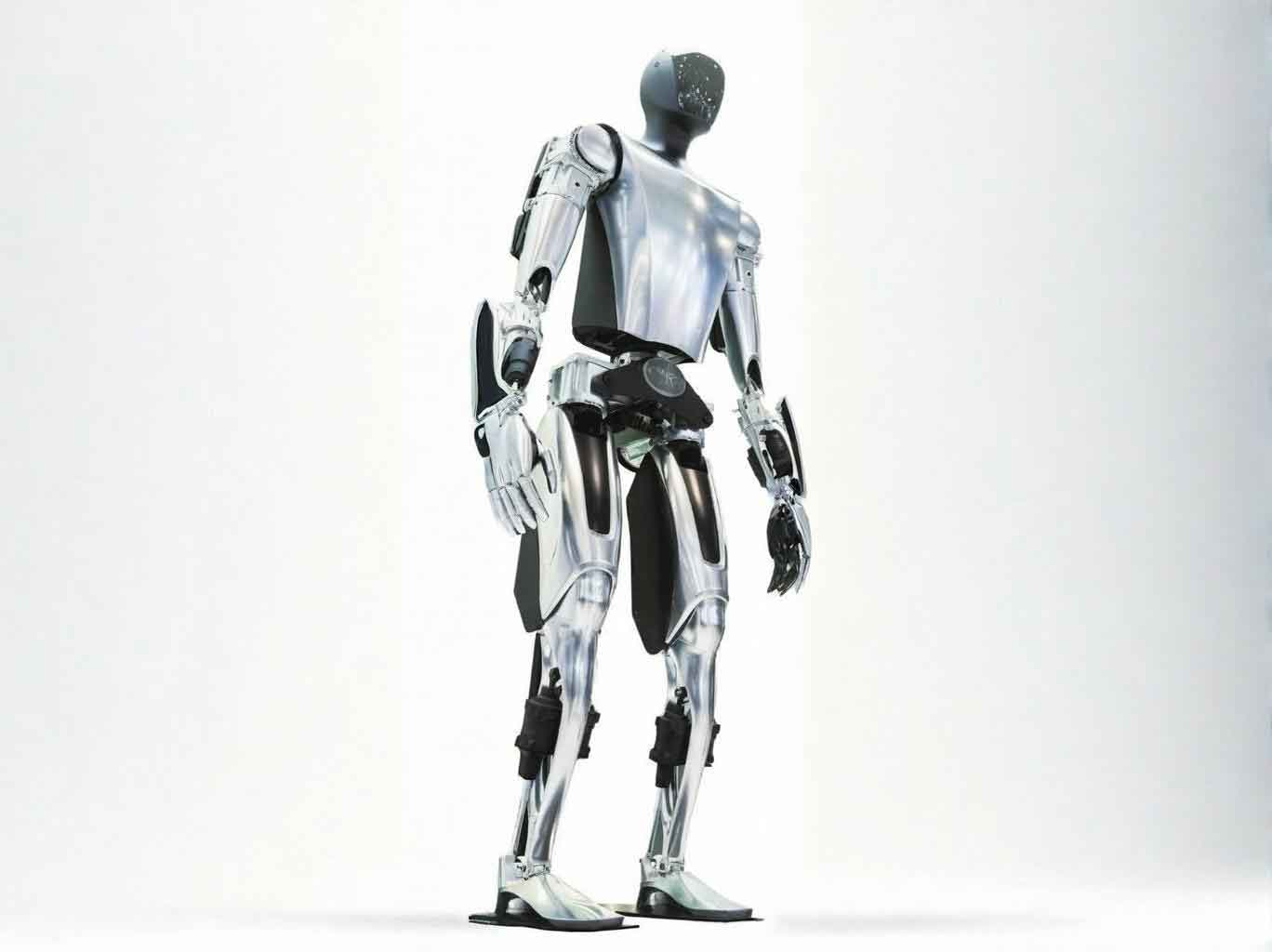
From my standpoint, embodied intelligence represents a shift from “disembodied intelligence” to physically interactive systems. Historically, the concept traces back to early AI discussions, such as Turing’s 1950 question on machine thinking. However, it was Brooks in 1986 who emphasized that intelligence is embodied and situated, steering research toward body-environment interactions. The emergence of humanoid and bionic robots in the 21st century further propelled embodied intelligence, making practical applications feasible. In essence, embodied intelligence refers to intelligent systems that interact with the environment through physical entities like robots, enabling environmental perception, information cognition, autonomous decision-making, and action, while learning from feedback to achieve adaptive growth. It is not merely a combination of large language models (LLMs) and robots; rather, it involves a “perception-action” closed loop that allows for autonomous decision-making. Similarly, while humanoid robots are ideal forms, embodied intelligence encompasses various physical morphologies, and it specifically refers to intelligent agents with physical bodies that interact contextually with the real world.
The core elements of embodied intelligence, as I conceptualize them, consist of three components: the body, the intelligence, and the environment. These can be summarized in the following table:
| Element | Description | Role in Embodied Intelligence |
|---|---|---|
| Body (Embodied AI Robot) | The physical entity, such as robots with various morphologies (e.g., humanoid, robotic arms). | Serves as the “senses and limbs,” connecting the physical and virtual worlds by perceiving and interacting with the environment. |
| Intelligence | The embedded smart brain, including models like LLMs, Vision Language Models (VLMs), and Vision Language Action (VLA) models. | Acts as the “neural center,” processing information, learning knowledge, and conducting reasoning to command actions. |
| Environment | The physical or virtual context where interaction occurs, such as real-world settings or simulated environments. | Functions as the “testing ground,” supporting learning processes and strategy optimization through interaction. |
The relationship among these elements can be expressed through a formula that highlights their integration: $$ \text{Embodied Intelligence} = \mathcal{F}(\text{Body}, \text{Intelligence}, \text{Environment}) $$ where $\mathcal{F}$ represents the interactive function that enables continuous learning and adaptation. The body, often an embodied AI robot, perceives the environment through sensors, the intelligence processes this data, and the environment provides feedback, forming a dynamic loop: $$ \text{Perception} \rightarrow \text{Cognition} \rightarrow \text{Decision} \rightarrow \text{Action} \rightarrow \text{Feedback} $$ This closed loop is essential for achieving autonomous evolution in embodied intelligence systems.
From the perspective of embodied cognition theory, which posits that cognitive activities arise from interactions among the brain, body, and environment, I divide the application of embodied intelligence in education into three layers: primary embodiment, intermediate embodiment, and advanced embodiment. These layers are not isolated but form a dynamic continuum that facilitates cognitive deepening. The following table outlines their characteristics:
| Layer | Focus | Educational Implication | Example with Embodied AI Robot |
|---|---|---|---|
| Primary Embodiment | Situational embedding through immersive environments (e.g., VR, AR, MR). | Breaks single-scene limitations, providing embodied experiences to stimulate interest. | An embodied AI robot guides students in a mixed-reality history lesson, allowing them to explore ancient sites virtually. |
| Intermediate Embodiment | Embodied interaction via physical or virtual actions. | Enhances knowledge internalization through operation, practice, and feedback. | Students program an embodied AI robot to perform physics experiments, observing real-time data and adjusting parameters. |
| Advanced Embodiment | Cognitive creativity and personalized knowledge generation. | Promotes deep knowledge reconstruction and innovation through embodied practices. | Learners use gestures to shape virtual geometric models with an embodied AI robot, fostering spatial reasoning and creative design. |
This layered approach aligns with embodied cognition principles, where learning is an embedded activity involving the whole body. For instance, in primary embodiment, the environment provides contextualized scenes; in intermediate embodiment, the embodied AI robot enables physical participation; and in advanced embodiment, intelligence drives creative cognition. The progression can be modeled as: $$ \text{Learning Outcome} = \int (\text{Situational Embedding} + \text{Embodied Participation} + \text{Cognitive Creation}) \, dt $$ where the integral symbolizes the cumulative effect over time, emphasizing the continuous interaction among layers.
Building on these layers, I propose an implementation framework for embodied intelligence empowering education. This framework comprises three main parts: situational embedding (virtual-physical integrated learning scenes), embodied participation (multimodal perceptual interaction), and cognitive creation (intelligence-driven knowledge generation). The framework integrates embodied cognition theory, AI technology, and educational practice to support embodied, contextualized, and personalized learning. The structure is summarized below:
| Framework Component | Corresponding Layer | Key Technologies | Educational Function |
|---|---|---|---|
| Situational Embedding | Primary Embodiment | VR, AR, MR, simulation platforms | Constructs immersive learning environments for experiential engagement. |
| Embodied Participation | Intermediate Embodiment | Multi-sensor perception, SLAM, imitation learning, reinforcement learning | Enables real-time interaction through embodied AI robots, enhancing skill acquisition. |
| Cognitive Creation | Advanced Embodiment | LLMs, MLLMs, adaptive reasoning models | Facilitates knowledge innovation and personalized cognitive development. |
In situational embedding, environments range from physical spaces to virtual simulations. For example, an embodied AI robot can operate in a real lab or a digital twin, providing flexibility. The embodied participation component relies on the perceptual and action capabilities of the embodied AI robot. Through sensors like cameras and touch feedback, it captures multimodal data, processes it using algorithms such as: $$ \text{Perception Model: } P = \sigma(\mathbf{W} \cdot \mathbf{S} + \mathbf{b}) $$ where $P$ represents perceptual output, $\mathbf{S}$ is sensory input, $\mathbf{W}$ and $\mathbf{b}$ are parameters, and $\sigma$ is an activation function. This allows the embodied AI robot to understand instructions, navigate spaces, and perform tasks. Cognitive creation leverages intelligent models like MLLMs to analyze student data, generate insights, and adapt teaching strategies. The overall framework operation can be expressed as: $$ \text{Educational Efficacy} = \alpha \cdot \text{Environmental Fidelity} + \beta \cdot \text{Embodied Interaction} + \gamma \cdot \text{Intelligent Processing} $$ where $\alpha$, $\beta$, and $\gamma$ are weighting coefficients reflecting the importance of each component.
Looking ahead, I identify several potential research directions for embodied intelligence in education, focusing on learners, teachers, human-machine collaboration, and learning environments. These directions aim to address current challenges and unlock new possibilities. The table below summarizes key areas:
| Research Perspective | Specific Direction | Role of Embodied AI Robot | Expected Impact |
|---|---|---|---|
| Learner-Centered | Embodied personalized learning | Serves as interactive tutor or practice partner, adapting to individual cognitive styles. | Enhances engagement and skill acquisition in fields like STEM or special education. |
| Teacher Support | Embodied teaching agents | Acts as assistant or proxy, monitoring classes and providing real-time feedback. | Reduces teacher workload and improves instructional quality through human-robot collaboration. |
| Human-Machine Synergy | Multi-agent collaborative systems | Coordinates with other embodied AI robots or virtual agents to solve complex tasks. | Enables project-based learning and simulates real-world teamwork scenarios. |
| Environmental Design | Immersive learning with embodied participation | Integrates into VR/MR environments to offer tangible interaction experiences. | Deepens conceptual understanding through hands-on, embodied exploration. |
In embodied personalized learning, for instance, an embodied AI robot can tailor activities based on learner’s physiological and behavioral data. Using formulas like: $$ \text{Adaptation Score} = \sum_{i=1}^{n} w_i \cdot \text{Feedback}_i $$ where $w_i$ weights different feedback modalities (e.g., visual, auditory), the robot adjusts its teaching strategies. For teacher support, embodied teaching agents can analyze classroom dynamics through sensors, offering insights to educators. In multi-agent systems, multiple embodied AI robots might collaborate using frameworks like: $$ \text{Collaborative Output} = \max_{\text{actions}} \left( \sum_{j} U_j(\text{joint action}) \right) $$ where $U_j$ represents utility functions for each agent, optimizing group performance. Regarding immersive environments, embodied AI robots enhance presence by bridging physical and virtual worlds, as shown in studies where VR-based embodied learning boosts academic outcomes. These directions underscore the transformative potential of embodied intelligence, but they also require addressing technical hurdles such as multimodal data integration, adaptive migration across scenarios, and ethical considerations like privacy.
In conclusion, as I reflect on the journey of embodied intelligence, it is clear that this technology represents a pivotal pathway toward general artificial intelligence and a key innovation area for industries, including education. By overcoming the limitations of “disembodied cognition,” embodied intelligence fosters a “symbiosis of body and mind” in learning, effectively tackling the long-standing issue of “separation of knowledge and practice.” My exploration of its theoretical connotation, application layers, implementation framework, and research directions provides a foundation for future endeavors. However, challenges remain in areas like multimodal data collection, multi-agent coordination, and ethical safeguards. For example, ensuring the explainability and safety of embodied AI robot actions is crucial. Moving forward, I believe that continued research and development will enable embodied intelligence to drive innovative applications in education, promoting a more holistic and human-centric learning ecosystem. The integration of embodied AI robots into educational practices holds promise for revolutionizing how we teach and learn, ultimately contributing to the advancement of new productive forces in society.