
In this article, I explore the transformative intersection of intelligent computation and embodied intelligence, a paradigm shift that marks a new era in artificial intelligence development. As we move beyond virtual intelligence, the fusion of computational power with physical interaction promises to redefine how intelligent systems perceive, learn, and act in complex environments. Embodied intelligence, as a critical pathway to achieving general artificial intelligence, leverages physical entities to create cognitive architectures that enable real-world problem-solving. This convergence is not merely a technological advancement but a fundamental rethinking of how machines interact with the world, driven by policy initiatives, industrial evolution, and technological breakthroughs. Throughout this discussion, I will emphasize the role of the embodied robot as a key embodiment of this fusion, using tables and formulas to elucidate the underlying principles and future directions.
The journey begins with policy-driven acceleration, where global strategies are shaping the integration of computational paradigms and physical systems. In the European Union, the AI Act of 2024 establishes ethical guidelines for embodied intelligence systems, addressing concerns such as autonomy and safety in human-robot interactions. Similarly, the United States’ CHIPS and Science Act of 2022 focuses on reshoring semiconductor manufacturing to enhance control over intelligent hardware, which is essential for advancing embodied robot capabilities. In China, policies emphasize synergistic development between computing infrastructure and robotics clusters, such as coupling the “East Data West Computing” project with smart manufacturing bases. This alignment aims to optimize resource allocation and foster industrial collaboration, ensuring that data governance extends into physical spaces. For instance, in autonomous vehicle testing, data ownership frameworks are being defined to secure and utilize information efficiently. Moreover, comprehensive safety governance frameworks are being built to cover virtual and physical interactions, such as establishing accountability mechanisms in human-robot collaboration scenarios. These policy efforts underscore a global commitment to harnessing intelligent computation for embodied intelligence, paving the way for scalable and ethical deployments of embodied robots in diverse settings.
As policies set the stage, industrial evolution transitions from technical stacking to value closure, where the scaling of AI models plays a pivotal role. The development of AI foundation models faces bottlenecks due to diminishing high-quality data and exponential resource demands. However, scaling strategies—comprising scaling up, scaling down, and scaling out—offer pathways to overcome these challenges. Scaling up involves increasing data volume, model parameters, and computational resources to enhance AI capabilities, but it grapples with issues like data exhaustion and redundancy. Scaling down focuses on model compression and efficiency optimization for resource-constrained environments, balancing accuracy with practicality. Scaling out extends isolated models into interconnected ecosystems with structured interfaces, fostering decentralized AI applications. The following table summarizes this evolutionary process from technical stacking to value closure in embodied intelligence, highlighting how these scaling dimensions contribute to the development of embodied robots.
| Dimension | Scaling Up | Scaling Down | Scaling Out |
|---|---|---|---|
| Core Definition | Enhancing AI system capabilities by expanding data scale, model parameters, and computational resources. | Reducing model size and optimizing efficiency while retaining core functionalities for limited-resource scenarios. | Extending isolated foundation models into specialized variants with structured interfaces, building diverse, interconnected AI ecosystems. |
| Key Challenges | 1. Depletion of high-quality public data. 2. Diminishing returns from parameter increases. 3. Exponential growth in computational demands. |
1. Balancing model compression with accuracy preservation. 2. Ensuring hardware adaptability and generalization. 3. Addressing real-time performance in dynamic environments. |
1. Standardizing interfaces and ensuring interoperability. 2. Improving collaborative reasoning efficiency among heterogeneous models. 3. Managing maintenance complexity in distributed architectures. |
| Technological Foundations | 1. Data optimization via synthetic data generation. 2. Efficient training methods like progressive training and mixed-precision training. 3. Dynamic allocation of computational resources. |
1. Structured pruning and quantization-aware training. 2. Speculative decoding and KV caching. 3. Mixture of Experts (MoE) models. |
1. Plugin mechanisms and adapter networks. 2. Model routing and service orchestration. 3. Distributed training with privacy protection. |
| Application Scenarios | 1. Providing foundational capabilities for downstream tasks, such as cross-modal understanding in AI bots. 2. Supporting complex scientific computations like protein folding prediction. 3. Building large-scale pre-training platforms. |
1. Deploying on mobile devices for edge intelligence. 2. Enabling real-time decisions in industrial IoT for predictive maintenance. 3. Facilitating local path planning in autonomous driving. |
1. Developing agent ecosystems for autonomous task decomposition. 2. Enhancing human-robot interaction in embodied robot systems like Figure 01. 3. Creating specialized clusters for domain-specific applications, such as multi-model consultation in healthcare. |
This industrial shift is exemplified by cloud-edge-end computing dynamics, where technologies like NVIDIA Omniverse enable distributed rendering for real-time responses in embodied systems. In algorithms, multimodal large models such as PaLM-E revolutionize visual-language processing by accurately modeling physical states. At the hardware level, innovations in flexible electronics and liquid metals allow for morphologically adaptive embodied robots, such as MIT’s bio-inspired soft robots, which exhibit high plasticity and functionality. As infrastructure regulations tighten, application layers become highly competitive, driving the need to transform computational resources into tangible value. This involves deepening vertical industry solutions, building collaborative ecosystems, and innovating service models for embodied robots.
Technological evolution further重构 the cognitive framework of embodied intelligence, moving beyond traditional robotics to systems that emulate human-like perception and autonomy. Embodied robots represent a leap forward, capable of sensing environments, planning actions, and making decisions independently. Academic consensus highlights three key dimensions: perception, decision-making, and action. In perception, spatiotemporal joint encoding techniques, such as spiking neural networks, overcome frame-rate limitations of conventional vision systems. For decision-making, world models support long-term reasoning in partially observable environments. In action, musculoskeletal simulation algorithms achieve energy-optimal control of movement chains. The embodied robot distinguishes itself through traits like strong autonomy, exceptional sensory capabilities, powerful learning aptitudes, broad generality, and humanoid features that facilitate natural interaction. The integration of these aspects relies on multiple technologies, as described by the following formula that models the performance of an embodied robot system: $$ P_{er} = \alpha \cdot S + \beta \cdot D + \gamma \cdot A $$ where \( P_{er} \) represents the overall performance of the embodied robot, \( S \) denotes sensory input quality, \( D \) signifies decision-making efficiency, \( A \) indicates action execution precision, and \( \alpha, \beta, \gamma \) are weighting coefficients that vary based on environmental constraints. This formula underscores the multidimensional optimization required for advanced embodied robots.
Key technologies enabling embodied robots include sensor systems for visual, auditory, and tactile data; machine vision for object recognition and scene understanding; AI techniques like deep learning and reinforcement learning for adaptive decision-making; robotic manipulation for motion control and path planning; intelligent control for dynamic task allocation; rapid computation methods such as quantum computing for efficiency; and wireless communication for seamless data exchange. Additionally, advancements in materials, human-robot interaction, safety protocols, IoT, and big data provide a solid foundation. The interdisciplinary nature of this field—spanning robotics, neuroscience, machine learning, and computer vision—is crucial for progress. For instance, the learning capability of an embodied robot can be modeled using a reinforcement learning update rule: $$ Q(s,a) \leftarrow Q(s,a) + \eta [r + \delta \max_{a’} Q(s’,a’) – Q(s,a)] $$ where \( Q(s,a) \) is the action-value function, \( \eta \) is the learning rate, \( r \) is the reward, and \( \delta \) is the discount factor. This illustrates how embodied robots continuously refine their behaviors through environmental interactions.
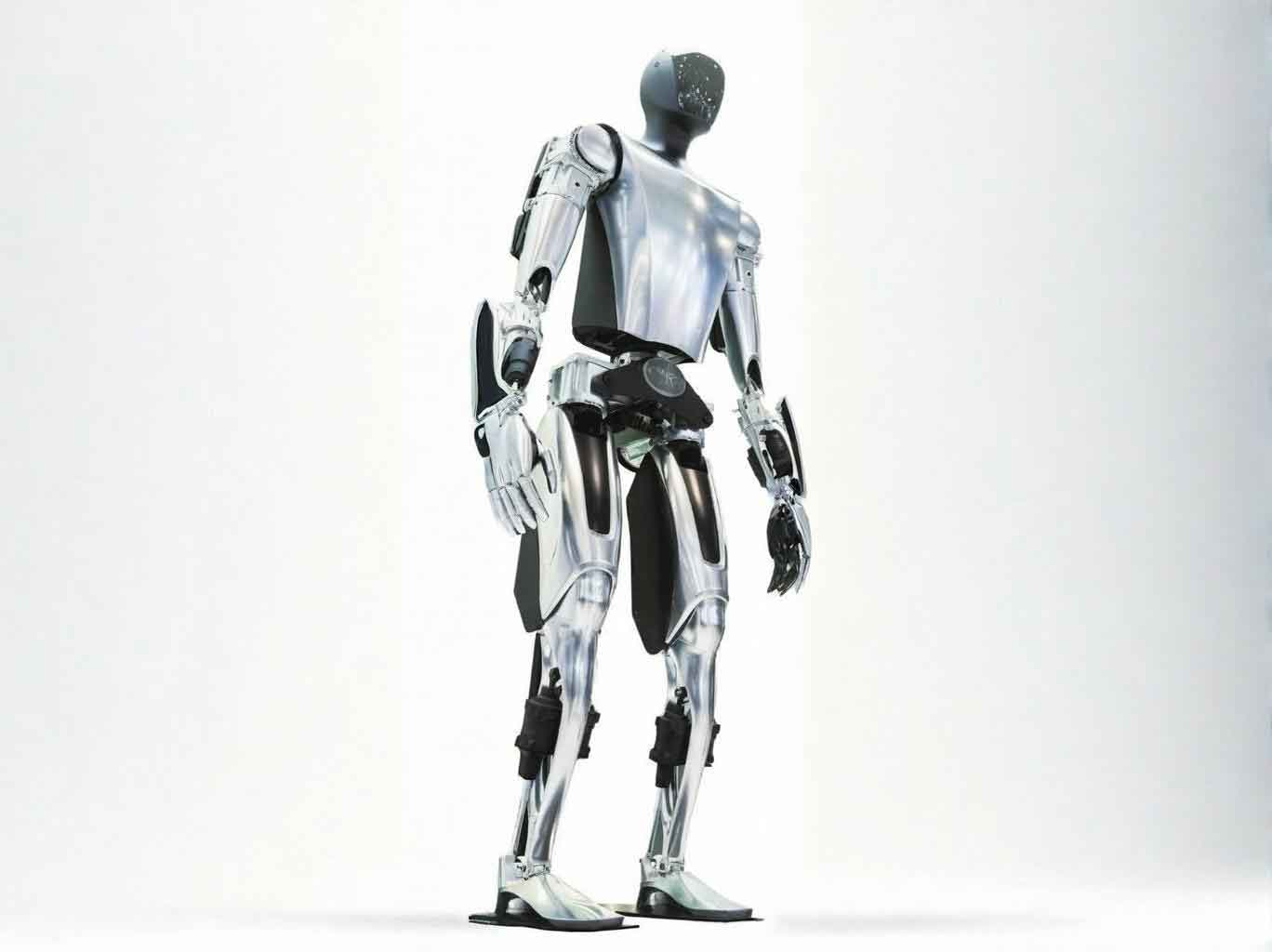
In practical terms, the embodied robot excels in scenarios ranging from home assistance to industrial logistics, thanks to its ability to adapt to dynamic conditions. For example, in manufacturing, an embodied robot can optimize production lines by perceiving real-time changes and executing precise actions. The energy efficiency of such systems is critical, as captured by the formula for power consumption in embodied robots: $$ E_{total} = \sum_{i=1}^{n} (E_{sensor_i} + E_{compute_i} + E_{actuator_i}) $$ where \( E_{total} \) is the total energy expenditure, and each component contributes to the overall sustainability. As we advance, challenges like cross-modal common sense integration, quantum-level energy optimization, and societal acceptance of human-robot coexistence will shape the future of embodied robots. The convergence of intelligent computation and embodied intelligence not only drives technological progress but also redefines the boundaries of collaboration between humans and machines, fostering an ecosystem where embodied robots evolve autonomously.
In conclusion, the fusion of intelligent computation and embodied intelligence represents a pivotal stage in AI development, centered on creating digital twins of the physical world that enable self-evolving ecosystems. This integration transcends traditional symbolic and behavioral approaches, offering a new theoretical paradigm for autonomous evolution in complex scenarios. The embodied robot stands as a testament to this progress, embodying the principles of perception, decision-making, and action in a cohesive system. Looking ahead, we must address challenges in common sense reasoning, energy efficiency, and ethical integration to fully realize the potential of embodied robots. As policies, industries, and technologies continue to align, this convergence will not only reshape AI trajectories but also establish a foundation for a intelligent society where humans and embodied robots collaborate seamlessly. The journey ahead demands interdisciplinary efforts and innovative thinking to harness the full capabilities of embodied intelligence in our daily lives.