
The evolution of the humanoid robot represents one of the most ambitious frontiers in robotics and artificial intelligence. The ultimate goal is to create machines that can seamlessly operate in environments built for humans, performing complex tasks with autonomy and precision. A pivotal component in achieving this goal is the end-effector—the hand. For a humanoid robot to manipulate objects with human-like grace, strength, and sensitivity, its hands require a level of dexterity, or “灵巧手” (dexterous hands), previously confined to biological systems. This dexterity is fundamentally enabled by the actuation system, and increasingly, the core of this system hinges on a seemingly simple yet profoundly critical element: the tendon.
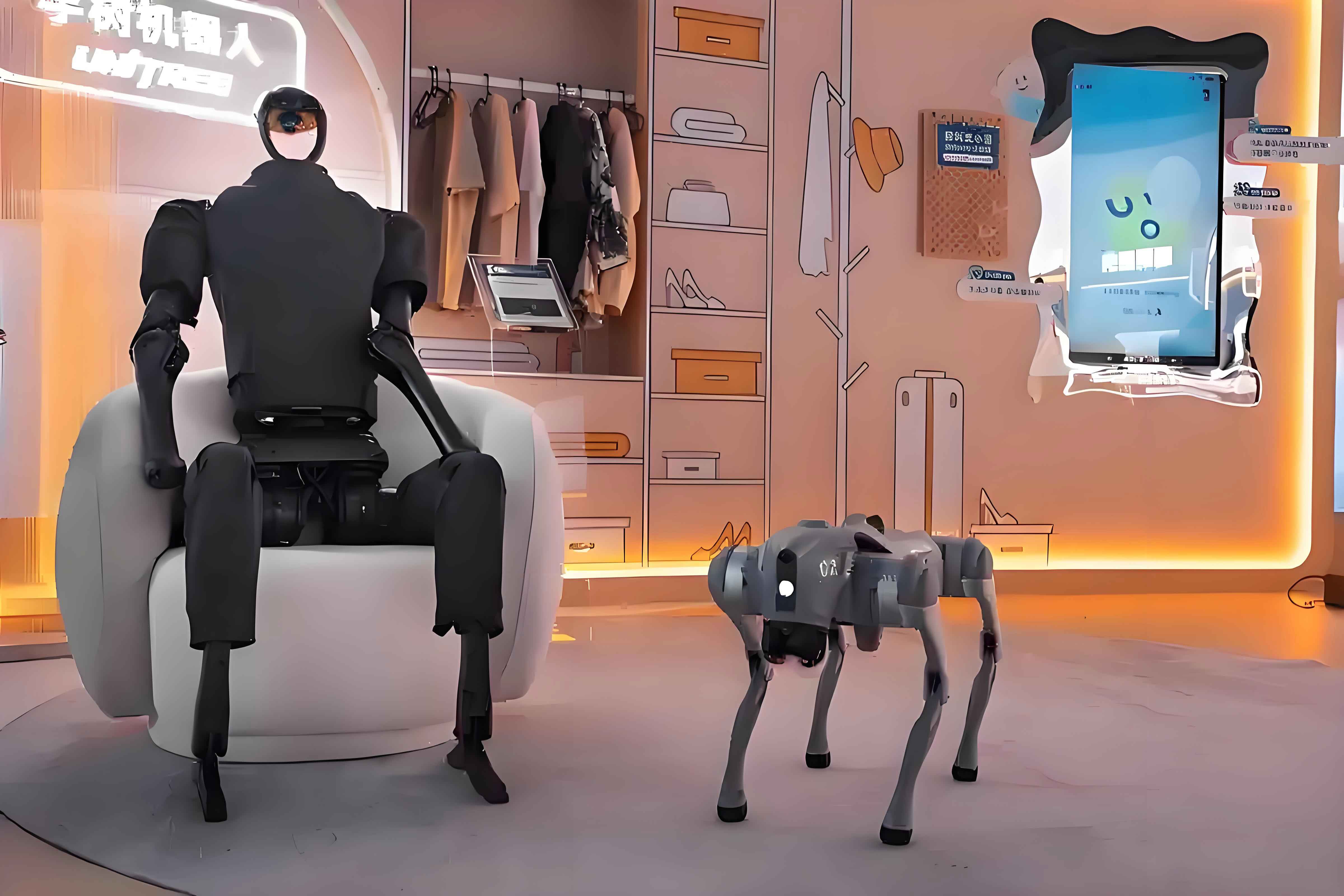
In my analysis of actuation technologies, the transition from direct-drive mechanisms or simple linkages to tendon-driven systems marks a significant leap. Tendon-driven actuation, inspired by biomechanics, offers unparalleled advantages for humanoid robot hand design. It allows for the decoupling of heavy actuators (motors, gearboxes) from the moving parts of the hand, enabling a more compact, lightweight, and anatomically realistic design. The actuators can be placed in the forearm or upper arm, reducing the inertial load on the wrist and fingers, which is crucial for dynamic motion and energy efficiency. This biomimetic approach is evident in advanced humanoid robot platforms, where the hand’s complexity is defined by its number of degrees of freedom (DoF), each often controlled by a dedicated tendon.
The performance of a tendon-driven system is intrinsically linked to the properties of the tendon material itself. This component acts as the literal lifeline between the power source and the joint, transmitting force and motion. Early iterations utilized readily available synthetic fibers like polytetrafluoroethylene (PTFE), aramid, or polyester. However, the extreme demands of a humanoid robot hand—requiring high force transmission in a tiny package, minimal stretch under load for precise control, exceptional durability over millions of cycles, and resistance to wear and environmental factors—quickly exposed the limitations of these materials. The search for a superior tendon material has converged on two primary contenders: high-strength steel cable and Ultra-High Molecular Weight Polyethylene (UHMWPE) fiber.
The choice between these materials involves critical trade-offs. To understand this, consider the following comparison of key properties:
| Property | High-Strength Steel Cable | UHMWPE Fiber | Biological Tendon (Reference) |
|---|---|---|---|
| Specific Strength (Strength/Density) | High (~0.25-0.3 GPa·cm³/g) | Extremely High (~2.5-3.5 GPa·cm³/g) | High (~0.1 GPa·cm³/g) |
| Tensile Modulus (Stiffness) | Very High (~200 GPa) | High (~100-150 GPa) | Variable, nonlinear (~1-2 GPa) |
| Density | High (7.8 g/cm³) | Very Low (0.97 g/cm³) | ~1.1 g/cm³ |
| Creep Resistance | Excellent | Good to Excellent (Material Dependent) | Excellent (self-repairing) |
| Fatigue Life | Good (can suffer from fatigue fracture) | Excellent (high cyclic loading) | Excellent |
| Flexibility & Bending Fatigue | Moderate (risk of kinking) | Excellent | Excellent |
| Corrosion Resistance | Low (requires coating) | Excellent (inert polymer) | N/A |
| Key Advantage for Humanoid Robots | Ultimate precision, minimal stretch | Lightweight, high strength, durable | Integrated, adaptive |
From this analysis, UHMWPE fiber emerges as a remarkably compelling solution for humanoid robot applications. Its most outstanding feature is its unparalleled specific strength, which allows for tendons that are incredibly strong yet almost weightless. This directly translates to lower inertial forces in the moving hand, enabling faster and more energy-efficient movements—a critical factor for a mobile humanoid robot operating on battery power. Its flexibility and excellent resistance to bending fatigue make it ideal for routing through complex, compact pulley systems within a multi-fingered humanoid robot hand without premature failure. Furthermore, its inherent chemical inertness provides reliability in varied environments.
The force transmission in a tendon-driven finger can be modeled statically. For a simple tendon routed around a pulley to flex a joint, the relationship between tendon tension ($T$), joint torque ($\tau$), and pulley radius ($r$) is given by:
$$ \tau = T \cdot r $$
In a more complex, multi-DoF humanoid robot finger with multiple tendons acting on the same joint (e.g., for flexion and extension), the net torque is the sum of contributions. If a flexion tendon with tension $T_f$ and moment arm $r_f$ acts against an extension tendon with tension $T_e$ and moment arm $r_e$, the net torque is:
$$ \tau_{net} = T_f r_f – T_e r_e $$
The elongation of the tendon under load is crucial for control fidelity. Assuming linear elastic behavior over the operational range, the elongation ($\Delta L$) is governed by a form of Hooke’s Law:
$$ \Delta L = \frac{T \cdot L_0}{A \cdot E} $$
where $L_0$ is the original length of the tendon, $A$ is its cross-sectional area, and $E$ is the Young’s modulus (tensile modulus) of the material. For a humanoid robot hand requiring high positional accuracy, a high modulus $E$ (low stretch) is desirable to minimize unwanted compliance in the transmission.
The Paramount Challenge: Creep in UHMWPE Tendons
While UHMWPE fiber’s baseline properties are exceptional, its application in a load-bearing, precision humanoid robot component introduces a critical long-term reliability challenge: creep. Creep is the time-dependent, permanent deformation of a material under a constant stress below its yield point. For a tendon in a humanoid robot hand, this manifests as a gradual, irreversible lengthening under sustained tension. This can lead to a catastrophic loss of calibration: joint angles become inaccurate, grip forces become unreliable, and the control system’s kinematic model diverges from reality. In a humanoid robot expected to perform consistently over years, perhaps holding tools or maintaining a grip for extended periods, creep is not a minor issue—it is a fundamental failure mode that must be engineered out.
Therefore, not all UHMWPE fibers are suitable. Standard high-strength UHMWPE, as used in ballistic protection or cut-resistant gloves, may exhibit significant creep. The industry has developed “anti-creep” or “creep-optimized” UHMWPE fibers specifically engineered to resist this deformation. The performance of these specialized fibers must be rigorously characterized under conditions that simulate the harsh operating environment of a humanoid robot.
Based on established industrial testing frameworks, the evaluation of creep resistance for humanoid robot tendon materials should involve accelerated testing under elevated temperature and load. A standardized test protocol is essential for comparing materials and guaranteeing lifetime performance. Key test conditions and evaluation metrics can be summarized as follows:
| Aspect | Proposed Condition / Metric | Rationale for Humanoid Robot Application |
|---|---|---|
| Test Temperature | 70°C | Accelerates molecular mobility, simulating long-term aging and potential internal heating from actuator friction in a confined humanoid robot limb. |
| Applied Stress | 3.093 cN/dtex (≈ 300 MPa) | Represents a significant, sustained operational load (e.g., a firm, continuous grip). The tex-based unit (cN/dtex) normalizes for fiber fineness. |
| Test Duration | Minimum 400 hours | Provides sufficient data to project long-term creep behavior over the expected service life of the humanoid robot. |
| Key Metric 1: Creep Elongation at 100 h | $\epsilon_{100} = \frac{L_{100} – L_0}{L_0} \times 100\%$ | A standard checkpoint for medium-term creep performance. Lower values indicate better resistance. |
| Key Metric 2: Time to 10% Creep Elongation | $t_{\epsilon=10\%}$ | A critical failure threshold indicator. For a humanoid robot tendon, 10% elongation likely renders the system inoperable. A longer time signifies greater durability. |
| Key Metric 3: Average Creep Rate (24-100 h) | $\dot{\epsilon}_{avg} = \frac{\epsilon_{100} – \epsilon_{24}}{76}$ | Measures the steady-state creep rate after initial transient effects, crucial for predicting long-term dimensional stability. |
The creep strain over time, $\epsilon(t)$, for a polymer fiber often follows a multi-stage curve describable by a model incorporating instantaneous elastic strain, primary (decelerating) creep, and secondary (steady-state) creep. A simplified representation focusing on the secondary phase can be expressed as:
$$ \epsilon(t) = \epsilon_0 + \dot{\epsilon}_s \cdot t $$
where $\epsilon_0$ is the strain at the start of the secondary phase (combining elastic and primary creep), and $\dot{\epsilon}_s$ is the steady-state creep rate. For a tendon material in a humanoid robot, minimizing $\dot{\epsilon}_s$ is the primary objective of material optimization. More advanced models like the Norton-Bailey or Findley power-law creep models can provide a better fit:
$$ \epsilon(t) = \epsilon_0 + A \cdot \sigma^n \cdot t^m $$
where $A$, $n$, and $m$ are material-dependent constants, and $\sigma$ is the applied stress. Characterizing a candidate UHMWPE fiber with such a model allows engineers to simulate its elongation under complex, time-varying load profiles expected in a working humanoid robot.
System Integration and Future Trajectory
The selection of UHMWPE as a tendon material profoundly influences the design of the entire actuation system for a humanoid robot hand. Its flexibility allows for compact, low-friction pulley designs. Its low weight reduces the reflected inertia back to the motor, improving dynamic response. However, system integration must also address termination methods—how the fiber is attached to the actuator (e.g., a capstan on a motor shaft) and to the phalange. Specialized splicing, potting, or clamping techniques are required to prevent slippage or failure at these critical points, as the fiber’s smooth, chemically inert surface can make bonding challenging.
The global supply chain for high-performance, creep-optimized UHMWPE fiber has historically been led by advanced materials corporations. However, a strong trend toward domestic sourcing and technological parity is underway, driven by the strategic importance of robotics. This diversification is vital for the scalable and sustainable production of humanoid robots.
Looking forward, the evolution of tendon materials for humanoid robot dexterity will follow several interconnected paths:
| Pathway | Description | Impact on Humanoid Robot Capability |
|---|---|---|
| Material Hybridization | Combining UHMWPE with other nanomaterials (e.g., graphene, carbon nanotubes) or in coaxial structures with other polymers to further enhance creep resistance, modulus, and thermal stability. | Enables longer operational lifespans, higher force transmission, and operation in wider temperature ranges. |
| Functionalization & Sensing | Integrating conductive elements into or around the tendon to create “smart tendons” capable of measuring tension (via resistive or capacitive changes) or even detecting wear. | Provides proprioceptive and health-monitoring data, enabling adaptive control and predictive maintenance for the humanoid robot. |
| Variable Impedance Actuation | Coupling tendon drives with novel variable-stiffness elements (e.g., based on jamming, shape memory alloys) to mimic the adaptive compliance of biological muscles and tendons. | Allows the humanoid robot hand to be both rigid for precise manipulation and soft for safe interaction, enhancing versatility. |
| Bio-Hybrid Systems | Long-term research into engineered biological tissues or synthetic-biological composites as truly biomimetic tendon materials. | Could potentially offer self-healing and adaptive growth properties, far surpassing current synthetic materials. |
The force control law in a tendon-driven humanoid robot finger must also account for the tendon’s properties. A basic proportional-integral-derivative (PID) controller for tendon tension might target a desired force $T_{des}$. The control output (e.g., motor current) is calculated based on the error $e(t) = T_{des} – T_{measured}(t)$:
$$ u(t) = K_p e(t) + K_i \int_0^t e(\tau) d\tau + K_d \frac{de(t)}{dt} $$
If creep causes a gradual increase in tendon length, the control system must compensate by taking up more slack (increasing the actuator position) to maintain the same tension, effectively operating at a different point in its workspace. Advanced models can incorporate a creep compensation term $\delta L_{creep}(t, T)$ into the kinematic mapping between actuator position and joint angle:
$$ \theta = f(\phi, \delta L_{creep}(t, T)) $$
where $\theta$ is the joint angle and $\phi$ is the actuator position. Minimizing $\delta L_{creep}$ through material science simplifies the control problem immensely.
In conclusion, the pursuit of true dexterity in humanoid robots is a multidisciplinary endeavor where advanced materials science plays a foundational role. The tendon, particularly when made from creep-optimized UHMWPE fiber, is far more than a passive cable; it is a critical enabler that dictates the weight, speed, durability, and ultimately, the reliability of the humanoid robot‘s interaction with the physical world. The rigorous testing of its long-term viscoelastic behavior under simulated operational loads is not merely a quality check—it is a non-negotiable requirement for guaranteeing the functional integrity of the machine over its intended lifespan. As the humanoid robot industry progresses from laboratory prototypes to commercial products, the optimization, standardization, and scalable production of these high-performance tendon materials will remain a key focus, quietly empowering the hands that will build, assist, and explore alongside humanity.