
The narrative of industrial automation in my country is one of foresight meeting fortuitous timing. My own journey mirrors this arc. In the mid-1980s, I entered a laboratory dedicated to robotics, becoming a direct disciple of a pioneering researcher who, as early as 1977, championed the inclusion of robotics and artificial intelligence in our national scientific development plan. This early academic push, however, was not driven by immediate industrial necessity. Back then, the focus was on special applications—exploring the depths of the ocean or the frontiers of space. The concept of using robots widely in manufacturing seemed a distant concern for an economy blessed with abundant and low-cost labor.
This perception was pervasive. I recall conversations from the early 1990s, where executives from major automotive manufacturers would uniformly dismiss the idea: “Labor in China is so cheap, it’s impossible to consider using robots.” For decades, this economic reality meant that the development of China robots remained primarily within research institutes, a technological pursuit detached from mass-market industrial application. The seed was planted, but the soil was not yet ready.
The turn of the millennium marked a symbolic beginning. In the year 2000, the first company dedicated to the development and production of industrial robots was spun off from a major research institute. This event, quiet as it was, signified a crucial step: the formal transition of robotics from a pure research topic to a commercial enterprise. It was the start of the long road to build a national brand for China robots.
Today, the landscape has transformed utterly. China is now the world’s largest consumer market for industrial robots, accounting for roughly one-fifth of global sales. The drivers are clear and powerful: a sustained and significant rise in labor costs, coupled with a decade-long decrease in robot prices. The economic calculus has flipped. Yet, this booming market presents a paradox. Despite being the largest consumer, domestic brands of China robots hold a painfully small share, with foreign giants dominating over 90% of the market. This leads to the central question: what is the true weakness of China robots?
A common diagnosis points to core components. It is an undeniable fact that critical parts like precision reducers and high-performance servo motors are largely imported. Many conclude that this dependency is the primary shackle holding back China robots. However, after years at the forefront of this industry, I must disagree with this simplified view. The issue is more systemic.
We must look globally for context. No leading robot-producing nation—not in Europe, Japan, or Korea—insists on using exclusively domestically produced components for every robot they build. Globalization of supply chains is the norm, not the exception. Companies specialize. The competitiveness of a robot does not reside in the origin of its gears or motors, but in how these parts are integrated into a superior whole. The real formula for a robot’s market strength is a composite of multiple factors:
$$C_{robot} = f(D, T, B)$$
Where \(C_{robot}\) represents the overall competitiveness, \(D\) stands for integrated Design capability, \(T\) for core Technology and control algorithms, and \(B\) for Brand reputation and reliability. This holistic capability is what takes time and iteration to build.
Consider the histories of the global leaders. Their journeys were not short. One Japanese leader spent over two decades dominating numerical control systems before even launching its first robot, and waited another 30 years before achieving its position as a global volume leader. A German pioneer used American robots in its first automated welding line before developing its own technology years later. Their ascent was built on decades of accumulated engineering, application experience, and brand trust within global manufacturing. This historical perspective is crucial for understanding the challenge facing China robots.
The following table contrasts the scale and evolution of key players, highlighting the gap that must be closed:
| Entity / Metric | Origin Year (Robotics) | Key Milestone to Robotics | Approx. Revenue (2013) | Market Position |
|---|---|---|---|---|
| Foreign Leader A | 1970s | Diversified from electrification/automation | $418 Billion* | Global conglomerate, top 4 in robots |
| Foreign Leader B (Japan) | 1970s | Evolved from numerical control dominance | $60 Billion* | Global leader in volume & integration |
| Foreign Leader C (Japan) | 1970s | Grew from motor and servo technology | $38 Billion* | Top 4 global robot manufacturer |
| Foreign Leader D (Germany) | 1970s | Developed from welding automation | $24 Billion* | Top 4 global, strong in automotive |
| Prominent China Robots Company | 2000 | Spin-off from national research institute | $2.1 Billion (RMB 13.2B) | Domestic market leader, growing globally |
*Group revenue, not solely robotics division.
Therefore, the primary shortfall for China robots is not merely a supply chain issue, but a gap in compounded system-level expertise, scale, and brand equity forged over time. The question then becomes: is it too late to compete? The answer lies in a confluence of powerful market forces and technological shift.
The opportunity is monumental, defined by two transformative trends. First, the manufacturing model itself is undergoing a radical change. The demand for automation is exploding beyond traditional strongholds like the automotive industry into general industry—electronics, food and beverage, logistics, and beyond. The potential is quantified by the concept of robot density. As of 2012, the number of robots per 10,000 manufacturing employees in China was a mere 23, compared to 396 in South Korea or over 150 in Germany and Japan. If China aims to approach these levels of automation, the required installation base numbers in the millions, far exceeding the total global historical stock of approximately 1.6 million units. This represents a vacuum that existing global producers cannot fill alone, creating a vast runway for China robots.
| Country/Region | Robot Density (2012, robots per 10,000 employees) | Implied Market Gap for China (Millions of units, approximate) |
|---|---|---|
| South Korea | 396 | >3.0 |
| Japan | 332 | >2.5 |
| Germany | 273 | >2.0 |
| United States | 152 | >1.0 |
| China | 23 | Base |
The second, and perhaps more pivotal, trend is the technological evolution of the robot itself. The industry is transitioning from the first-generation “teaching-playback” machines to a new era of intelligent, sensing, and adaptive systems. This shift can be summarized in three stages:
| Generation | Core Capability | Description & Status |
|---|---|---|
| 1st Gen | Playback | Executes pre-programmed tasks repetitively. Still constitutes ~90% of installed industrial base. |
| 2nd Gen | Perception | Equipped with vision, force, etc., to adapt to environment (e.g., bin picking). Growing application. |
| 3rd Gen | Cognition & Autonomy | Can make decisions based on complex sensor data. Mostly in research/niche applications (e.g., space exploration). |
This transition towards intelligence, encapsulated by the move from Generation 1 to Generations 2 and 3, represents a paradigm shift. In this new domain, the historical advantage in perfecting rigid, high-speed arms is less absolute. The competition increasingly revolves around software, artificial intelligence, sensor fusion, and human-robot collaboration. This levels the playing field significantly. For the first time, developers of China robots are not merely latecomers trying to replicate perfected mechanical systems; we are entering a new and open frontier alongside the established giants. The core competency equation is evolving:
$$C_{robot}^{future} = f(D, T, B, AI, S)$$
Where \(AI\) represents Artificial Intelligence integration and \(S\) represents advanced Sensor fusion and contextual understanding. This is where the battle for the next generation of China robots will be fought.
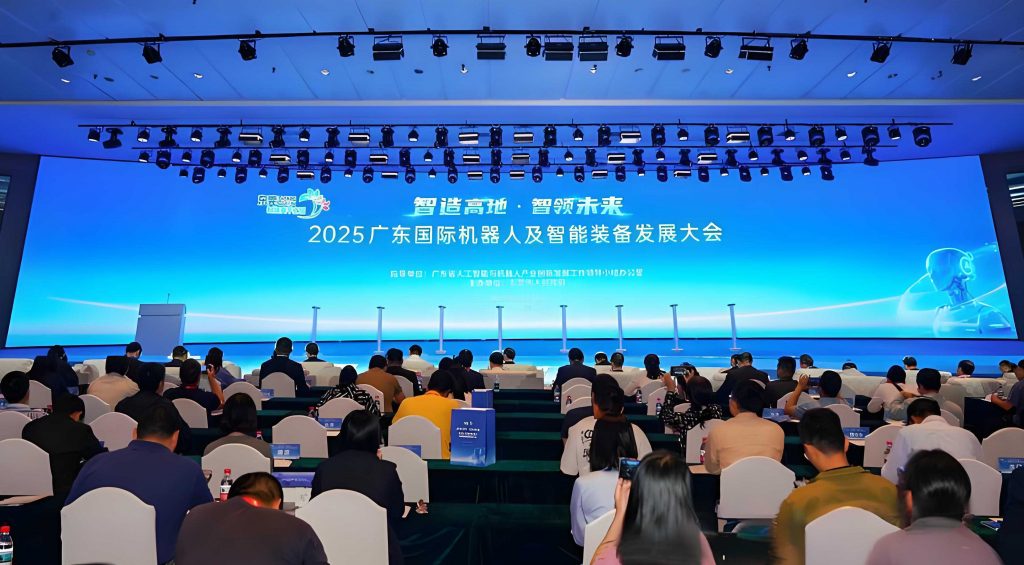
This scene from a domestic production line symbolizes the ongoing integration of automation. It is on such floors that the reliability and capability of China robots are proven and iterated.
However, this window of opportunity is not indefinite. The current surge in demand has led to a proliferation of companies entering the robotics space in China, with hundreds now involved across the产业链. This phase of vigorous growth is natural and mirrors the early, fragmented stages seen in Japan and other nations. The critical process that follows is consolidation and the emergence of true, scaled champions. The key challenge for China robots is one of speed and scale. We must cultivate companies with not just technical prowess, but also the financial strength, manufacturing scale, and global service network to compete as peers with the international giants. These are “three-high” enterprises: high technology, high talent, and high capital intensity.
Based on the historical maturation cycles of other robotics ecosystems and the current velocity of change, the consensus is clear: the critical window for establishing the global order in robotics is the next 8 to 10 years. During this period, the market will expand rapidly, technology will reset, and the future leaders will be determined. If domestic champions of China robots cannot achieve critical mass, technological leadership in the intelligent era, and strong brand recognition within this timeframe, the risk is that the industry will solidify into a permanent secondary tier—a large domestic market predominantly served by foreign brands with domestic players relegated to niche or low-margin segments.
Therefore, the path forward is unequivocal. The mission is to nurture and scale international-caliber enterprises for China robots. This requires a concerted effort: sustained investment in R&D focused on the next generation of intelligent robotics, policies that encourage adoption while fostering quality and innovation, and capital markets that support the long-term growth of these “three-high” firms. The goal is not autarky in components, but supremacy in system innovation and integration. The formula for success combines the immense, dynamic market of China with the accelerated development of intelligent robotics technology. Time is the essential, non-renewable resource. The market has provided the opportunity; we must now provide the speed and vision to seize it. The future of global manufacturing will be written in no small part by the trajectory of China robots in this decisive decade.