
The recent unveiling of the world’s first “Humanoid Robot Intelligence Grading” standard feels like a pivotal moment, one that many of us in the field have been anticipating. For years, we have witnessed a dazzling array of humanoid robot prototypes and products emerging at a breakneck pace. Yet, beneath the surface of this innovation boom, a fundamental challenge persisted: the absence of a common language to define and measure their intelligence. Questions about technical maturity, product design philosophy, and viable application pathways remained largely subjective, hindering collaboration and creating market confusion. This new standard, a collaborative effort by leading innovation centers, major companies, and research institutes, promises to be the Rosetta Stone we desperately needed.
This standard signifies a profound shift for the humanoid robot industry. We are collectively moving from a “function-oriented” paradigm—where robots are built to perform specific, pre-programmed tasks—towards an era of “intelligent evolution.” In this new era, the value of a humanoid robot is increasingly defined not just by its mechanical dexterity, but by its capacity to perceive, understand, learn, and adapt in complex, unstructured environments. The enhancement of a humanoid robot‘s intelligent capabilities exponentially increases its potential across diverse and dynamically changing scenarios.
Decoding the “Four Dimensions and Five Levels” Framework
The new standard ingeniously adapts grading logics from fields like autonomous driving, creating a tailored “Four Dimensions and Five Levels” (4D5L) evaluation framework specifically for humanoid robots. This framework provides a multi-faceted lens through which to assess a robot’s intelligence.
The four core competency dimensions are:
- Perception & Cognition (P): The robot’s ability to sense and interpret its environment and internal states. This includes multi-modal sensing (vision, audio, force/torque, proprioception) and the cognitive processing to understand objects, scenes, human intent, and its own status.
- Decision & Learning (D): The capability to plan, make decisions, and acquire new skills. This spans from rule-based task planning to adaptive decision-making in uncertainty and, crucially, the ability to learn from interaction, demonstration, or simulation.
- Execution & Performance (E): The physical realization of decisions through whole-body motion control and manipulation. It evaluates the precision, stability, robustness, and complexity of motor skills under varying conditions.
- Collaboration & Interaction (C): The aptitude for safe, natural, and effective engagement with humans, other robots, or digital systems. This includes human-robot interaction (HRI), task-oriented communication, and multi-agent collaboration.
These dimensions are then mapped onto a five-level progression from L1 to L5, where intelligence capability increases stepwise. The standard further details this with over 22 primary indicators and 100 technical clauses. A simplified representation of the progression is as follows:
| Intelligence Level | Perception & Cognition (P) | Decision & Learning (D) | Execution & Performance (E) | Collaboration & Interaction (C) | General Analogy |
|---|---|---|---|---|---|
| L1: Assisted | Pre-programmed or teleoperated perception for fixed tasks. | No autonomous decision-making. Executes pre-defined sequences. | Stable execution in structured, static environments. Basic locomotion/manipulation. | Requires constant, direct human oversight and control. | Industrial robot arm; early robotic prototypes. |
| L2: Partial | Recognizes predefined objects/states in semi-structured settings. | Simple rule-based decisions for sub-tasks (e.g., obstacle avoidance). | Can handle minor environmental variations. Multi-step primitive tasks. | Can follow simple verbal/gestural commands in constrained settings. | Early mobile robots; basic interactive kiosk robots. |
| L3: Conditional | Dynamic environment understanding. Can track and identify multiple elements. | Can plan and execute a full sequence of tasks autonomously in known scenarios. | Competent in dynamic environments (e.g., walking on uneven terrain). Can recover from minor failures. | Proactive but basic interaction. Can operate alongside humans with clear protocols. | Current state-of-the-art in research labs and early commercial deployments. |
| L4: High | Comprehensive situational awareness. Anticipates changes and understands complex scenes. | Adaptive planning under significant uncertainty. Can learn new skills from limited demonstrations. | Robust performance in highly complex, adversarial, or novel physical situations. | Seamless, intuitive collaboration. Understands context and social cues in professional settings. | Envisioned near-future “skilled worker” or “professional assistant” level. |
| L5: Full | Human-like or superior cross-modal perception and cognitive reasoning. | Generalizable learning and abstract reasoning. Autonomous goal setting and long-term planning. | Mastery of full-body dynamics matching or exceeding human agility and dexterity. | Fully symbiotic partnership with humans, capable of social and emotional intelligence. | The long-term vision of a truly “general-purpose” humanoid robot. |
The mathematical representation of a humanoid robot‘s overall intelligence level $I_{total}$ can be conceptualized as a function of its competency across these dimensions, though not a simple linear sum. A holistic assessment ensures a robot does not excel in one dimension while being critically deficient in another.
$$ I_{total} = f(P, D, E, C) \quad \text{where} \quad P, D, E, C \in \{L1, L2, L3, L4, L5\} $$
The function $f$ incorporates weighting and interdependencies, ensuring that advancement to a higher overall level (e.g., L4) requires a balanced, high-level performance across all four dimensions, often with specific safety and reliability thresholds met.
From Mechanical Mimicry to Cognitive Fusion: A Brief Historical Context
To appreciate the significance of this grading standard, it helps to reflect on the journey of the humanoid robot. The evolution has been a relentless pursuit from “form similarity” to “capability likeness.”
| Time Period | Phase | Key Characteristics & Milestones | Intelligence Level (Retrospective) |
|---|---|---|---|
| 1970s – 2000s | Early仿形 & Static Control | Focus on bipedal mechanics and basic static stability. Robots like Wabot-1 demonstrated the ambition of human-like form. | L1 (Assisted) |
| 2010 – 2020 | Dynamic Control & Agility | Breakthroughs in real-time balance and whole-body dynamics. Robots performed complex motions like running, backflips, and parkour. | L2 – Early L3 |
| 2020 – 2025 | AI Empowerment & Integration | Convergence of advanced AI (computer vision, large language models, reinforcement learning) with sophisticated hardware. Shift from pre-scripted acts to learning and adaptation. | Progressing from L3 to L4 |
| 2025+ | Graded Intelligence & Scalable Application | Industry standardization enables clear benchmarking. Focus shifts to reliability, cost reduction, and solving economically valuable tasks in real-world scenarios. | Targeting L4 for commercialization |
This historical progression underscores why the current moment is critical. The technology has matured beyond laboratory curiosities, and the market is demanding clarity on what different levels of a humanoid robot‘s intelligence actually mean for deployment.
The Acceleration: From Weekly Breakthroughs to Tangible Applications
The pace of innovation today is staggering. It often feels like the industry delivers a minor breakthrough every week. This rapid iteration is most visible in two areas: physical resilience and integrated task performance.
Just over a year ago, sustained bipedal locomotion without falls was a major challenge for most humanoid robots. Today, leading models demonstrate remarkable robustness. They can maintain balance under external disturbances like pushes and pulls, recover autonomously from a fall within seconds, and navigate complex terrains such as staircases, snow, and rubble. This leap in motion control and stability is a prerequisite for any meaningful real-world application.
Concurrently, the fusion of AI is turning the humanoid robot into a perceptive and trainable entity. We are moving beyond robots that simply walk to robots that can see a cluttered table, identify specific objects, plan a manipulation sequence, and execute it. The cognitive task completion rate $C$ for a set of $N_t$ novel instructions is becoming a key metric:
$$ C = \frac{N_s}{N_t} \times 100\% $$
where $N_s$ is the number of successfully completed tasks without manual intervention. Progress here is being driven by simulation-to-real (Sim2Real) training and large-scale embodied AI models.
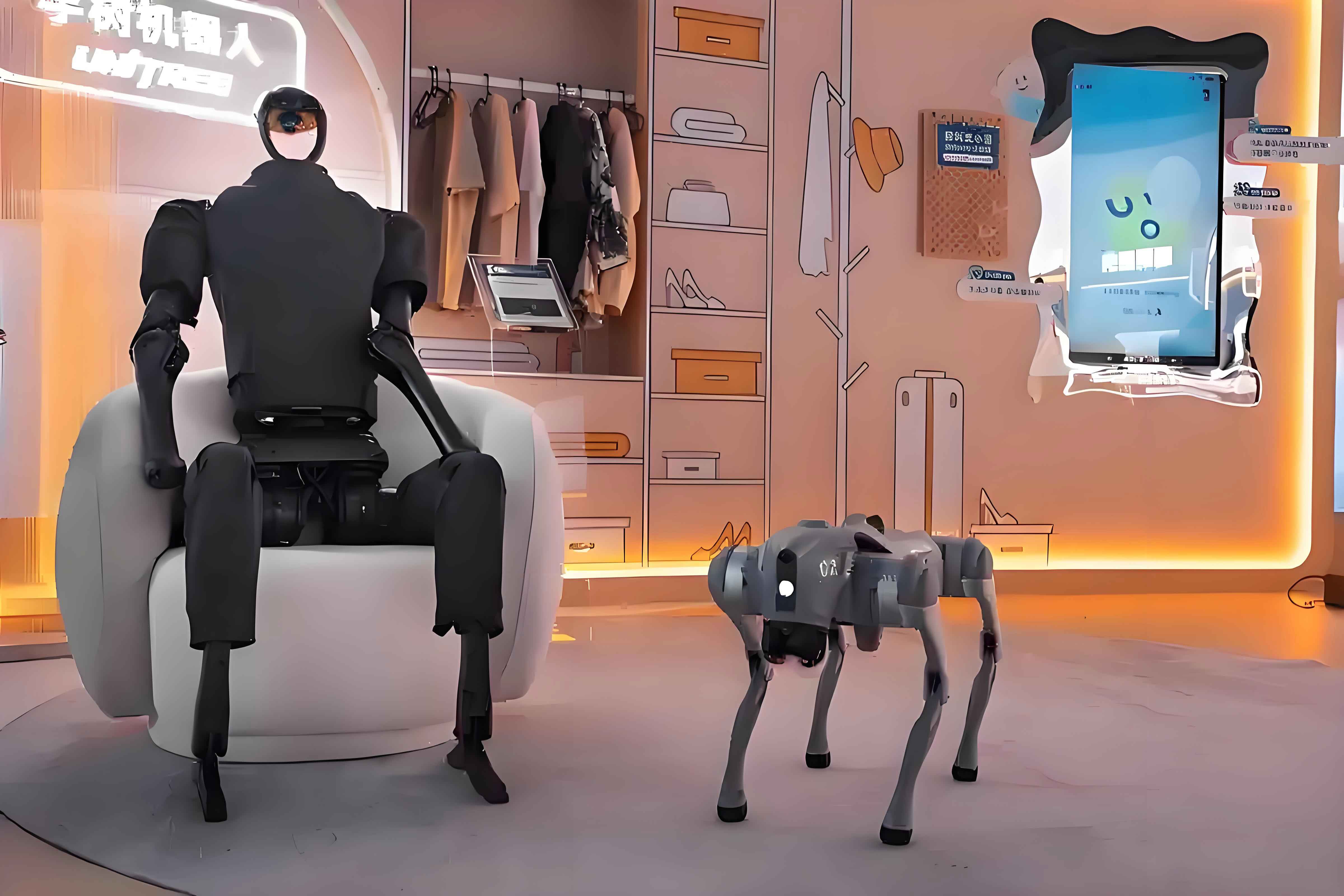
This technological ferment is unlocking tangible applications that were speculative just a few years ago. I see pilot projects materializing across sectors. In industrial logistics, humanoid robots are being trialed for last-yard parts delivery and assembly line support. In commercial settings, we see early deployments for inventory scanning, customer greeting, and even complex tasks like pharmacy order fulfillment, where a humanoid robot navigates a store, picks items, and prepares them for handoff. The common thread is a focus on “task generalizability” and “scene generalizability”—the core promise of a humanoid robot platform.
Mapping the Future: Scenarios, Challenges, and Ecosystem Growth
The introduction of the intelligence grading standard acts as a catalyst, providing a roadmap for development and a common framework for regulators, investors, and end-users. It allows us to map the required intelligence level to specific application scenarios with greater precision.
| Application Domain | Key Tasks | Required Intelligence Dimension Focus | Target Level for Viability | Current Status |
|---|---|---|---|---|
| Industrial Manufacturing | Parts handling, machine tending, quality inspection, assembly. | Execution (E), Perception (P), Decision (D) for structured tasks. | Solid L3, progressing to L4 | Initial pilot contracts signed; focus on dull, dirty, or dangerous (3D) tasks. |
| Logistics & Warehousing | Unloading, sorting, palletizing, moving non-standard packages. | Perception (P) for varied objects, Execution (E) in cramped spaces. | L3 to L4 | Advanced R&D and early-stage testing in controlled warehouses. |
| Commercial Services | Retail assistance, inventory management, food/beverage service, hotel concierge. | Collaboration (C), Perception (P) in public spaces, Decision (D) for service flows. | L3 (basic) to L4 (advanced) | Proof-of-concept demonstrations; niche deployments in “smart” stores. |
| Healthcare & Elderly Support | Monitoring, fetching objects, providing physical support, companionship. | Collaboration (C) with extreme safety, Perception (P) for health cues, gentle Execution (E). | L4 to L5 | Long-term research horizon. Significant safety and ethical hurdles remain. |
| Education & Research | Platform for AI/robotics research, STEM education tool. | All dimensions, depending on research focus. | L2 to L5 (as a platform) | Widely used in academia and corporate R&D labs. |
However, the path to widespread adoption is paved with interconnected challenges that must be solved in concert. The most frequently cited triad is:
- Cost Reduction & Industrialization: Moving from hand-built prototypes to mass-manufacturable, reliable products. This involves deep supply chain localization and design for manufacturability.
- Core Technology Stack Sovereignty: Ensuring key components—from high-torque density actuators and force-torque sensors to the AI chips and foundational models—are domestically viable and not subject to external constraints.
- True Generalization vs. Scenario Optimization: Striking the balance between developing a truly general-purpose humanoid robot and creating optimized versions for high-value, specific verticals that can generate revenue in the near term.
The role of policy in nurturing this ecosystem cannot be overstated. Major industrial regions have recognized humanoid robots and embodied AI as a strategic frontier. Ambitious multi-year action plans have been unveiled, targeting breakthroughs in hundreds of key technologies, the cultivation of dozens of core enterprises, and the deployment of thousands of units across educational, industrial, and service scenarios. The goal is clear: to foster a complete, competitive, and innovative industrial cluster. This top-level design, combined with the new technical standard, creates a powerful synergy for growth.
Conclusion: Beyond “Demo Intelligence” Towards Measurable Value
Looking ahead, the implementation of the intelligence grading standard is more than an academic exercise. It is the key to unlocking the next phase of the humanoid robot revolution. It pushes the entire industry beyond “demonstration intelligence”—impressive but fragile capabilities shown in controlled settings—and towards building robust, reliable, and economically valuable “general intelligence,” one graded level at a time.
The standard provides the essential technical vocabulary and transparent benchmarking tools. This will inevitably guide R&D investment, inform regulatory frameworks, and build trust with potential adopters. As the performance $P$ of these machines at a given intelligence level $L$ improves and their cost $C$ decreases, the adoption curve $A(t)$ will accelerate. We can model this adoption growth as being driven by the improvement in the performance-to-cost ratio over time:
$$ A(t) \propto \int_{0}^{t} \frac{P(L, \tau)}{C(\tau)} \, d\tau $$
where $P(L, \tau)$ represents the performance achievable at a target intelligence level $L$ at time $\tau$, and $C(\tau)$ represents the unit cost.
The journey from mechanical fantasy to a foundational technology for the physical world is underway. With a shared map for intelligence now in hand, the race is no longer just about who can build the most impressive single demo, but about who can most efficiently and reliably scale graded intelligence to solve real problems. The era of the intelligently graded humanoid robot has truly begun, and its impact across industries and societies will be measured by the clarity this new standard provides.