
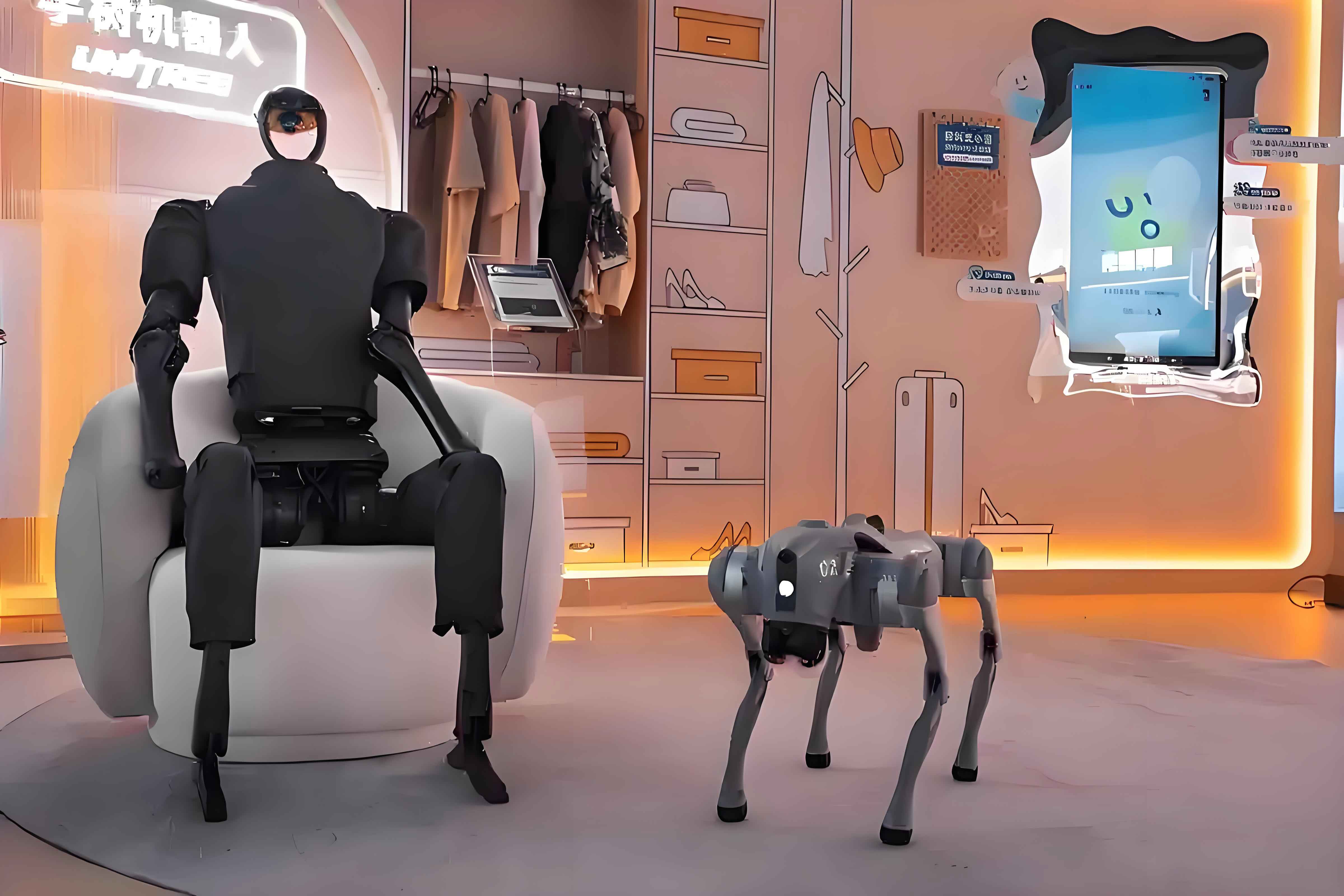
The 2025 World Robot Conference (WRC), which concluded on August 12 after a five-day run, showcased a vibrant exhibition with 50,000 square meters of space filled with enthusiastic attendees. A recurring question from visitors to exhibitors centered on the practical applications of humanoid robots, reflecting the industry’s focus on real-world usability. Dubbed the “Year of Commercialization for Humanoid Robots,” 2025 marks a pivotal moment where humanoid robots are transitioning into the “scenario validation and cost criticality” phase, as highlighted by numerous announcements at the event. The excitement at WRC was palpable, with demonstrations of humanoid robots performing tasks from assembly to customer service, drawing crowds and sparking discussions about their potential to revolutionize various sectors. This year’s event highlighted that humanoid robots are no longer confined to research labs but are making tangible strides into commercial environments.
-
Commercialization Progress: A Wave of Orders and Partnerships
During the WRC, at least ten humanoid robot companies publicly shared updates on their commercialization efforts, according to incomplete statistics from China Business News. The companies include Ubtech, Xingdong Jiyuan, Yushu Technology, Zhipingfang, Yuejiang Technology, Songyan Power, Yinhe Tongyong, Leju Robot, Zhiyuan Robot, and Qiongche Intelligent. In terms of industry promotion, the WRC committee reported the sale of 19,000 robots and related products, with total sales exceeding 200 million yuan, underscoring the growing market interest. These humanoid robot companies are driving innovation and adoption across multiple sectors, with a focus on practical deployment.
To provide a clearer overview, here is a summary of key commercialization milestones disclosed by select humanoid robot companies:
Company Commercialization Progress Yinhe Tongyong Signed contracts for “Smart Pharmacy” projects with hundreds of pharmacies in Beijing and Shanghai; plans to deploy 100 smart pharmacies by year-end to facilitate consumer drug purchases, especially during night emergencies. Songyan Power Mass-produced and delivered 105 humanoid robots in July; as of June, total orders surpassed 2,500 units with contract value over 100 million yuan. Zhiyuan Robot Secured a project worth tens of millions of yuan with Fuling Jinggong; nearly 100 Expedition A2-W humanoid robots to be deployed in the factory. Leju Robot Applied in education companionship, empty box handling at FAW assembly lines, and logistics transport for Seres. Ubtech Awarded a robot equipment procurement project from MiYi (Shanghai) Automotive valued at approximately 90.51 million yuan. Zhiyuan Robot and Yushu Technology Jointly awarded a 124 million yuan humanoid robot OEM service procurement project by China Mobile. These advancements are not isolated; they reflect a broader trend of humanoid robots gaining traction in practical applications. For instance, the Smart Pharmacy project by Yinhe Tongyong addresses a genuine market need for 24/7 pharmacy access, while the industrial deployments by companies like Zhiyuan Robot and Leju Robot demonstrate the versatility of humanoid robots in automating complex tasks. The humanoid robot industry is witnessing a surge in orders, indicating robust demand and confidence in the technology’s potential.
-
Scenario Validation: Demonstrating Practical Utility in Real-World Settings
The validation of humanoid robots in actual scenarios is crucial for commercialization. Industrial flexible manufacturing, education, and commercial services have emerged as primary domains where humanoid robots are proving their value. The “Top Ten Potential Application Scenarios for Humanoid Robots” report, released during WRC, emphasizes industrial operations as the foremost potential area. In manufacturing and logistics, humanoid robots can integrate with automated systems to perform tasks such as material handling, loading and unloading, and warehouse navigation, thereby improving operational efficiency and flexibility. This humanoid robot capability is essential for scaling in diverse environments.
Industry leaders shared their perspectives on scenario validation. Leng Xiaokun, Chairman of Leju Robot, stated, “Prior to the anticipated boom in household services, the transitional phase will likely occur in industrial scenarios.” Lu Cewu, Co-founder of Qiongche Intelligent, emphasized the importance of productivity-focused applications, noting that their embodied AI models are already deployed in food processing scenarios, enabling humanoid robots to perform labor-intensive tasks effectively. This focus on real-world productivity underscores the evolving role of humanoid robots in addressing workforce challenges.
Zeng Guang, CEO of Zhongke Yungu (a Zoomlion subsidiary), provided insights into their extensive use of robotics, having developed over 300 smart manufacturing lines equipped with more than 2,000 industrial robots. Additionally, they have experimentally deployed dozens of self-developed humanoid robots in their workshops, exploring their potential in complex environments. This integration highlights how humanoid robots can complement existing automation systems, offering adaptability in dynamic settings.
Chen Jianyu, Founder and CEO of Xingdong Jiyuan, expressed optimism about the efficiency of humanoid robots in industrial settings. He projected that robot efficiency would reach 70% of human labor by the end of 2025 and improve to 90% by 2026, viewing business-to-business (B2B) scenarios as a critical stepping stone toward widespread household adoption. This progression in humanoid robot performance is key to achieving commercial viability and broader acceptance.
Beyond industrial settings, humanoid robots are also being tested in educational contexts. For example, some exhibits at WRC featured humanoid robots assisting in classrooms or providing interactive learning experiences, indicating their potential to enhance pedagogy and student engagement. Such applications demonstrate the versatility of humanoid robots beyond traditional industrial uses, paving the way for future expansions.
On the policy front, Wang Lei, Director of the Beijing Economic-Technological Development Area Management Committee, announced the Embodied Intelligence Social Experiment Plan for Beijing Yizhuang. This initiative will release demand for up to 10,000 embodied robots over the next two years, with an estimated value of nearly 5 billion yuan. Application scenarios span high-end manufacturing, education, medical care, and municipal management, with over 1,000 robots already in demonstration use across factories, schools, hospitals, and parks. This government support accelerates the scenario validation of humanoid robots, fostering innovation and adoption.
-
Cost Criticality: Achieving Affordability for Mass Adoption
Cost reduction is a key enabler for the large-scale adoption of humanoid robots. Significant price drops were highlighted at WRC, with several companies offering humanoid robots below the 50,000 yuan threshold. Last year, Yushu Technology made headlines with its G1 humanoid robot priced at 99,000 yuan, but recent developments have pushed prices even lower, making humanoid robots more accessible to a wider range of users.
Yushu Technology’s Founder and CEO, Wang Xingxing, detailed the price evolution in his WRC presentation. The company’s initial H1 humanoid robot was priced at 650,000 yuan per unit. In 2024, the G1 model reduced the price to 99,000 yuan, and the newly launched R1 lightweight version is now available for just 39,900 yuan. This progressive price reduction aligns with their vision of making humanoid robots accessible for everyday use. Wang Xingxing emphasized that affordability is critical for the humanoid robot industry to achieve widespread deployment and impact.
Wang Xingxing also addressed technological challenges, stating that current embodied AI is not yet mature enough for large-scale deployment. He drew a parallel to the pre-ChatGPT era, suggesting that a breakthrough similar to ChatGPT is needed for humanoid robots. “The critical point for robot AI will be when a humanoid robot can understand and execute a novel instruction in an unfamiliar environment, such as handing a water bottle to a specific person at a conference without prior training. That will be the ChatGPT moment for humanoid robots,” he explained. This AI advancement is essential for unlocking the full potential of humanoid robots in complex, unstructured settings.
Other companies are also competing in the low-cost segment. Songyan Power and Zhongqing Robot have introduced humanoid robots priced below 50,000 yuan. Zhongqing Robot’s Founder and Chairman, Zhao Tongyang, highlighted the dramatic cost reduction over the past five years, from 3-5 million yuan per unit to around 50,000 yuan today—a hundredfold decrease. He elaborated on the economic feasibility from a lifespan perspective: for household adoption, humanoid robots need a lifespan of 10-15 years to justify costs. Assuming an annual cost of 10,000 yuan (about 1,000 yuan per month), it becomes economically viable compared to the challenge of finding human labor at such low wages in China. This cost-benefit analysis underscores the growing appeal of humanoid robots as a sustainable solution in various sectors.
The race to lower costs is intensifying competition among humanoid robot manufacturers. Companies are leveraging advancements in materials, sensors, and AI to drive down prices without compromising functionality. This trend is expected to continue, making humanoid robots more accessible to small and medium-sized enterprises and eventually consumers. As prices fall, the humanoid robot market is poised for exponential growth, with potential applications expanding into everyday life.
-
Industry Insights and Future Prospects
Expert opinions at WRC provided a balanced view of the humanoid robot industry’s current state and future trajectory. Jiang Lei, Chief Scientist at the National-Local Co-construction Humanoid Robot Innovation Center, noted that many players are already profitable, dismissing skepticism about the industry. However, he cautioned that the recent order surge does not equate to true large-scale adoption, as humanoid robots still need to prove their commercial value in practical scenarios. He emphasized that the humanoid robot sector must focus on delivering tangible benefits to overcome initial hype and achieve sustainable growth.
Xiong Youjun, General Manager of the National-Local Co-construction Embodied Intelligence Innovation Center, reported that humanoid robot shipments in the first half of 2025 have already surpassed the total for 2024, indicating rapid growth. He attributed this to advancements in core components and industry chain collaboration, which have driven down costs. Looking ahead, he foresees significant demand in household, elderly care, and companionship scenarios, which will further propel the humanoid robot industry. This expansion into personal and service-oriented fields highlights the evolving role of humanoid robots in addressing societal needs.
Despite the progress, challenges remain. Jiang Lei emphasized that humanoid robots must overcome hurdles related to reliability, safety, and AI maturity to achieve true scalability. However, the overall sentiment at WRC was optimistic, with many stakeholders believing that the industry is on the cusp of a breakthrough. The convergence of scenario validation and cost reduction is bringing the commercialization of humanoid robots closer to a tipping point. As companies continue to innovate and deploy humanoid robots in diverse settings, the technology is poised to transform industries and eventually enter daily life, with applications in domestic chores, elderly assistance, and social interaction gaining traction.
The future of humanoid robots looks promising, with ongoing research and development focused on enhancing AI capabilities and expanding application scenarios. As these developments unfold, humanoid robots are set to play an increasingly integral role in shaping the future of work and life, offering solutions to labor shortages and improving quality of life across the globe.
In conclusion, the 2025 World Robot Conference underscored that the humanoid robot industry is at the dawn of commercialization. With over ten companies reporting substantive progress, scenario validation accelerating in industrial and service domains, and costs falling to unprecedented levels, humanoid robots are transitioning from novelty to necessity. The path ahead involves refining AI capabilities, expanding application scenarios, and achieving economies of scale, but the momentum is undeniable. As these developments unfold, humanoid robots are set to play an increasingly integral role in shaping the future of work and life, driven by innovation and growing market acceptance.