
As an observer deeply embedded in the analysis of technological and industrial trends, I perceive 2024 as a pivotal inflection point for the development of intelligent systems. The convergence of foundational large language models and the conceptual leap towards embodied AI has catapulted humanoid robot development into an unprecedented spotlight. The market atmosphere is intensely charged, reminiscent of a crucible forging new realities, attracting a surge of new entrants. This is not mere hype; it is capital voting with conviction. In the first half of 2024 alone, the global humanoid robot sector witnessed 22 financing rounds, amassing a total exceeding 7 billion USD. The Chinese market demonstrated particularly vigorous activity, accounting for 13 of these rounds with a total funding surpassing 3.5 billion USD. This financial momentum underscores a collective belief in the transformative potential of this technology.
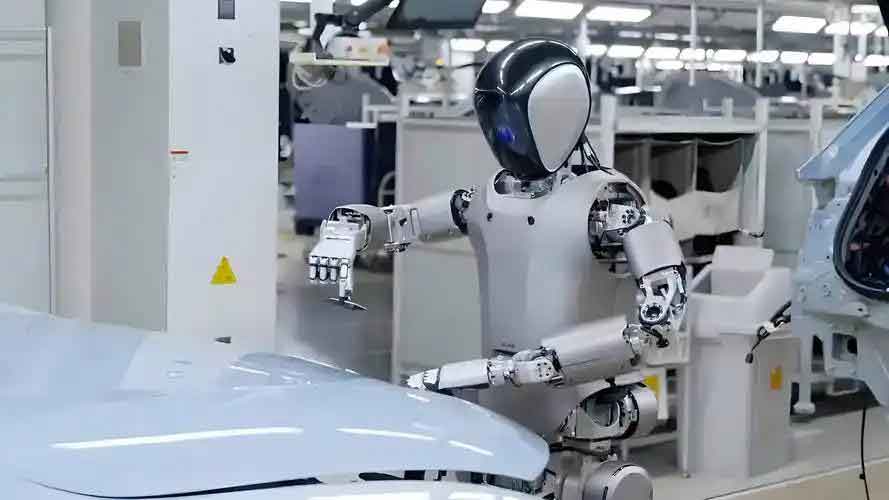
The data from this financing surge can be summarized to highlight the geographical and financial intensity of the field:
| Region | Financing Rounds (H1 2024) | Total Funding (Approx. USD) | Key Driver |
|---|---|---|---|
| Global | 22 | >7 Billion | AI Convergence & Market Speculation |
| China | 13 | >3.5 Billion | Policy Support & Industrial Ambition |
Simultaneously, a powerful wave of policy-driven infrastructure is taking shape. Since April 2024, a series of provincial and municipal-level innovation centers dedicated to humanoid robot and embodied intelligence have been inaugurated across major Chinese economic hubs. This is far more than ceremonial; it represents the formal “starting whistle” for a coordinated, regionally competitive industrial race. These centers, conceptualized as engines for strategic technological breakthroughs, aim to tackle key common technologies, pioneer frontier research, and crucially, foster the incubation and acceleration of new industries. The establishment of such centers for humanoid robot technology signals its official ascension to the status of a national strategic priority, following in the footsteps of semiconductors and advanced batteries.
The “Second Jewel”: Economic Logic of the Humanoid Platform
The fervent interest from regional governments is not baseless enthusiasm. It is rooted in the profound economic logic embodied by the humanoid robot. Unlike purely digital innovations in software or AI, a humanoid robot is a complex fusion of mechanics, electronics, semiconductors, and advanced software. In this tangible nature, I see a direct parallel to the automobile or the smartphone. Its critical importance lies in its character as a physical industry with extensive technological reach and intricate manufacturing processes. Such an industry does not merely create substantial industrial output; it acts as a powerful gravitational core, pulling up entire regional ecosystems of suppliers, creating skilled employment, and catalyzing widespread industrial upgrading.
Consider the automobile industry, often termed the “jewel in the crown of industry.” A single vehicle integrates tens of thousands of components, involving thousands of upstream and downstream suppliers. Its economic footprint is colossal. The humanoid robot, similarly composed of subsystems like battery packs, robotic arms, linear actuators, and sensor suites, also involves thousands of precision components. Therefore, from both a technological complexity and industrial value-add perspective, the humanoid robot possesses the inherent potential to rival the automotive sector, poised to become the “second jewel” on the industrial crown. This potential is the fundamental driver behind the strategic push. The value generation of such a platform industry can be modeled as a multiplicative function:
$$ E_{id} = \alpha \cdot S \cdot \beta \cdot L $$
Where:
- $E_{id}$ = Induced Economic Development
- $\alpha$ = Core Industrial Output Multiplier
- $S$ = Supply Chain Breadth (Number of linked sectors)
- $\beta$ = Labor Skill & Employment Coefficient
- $L$ = Localization Factor of the Value Chain
For a humanoid robot, both $S$ and $\alpha$ are projected to be exceptionally high, similar to the automotive industry, justifying the massive public and private investment.
Innovation Centers: The High Ground in a Nascent Race
In this early, pre-commercialization phase, these newly established innovation centers are not just R&D labs; they are strategically positioned “high ground.” Their mission is to aggregate talent, capital, and corporate resources to accelerate technological iteration. A fascinating and disruptive model emerging from some centers is the commitment to open-source their evolving platform technologies. This approach aims to standardize foundational architectures, lower barriers to entry for application developers, and foster a vibrant ecosystem—a playbook reminiscent of successful software platforms. The progress from key centers in 2024, though often anonymizing specific entities, highlights this competitive dynamism:
| Center Focus (Representative) | Key 2024 Output / Announcement | Strategic Implication |
|---|---|---|
| National-Level Pioneer | Release of a full-size, electricity-driven humanoid robot capable of stable running at 6 km/h. | Demonstrating advanced mobility and dynamic control capabilities. |
| Regional Hub (Coastal Megacity) | Launch and open-sourcing of a full-size general-purpose humanoid robot “blueprint,” with a pledge for annual version updates. | Attempting to set de facto hardware/software standards and lead ecosystem building. |
| Inland Tech Hub | Introduction of a vision-diffusion based task-generation model for humanoid robots. | Focusing on the critical AI “brain” and task planning layer. |
| Eastern Manufacturing Province | Release of a first-generation, fully self-developed humanoid robot platform. | Asserting indigenous innovation and integration capabilities. |
The competition exemplified in this table is not merely about building a single robot; it is about defining the future stack—the operating systems, the middleware, the component interfaces—upon which the entire industry will be built. Winning this early phase grants immense influence.
Why the Yangtze and Pearl River Deltas? The Bedrock of Supply Chains
However, launching an innovation center is one thing; cultivating a thriving, sustainable humanoid robot industry is another. The eventual leaders in this race will be determined by the same fundamental factors that shaped automotive and electronics hubs: industrial bedrock, supply chain density, and proximity to early-adopter markets. A geographical analysis reveals a stark concentration. Leading humanoid robot startups are overwhelmingly clustered in a handful of cities within China’s Yangtze River Delta (YRD) and Pearl River Delta (PRD). The primary reason is not preferential policy alone, but the unparalleled supply chain ecosystems present there.
Data on robotics-related enterprises shows mega-cities like Shenzhen, Shanghai, Guangzhou, and Suhou hosting tens of thousands of such companies. This concentration is historical and self-reinforcing. The YRD, a traditional powerhouse of automotive manufacturing, has decisively pivoted to lead in new energy vehicles (NEVs). It has built a complete, world-class ecosystem encompassing整车制造, battery production, motors, and electronic controls. In 2023, the region produced over a third of China’s NEVs. This is critically relevant because, as visionaries have pointed out, technologies from EVs—especially in batteries, motors, and power electronics—are directly transferable to humanoid robot platforms. The supply chain synergy is profound and reduces development friction immensely.
The PRD boasts a similar advantage in automotive but couples it with perhaps an even more relevant heritage: the world’s most robust consumer electronics manufacturing cluster. Centered on Shenzhen and extending through Dongguan and Huizhou, this “electronics corridor” offers immediate access to advanced, miniaturized sensors, high-density actuators, precision gears, casting, and assembly expertise—all vital for a dexterous, power-efficient humanoid robot. The convergence can be expressed as a technological fusion probability:
$$ P(T_{HR}) = \int_{S_{EV}} \int_{S_{CE}} \kappa(T_i, T_j) \, dT_i \, dT_j $$
Where $S_{EV}$ and $S_{CE}$ represent the technology sets from Electric Vehicles and Consumer Electronics, and $\kappa$ is a compatibility kernel function. Regions where these two sets overlap extensively have a much higher probability $P$ of efficiently generating viable humanoid robot technologies $T_{HR}$.
Furthermore, these established industries are not just suppliers; they are the most likely initial deployment scenarios for humanoid robots. Automotive assembly lines, electronics manufacturing floors, and logistics warehouses present structured, high-value environments where early-generation humanoid robots can prove their utility. This creates a powerful “flywheel”: a strong supply chain enables robot development, which then finds early use in the very industries that constitute that supply chain, generating data, revenue, and iterative feedback. The comparative advantage of these regions is clear:
| Region | Core Industrial Foundation | Relevance to Humanoid Robots | Primary Early-Adopter Scenario |
|---|---|---|---|
| Yangtze River Delta (Shanghai, Hangzhou, Ningbo, Suhou) | New Energy Vehicle & Traditional Automotive Hub | High: Powertrains (motors, batteries), structural components, systems integration. | Automotive Manufacturing, Logistics |
| Pearl River Delta (Shenzhen, Guangzhou, Dongguan) | Consumer Electronics & EV Manufacturing | Very High: Precision actuators, sensors, compact power systems, agile manufacturing. | 3C Electronics Assembly, Logistics, Light Manufacturing |
| Other Major Metropolises | Strong in AI Software, Research Institutions | Medium-High: “Brain” development (AI, perception, control algorithms). | Research, Services, Specialized Applications |
Policy Winds and Market Currents: A Converging Force
This regional competition unfolds against a backdrop of sustained and escalating national policy support. The strategic importance of robotics has been underscored in successive national five-year plans. The pivotal shift occurred as AI capabilities matured. Starting in 2023, humanoid robots transitioned from a broader robotics category to a distinctly named, prioritized future industry. Key national directives laid out clear roadmaps: establishing innovation systems by 2025, achieving world-leading整机水平, and reaching comprehensive world-class industry strength by 2027. These documents serve as both a blueprint and a starting gun.
Provinces and cities have rapidly responded with localized action plans, competing to offer the most attractive innovation ecosystems, talent policies, and application demonstration zones. The flurry of innovation center establishments in 2024 is the most tangible manifestation of this policy-driven race. The synergy between top-down policy direction and bottom-up market investment is creating a powerful accelerant. Policy de-risks early-stage investment and coordinates infrastructure, while market capital seeks the most efficient and promising technological paths. This dual-engine thrust significantly compresses the timeline from fundamental research to industrial prototyping and pilot applications.
The market growth trajectory, often cited by industry leaders, can be modeled with a modified logistic function (S-curve), accounting for technological readiness and cost reduction:
$$ M(t) = \frac{K}{1 + e^{-r \cdot (t – t_0)}} \cdot \frac{1}{1 + \eta \cdot C(t)} $$
Where:
- $M(t)$ = Market size at time $t$
- $K$ = Carrying capacity or long-term saturation potential (e.g., 150B+ USD)
- $r$ = Intrinsic growth rate (accelerated by policy & investment)
- $t_0$ = Time of the inflection point (~2024)
- $\eta$ = Cost sensitivity parameter
- $C(t)$ = Unit cost of a humanoid robot, expected to decay exponentially: $C(t) = C_0 \cdot e^{-\lambda t}$
The current environment of fierce competition among regions and companies directly attacks the $\lambda$ parameter in the cost function, driving costs down faster through supply chain optimization and manufacturing learning curves, thereby pulling the market adoption curve $M(t)$ forward in time.
In my assessment, we are witnessing the foundational phase of what will become a pillar industry of the 21st century. The race for the “preeminent humanoid robot hub” is multifaceted—encompassing hardware innovation, AI brainpower, supply chain mastery, and strategic policy foresight. The Yangtze and Pearl River Deltas, with their deep industrial legacies, currently hold a significant advantage. However, the ultimate landscape will be shaped by who can most effectively integrate these elements, foster an open yet competitive ecosystem, and navigate the arduous path from captivating laboratory prototypes to reliable, economically viable partners in our workplaces and daily lives. The starting whistle has sounded, and the marathon is underway.