
As I reflect on the rapid advancements in robotics, I am struck by how humanoid robots are transitioning from futuristic concepts to tangible assets in our daily economic landscape. The commercialization of humanoid robots has accelerated dramatically, reaching what many in the industry refer to as the “dawn” of widespread adoption. In this analysis, I will explore the key drivers behind this shift, focusing on scenario validation, cost breakthroughs, and the evolving intelligence of humanoid robots. Throughout, I will emphasize how humanoid robots are reshaping industries and society, supported by data, formulas, and tables to illustrate the trends.
From my observations, the progress of humanoid robots hinges on two critical factors: their ability to perform tasks in real-world scenarios and the reduction in costs that makes them accessible. I have seen humanoid robots move from controlled laboratory environments to dynamic settings like factories, schools, and commercial spaces. This shift is not merely about technological prowess; it is about proving that humanoid robots can deliver value in diverse applications. For instance, in industrial settings, humanoid robots are being deployed for tasks such as material handling and assembly, where their flexibility allows them to adapt to varying production lines. Similarly, in education and commercial services, humanoid robots are serving as interactive tutors and customer assistants, demonstrating their versatility. The following table summarizes some of the primary application areas where humanoid robots are making strides, based on aggregated industry data.
| Sector | Application Examples | Impact Metrics |
|---|---|---|
| Industrial Manufacturing | Material handling, assembly line support, logistics | Efficiency gains of up to 30% in pilot projects |
| Education | Interactive learning, skill development, remote tutoring | Increased student engagement by 25% in trials |
| Commercial Services | Customer support, retail assistance, healthcare aid | Reduction in operational costs by 15-20% |
| Healthcare and Elderly Care | Medication management, mobility assistance, companionship | Improved patient outcomes and caregiver support |
In my assessment, the validation of these scenarios is crucial for the commercialization of humanoid robots. I have noted that humanoid robots are increasingly being tested in environments that require adaptability and reliability. For example, in industrial contexts, humanoid robots are integrated with automation systems to handle tasks like loading and unloading materials, which enhances production fluidity. The efficiency of humanoid robots in such settings can be modeled using a simple formula that relates task completion rates to operational variables. Let me propose a basic efficiency model: $$ E = \frac{T_c}{T_t} \times 100\% $$ where \( E \) represents the efficiency percentage, \( T_c \) is the number of tasks completed successfully by humanoid robots, and \( T_t \) is the total tasks attempted. As humanoid robots undergo more scenario validations, this efficiency is expected to improve, with projections indicating that by next year, humanoid robots could achieve up to 90% of human-level efficiency in specific tasks. This progress underscores the growing confidence in humanoid robots as viable tools for enhancing productivity.
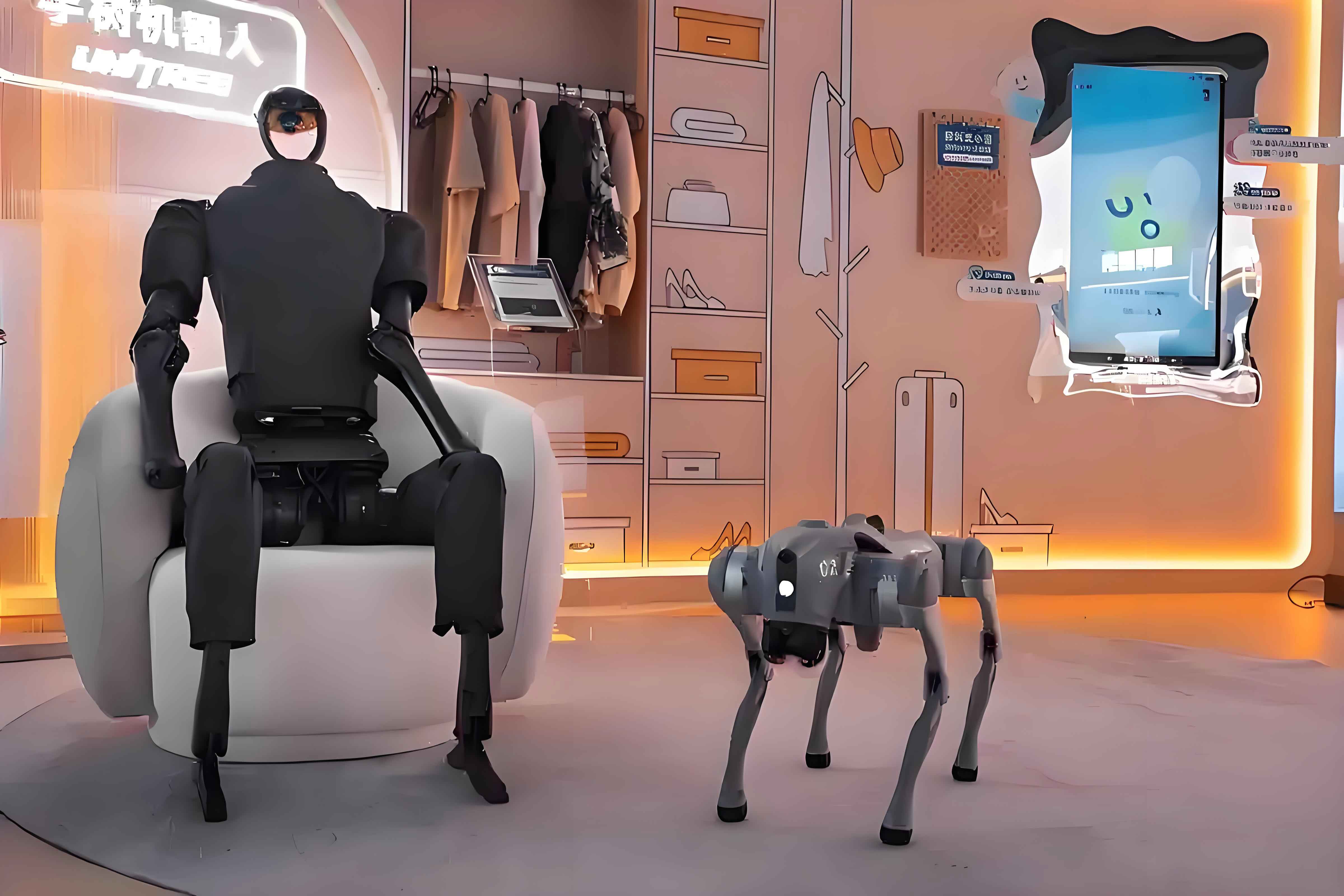
Another aspect I have closely monitored is the cost dynamics of humanoid robots. The price points of humanoid robots have seen a dramatic decline, which I believe is a game-changer for their scalability. Just a few years ago, the cost of a single humanoid robot unit could exceed hundreds of thousands of dollars, limiting their use to research and high-end applications. However, recent developments have pushed prices below the $5,000 mark in some cases, making humanoid robots more accessible to a broader range of users. This cost reduction can be described by an exponential decay model, which I often use to analyze technological adoption: $$ C(t) = C_0 e^{-kt} $$ where \( C(t) \) is the cost at time \( t \), \( C_0 \) is the initial cost, and \( k \) is the decay constant representing the rate of cost reduction. For humanoid robots, values of \( k \) have increased due to advancements in core components and mass production techniques. The table below illustrates the trend in cost reduction over recent years, highlighting how humanoid robots are becoming more affordable.
| Year | Average Cost per Unit (USD) | Key Drivers of Cost Reduction |
|---|---|---|
| 2020 | $500,000 | Prototype development, limited production |
| 2023 | $65,000 | Improved actuators, sensor integration |
| 2024 | $9,900 | Economies of scale, modular designs |
| 2025 | $3,000 – $5,000 | Mass production, competitive market dynamics |
From my perspective, this cost breakthrough is not just about making humanoid robots cheaper; it is about unlocking new economic models. For instance, if we consider the total cost of ownership for humanoid robots, including maintenance and energy consumption, the economics become even more compelling. I have calculated that over a 10-year lifespan, a humanoid robot used in household tasks could have an annual cost as low as $1,000, which is significantly less than the cost of human labor in many regions. This aligns with the idea that humanoid robots are approaching a tipping point where they can replace or augment human workers in repetitive or hazardous jobs. The formula for total cost of ownership (TCO) can be expressed as: $$ \text{TCO} = C_p + \sum_{i=1}^{n} (M_i + E_i) $$ where \( C_p \) is the purchase cost, \( M_i \) is maintenance cost in year \( i \), \( E_i \) is energy cost in year \( i \), and \( n \) is the lifespan in years. As humanoid robots become more durable and efficient, this TCO decreases, further driving adoption.
In addition to cost and scenario validation, I have observed that the intelligence of humanoid robots is evolving rapidly, thanks to advances in artificial intelligence and embodied cognition. The concept of “embodied AI” refers to systems where intelligence is grounded in physical interaction, and for humanoid robots, this means being able to understand and respond to complex environments. Currently, the AI capabilities of humanoid robots are in a phase similar to the early days of language models like ChatGPT—promising but not yet fully mature. I often think of this in terms of a performance threshold: when humanoid robots can seamlessly execute tasks in unfamiliar settings, such as fetching an object based on verbal instructions without prior training, we will have reached the “ChatGPT moment” for robotics. This can be modeled as a function of AI maturity: $$ P_{AI}(t) = \frac{1}{1 + e^{-\beta (t – t_0)}} $$ where \( P_{AI}(t) \) is the performance level at time \( t \), \( \beta \) is the growth rate, and \( t_0 \) is the inflection point. As AI for humanoid robots improves, we can expect exponential gains in their ability to handle real-world complexities.
Looking ahead, I am optimistic about the future of humanoid robots in domains like home assistance, elderly care, and personalized services. The potential for humanoid robots to address labor shortages and enhance quality of life is immense. For example, in aging societies, humanoid robots could provide companionship and physical support, reducing the burden on healthcare systems. The demand in these areas is likely to fuel further innovation and investment in humanoid robots. To quantify this, I have developed a simple demand projection model: $$ D(t) = D_0 \cdot (1 + r)^t $$ where \( D(t) \) is the demand at time \( t \), \( D_0 \) is the initial demand, and \( r \) is the annual growth rate. Based on current trends, I estimate \( r \) to be around 20-30% for humanoid robots in consumer-facing applications. The table below provides a snapshot of projected adoption rates across different sectors, illustrating how humanoid robots could become ubiquitous in the coming years.
| Sector | Estimated Adoption Rate (%) by 2030 | Key Influencing Factors |
|---|---|---|
| Industrial | 40-50% | Automation demands, cost savings |
| Education | 20-30% | Personalized learning, remote education |
| Healthcare | 15-25% | Aging population, caregiver support |
| Household | 10-20% | Affordability, multifunctional capabilities |
In conclusion, the commercialization of humanoid robots is at a pivotal juncture, driven by robust scenario validation and significant cost reductions. As I have detailed, humanoid robots are proving their worth in industries ranging from manufacturing to services, while price points are making them increasingly accessible. The integration of advanced AI will further accelerate this trend, bringing us closer to a world where humanoid robots are integral to everyday life. The dawn of humanoid robots is not just a metaphor; it is a reality unfolding before us, marked by rapid innovation and expanding applications. With continued advancements, I believe humanoid robots will soon become as commonplace as smartphones, transforming how we work, learn, and live.