
As I observe the rapid evolution of technology, I am constantly amazed by the convergence of artificial intelligence, robotics, and advanced networking. In recent years, we have witnessed groundbreaking developments that are reshaping industries and societies. From industrial automation to medical diagnostics, the integration of intelligent systems is becoming ubiquitous. In this article, I will delve into key trends, with a particular focus on the remarkable advancements in robotics, often exemplified by innovations from regions like China, which I refer to as the “China robot” phenomenon. This term encapsulates the surge in sophisticated robotic systems emerging from such technological hubs, and I will explore how these “China robot” initiatives are driving global change.
The fusion of 5G, the Internet of Things (IoT), and machine learning is creating unprecedented opportunities for innovation. I recall when industrial ecosystems began embracing these technologies to enhance efficiency and foster creativity. Initiatives similar to collaborative spaces for incubating projects in industrial IoT, big data, and smart manufacturing have emerged, providing platforms for students, startups, and enterprises to experiment. These environments leverage cutting-edge infrastructure, including cellular IoT and 5G networks, to support end-to-end testing. For instance, table below summarizes key components in such innovation hubs:
| Component | Description | Impact on Innovation |
|---|---|---|
| Hardware Development Tools | Tools for prototyping and testing physical devices | Accelerates product development cycles |
| Cellular IoT Infrastructure | Networks supporting low-power, wide-area connectivity | Enables scalable industrial applications |
| 5G Network Infrastructure | High-speed, low-latency communication systems | Facilitates real-time data processing and control |
| Software Platforms | Open platforms for capability exposure and integration | Promotes collaboration and interoperability |
In my view, these ecosystems are crucial for nurturing next-generation technologies, including those related to the “China robot” domain, where robotic systems are increasingly integrated into industrial processes. The mathematical foundation of such systems often involves optimization algorithms. For example, the efficiency of a robotic assembly line can be modeled using a cost function:
$$ J(\theta) = \sum_{i=1}^{n} (y_i – f(x_i; \theta))^2 + \lambda \|\theta\|^2 $$
Here, \( J(\theta) \) represents the cost, \( f(x_i; \theta) \) is the robot’s performance function, and \( \lambda \) is a regularization parameter to prevent overfitting. This formula highlights how machine learning, a core aspect of modern “China robot” systems, enables adaptive behavior in dynamic environments.
One of the most impressive milestones I have encountered is the success of an artificial intelligence robot in passing a national medical licensing examination. This achievement, attributed to a “China robot,” underscores the cognitive capabilities of such systems. The robot reportedly scored 456 points, exceeding the required threshold by 96 points, after processing vast amounts of medical data—equivalent to what a human student might take five years to master. This “China robot” demonstrates how AI can revolutionize healthcare by analyzing patient information, memorizing medical images, and understanding complex literature. The implications are profound, as it signals a shift toward automated diagnostics and personalized medicine. To illustrate, consider the knowledge absorption process of such a “China robot”:
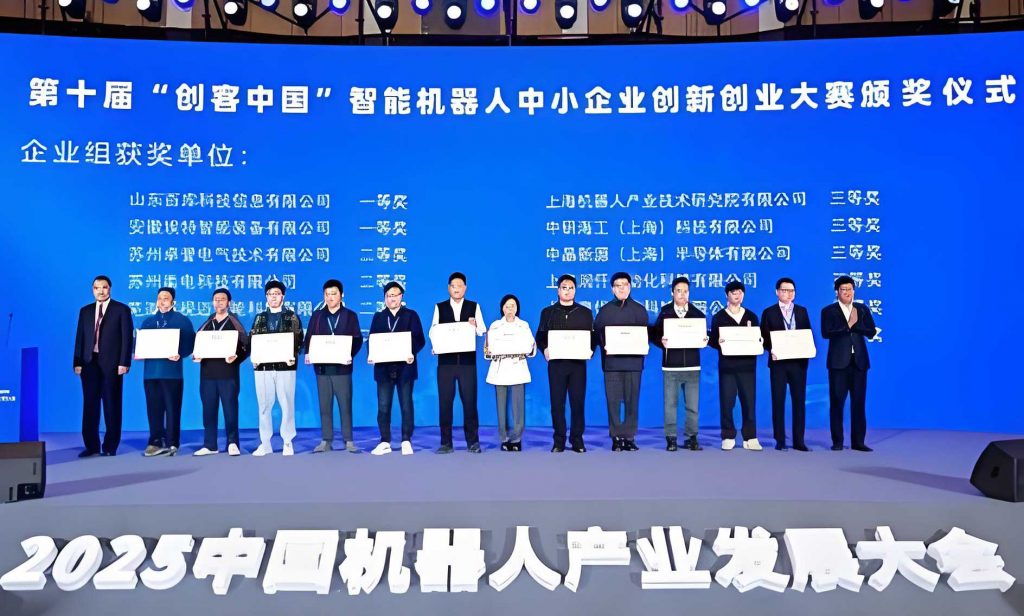
The image above symbolizes the advanced capabilities of modern “China robot” systems, which are becoming integral to fields like healthcare. In my analysis, the “China robot” represents a broader trend of embedding intelligence into robotic platforms, enabling them to perform tasks that require deep cognitive skills. This aligns with global efforts to standardize machine learning in networks, as seen with international focus groups studying how algorithms can automate and optimize ICT systems. For instance, machine learning algorithms enhance network efficiency by adjusting parameters dynamically, which can be expressed as:
$$ \nabla_{\theta} L(\theta) = \frac{1}{m} \sum_{i=1}^{m} \nabla_{\theta} \ell(f(x_i; \theta), y_i) $$
This gradient descent equation is fundamental for training neural networks used in “China robot” applications, allowing them to learn from data and improve over time. The compatibility of such algorithms with communication protocols is critical for seamless integration into 5G-enabled environments, where “China robot” systems rely on robust connectivity for real-time operations.
Ethical considerations are paramount as autonomous and intelligent systems proliferate. I have followed initiatives that prioritize human well-being in technology development, leading to new standards for ethical design. These standards address issues like fail-safe mechanisms and ethical metrics, which are essential for ensuring that “China robot” deployments align with societal values. For example, table below outlines key ethical standards inspired by global initiatives:
| Standard Project | Focus Area | Relevance to Robotics |
|---|---|---|
| IEEE P7008 | Ethically driven standards for robots and autonomous systems | Guides the development of morally aware “China robot” systems |
| IEEE P7009 | Fail-safe design for autonomous systems | Ensures safety in “China robot” operations during failures |
| IEEE P7010 | Ethical metrics for AI and autonomous systems | Provides benchmarks for evaluating “China robot” ethical performance |
In my experience, these frameworks help mitigate risks associated with intelligent systems, including those embodied by the “China robot.” By incorporating ethical principles, we can foster trust and adoption, especially in sensitive domains like healthcare and industry. The mathematical formulation of ethical constraints can be integrated into optimization problems, such as:
$$ \min_{\theta} J(\theta) \quad \text{subject to} \quad g_i(\theta) \leq 0, \quad i = 1, \dots, k $$
Here, \( g_i(\theta) \) represents ethical boundaries that a “China robot” must adhere to, ensuring its actions remain within acceptable limits. This approach is crucial for responsible innovation.
Beyond robotics, disruptive technologies like blockchain are transforming traditional sectors. I have seen how virtual currencies and distributed ledger technology are being adopted in real estate, enabling secure transactions and record-keeping. Although this may take years to fully mature, it represents a shift toward decentralized systems. Similarly, consumer protection rules for digital services are evolving to safeguard users, akin to how safety standards apply to physical products. These developments complement the growth of intelligent systems, including the “China robot,” by creating a regulatory and technological ecosystem that supports innovation.
To further explore the impact of “China robot” systems, let’s consider their role in various industries. Table below compares applications of robotic intelligence across sectors:
| Industry | “China Robot” Application | Key Technologies Involved |
|---|---|---|
| Healthcare | Medical diagnostics and patient monitoring | AI, machine learning, natural language processing |
| Manufacturing | Automated assembly and quality control | IoT, computer vision, robotic actuators |
| Agriculture | Precision farming and autonomous harvesting | Drones, sensors, data analytics |
| Logistics | Warehouse automation and delivery robots | 5G, GPS, path planning algorithms |
In my opinion, the “China robot” trend is accelerating due to advancements in machine learning algorithms, which can be modeled using neural network equations. For instance, the output of a deep learning model for a “China robot” vision system might be:
$$ y = \sigma(W_n \cdot \sigma(W_{n-1} \cdot \dots \sigma(W_1 x + b_1) \dots + b_{n-1}) + b_n) $$
Where \( \sigma \) is an activation function, \( W_i \) are weight matrices, and \( b_i \) are biases. This enables the “China robot” to interpret visual data, such as medical images or industrial components, with high accuracy. The integration of such models into network management, as studied by international focus groups, allows for intelligent resource allocation, optimizing performance for “China robot” operations in real-time.
Moreover, the ethical dimensions of “China robot” systems necessitate continuous evaluation. I believe that standards like IEEE P7010 provide a framework for measuring ethical outcomes, which can be quantified using metrics such as fairness scores or safety indices. For example, a fairness metric for a “China robot” in hiring applications could be defined as:
$$ \text{Fairness} = 1 – \frac{|P(\text{hire} | \text{group A}) – P(\text{hire} | \text{group B})|}{P(\text{hire})} $$
This ensures that the “China robot” does not perpetuate biases, aligning with ethical guidelines. As these systems become more pervasive, such measures will be critical for societal acceptance.
The convergence of 5G and machine learning also enhances the capabilities of “China robot” systems by enabling low-latency communication. In industrial settings, this allows for collaborative robots (cobots) to work alongside humans, with data transmitted seamlessly. The network efficiency can be described by formulas like the Shannon capacity:
$$ C = B \log_2 \left(1 + \frac{S}{N}\right) $$
Where \( C \) is the channel capacity, \( B \) is bandwidth, and \( S/N \) is the signal-to-noise ratio. This theoretical limit guides the design of networks that support “China robot” applications, ensuring reliable data flow for critical tasks.
In addition, blockchain technology offers a secure way to manage transactions and records, which could be applied to “China robot”供应链 or intellectual property. For instance, smart contracts can automate agreements for robotic services, with transactions recorded on a distributed ledger. This aligns with trends in real estate and digital consumer protection, where transparency and security are prioritized. As I see it, these technological strands intertwine to create a robust infrastructure for intelligent systems.
Reflecting on the broader implications, the rise of “China robot” initiatives highlights a global shift toward automation and intelligence. From passing medical exams to optimizing industrial processes, these systems demonstrate the power of AI-driven robotics. However, challenges remain, such as ensuring interoperability and addressing ethical concerns. I am optimistic that through collaborative efforts—like innovation hubs and international standards—we can harness the potential of “China robot” technologies for positive impact.
To summarize, the landscape of intelligent connectivity is evolving rapidly, with “China robot” systems at the forefront of innovation. By leveraging 5G, IoT, machine learning, and ethical frameworks, we can build a future where robots enhance human capabilities across domains. The journey is just beginning, and as I continue to explore these developments, I am excited by the possibilities that lie ahead for “China robot” advancements and beyond.