
The buzz is palpable. From captivating performances on a national stage to products selling out within hours of their online launch, the humanoid robot has decisively stepped out of research labs and into the public consciousness. This surge in visibility is not mere spectacle; it signals a pivotal moment where a long-envisioned technology appears poised for a fundamental transition. As an observer and analyst of this space, I perceive we are at the cusp of a significant shift. The chatter in industrial and investment circles is no longer centered on “if” but increasingly on “when” and “how.” The underlying data and market movements strongly suggest that the much-anticipated era of mass production for humanoid robots may be dawning upon us, yet the path is strewn with both immense opportunity and formidable challenges.
The recent frenzy finds its roots in a series of highly visible events. The image of a humanoid robot performing a traditional dance on a major television gala captured the imagination of millions, demonstrating agility and cultural integration previously unseen. This was swiftly followed by the commercial launch of advanced models by leading companies, which were met with overwhelming demand, selling out almost instantaneously. This public validation has acted as a catalyst, igniting a firestorm of interest across capital markets. Sector-specific indices have skyrocketed, with gains exceeding 50% in a matter of weeks, reflecting intense investor speculation and belief in the sector’s growth trajectory. This capital inflow is not baseless optimism; it is a calculated bet on what multiple industry forecasts are now converging upon: 2025 is being heralded as the potential “Year One” for the mass production of humanoid robots.
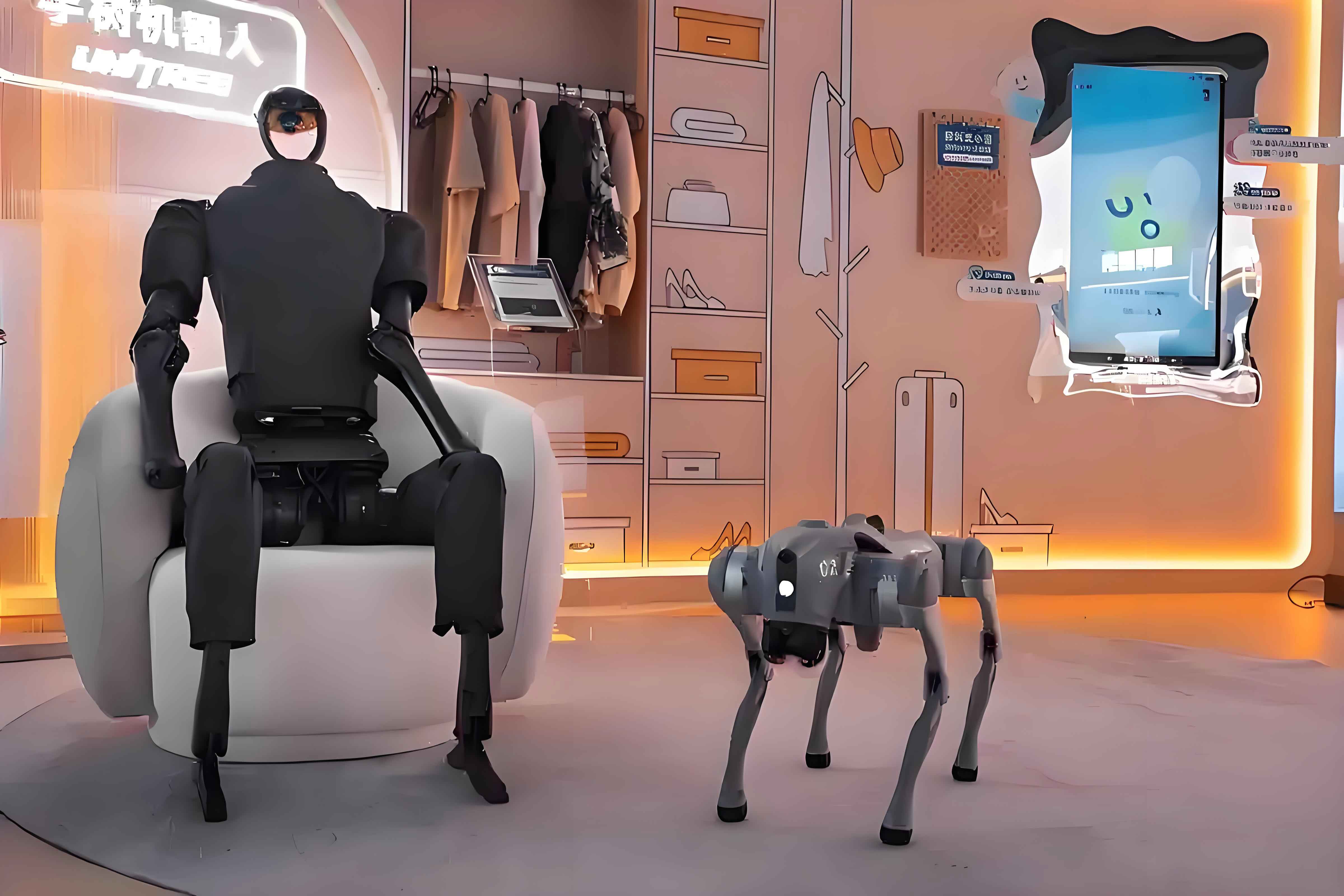
The scale of projected growth is staggering. Market analyses indicate that the domestic market for humanoid robots, while currently valued in the billions, is on a trajectory to expand into a hundred-billion-dollar ecosystem by 2030. This explosive growth is underpinned by tangible industrial activity. Across manufacturing hubs, significant groundbreakings are occurring for facilities dedicated to core components like precision gears and actuators, with investments reaching hundreds of millions of dollars. Furthermore, supply chain interactions have intensified; numerous sensor and component manufacturers report engaging in extensive collaboration with dozens of humanoid robot OEMs, providing samples, customizing solutions, and initiating small-batch supply agreements. This flurry of activity up and down the value chain is the hallmark of an industry preparing for scale.
The competitive landscape is rapidly evolving into a vibrant and crowded ecosystem. The field is no longer the exclusive domain of specialized robotics firms. We are witnessing a “blooming of a hundred flowers,” with players from diverse backgrounds accelerating their entry. This includes established giants from consumer electronics, automotive, and internet technology, alongside agile startups and dedicated robotics companies. This convergence of expertise from hardware manufacturing, artificial intelligence, automotive systems, and consumer interfaces is creating a powerful fusion, accelerating the pace of innovation and commercialization for the humanoid robot.
At the heart of this transition is a complex and maturing supply chain. The anatomy of a modern humanoid robot reveals a symphony of advanced technologies that must work in perfect harmony. The journey from prototype to mass-producible product hinges on the availability, performance, and cost of these core subsystems.
| Subsystem | Key Components | Technical & Manufacturing Challenges | Current Industry Focus |
|---|---|---|---|
| Actuation & Drivetrain | Electric actuators (high-torque density motors), Harmonic Drives, Planetary Roller Screws, Bearings | Power density, efficiency, backlash minimization, durability, cost reduction for mass production. | Developing specialized manufacturing lines (e.g., for 1 million roller screws/year), forming client partnerships for custom actuators. |
| Sensing & Perception | Depth cameras (RGB-D), LiDAR, IMUs, Force/Torque Sensors, Tactile Sensors | Sensor fusion, real-time processing, robustness in dynamic lighting/conditions, miniaturization, cost. | Suppliers engaging in extensive sampling and co-development with multiple OEMs to tailor solutions. |
| Control & Intelligence | On-board Computing (SoCs, GPUs), Control Algorithms, AI Models (Vision, NLP, Manipulation) | Real-time stability, whole-body dynamics control, energy efficiency, edge AI inference, large-scale embodied AI training. | Investment in simulation environments, reinforcement learning, and transferring advancements from large language models to robotic control. |
| Structural & Power | Lightweight alloys/composites, Battery Packs, Power Management Systems | Strength-to-weight ratio, thermal management, safe and high-energy-density batteries, operational lifespan. | Adapting aerospace and EV battery technologies; optimizing skeletal design for manufacturability. |
The mathematical foundation controlling these physical systems is profound. The real-time motion of a humanoid robot is governed by complex dynamics. A fundamental representation is the Lagrangian dynamics equation, which describes the motion of the robot’s multi-joint system:
$$
M(q)\ddot{q} + C(q, \dot{q})\dot{q} + G(q) = \tau + J^T F
$$
Where:
- $q$, $\dot{q}$, $\ddot{q}$ are the vectors of joint positions, velocities, and accelerations, respectively.
- $M(q)$ is the inertia matrix, capturing the mass distribution.
- $C(q, \dot{q})$ represents Coriolis and centrifugal forces.
- $G(q)$ is the gravitational torque vector.
- $\tau$ is the vector of actuator torques applied at the joints.
- $J$ is the Jacobian matrix, and $F$ represents external forces (e.g., from contact with the environment), making $J^T F$ the mapping of these forces to joint torques.
Solving this equation in real-time to achieve stable bipedal locomotion, while managing contact forces and executing tasks, is a monumental computational challenge. Similarly, the relationship between joint velocities and the velocity of the robot’s end-effector (like a hand) is given by the kinematic equation:
$$
v = J(q) \dot{q}
$$
Where $v$ is the end-effector velocity vector. Inverse kinematics, solving for $\dot{q}$ given a desired $v$, is essential for precise manipulation. The leap towards viable humanoid robots has been enabled by advances in solving these equations efficiently using optimization techniques and machine learning, allowing for adaptive and robust control.
However, the path to true mass adoption is not merely an engineering challenge; it is an ecosystem challenge. The current investment euphoria, while providing essential fuel, masks several critical hurdles that must be overcome for sustainable growth. The first is the glaring absence of unified standards. The industry is currently a tapestry of divergent technical roadmaps—differences in actuator types (electric vs. hydraulic hybrids), sensor suites, communication protocols, and software architectures. This lack of hardware and software interoperability increases development costs, fragments the supply chain, and slows down ecosystem development. A call for regulatory bodies to provide benign guidance to foster standardization is growing louder from within the industry itself.
Perhaps the most significant bottleneck is the “data problem.” The intelligence of a modern humanoid robot is not purely pre-programmed; it is increasingly learned. Training robust, generalizable AI models for manipulation, navigation, and interaction requires vast amounts of real-world and simulated data. As one industry leader pointed out, collecting and curating this training data consumes enormous amounts of capital and time. This requirement fundamentally delays the large-scale deployment of humanoid robots into diverse, unstructured application scenarios. Each new task or environment may require additional data collection and fine-tuning, making the path to general-purpose utility long and resource-intensive.
| Challenge Category | Specific Issues | Potential Mitigation Pathways |
|---|---|---|
| Technological & Standardization | Divergent technical routes, lack of hardware/software standards, reliability and safety certification. | Formation of industry consortia, government-led pre-competitive research programs, development of safety and performance benchmarks. |
| Economic & Data | High BoM cost, massive capital needed for AI training data collection and computation, unclear ROI in initial applications. | Vertical integration, design for manufacturability (DFM), advancement in simulation-to-real transfer learning, focused deployment in high-ROI niches first (e.g., industrial logistics). |
| Talent &> Education | Severe shortage of interdisciplinary talent combining robotics, AI, mechanical design, and control theory. Academic curricula lag industry needs. | University-industry partnerships, creation of specialized “robotics engineering” degrees, investment in vocational training for robotics technicians and maintenance. |
| Market & Application | Application scenarios require extensive打磨 (polishing), risk of homogeneous low-end competition, uncertain public acceptance and regulatory frameworks. | Deep collaboration with end-users in target sectors (manufacturing, healthcare, hospitality), clear value proposition over specialized robots, proactive public engagement and ethics guidelines. |
Compounding these issues is a critical human capital deficit. The field of humanoid robotics demands a rare blend of skills: advanced mechanical engineering, electronics, control theory, computer vision, and artificial intelligence. Currently, the academic pipeline is struggling to keep pace. University programs often lack the interdisciplinary structure and industry-aligned curriculum required to produce graduates who are immediately effective. This disconnect between talent cultivation and industrial needs creates a significant drag on innovation and scaling. As one association leader noted, the insufficient supply of specialized talent is itself a major constraint on the industry’s development.
The financial landscape presents its own paradox. While capital is flooding into the sector, it is often “impatient capital” seeking quick returns from a technological frontier known for its long development cycles. The risks, as noted by financial researchers, are substantial. Beyond the technical hurdles, there exists profound market uncertainty regarding viable business models, customer acceptance, and the timeline for profitability. Companies face the danger of burning through cash in a fiercely competitive “land grab” before achieving technological maturity or market fit. A sustainable future requires not just speculative investment, but patient, strategic capital committed to the long-term journey of technological refinement and ecosystem building.
So, what is the trajectory from here? The consensus points towards a phased adoption. The initial wave of mass production will likely not be for the generalized domestic assistant of science fiction. Instead, it will be targeted at structured, high-value environments. Industrial settings, particularly in logistics within manufacturing and e-commerce warehouses, present a clear first beachhead. Here, humanoid robots can leverage their bipedal form to navigate spaces designed for humans and perform repetitive loading, unloading, and inspection tasks. Another promising early arena is specialized service roles in environments like hospitals (for delivery and basic support) or dangerous inspection sites in energy and infrastructure.
The economic equation for these niches is clearer. The cost of the humanoid robot can be measured against high labor costs, worker safety risks, or operational efficiencies. Success in these domains will provide the crucial feedback loop: generating real-world operational data to improve AI, driving production volumes to lower component costs, and proving reliability. This virtuous cycle will gradually expand the operational envelope of the humanoid robot, making it capable of more complex tasks and moving it closer to broader consumer applications.
In conclusion, standing at this inflection point, the feeling is one of cautious exhilaration. The technological pieces—in AI, actuation, and sensing—are converging with unprecedented capital investment and industrial mobilization. The “mass production元年” is more than a buzzword; it is a tangible phase of industrialization taking shape on factory floors and in R&D centers. Yet, the journey ahead is a marathon, not a sprint. It will demand not just breakthrough engineering, but also collaborative standard-setting, strategic patience from investors, a revolution in talent development, and thoughtful navigation of market realities. The humanoid robot is no longer a distant dream. It is a complex, exciting, and challenging reality being built today, piece by precise piece, algorithm by learned algorithm, steering towards a future where it walks seamlessly among us.