
The deep integration of technological innovation and industrial innovation constitutes the fundamental pathway for cultivating new quality productive forces and advancing Chinese modernization. Technological innovation, as the endogenous driving force, provides the wellspring for industrial breakthroughs, while industrial innovation serves as the essential conduit for realizing the value creation of scientific and technological advancements. In the current wave of technological revolution, embodied AI robots, representing the convergence of artificial intelligence algorithms and physical robotics, have emerged as a pivotal frontier. This fusion breaks the “dimensional barrier” of traditional AI, enabling intelligence to transcend the virtual realm and acquire perception, action, and interactive capabilities within the physical world. Therefore, promoting the development of embodied AI robot technology is a crucial lever for achieving deep integration between technological and industrial innovation. This article examines the strategic positioning of embodied AI robots within this integrative framework, analyzes its underlying mechanisms and theoretical logic, explores practical advancements, and ultimately proposes pathways for constructing a robust, synergistic innovation ecosystem.
The strategic significance of developing embodied AI robots is multi-faceted, spanning national competitiveness, industrial upgrading, and economic transformation. At the national level, it is a strategic imperative for securing technological leadership and industrial sovereignty. Globally, competition in the “AI + robotics” arena is increasingly focusing on embodied intelligence. Facing technological containment and global supply chain restructuring, China must strengthen the leading role of technological innovation in industrial innovation. Embodied AI robot technology, particularly in smart manufacturing, presents a potential avenue for “changing lanes to overtake” in the global value chain competition, providing material support for technological self-reliance and the construction of a modern industrial system.
From the perspective of innovation economics, the integration driven by embodied AI robots can be analyzed through several lenses:
- Change in Production Function and Technological Progress: The application of embodied AI robots alters the technical coefficients within the production function. Macro-economically, it enhances Total Factor Productivity (TFP). According to the Solow growth model, output increases with technological progress, even with constant labor and capital inputs:
$$Y = A \cdot F(K, L)$$
where $Y$ is output, $A$ represents TFP (enhanced by embodied AI), and $F(K, L)$ is the function of capital $K$ and labor $L$. This efficiency gain creates a virtuous cycle: “efficiency improvement → resource reallocation → innovation breakthrough → new efficiency leap.” - Cost Reduction and Economies of Scale: Widespread adoption of embodied AI robots leads to significant savings in labor, materials, and maintenance costs. The subsequent reduction in average cost per unit with increased output embodies economies of scale:
$$AC(Q) = \frac{TC(Q)}{Q}$$
where $AC$ is average cost, $TC$ is total cost, and $Q$ is quantity. Lower costs free up capital for reinvestment in R&D, further driving technological iteration and industrial upgrading. - Creation of Market Demand and Positive Externalities: Embodied AI robots are creating new markets in smart manufacturing, healthcare, logistics, and domestic services, generating demand-pull for innovation. Furthermore, their development generates positive externalities through knowledge spillover, advancing adjacent fields like sensor technology, AI algorithms, and control systems.
The integration mechanism operates through a bidirectional flow. Technological innovation in embodied AI drives industrial innovation. Breakthroughs in core “embodied” technologies form the material basis for industrial development, as summarized in Table 1.
| Module | Domain | Key Technological Innovations | Role in Industrial Innovation |
|---|---|---|---|
| Machine Brain | Information Processing | Embodied AI Large Models (LLMs, VLMs, VLAMs), Multimodal Perception, Natural Language Interaction | Provides cognitive capabilities for complex task understanding, planning, and decision-making, enabling flexible task execution. |
| Machine Limb | Control & Action | High-performance Actuators, Dexterous Hands, Bionic Legs, Advanced Control Algorithms, Flexible Transmission Mechanisms | Enables precise, adaptive, and agile physical interaction in unstructured environments, expanding application scenarios. |
| Machine Body | Structure & Integration | Lightweight Materials (PEEK, Carbon Fiber), Topology Optimization, Additive Manufacturing, Standardized Modular Joints | Provides stable, efficient, and durable physical platform, enabling customized design and reliable long-term operation. |
Conversely, industrial development feeds back into and propels technological iteration. Real-world application scenarios pose new challenges, driving R&D in areas like multi-modal interaction and advanced motion control. Industrial scale fosters supply chain maturity, reducing component costs and enabling further innovation. The profits generated from successful industrial innovation can be reinvested into fundamental research, creating a reinforcing cycle.
The theoretical logic for this深度融合 can be effectively explained by the “Triple Helix” model of innovation, which highlights the interactive dynamics between universities, industry, and government. In the context of embodied AI robots:
- Academia (Universities & Research Institutes): Act as the knowledge source, conducting basic research on AI algorithms, robotics, and materials science. They generate the foundational knowledge assets.
- Industry (Enterprises): Serve as the primary entity for transformation and application. They convert technological breakthroughs into commercial products (e.g., humanoid robots, intelligent robotic arms) and deploy them in market applications.
- Government: Acts as the strategic guide and ecosystem architect. It formulates top-level designs, provides policy support (R&D subsidies, tax incentives), builds innovation platforms, and fosters industrial clusters.
The nonlinear interactions among these three helices—such as government-funded innovation centers, industry-academia joint labs, and public-private partnerships—create a dynamic innovation network. This network facilitates risk-sharing, resource pooling, and accelerates the journey from “technology R&D → industrial application → policy refinement.”
Practical exploration in China demonstrates this Triple Helix in action. Government policies have catalyzed the formation of major industrial clusters in Beijing-Tianjin-Hebei, the Yangtze River Delta, and the Greater Bay Area. Leading technology companies are integrating large AI models with robotic platforms, while a vibrant ecosystem of startups focuses on specific components like force sensors or AI algorithms. Universities and research institutes are pioneers in basic research and talent cultivation. Notably, a network of national and regional innovation centers has been established, acting as crucial hybrid entities that bridge the helices. These centers focus on critical common technology R&D and industrial ecosystem development, as shown in Table 2.
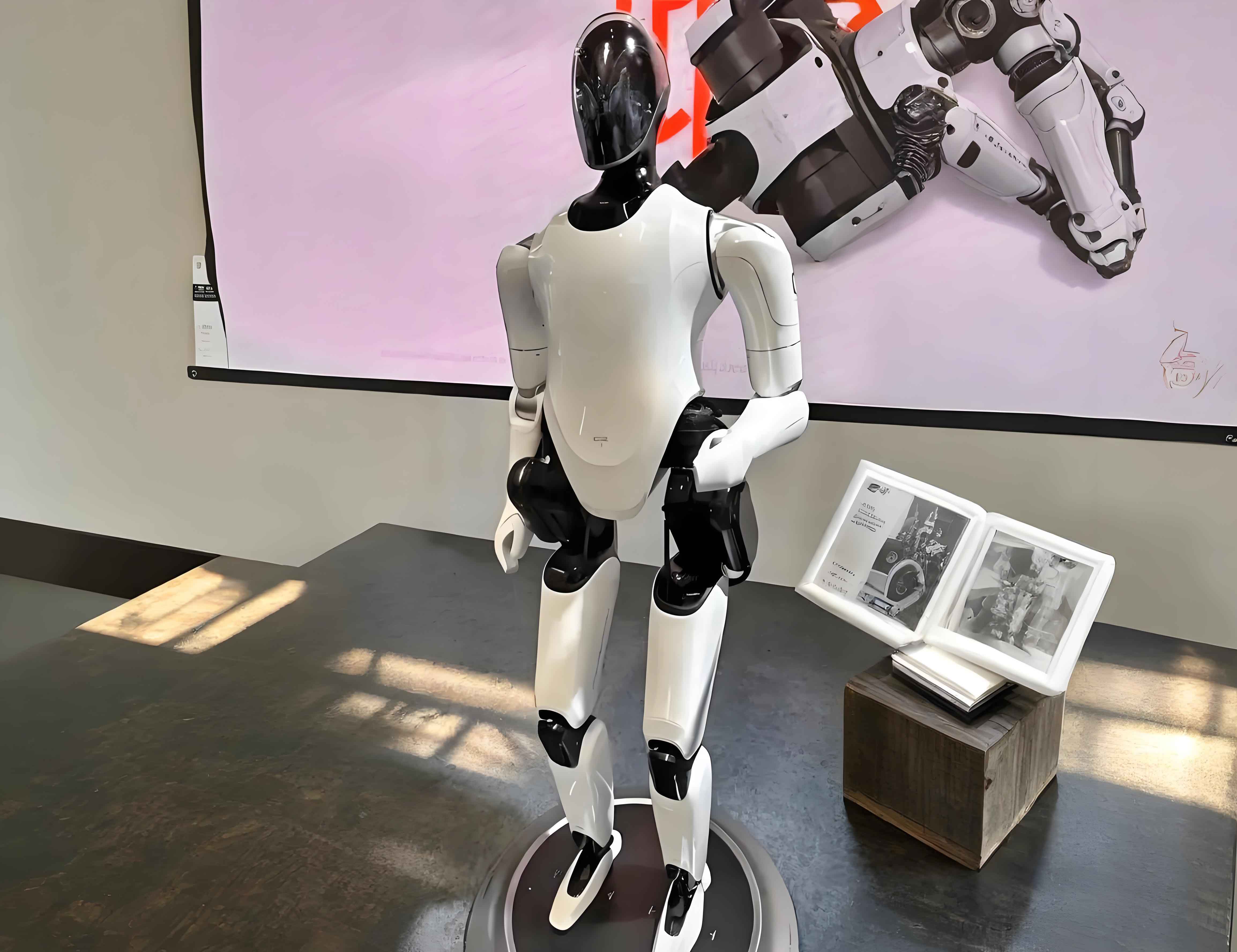
The image above illustrates the vibrant and interconnected nature of the emerging embodied AI robot industry landscape, showcasing the integration of various technologies and applications that fuel its growth.
| Innovation Center | Key Actors & Focus | Notable Outputs/Mission |
|---|---|---|
| National-Local Joint Embodied AI Robot Innovation Center (Beijing) | Government-led, consortium of enterprises & institutes. | “Tiangong” robot; focuses on core embodied control and operational capabilities. |
| Zhejiang Humanoid Robot Innovation Center (Ningbo) | City gov’t & Zhejiang University team. | “Navigator 2” robot with sub-millimeter operation accuracy; 100% self-developed technology. |
| Chengdu Humanoid Robot Innovation Center | Local gov’t support, agile R&D entity. | Released multiple foundational models (R-DDPRM, RRMM) and the “Gongga-1” lightweight humanoid robot rapidly. |
| Shanghai National Robot Innovation Center | Located in Zhangjiang Robot Valley. | Released “Qinglong,” a full-size open-source embodied AI humanoid robot. |
To cultivate and expand the embodied AI robot industry, a deliberate path of deep integration between technological and industrial innovation must be followed. The urgent task is to construct a multi-dimensional, collaborative, and resource-complementary industrial innovation ecosystem. This ecosystem can be built across several key dimensions, as outlined in Table 3.
| Ecosystem Dimension | Core Objectives | Key Actions & Measures |
|---|---|---|
| Technological Innovation Ecology | Strengthen foundational research and accelerate translation. |
|
| Industrial Synergy Ecology | Build resilient, collaborative supply chains and clusters. |
|
| Financial Support Ecology | Provide patient, full-lifecycle capital. |
|
| Policy & Regulation Ecology | Create a supportive, safe, and standardized environment. |
|
| Education & Talent Ecology | Cultivate a multidisciplinary, skilled workforce. |
|
In conclusion, the development of embodied AI robots epitomizes the profound integration of technological and industrial innovation. Its strategic importance is clear, its economic logic is sound, and its practical momentum is growing. The future trajectory of this transformative field hinges on the conscious construction of a holistic innovation ecosystem. By synchronizing efforts across technology, industry, capital, policy, and talent, we can navigate the complexities of this frontier, accelerate the maturation of the embodied AI robot industry, and ultimately harness its full potential to generate new quality productive forces and contribute meaningfully to global technological advancement.