
The global technological landscape is undergoing a seismic shift, driven by the convergence of artificial intelligence, advanced robotics, and sensor technologies. At the heart of this transformation lies the embodied intelligence industry—an emerging sector where intelligent systems are endowed with physical form to interact with and manipulate the real world. This industry, centered on the development and deployment of embodied AI robot systems, represents a strategic frontier in the new round of scientific and industrial revolution. This analysis delves into the intrinsic characteristics, developmental mechanisms, and competitive dynamics of this burgeoning field, proposing a framework for its sustained advancement.
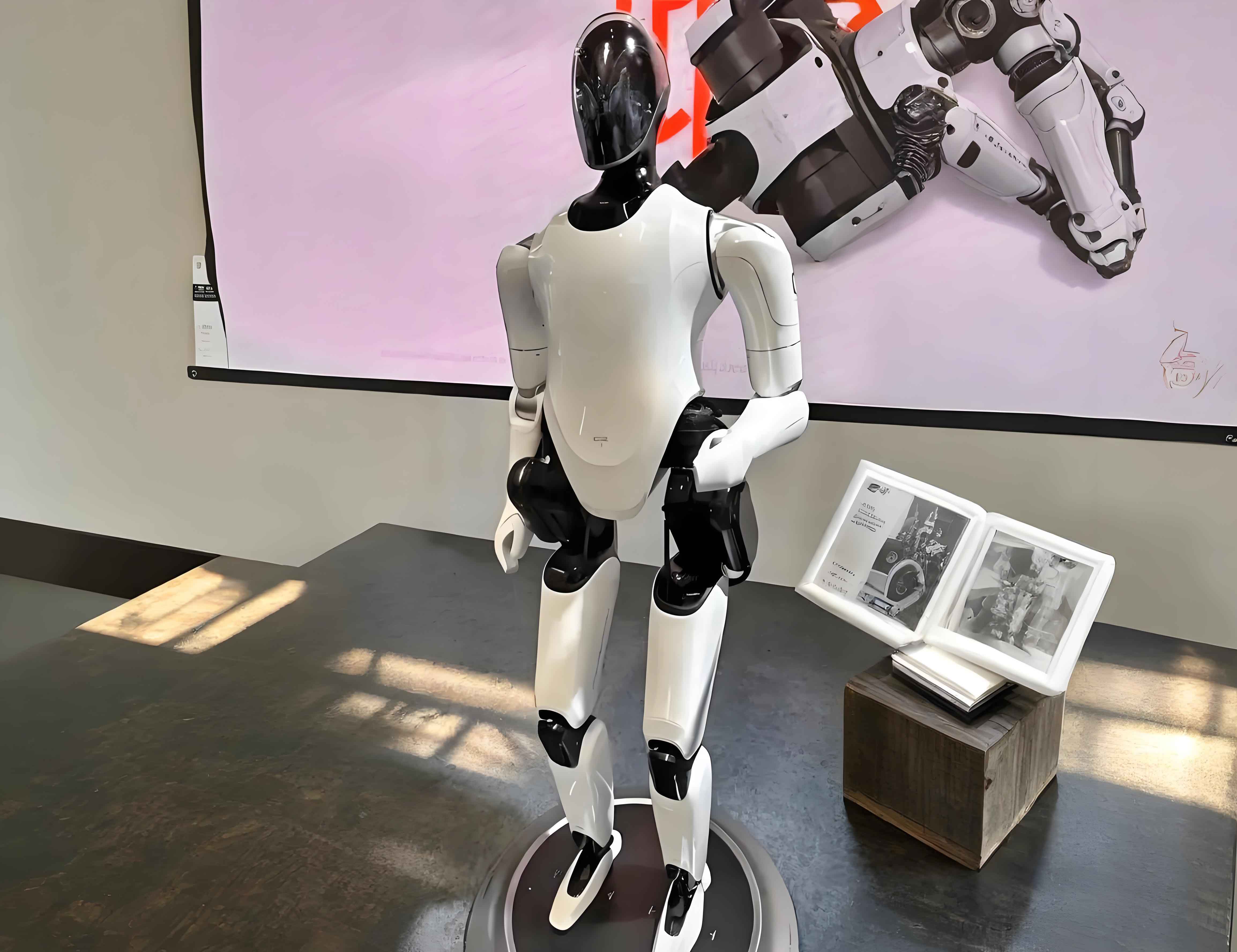
Defining the Embodied AI Robot and Its Industrial Scope
An embodied AI robot is fundamentally distinct from traditional disembodied AI. It is an intelligent system that possesses a physical body, enabling it to perceive the environment through sensors, process information and make decisions (often via advanced AI models), and execute physical actions through actuators. The core premise is that intelligence emerges from the dynamic coupling and continuous interaction between the body, its computational “brain,” and the environment. This paradigm shift moves beyond pure data-driven pattern recognition to active, experiential learning in the physical world.
The industry built around this technology encompasses the entire value chain required to create and deploy such systems. It is not merely about manufacturing robots but involves a deeply integrated ecosystem. The industrial scope can be structured into three primary layers:
| Layer | Components | Description & Role |
|---|---|---|
| Upstream (Infrastructure & Core Components) | Semiconductors (AI chips, processors), Sensors (vision, LiDAR, tactile), Actuators (motors, servos), Power Systems, Mechanical Structures, Communication Modules. | Provides the foundational hardware that constitutes the “body” and “senses” of the embodied AI robot. This layer determines fundamental capabilities like dexterity, perception fidelity, and computational speed. |
| Midstream (Software, Integration & Platform) | AI Algorithms & Models (LLMs, VLMs, Reinforcement Learning), Robot Operating Systems (ROS, etc.), Simulation Platforms, Middleware, System Integration Services. | Provides the “intelligence” and coordination software. This layer enables perception, decision-making, control, and seamless communication between hardware components. Platforms here are crucial for development, training, and deployment. |
| Downstream (Products & Application Scenarios) | Humanoid Robots, Industrial/Logistics Robots, Service Robots, Autonomous Vehicles, Drones, and their deployment in Manufacturing, Healthcare, Domestic Services, Agriculture, Public Safety, etc. | Represents the final commercial products and their practical implementation. This layer is where value is realized and where iterative feedback from real-world use drives upstream innovation. |
The “Technology-Economy” Characteristics of the Embodied Intelligence Industry
Analyzing the embodied AI robot industry through a “technology-economy” lens reveals a set of defining and interdependent characteristics.
| Characteristic | Technological Dimension | Economic Dimension |
|---|---|---|
| Frontier Advancement & Disruptive Uncertainty | Driven by breakthroughs in multimodal AI, advanced materials, and precision mechanics. Multiple, competing technical pathways (e.g., hydraulics vs. high-torque electric actuators) coexist. | Potential to redefine business models and labor markets across sectors. High uncertainty in market winners, dominant designs, and the timeline for mass adoption, leading to significant investment risks and rewards. |
| Technological Fusion & Industrial Synergy | Convergence of AI, robotics, IoT, edge computing, and materials science. No single technology is sufficient; success depends on systems integration. | Requires unprecedented collaboration across traditionally separate industries (e.g., semiconductor firms, AI labs, auto manufacturers, specialty component makers). Value creation is distributed across a complex, synergistic network. |
| Forward-Looking Strategic Value & High-Growth Potential | Seen as a core “future industry” with national security and economic sovereignty implications. Governments actively fund basic research and set strategic roadmaps. | Projected to grow into a multi-hundred-billion-dollar market. Early leaders aim to capture rents from setting global standards and controlling critical segments of the future embodied AI robot supply chain. |
Mechanism Analysis: The “Technology-Industry-Society” Framework
The development of the embodied AI robot industry is not linear but follows a dynamic, multi-loop process governed by the interplay of internal and external forces. We propose a “Technology-Industry-Society” framework to elucidate this机理.
1. Innovation Drive: The Core Engine
Innovation is the primary endogenous force, transforming isolated technologies into a cohesive industrial system. This drive operates through three interconnected vectors:
a) Technology Cluster Innovation: Progress moves from disparate, single-point breakthroughs toward convergent, clustered innovation ecosystems. Early-stage exploration of varied technical paths (e.g., different locomotion methods for humanoids) gradually coalesces around dominant designs, which then spawn derivative innovations. The innovation function can be modeled as a path-dependent process:
$$ I(t) = \alpha \sum_{i=1}^{n} K_i(t)^{\beta} + \gamma \cdot Network(K_1…K_n) $$
Where $I(t)$ is the innovation output at time $t$, $K_i$ represents the knowledge stock in a specific technological domain $i$ (e.g., actuation, computer vision), $\alpha$ and $\beta$ are scaling parameters, and $\gamma \cdot Network(…)$ captures the synergistic, super-linear gains from integrating these knowledge clusters within an innovation ecosystem.
b) Technology System Integration: The fundamental challenge is integrating hardware and software into a reliable “perception-decision-action” loop. This requires breakthroughs at both the physical and algorithmic levels. The system’s performance $P_{sys}$ is a non-linear function of its constituent capabilities:
$$ P_{sys} = f(P_{sense}, P_{plan}, P_{act}) \approx \eta \cdot \min(P_{sense}, P_{plan}, P_{act}) + \omega \cdot (P_{sense} \cdot P_{plan} \cdot P_{act}) $$
Here, $P_{sense}$, $P_{plan}$, and $P_{act}$ represent the performance metrics of perception, planning/decision-making, and actuation, respectively. The first term ($\eta \cdot \min(…)$) highlights the bottleneck effect (the weakest link), while the second term ($\omega \cdot (…)$) models the multiplicative gains from tightly coupled, high-performance components.
c) Cross-Domain Technology Spillover: Technologies developed for one application of embodied AI robot often diffuse to others, accelerating overall progress. For example, navigation algorithms from autonomous vehicles improve mobile robot logistics. The spillover can be expressed as a knowledge diffusion equation:
$$ \frac{dK_{dst}(t)}{dt} = \delta \cdot (K_{src}(t) – K_{dst}(t)) + \lambda \cdot A_{dst} $$
Where $K_{dst}$ is knowledge in a destination domain, $K_{src}$ is knowledge in a source domain, $\delta$ is the diffusion rate, and $\lambda \cdot A_{dst}$ represents the absorptive capacity of the destination domain, which depends on factors like R&D investment and related expertise.
2. Demand Pull: The Market Compass
Market and societal needs guide the direction of innovation and provide the validation ground for technological iteration.
a) Application Scenarios Catalyze Demand: Specific, high-value problems (e.g., warehouse automation, elderly care) create immediate demand, funding focused R&D and providing crucial real-world data. The evolution of demand $D_{scenario}$ for a specific scenario can be modeled as:
$$ D_{scenario}(t) = B \cdot e^{\rho \cdot (V(t) – C(t))} $$
Here, $B$ is a baseline constant, $\rho$ is a sensitivity parameter, $V(t)$ is the perceived value (e.g., labor savings, safety improvements), and $C(t)$ is the total cost of ownership, which decreases with technological maturation.
b) Market Scale Amplifies and Refines Demand: A large, unified market offers immense advantages. It provides diverse testing environments, enables economies of scale to lower costs, and attracts global talent and capital. The scale effect on innovation feedback speed $S_{feedback}$ can be conceptualized as:
$$ S_{feedback} \propto \log(M \cdot U \cdot D_{variety}) $$
Where $M$ is market size (number of potential users/units), $U$ is the utilization intensity, and $D_{variety}$ is the diversity of application scenarios, all contributing to a faster cycle of “deploy-learn-improve.”
c) Industrial Ecosystem Expands Demand: A mature ecosystem, through vertical collaboration (supplier-manufacturer-integrator) and horizontal synergy (cross-industry knowledge sharing), lowers barriers to entry and creates composite solutions, thereby expanding the total addressable market for embodied AI robot technologies.
3. Supply Creation: The Foundation for Growth
According to Say’s Law, supply can create its own demand. In the context of embodied AI robot, innovative supply plays a proactive role in shaping markets.
a) Technology-Driven Diversified Supply: Breakthroughs enable entirely new product categories (e.g., affordable collaborative robots, general-purpose humanoids), unlocking latent demand that was previously unaddressable. This creates a virtuous cycle: New Supply $\rightarrow$ New Intermediate Demand (for components, services) $\rightarrow$ Further Innovation.
b) Competition-Driven High-Quality Supply: Rivalry among firms forces rapid iteration, cost reduction, and performance enhancement. This competitive pressure, modeled as a race to a shifting frontier, transforms expensive prototypes into reliable, cost-effective solutions, thereby creating “effective demand” from a broader customer base.
$$ Q_{supply}(t) = \int_0^t \left( \nu \cdot R\&D_{rival}(t) – \frac{\partial C_{prod}}{\partial t} \right) dt $$
Where $Q_{supply}$ is the quality-adjusted supply, $\nu$ is an efficiency parameter, $R\&D_{rival}$ represents competitive R&D pressure, and $\frac{\partial C_{prod}}{\partial t}$ is the rate of production cost decline.
c) Efficiency-Driven High-Performance Supply: Optimizing the entire value chain—from component manufacturing to deployment—lowers costs and improves accessibility. This includes advancements in manufacturing techniques for sensors and actuators, as well as efficient software development platforms, making embodied AI robot solutions viable for smaller enterprises and new sectors.
4. Value Co-Creation: The Ecosystem Flywheel
The final mechanism involves the synergistic interaction of multiple societal actors to form a self-reinforcing innovation ecosystem.
a) Multi-Capital Empowerment: Government funding (for basic research, infrastructure, strategic procurement) de-risks early-stage development. This public investment “crowds in” substantial private venture capital and corporate R&D, creating a powerful financial engine. The total capital inflow $C_{total}$ can be seen as:
$$ C_{total} = G_{policy} \cdot (1 + \mu) + VC_{risk} + C_{corp} $$
Where $G_{policy}$ is government funding, $\mu > 0$ is the multiplier effect on private investment, $VC_{risk}$ is venture capital, and $C_{corp}$ is corporate investment.
b) Industry-Academia-Research-Application Collaborative Innovation: This is the organizational manifestation of value co-creation. Universities provide fundamental research and talent; national labs tackle grand challenges; corporations bring market insight, engineering prowess, and scaling capabilities; and end-users provide critical feedback. The strength of this network, $N_{strength}$, is key to translating ideas into products:
$$ N_{strength} = \sum_{i \neq j} \sigma_{ij} \cdot T_{ij} \cdot T_{ji} $$
Summing over all pairs of entities $i$ and $j$ (firm, university, etc.), where $\sigma_{ij}$ is the relational strength (e.g., partnership depth), and $T_{ij}$ represents the volume and quality of knowledge/technology flow from $i$ to $j$. A strong, bidirectional flow ($T_{ij} \cdot T_{ji}$) indicates a healthy collaborative ecosystem essential for advancing embodied AI robot technology.
A Comparative Analysis: Diverging Pathways in the U.S. and China
The global race in embodied AI robot is prominently defined by the strategies of the United States and China, which exhibit distinct yet increasingly competitive pathways.
| Dimension | United States | China |
|---|---|---|
| Technology Driver & Path | Algorithm & Model-First: Focus on foundational AI breakthroughs (LLMs, VLMs), advanced control algorithms, and simulation. Aims to build a high “intelligence” barrier. Path: High-performance computing + proprietary software. | Hardware & Integration-First: Focus on rapid hardware iteration, system integration, and cost-effective manufacturing (e.g., high-torque density actuators). Path: Electrification + supply chain efficiency + application-layer software. |
| Development Direction | High-Value, Niche Leadership: Targets high-margin, complex scenarios (advanced surgery, agile manipulation, space robotics). Leverages software subscription and IP licensing models. Ecosystem is venture-capital driven with strong university-to-startup links. | Scale & Vertical Application Leadership: Targets large-scale industrial automation, logistics, and domestic services. Leverages massive domestic market for rapid iteration and cost reduction. Ecosystem is policy-guided with strong state-capital and manufacturing cluster support. |
| Capital Investment Pattern | Risk Capital Dominant: Massive flows from VCs, tech giants’ corporate venture arms, and private equity into foundational tech startups. High tolerance for long-term, high-risk bets on core technology. | Policy-Guided & Diversified: Combination of national/local government industrial funds, state-backed venture capital, and increasing private investment. Focused on building industrial chains and achieving commercialization milestones. |
| Talent Deployment | Global Magnet for Top Talent: Historically strong pull for world-leading AI/robotics researchers, sustained by top universities, corporate labs, and high-risk/high-reward culture. Faces domestic pipeline challenges. | Rapid Domestic Expansion & Growing Attraction: Massive output of STEM graduates and AI PhDs. Increasing number of top researchers working domestically. Improving talent retention but still playing catch-up in attracting global elite. |
Promotion Strategies for a Thriving Embodied AI Industry
To foster a robust and globally competitive embodied AI robot industry, a multi-pronged, systemic approach is required, aligned with the mechanisms described above.
1. Deepen Fusion of Frontier Technologies and Expand Application Scenarios
The fusion of AI models, novel materials, and advanced mechanics must be actively orchestrated. Establishing national grand challenges that require integrated solutions (e.g., a robot that can perform unstructured household chores) can focus efforts. Simultaneously, creating “living labs” and regulatory sandboxes in cities for real-world testing of embodied AI robot in logistics, healthcare, and public services is crucial. This directly links the Innovation Drive with Demand Pull, generating the feedback data needed for improvement.
2. Construct an Enterprise-Led, Collaborative Innovation Ecosystem
While basic research is vital, the translation to industry must be accelerated. The model of “anchor enterprise + upstream/downstream partners + research institutes” should be promoted. Large firms with system integration capabilities should lead consortiums to tackle key bottlenecks (e.g., developing a standardized, high-performance actuator platform). Policy should incentivize open innovation, where non-core IP from such projects is shared within the consortium to elevate the entire supply chain, strengthening the Value Co-Creation mechanism.
3. Cultivate a Gradient of Innovative Enterprises
The ecosystem needs diverse players. A tiered support system is essential:
$$ Support(t) = \begin{cases} S_{incubation}(R\&D, prototyping) & \text{for Startups} \\ S_{growth}(market access, talent) & \text{for Scaling Firms} \\ S_{leadership}(standards, global strategy) & \text{for Champions} \end{cases} $$
Incubators and seed funds should nurture startups with disruptive ideas. Growth-stage firms should receive support for pilot deployments and international expansion. Established champions should be encouraged to set open standards and make strategic, long-term investments in core technology, thus enhancing the diversity and quality of Supply Creation.
4. Unclog the “Science-Industry-Finance” Virtuous Cycle
Capital must be patient and matched to the stage of technological development. This requires:
- Long-Horizon Capital: Creating public “patient capital” funds with 10-15 year horizons to fund high-risk, foundational technology.
- Information Symmetry Platforms: Building digital platforms that connect university tech transfer offices, corporate R&D needs, and investors, reducing friction in the innovation chain.
- Cluster-Based Development: Intentionally developing geographical clusters that co-locate leading research institutions, component suppliers, integrators, and end-users, physically manifesting the innovation ecosystem and reducing transaction costs for all actors within the embodied AI robot value chain.
In conclusion, the embodied AI robot industry represents a paradigm shift in how intelligent systems will integrate into our physical world and economy. Its development is governed by a complex but understandable set of mechanisms—innovation, demand, supply, and co-creation—that interact within a “Technology-Industry-Society” framework. Nations that successfully understand and nurture these mechanisms, while leveraging their unique comparative advantages, will be best positioned to lead in this defining industry of the future.