
The manufacturing landscape stands at a profound inflection point. From my perspective, the relentless pressures of global competition, volatile supply chains, and the demand for mass customization are driving an unprecedented convergence of physical automation and artificial intelligence. While traditional industrial robots have been workhorses for decades, their limited adaptability and perception constrain their utility in dynamic, unstructured environments. The pivotal evolution lies in the transition from programmed automatons to intelligent, interactive agents. This is where the concept of the embodied AI robot emerges not merely as an incremental improvement, but as a foundational paradigm shift. An embodied AI robot is distinguished by its unified architecture that integrates sensing, reasoning, and actuation within a physical body, enabling it to learn from and interact with the real world in real-time. This analysis will explore the technical architecture of these systems, their transformative potential in industrial settings like polymer processing, and the critical symbiotic relationship they share with robust, well-maintained traditional production machinery.
The core of an embodied AI robot is its cognitive-physical loop. Unlike a purely software-based AI, its intelligence is grounded in physical experience. This can be modeled as a continuous cycle of perception ($P$), state estimation and planning ($S$), and action ($A$), with learning ($L$) occurring at every stage. We can frame this as:
$$ \text{Embodied Intelligence Loop: } P_{t} \rightarrow S_{t} = f(P_{t}, S_{t-1}, M) \rightarrow A_{t} = \pi(S_{t}) \rightarrow E_{t+1} \xrightarrow{L} \text{Update } f, \pi, M $$
Where $P_t$ represents multi-modal sensory data (vision, force, tactile) at time $t$, $S_t$ is the estimated state of the robot and environment, $M$ is the internal world model, $\pi$ is the policy (control strategy), $A_t$ is the generated action, and $E_{t+1}$ is the new environmental state resulting from that action. The learning process $L$ continuously refines the perception function $f$, the policy $\pi$, and the world model $M$. For a robot arm manipulating a deformable object like an uncured tire tread, the world model $M$ must include understandings of material deformation dynamics.
| System Component | Traditional Industrial Robot | Embodied AI Robot |
|---|---|---|
| Core Intelligence | Pre-programmed, fixed trajectories and logic. No real-time adaptation. | AI-driven, adaptive. Learns from interaction and sensory feedback. |
| Perception | Often limited or pre-defined (e.g., fixed-position sensors). | Rich, multi-modal (3D vision, tactile, force-torque). Actively used for decision-making. |
| Low. Requires extensive re-tooling and re-programming for new tasks. | High. Can be re-tasked through software, learning new skills from demonstration or simulation. | |
| Interaction with Environment | Rigid, assumes a perfectly structured and predictable world. | Robust to uncertainty. Can handle variations in part placement, texture, and shape. |
| Typical Application | High-speed, repetitive assembly, welding, painting in fixed locations. | Complex material handling (e.g., bin picking), adaptive assembly, quality inspection, human-robot collaboration. |
The transition to an embodied AI robot-driven factory requires a holistic view of the production ecosystem. A critical, yet often overlooked, prerequisite is the reliability and precision of the underlying production equipment. The most intelligent embodied AI robot for final assembly is of little value if the upstream processes, such as extrusion or molding, produce inconsistent components. Therefore, the journey towards intelligent manufacturing must be built on a foundation of卓越的设备管理和维护 (excellent equipment management and maintenance). To illustrate this point, consider the tire extruder, a quintessential piece of capital equipment in rubber manufacturing. Its consistent output is the bedrock upon which downstream automation, including that performed by an embodied AI robot, depends.
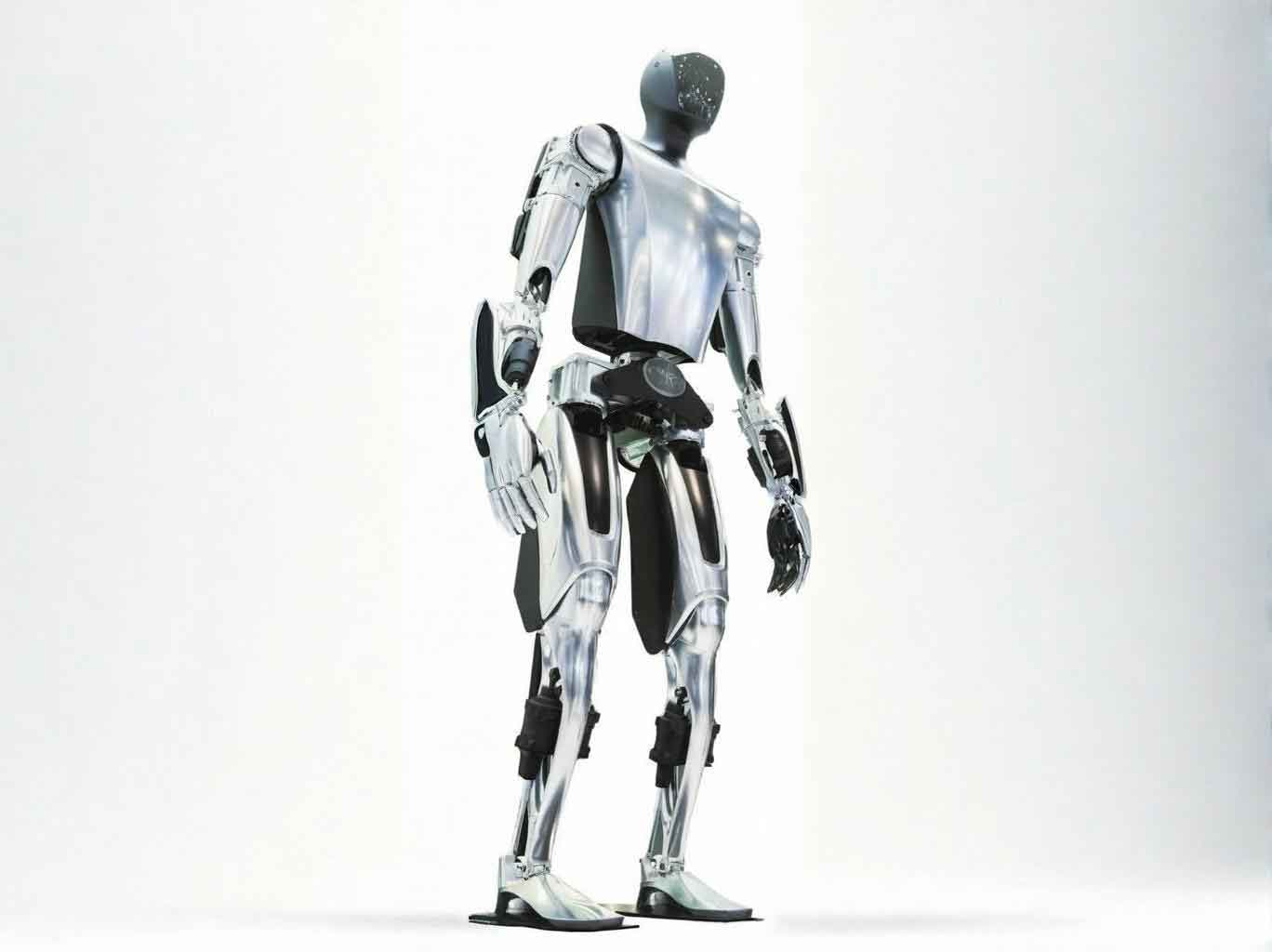
The industrial implementation of an embodied AI robot presents significant challenges in manufacturing and supply chain coordination. As seen in the image, the production of such sophisticated systems requires the integration of advanced actuators, high-fidelity sensors, and powerful edge-computing modules. This complexity underscores the importance of resilient, multi-tier supplier networks capable of producing these specialized components at scale and with high quality. The creation of industry alliances focused on this supply chain is a logical and necessary step to mitigate risk and foster innovation, ensuring that the physical platform for the AI is itself robust and reliable.
A modern tire extruder is a complex thermomechanical system. Its primary function is to plasticize rubber compound and form it into a continuous profile (e.g., tread, sidewall). Its core components include the drive system, feed hopper, barrel, screw, die head, and heating/cooling systems. The process can be modeled by a series of equations governing mass, energy, and momentum transfer. For instance, the pressure build-up in the metering section of the screw is crucial and can be approximated for a Newtonian fluid in a shallow channel as:
$$ \Delta P = \frac{6 \mu U L}{H^2} \left( \frac{Q_d}{Q_p} – 1 \right) $$
Where $\Delta P$ is the pressure rise, $\mu$ is the melt viscosity, $U$ is the screw velocity relative to the barrel, $L$ is the length of the metering section, $H$ is the channel depth, $Q_d$ is the drag flow rate, and $Q_p$ is the pressure flow rate. Maintaining geometric integrity of the screw and barrel is essential for this equation to hold true in practice. Wear alters $H$ and the channel geometry, leading to unpredictable pressure and output variations.
| Component | Common Failure Mode | Impact on Product & Downstream Processes | Potential Detection by Embodied AI Robot |
|---|---|---|---|
| Screw & Barrel | Wear, corrosion, damage to flight tips. | Reduced output, irregular melt temperature, poor mixing, dimensional instability of extrudate. | Indirect: Could detect variations in extrudate dimensions, surface texture, or temperature via inspection. |
| Heater Bands / Cooling Zones | Heater burnout, thermocouple drift, cooling channel blockage. | Unstable melt temperature profile, leading to scorch, poor viscosity control, and profile swelling or shrinkage. | Possible: Thermal imaging could identify abnormal barrel surface temperature profiles. |
| Drive System (Motor/Gearbox) | Bearing wear, gear tooth wear, misalignment, lubrication failure. | Speed fluctuations, torque variations, vibration, and ultimately catastrophic failure causing downtime. | Direct: Vibration analysis and acoustic monitoring are ideal tasks for a mobile embodied AI robot patrol. |
| Die Assembly | Wear, carbon build-up, damage to flow surfaces. | Poor surface finish on extrudate, dimensional errors, flow marks. | Direct: High-resolution visual inspection of the extrudate profile as it exits the die. |
Therefore, a rigorous maintenance regimen is non-negotiable. It consists of daily checks (e.g., lubrication levels, unusual sounds, visual inspection of the extrudate) and periodic preventive maintenance (PM). A data-driven PM schedule is far more effective than a purely time-based one. Vibration analysis on the main drive, for example, can predict bearing failure weeks in advance. The maintenance actions can be summarized in a structured plan:
| Frequency | Component/System | Action | Key Performance Indicator (KPI) to Record |
|---|---|---|---|
| Daily / Per Shift | Overall Machine | Visual and auditory check for leaks, noises, vibrations. Check amperage draw of main drive. | Drive motor current (A), existence of unusual events (Y/N). |
| Weekly | Lubrication System | Check oil levels and condition in gearbox and thrust bearing assembly. Top up or change as needed. | Oil level, oil color/contamination rating. |
| Monthly | Heating/Cooling System | Verify function of all heater bands and cooling solenoids. Calibrate thermocouples. | Temperature setpoint vs. actual for each zone. |
| Quarterly | Drive Train | Collect and analyze vibration spectra on motor and gearbox bearings. Check coupling alignment. | Vibration velocity (mm/s RMS) and dominant frequency peaks. |
| Annually / Bi-Annually | Screw & Barrel | Pull screw, measure for wear (flight width, root diameter), inspect barrel I.D. for scoring or wear. | Clearance between screw flight and barrel wall (mm). |
| As Needed (Based on Monitoring) | Control System | Back up system parameters and recipes. Update firmware. | Backup version number, firmware revision. |
This is where the synergy between traditional equipment and the embodied AI robot becomes powerfully evident. Imagine a mobile embodied AI robot platform, equipped with thermal, visual, and acoustic sensors, conducting autonomous patrols in the factory. It can perform many of the inspection tasks listed above, transforming subjective human checks into quantified, recorded data. It can listen to a gearbox and compare the sound signature to a baseline, flagging anomalies. It can scan the extrudate with a 3D camera to measure profile dimensions in real-time, providing immediate feedback not just for quality control but also as an indirect health indicator of the screw, die, and temperature control system. The embodied AI robot thus becomes a proactive maintenance agent, its intelligence embodied in a mobile form that can interact directly with the physical assets on the shop floor.
The true potential is unlocked when the embodied AI robot is not just an inspector but an integrated actor within the production cell. Consider a tire building station. An embodied AI robot with advanced manipulation capabilities, informed by real-time vision, can handle floppy, uncured tire components (treads, inner liners, belts) with the care and adaptability a human would, but with greater consistency and endurance. It can pick a tread from a conveyor, visually inspect it for defects, and precisely place it onto the drum, adapting its grip and trajectory based on the slight variations inherent in a compounded rubber product. The control policy $\pi$ for such a task is immensely complex, requiring reinforcement learning in simulations that accurately model rubber’s viscoelastic behavior before transfer to the real robot.
Ultimately, the future of manufacturing lies in a cohesive ecosystem. In this ecosystem, legacy machines like extruders are maintained to a high standard of precision and reliability, providing a stable stream of high-quality inputs. Meanwhile, embodied AI robot systems provide the flexible, intelligent automation required for downstream assembly, inspection, and material handling. These two pillars support each other: the predictable output of well-maintained equipment simplifies the task environment for the embodied AI robot, while the robot’s sensory and adaptive capabilities guarantee that any deviations are caught early, protecting the value-added work performed on subsequent stations. This creates a virtuous cycle of stability and adaptability.
In conclusion, the adoption of embodied AI robot technology represents a strategic imperative for modern manufacturing. However, its success is intrinsically linked to the foundational health of the existing production infrastructure. A focus on advanced, predictive maintenance of critical process equipment is not a separate initiative but a core enabler for intelligent automation. By investing in both the physical intelligence of new robotic systems and the mechanical integrity of traditional machinery, manufacturers can build resilient, efficient, and adaptive production systems capable of thriving in an era of constant change. The embodied AI robot is the nimble, intelligent hand of the factory, but it depends on the strong, steady heartbeat of well-maintained core equipment to create truly harmonious and productive symphony of manufacturing.