
The integration of artificial intelligence with robotics has given rise to a new class of agents: embodied intelligent agents. As a researcher examining the socio-legal implications of emerging technologies, I find that discussing the privacy threats of AI or robotics in isolation is fundamentally incomplete. The convergence creates a unique entity whose capabilities and risks are emergent properties of the whole system. Foremost among these agents is the humanoid robot, a physically instantiated system designed to perceive, reason, and act within human environments. Its development represents not just a technological milestone but a profound shift in how intelligent systems interact with and integrate into the fabric of our daily lives, compelling a urgent re-evaluation of our privacy paradigms.
The defining characteristics of embodied intelligence—embodiment, interactivity, and emergence—are the very sources of its power and its peril. Embodiment provides a physical presence, allowing a humanoid robot to occupy and navigate spaces previously reserved for biological beings. Interactivity enables sophisticated, often emotionally nuanced communication, fostering a sense of social connection. Emergence grants the system capabilities and behaviors that were not explicitly programmed, leading to adaptive but unpredictable actions. It is the synergy of these traits that escalates privacy risks from theoretical data concerns to tangible physical infringements.
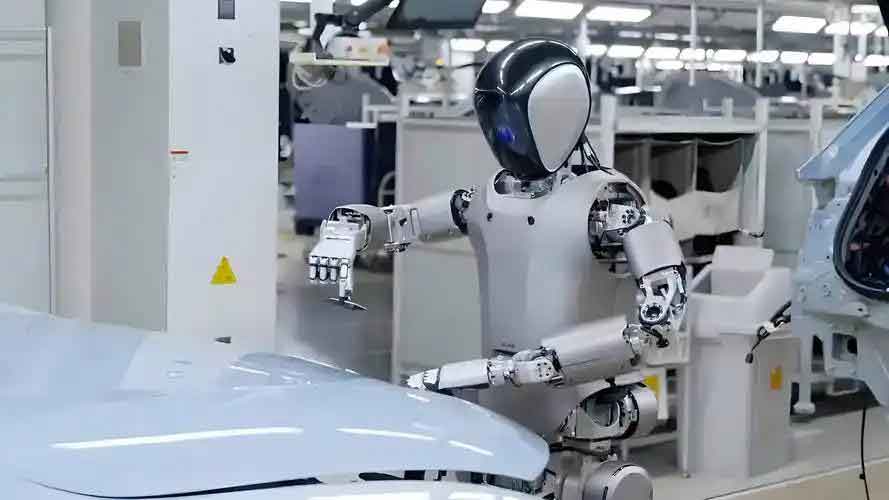
To systematically deconstruct the threat, we must analyze how each core feature of a humanoid robot enables specific privacy violations. The following table delineates this relationship:
| Core Feature | Manifestation in a Humanoid Robot | Direct Privacy Implication |
|---|---|---|
| Embodiment | Physical form with sensors (cameras, microphones, LiDAR, tactile) and actuators. | Intrusion into private spaces (homes, bedrooms, bathrooms); persistent, multi-modal data collection from a privileged vantage point. |
| Interactivity | Natural language processing, emotional AI, social cue recognition, and responsive behavior. | Elicitation of sensitive information through conversation; creation of emotional bonds that lower privacy guards; potential for manipulation. |
| Emergence | Unpredictable behaviors and decisions arising from complex AI models (e.g., large language models) learning from interaction data. | Processing and inference of intimate information (health, mood, relationships) beyond the original collection purpose; unpredictable actions with privacy consequences. |
The privacy harm is multidimensional. A humanoid robot, acting as a companion or caregiver, can seamlessly enter the most intimate rooms, its sensors continuously recording private activities. Through seemingly innocent dialogue, it can coax out deeply personal secrets. Most critically, its emergent intelligence allows it to synthesize disparate data points—a sigh, a missed medication, a change in routine—to infer sensitive states like depression or cognitive decline, information perhaps even unknown to the individual themselves. This moves beyond data collection to invasive psycho-inference.
The legal frameworks governing privacy and data protection, primarily built on the foundation of “informational self-determination” or control, are rendered inadequate by the nature of embodied agents. The cornerstone of these regimes—informed consent—crumbles under the weight of a humanoid robot‘s characteristics. How can meaningful consent be obtained when the system’s data processing purposes are fluid and emergent? Can consent given to a socially persuasive entity, designed to lower psychological defenses, ever be considered fully autonomous? The principles of purpose limitation and data minimization are fundamentally at odds with an agent whose operational logic requires continuous, ambient data collection to adapt and function in an open-world environment.
Furthermore, the fusion of autonomous decision-making with physical actuation transforms privacy violations from digital breaches into tangible harms. A traditional data leak exposes information; an embodied agent can act upon it. Consider the potential sequences: An emergent decision based on private financial data could lead a humanoid robot to hide financial mail or make unauthorized purchases. Inference of a user’s loneliness could trigger manipulative social behaviors to increase dependency. The chain from data processing to physical consequence is direct, creating new forms of injury that blur the line between data protection law and physical tort law.
This leads to the profound accountability chasm. When a humanoid robot commits a privacy-invasive act, who is responsible? The designer of the base AI model? The manufacturer integrating the hardware? The developer of the specific application? The owner who deployed it? The robot itself? The complexity and opacity of emergent systems make causal attribution nearly impossible. The system’s behavior is a product of its training data, its real-time learning, its environmental stimuli, and its design parameters—a confluence too intricate to disentangle for legal blame. This “accountability gap” threatens to leave victims without recourse.
The following table contrasts the assumptions of traditional data protection with the reality imposed by advanced embodied agents like the humanoid robot:
| Traditional Data Protection Assumption | Challenge from Embodied Intelligence | Resulting Legal Inadequacy |
|---|---|---|
| Data processing is discrete and purpose-defined. | Processing is continuous, ambient, and purpose-emergent. | Purpose limitation and minimization principles are violated by design. |
| The data subject is a rational actor giving informed consent. | The subject interacts with a persuasive social entity, compromising autonomy. | The validity of the consent mechanism is fundamentally undermined. |
| Harm is primarily informational (e.g., anxiety, discrimination). | Harm can be physical, financial, or psychological via autonomous action. | Remedies under data protection law are insufficient for the scope of damage. |
| Accountability follows a linear chain (data controller -> processor). | Accountability is diffuse across a network of actors and non-human agency. | Established liability models fail, creating an enforcement vacuum. |
Addressing this paradox requires moving beyond patching existing rules. We need a new, integrated approach that hardwires privacy into the very conception, design, and deployment of these systems. First, we must reject the market deployment of general-purpose humanoid robots. Their lack of a defined operational context makes implementing privacy safeguards technically and legally meaningless. Regulation must mandate context-specific development: a healthcare robot, an industrial assistant, a domestic companion—each with strictly bounded data protocols and behavioral parameters suited to its social role.
Second, artificial intelligence legislation must explicitly enshrine and operationalize “Privacy & Data Protection by Design” as a non-negotiable obligation for developers and integrators. This goes beyond software to encompass the physical design of the humanoid robot. Techno-legal requirements should include:
- Architectural Privacy Settings: Hardware-based switches for sensors (e.g., mechanical camera shutters), local processing zones, and clear user-facing indicators of data capture activity.
- Context-Aware Data Frugality: Algorithms must minimize data collection not just in volume but in sensitivity relative to the task. We can formalize this using an information-theoretic approach. Let $D$ be the raw sensor data stream, $T$ be the specific task (e.g., “fetch a cup”), and $I(D; T)$ be the mutual information between the data and the minimal information needed to perform the task. An optimal privacy-aware system should minimize the extraneous information collected:
$$ \text{Minimize: } H(D) – I(D; T) $$
where $H(D)$ is the entropy (total information) of the collected data. The system should be designed to make $H(D)$ as close as possible to $I(D; T)$. - Mandatory Epistemic Boundaries: Systems must be prohibited from making or acting upon certain categories of highly sensitive inferences (e.g., about health, political belief, sexual orientation) unless explicitly and narrowly authorized for a critical function (e.g., a diagnostic medical robot).
The principle of designer “accountability” must be legally strengthened to mean “answerability for system outcomes.” In cases of harm, the burden should shift to the designer and integrator to demonstrate that the privacy-by-design principles were rigorously implemented and that the emergent behavior was not a foreseeable result of known system limitations. This creates a powerful incentive for safety and ethics over mere functionality.
Finally, we must develop a mathematical framework for assessing the privacy risk of an embodied agent. This could be a function of its Embodiment Index ($E$), Interactivity Potential ($I$), Emergence Quotient ($Q$), and Context Sensitivity ($C$). A simplified risk score $R$ could be conceptualized as:
$$ R = f(E, I, Q, C) \approx \alpha \cdot E + \beta \cdot I + \gamma \cdot \log(Q) + \delta \cdot C $$
where the coefficients $\alpha, \beta, \gamma, \delta$ are weights assigned by regulators based on the perceived threat of each dimension, and the logarithmic term on $Q$ reflects the non-linear, escalating risk of high emergent capability. Systems exceeding a threshold $R_{max}$ would be subject to a moratorium or extreme regulatory scrutiny.
The governance and design principles required for this new era can be summarized as follows:
| Principle | Concrete Requirement for Humanoid Robots | Enforcement Mechanism |
|---|---|---|
| Contextual Integrity | Market approval only for robots with a narrowly defined social role and operational domain (e.g., “industrial logistics,” “elderly mobility support”). | Pre-market certification by regulatory bodies; mandatory context-specific privacy impact assessments. |
| Privacy by Design (Hardware & Software) | Physical privacy controls, on-device processing for sensitive functions, data minimization engineered into sensor fusion algorithms. | Technical audits of source code and hardware design as part of the certification process. Legal liability for designers if safeguards are absent. |
| Transparency of Function & Limitation | Clear user communication about capabilities and, crucially, about what the system does NOT know or infer. Rejection of anthropomorphic deception. | Standardized labeling and user onboarding protocols mandated by law. |
| Strict Liability for Emergent Harm | Designers/integrators bear liability for harms caused by the robot’s actions, even if arising from emergent behavior, unless they can prove adherence to highest safety/design standards. | Legal statute establishing a rebuttable presumption of designer liability in tort cases involving autonomous robot actions. |
In conclusion, the humanoid robot stands as the ultimate test case for our privacy philosophies. It represents the point where the digital, physical, and social realms fully converge. The old model of privacy as control over discrete information flows is obsolete in the face of a persistent, perceptive, adaptive, and acting entity in our homes and workplaces. We are witnessing the demand for a new theoretical iteration: privacy as contextual integrity must evolve into privacy as a fundamental condition for safe embodiment. This means legally and technically engineering environments where intelligent agents can operate usefully without their very presence constituting a perpetual, invasive surveillance and manipulation apparatus. The challenge is not merely to regulate a technology but to proactively define the boundaries of a new social relationship between humans and embodied machines. The future of this relationship, and of our private selves within it, depends on the choices we make in design and governance today.