
The discourse surrounding subjectivity has long been a pivotal concern across philosophy, aesthetics, and pedagogy. In educational theory, the shift from teacher-centered instruction to “student-as-subject” paradigms marked a significant evolution. However, this conceptualization of subjectivity has often been disproportionately intellectual, prioritizing mind over body, cognition over corporeality. The rapid integration of digital technologies into education, particularly ideological and political education (IPE), has further complicated this dynamic. While expanding its spatiotemporal reach, digital IPE has frequently exhibited a “disembodied” quality, relying on one-way information transmission that risks rendering the physical body passive or invisible. This creates a paradoxical situation where technological empowerment coincides with a weakening of educational efficacy and a diminishment of the human subject.
The emerging paradigm of embodied intelligence, especially as materialized in embodied AI robots, offers a critical lens to interrogate and resolve this paradox. This is not merely another tool for digital augmentation but represents a fundamental reconfiguration of the educational ecology. Embodied intelligence posits that cognition, learning, and behavior are fundamentally grounded in an agent’s physical body and its sensorimotor interactions with the environment. An embodied AI robot is the engineered instantiation of this principle—a system whose intelligence is contingent upon its physical presence and actions in the world. This perspective forces a “return to the body,” a “somatic turn” that compels us to re-examine the foundational relationship between body and subject within digital pedagogical spaces.
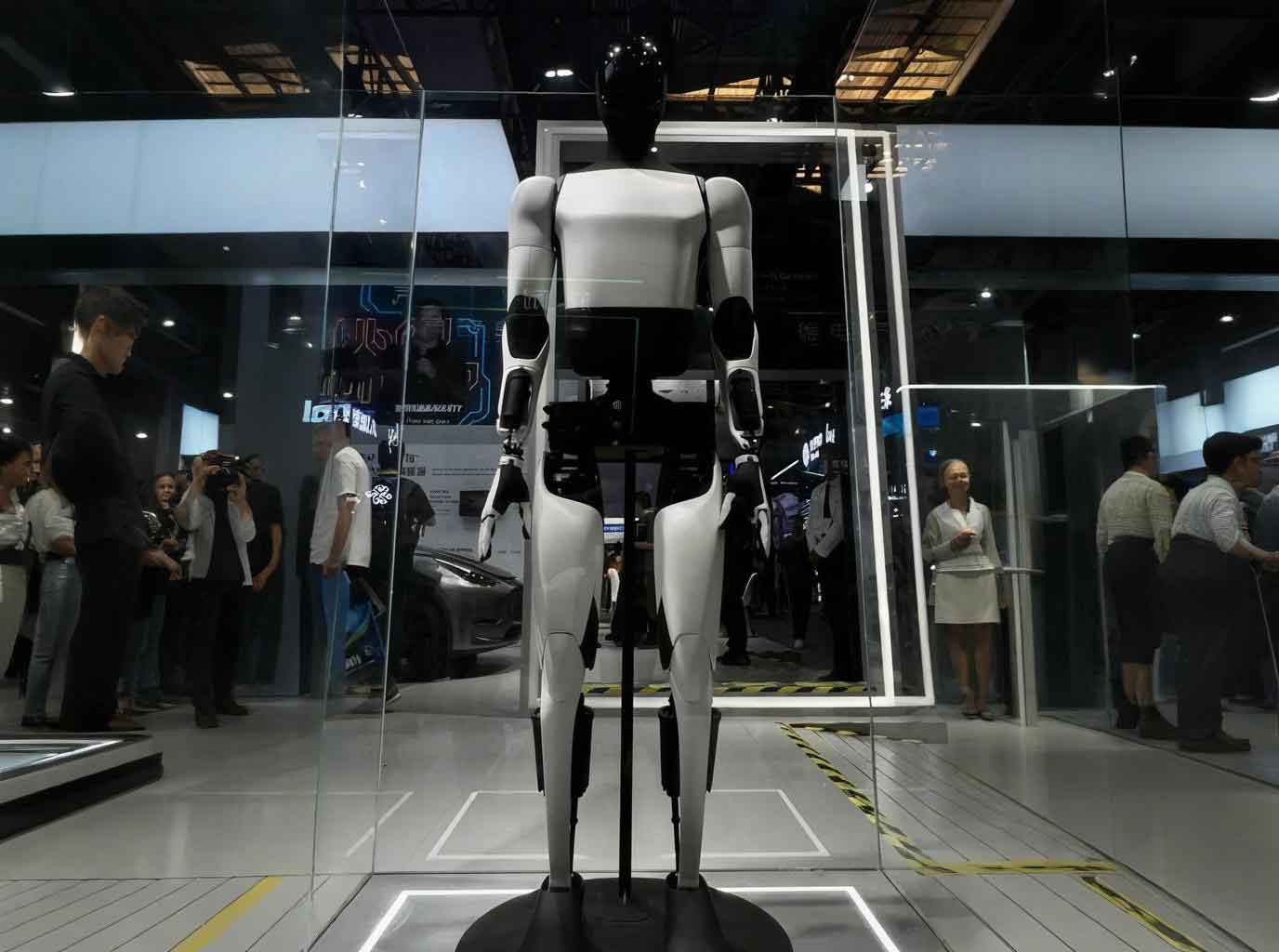
The core argument I advance is that the integration of embodied AI robot technology necessitates and enables a profound re-subjectification of digital IPE. It moves us beyond the “tool-empowerment” model toward a “subject-reconstruction” paradigm. This reconstruction hinges on recognizing the embodied AI robot not just as a mediator but as a new kind of active participant that re-calibrates the “body-subject” dialectic. To neglect the body is to neglect the very ground of subjective experience and agency. Therefore, the central task for IPE in the age of embodied intelligence is to harness this technology to foster a holistic development where bodily experience and conscious subjectivity are synergistically reinforced, rather than one being eclipsed by the other.
I. Body-as-Subject: The Foundational Dimension of Human Development in IPE
A philosophical realignment is necessary, shifting from a dualistic mind-body model to an integrative “body-subject” framework. The body is not a mere container for the mind but the primary medium through which we perceive, interpret, and act upon the world. Subjectivity emerges from this corporeal engagement.
1.1 Experientiality: The Modality of Bodily Influence
Cognition is fundamentally embodied. It arises from the continuous loop of sensorimotor experience. As formulated in embodied cognitive science, our conceptual frameworks, values, and even moral reasoning are shaped by pre-conceptual bodily interactions. In IPE, this translates to a simple but profound truth: abstract political concepts, ethical principles, and social values cannot be fully internalized through disembodied transmission alone. They require experiential grounding.
- Direct (Embodied) Experience: Field visits, role-playing, physical community service, and hands-on workshops.
- Indirect (Disembodied) Experience: Listening to lectures, reading texts, watching documentaries.
Traditional education has been limited by the scalability of direct experiences. Here, the embodied AI robot acts as a powerful experiential amplifier and bridge. It can simulate high-fidelity historical or social scenarios, guide physical interactions in learning tasks, and provide a tangible, responsive presence that makes abstract lessons palpable. The experiential gain can be modeled as a function of sensory fidelity and interaction depth:
$$ E = f(S, I, C) $$
Where \(E\) is the educational experience, \(S\) is sensory richness, \(I\) is the degree of interactive agency, and \(C\) is the contextuality provided by the embodied AI robot‘s situatedness.
1.2 From Experience to Subjectivity: The Formative Loop
Subjectivity—the capacity for autonomous, critical, and creative thought and action—is not pre-given but cultivated. The process of cultivation is driven by the internalization and reflection upon experience. The “body-subject” framework posits that this internalization is itself a bodily process, forming what can be called “habit” or “bodily schema.”
This formative process can be summarized in the following dynamic model:
| Phase | Bodily Dimension | Cognitive/Affective Dimension | Role of Embodied AI Robot |
|---|---|---|---|
| 1. Primary Interaction | Sensorimotor engagement with environment (physical/virtual). | Perception, basic affective response. | Provides a structured, responsive environment for safe exploration and action. |
| 2. Experiential Integration | Formation of motor patterns, sensory associations. | Formation of tacit knowledge, intuitive understanding. | Guides and scaffolds interactions to build meaningful sensorimotor patterns aligned with learning objectives. |
| 3. Reflective Abstraction | Body as anchor for metaphorical thinking (“grasping” an idea). | Concept formation, explicit knowledge, value judgment. | Can engage in Socratic dialogue, prompt reflection, and connect physical experiences to abstract principles. |
| 4. Habitual Agency | Internalized schema enabling spontaneous, value-congruent action. | Strengthened subjective identity, moral autonomy, critical stance. | Serves as a persistent companion and reminder, reinforcing desired schemas through consistent interaction. |
The ultimate aim of IPE is to facilitate progress through this loop, where enriched experience (\(E\)) feeds the development of robust subjectivity (\(Subj\)). This can be expressed as a growth function:
$$ \frac{d(Subj)}{dt} = \alpha \cdot R(E, Subj) $$
where the rate of change in subjectivity depends on a coefficient of learning efficacy \(\alpha\) and a reflection function \(R\) that operates on current experience and existing subjectivity.
II. The Body-Subject Schism: A New Pathology of Traditional Digital IPE
Before the advent of sophisticated embodied AI robot systems, digital IPE often exacerbated the separation between body and subject. The virtual space, while expansive, tended to create a “disembodied subjectivity.”
2.1 The Primacy of the Digital Body & The Occlusion of the Physical
In standard virtual learning environments, the user is represented by an avatar or a digital profile—a “digital body.” This representation, while flexible, suffers from critical limitations:
- Homogenization: Digital bodies can mask the unique physical, emotional, and socio-cultural characteristics of the learner, leading to a one-size-fits-all pedagogy that fails to engage individual potential.
- Accountability Diffusion: The anonymity or pseudonymity of digital bodies can dilute the sense of real-world responsibility and consequence, weakening the link between virtual action and ethical identity.
- Agency Override: Algorithmic recommendation systems (e.g., for content) can subtly guide the digital body’s “choices,” outsourcing autonomy to predictive analytics and creating “filter bubbles” that narrow cognitive horizons. This is the antithesis of cultivating critical subjectivity.
2.2 Enhanced Sensation vs. Diminished Comprehension
Modern VR/AR can provide intense sensory stimulation—a form of enhanced virtual experientiality. However, without proper pedagogical framing through an intelligent, interactive agent, this can lead to:
- Cognitive Fragmentation: Isolated, dramatic simulations may lack historical or conceptual continuity, resulting in a patchwork of impressions rather than deep understanding.
- Superficial Engagement: The “wow factor” of immersive tech can prioritize spectacle over substance, leading to passive consumption rather than active, critical engagement.
- Unidirectional Cognition: As mentioned, algorithmically curated experiences can produce a “single-dimensional” cognitive pathway, stifling the dialectical thinking essential for robust political and ideological subjectivity.
The following table contrasts the characteristics of traditional digital IPE with the potential of an embodied AI robot-facilitated paradigm:
| Aspect | Traditional Digital IPE (Disembodied) | Embodied AI Robot-Facilitated IPE |
|---|---|---|
| Primary Medium | Screen, avatar, keyboard/mouse. | Physical robotic entity with multi-modal sensors and actuators. |
| Body-Subject Link | Separated; physical body passive, digital body abstract. | Integrated; physical body actively engaged, subjectivity grounded in real-time corporeal interaction. |
| Experiential Mode | Mostly visual/auditory, often passive consumption. | Multi-sensory (tactile, proprioceptive), inherently interactive and agentic. |
| Agency & Feedback | Limited, pre-programmed pathways; feedback is often delayed and digital. | Dynamic, adaptive response; immediate physical and social feedback from the robot and environment. |
| Risk of Subjectivity Erosion | High (anonymity, algorithmic determinism, passivity). | Mitigated (accountable presence, guided reflection, active co-construction of meaning). |
III. Embodied Subjectivity: The Path to Resubjectification via Embodied AI Robots
The solution to the body-subject schism lies not in rejecting technology, but in embracing a form of technology—the embodied AI robot—that recenters the physical and the experiential. The goal is resubjectification: using the embodied AI robot to reaffirm and strengthen the learner’s status as an autonomous, critical, and socially embedded agent.
3.1 Grounding the Digital: The Physical Body as Regulative Template
The embodied AI robot must be designed and deployed to serve the physical human, not replace it. This involves several key principles:
- Biometric Continuity: The robot’s interactions should be tied to the unique biological identity of the learner (in an ethical, privacy-preserving manner), ensuring that the digital/physical learning journey is personalized and accountable. The robot becomes a persistent companion in development, not a detached portal.
- Reality Reinforcement: The embodied AI robot should consistently bridge virtual scenarios back to real-world roles and responsibilities. For example, a simulation about environmental policy run by the robot should conclude with prompts for tangible, local action, with the robot perhaps assisting in planning or monitoring those actions.
- Holistic Assessment: Evaluation must transcend digital analytics. The embodied AI robot, through its sensors, can observe and report on physical manifestations of understanding—engagement, collaboration, practical application—providing a more complete picture of subjective development than clickstream data alone. A composite assessment score \(A\) could be:
$$ A = \omega_1 \cdot D_{data} + \omega_2 \cdot P_{phy} + \omega_3 \cdot R_{reflection} $$
where \(D\) is digital performance, \(P\) is physical/task performance assessed by the robot, \(R\) is quality of reflective dialogue with the robot, and \(\omega\) are weights prioritizing holistic growth.
3.2 Structuring Embodied Experience to Foster Critical Subjectivity
The embodied AI robot is an ideal platform for structuring experiences that move beyond sensation to cultivation.
- Guided Exploratory Experiences: The robot can set up physical puzzles or scenarios that require learners to collaboratively discover principles of social cooperation or ethical problem-solving, making abstract values tangible.
- Dialogic & Socratic Engagement: Unlike a pre-recorded lesson, an embodied AI robot can engage in real-time dialogue, challenging assumptions, asking probing questions, and encouraging learners to articulate and defend their views, thereby strengthening their subjective voice.
- Reflective Praxis Loops: The robot can facilitate a cycle of action and reflection. After a collaborative task, it can guide a debriefing session, asking: “How did your body feel during that conflict?” “What would you do differently?” This integrates the bodily experience directly into cognitive reflection.
3.3 Presence and Co-Presence: Reinforcing Social Subjectivity
Subjectivity is also intersubjective; it is formed in relation to others. An embodied AI robot possesses a physical presence that a screen avatar lacks. This presence enables:
- Shared Physical Context: Learners and robots share the same physical space, working on tangible objects. This fosters a sense of shared reality and collective purpose, essential for teaching communal values and civic responsibility.
- Modeling Pro-Social Behavior: The embodied AI robot can be programmed to demonstrate (and insist upon) turn-taking, respectful communication, and cooperative problem-solving, providing a constant, interactive model for social norms.
- Mitigating Technological Alienation: By being a physical entity that learners care for, maintain, and interact with socially, the embodied AI robot can counteract the alienating effects of purely virtual interaction. It becomes part of the learner’s social world, teaching empathy and responsibility through direct interaction.
The resubjectification process facilitated by an embodied AI robot can be modeled as a system of integration, where fragmented components of the learning self are brought into a coherent whole:
$$ Subj_{integrated} = \int_{t_0}^{t_1} \left[ \beta \cdot B_{physical}(t) + \gamma \cdot E_{robot}(t) + \delta \cdot I_{social}(t) \right] \cdot R_{meta}(t) \, dt $$
Here, the integrated subjectivity over time is a function of the integral of bodily state \(B\), robot-mediated experience \(E\), and social interaction \(I\), all modulated by a meta-cognitive reflection function \(R_{meta}\). The coefficients \(\beta, \gamma, \delta\) represent the relative importance of each domain, ideally balanced by the pedagogical design orchestrated by the embodied AI robot.
Conclusion: The Embodied AI Robot as Catalyst for Holistic Development
The advent of embodied intelligence signals more than a technological shift; it is an imperative to re-ground our educational philosophies. For digital ideological and political education, which grapples with the highest-order tasks of shaping values, ethics, and civic identity, this imperative is particularly urgent. The disembodied, consumption-based model of digital learning risks producing subjects who are informed but not transformed, connected but not committed.
The embodied AI robot emerges as a uniquely powerful mediator in this context. It is not a replacement for human teachers or real-world experience, but a sophisticated catalyst that can make the abstract concrete, the passive active, and the individualistic collaborative. By insisting on physical interaction, by providing a responsive social presence, and by structuring experiences that cycle from action to reflection, the embodied AI robot helps mend the body-subject schism. It champions a subjectivity that is not ethereal but enacted, not just thought but felt and lived.
In this new ecology, the embodied AI robot acts as both mirror and scaffold: reflecting the learner’s embodied actions back to them for reflection, and scaffolding experiences that build towards autonomous, critical, and socially responsible agency. The future of effective digital IPE, therefore, lies not in fleeing further into the virtual, but in leveraging technologies like the embodied AI robot to conduct a profound “return to the body,” thereby reclaiming and重塑ing a subjectivity that is whole, resilient, and fully human.