
As I reflect on the rapid evolution of technology, I am struck by how the concept of AI human robot systems has transitioned from science fiction to tangible reality. In my observations, the integration of artificial intelligence with robotics is not just a technological shift but a profound transformation in how humans interact with machines. The vision of AI human robot companions as trusted partners in daily life is no longer a distant dream; it is unfolding before our eyes. This article explores the journey of bionic robotics, the global competitive landscape, and the potential pathways for growth, all through the lens of my own analysis and experiences. I will delve into the technical foundations, market dynamics, and future prospects, emphasizing the pivotal role of AI human robot innovations in shaping our world.
The development of bionic robotics spans decades, marked by significant milestones that highlight the convergence of mechanics, electronics, and AI. In my assessment, bionic robots can be broadly categorized into humanoid and animal-like types, each serving distinct purposes. Humanoid robots aim to replicate human form and function, while animal-inspired designs leverage biological efficiencies for specific tasks. The core components of these AI human robot systems include sensory systems (analogous to biological perception), control systems (acting as the brain), actuation systems (like limbs), and drive systems (similar to joints). These elements work in harmony, enabled by advancements in AI human robot technologies such as machine learning, computer vision, and sensor fusion. Below is a table summarizing the key categories and characteristics of bionic robots based on my research:
| Category | Sub-category | Key Features | Applications |
|---|---|---|---|
| Humanoid | Full-body humanoid | Bipedal locomotion, human-like interaction | Domestic assistance, healthcare |
| Humanoid | Enhanced human devices | Exoskeletons, prosthetic limbs, sensory augmentation | Rehabilitation, industrial support |
| Animal-like | Quadruped and other forms | Mimics animal movement, agile navigation | Exploration, surveillance, companionship |
From a technical perspective, the progression of AI human robot systems involves complex algorithms and models. For instance, the motion control of a humanoid robot can be described using kinematic equations. Consider the forward kinematics for a robotic arm, where the position and orientation of the end-effector are derived from joint angles. In LaTeX, this can be represented as: $$ \mathbf{x} = f(\mathbf{q}) $$ where $\mathbf{x}$ is the pose vector and $\mathbf{q}$ is the joint angle vector. Similarly, the dynamics involve torque calculations: $$ \tau = M(\mathbf{q})\ddot{\mathbf{q}} + C(\mathbf{q}, \dot{\mathbf{q}}) + G(\mathbf{q}) $$ where $\tau$ is the torque, $M$ is the inertia matrix, $C$ accounts for Coriolis forces, and $G$ represents gravitational effects. These equations underscore the sophistication required in AI human robot design, as they must adapt to real-world environments through AI-driven learning.
In my view, the historical trajectory of bionic robotics began with theoretical concepts in the early 20th century and accelerated with computational advances mid-century. Early prototypes focused on basic automation, but the infusion of AI human robot capabilities has enabled leaps in autonomy and interaction. For example, the emergence of full-terrain humanoid robots in the 2010s demonstrated remarkable agility, capable of running and jumping. The following table outlines major phases in the industry’s growth, as I have chronicled through studies and reports:
| Period | Phase | Key Developments | AI Human Robot Impact |
|---|---|---|---|
| Pre-2021 | Germination | Basic prototypes, limited autonomy | Early AI integration for simple tasks |
| 2021-Present | Growth | Advanced models with AI, increased dexterity | Enhanced learning and adaptation in AI human robot systems |
| Post-2030 (Projected) | Application | Widespread adoption in various sectors | Seamless AI human robot collaboration in daily life |
The rise of AI human robot technologies has been fueled by breakthroughs in artificial intelligence, particularly with large language models. In my analysis, models like GPT have injected a “soul” into robots, enabling natural language processing and contextual understanding. For instance, the probability of a robot generating an appropriate response can be modeled using a softmax function: $$ P(y|x) = \frac{\exp(s(x, y))}{\sum_{y’ \in \mathcal{Y}} \exp(s(x, y’))} $$ where $x$ is the input (e.g., a user’s query), $y$ is the output response, and $s(x, y)$ is a scoring function learned by the AI. This has empowered AI human robot systems to engage in dialogues, guide tours, or assist in homes, as seen with robotic dogs that respond to voice commands.
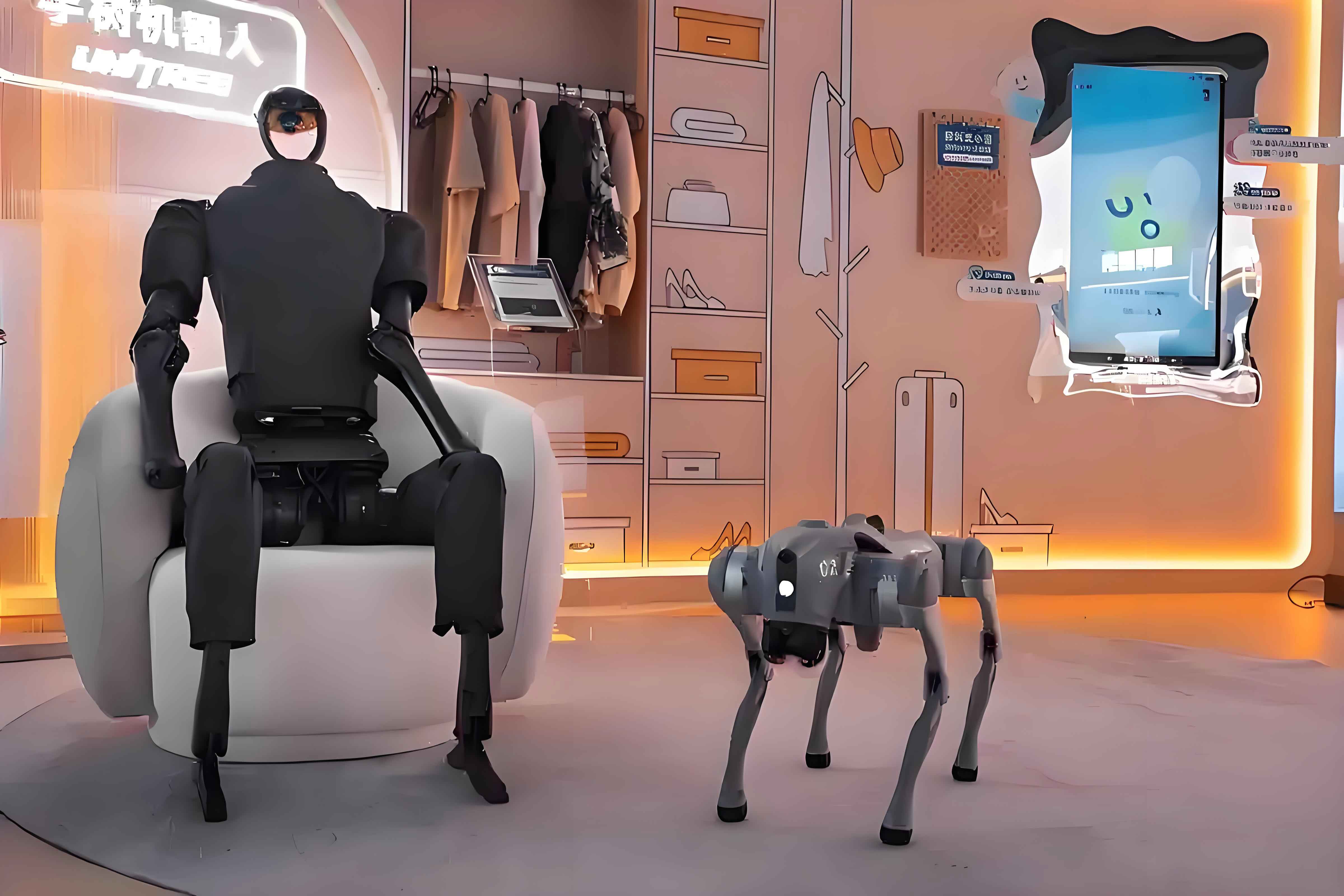
As I turn to the global landscape, the competition in AI human robot development has intensified, with nations and corporations vying for leadership. In my assessment, this is driven by strategic policies and substantial investments. For example, many governments have introduced initiatives to fund research and development in robotics, focusing on core technologies like AI, machine vision, and brain-computer interfaces. The table below summarizes typical policy approaches and their focus areas, derived from my review of international trends:
| Region Type | Policy Emphasis | Investment Scale | AI Human Robot Focus |
|---|---|---|---|
| Tech hubs | R&D grants, innovation centers | High (billions USD) | Humanoid robots, AI integration |
| Emerging zones | Incubation programs, tax incentives | Moderate | Niche applications like exoskeletons |
From an economic standpoint, the market for AI human robot solutions has attracted significant venture capital and corporate investments. In my observation, startups and established tech firms are racing to develop products, from humanoid assistants to enhanced prosthetic devices. The valuation of companies in this space has soared, with IPOs drawing attention to the potential of AI human robot ecosystems. This enthusiasm is rooted in the scalability of these technologies; for instance, the cost-effectiveness of mass-producing robotic components can be analyzed using production functions. Consider a Cobb-Douglas style model for robot manufacturing: $$ Q = A L^\alpha K^\beta $$ where $Q$ is output, $A$ is total factor productivity (driven by AI advancements), $L$ is labor, $K$ is capital, and $\alpha$ and $\beta$ are elasticities. As AI human robot systems improve, $A$ increases, reducing costs and accelerating adoption.
However, in my experience, challenges persist in the AI human robot domain, particularly in hardware-software integration and real-world application. Many regions struggle with imbalances in their industrial bases, such as strong software capabilities but weak hardware production. This leads to high costs and supply chain inefficiencies. For example, the transportation cost for components can be modeled as: $$ C_t = d \times c \times w $$ where $C_t$ is total cost, $d$ is distance, $c$ is cost per unit distance, and $w$ is weight. In areas lacking local manufacturing, $d$ increases, hampering the growth of AI human robot industries. To address this, I believe in fostering ecosystems that leverage existing strengths while addressing gaps through targeted investments and collaborations.
Looking ahead, the future of AI human robot systems hinges on continuous innovation in key areas. In my opinion, priorities include advancing machine vision algorithms, which can be expressed as optimization problems: $$ \min_{\theta} \sum_{i=1}^N \mathcal{L}(f(x_i; \theta), y_i) $$ where $f$ is a vision model parameterized by $\theta$, $x_i$ are input images, $y_i$ are labels, and $\mathcal{L}$ is a loss function. Similarly, brain-computer interfaces for enhanced human-robot interaction could involve neural decoding models: $$ \hat{s} = g(\mathbf{e}) $$ where $\hat{s}$ is the decoded signal and $\mathbf{e}$ is neural activity. By focusing on such technologies, we can unlock new applications in healthcare, manufacturing, and beyond, making AI human robot systems more accessible and effective.
In conclusion, as I envision the path forward, the synergy between AI and robotics will redefine human capabilities and societal structures. The proliferation of AI human robot solutions promises to enhance productivity, improve quality of life, and address complex global challenges. Through collaborative efforts in research, policy, and market development, we can navigate the uncertainties and harness the full potential of this transformative era. The journey of AI human robot evolution is just beginning, and I am optimistic about its positive impact on our collective future.