
As I reflect on the evolution of robotics over the past half-century, from the birth of the first robot in the United States to the vibrant ecosystem we see today, I am struck by the transformative role that robots have come to play. In my view, we are witnessing a golden age where robots are not only revolutionizing industries but also seamlessly integrating into daily life. The progress in technology, coupled with societal needs, has propelled robots into the spotlight. Nowhere is this more evident than in China, where the rise of the China robot sector is reshaping manufacturing, services, and beyond. In this article, I will delve into the global landscape, the expanding demand in China, the leaps in research and development, the challenges ahead, and the future of human-robot collaboration, all from my firsthand observations. I will employ tables and formulas to encapsulate key data and concepts, emphasizing the pivotal role of China robot in this narrative.
The global community has increasingly recognized robotics as a cornerstone of technological advancement. Over the past decade, robots have been hailed as one of the four technologies influencing human production and life, a driver of the third industrial revolution, a disruptive technology shaping the global economy, and a top technical innovation. This recognition has spurred nations worldwide to prioritize robotics in national strategies. For instance, the United States has outlined a robotics roadmap, equating its importance to the internet in the 20th century. The European Union launched “SPARC,” the largest civilian robotics research initiative, aiming to invest €28 billion by 2020 and create 240,000 jobs. Japan has formulated a long-term robotics strategy, listing it among seven key industries for growth, while South Korea has enacted the “Smart Robot Basic Plan” and “Robot Future Strategy 2022” to expand its robot industry and support global market entry. To summarize these efforts, I present Table 1, which highlights global robotics initiatives and their impacts.
| Country/Region | Initiative Name | Key Investment/Goal | Focus Area |
|---|---|---|---|
| United States | Robotics Roadmap | Emphasis on R&D and deployment | Industrial and service robots |
| European Union | SPARC Program | €28 billion by 2020 | Civilian robotics, job creation |
| Japan | Robot Revolution Initiative | Part of new industry strategy | Manufacturing and healthcare robots |
| South Korea | Smart Robot Basic Plan | Market expansion and overseas reach | Industrial and consumer robots |
| China | Made in China 2025 | Integration into smart manufacturing | China robot industry growth |
In parallel, the demand for robots in China has surged dramatically. From my analysis, this is driven by economic shifts, including labor shortages and rising wages, which have elevated human costs. Enterprises are turning to robots as a preferred solution to boost productivity. According to data from the International Federation of Robotics (IFR), robot imports in China skyrocketed from 380 units in 2000 to 36,860 units in 2013—a hundredfold increase over 13 years. In 2013, global industrial robot sales reached approximately 179,000 units, with China accounting for 37,000 units, ranking first worldwide with a 60% year-on-year growth. By 2014, China’s market share rose to one-quarter of the global total, solidifying its position as the largest consumer of robots. This trend underscores the critical role of China robot in addressing industrial needs. To quantify this growth, I use a formula for compound annual growth rate (CAGR): $$ CAGR = \left( \frac{V_f}{V_i} \right)^{\frac{1}{n}} – 1 $$ where \( V_i \) is the initial value (380 robots in 2000), \( V_f \) is the final value (36,860 robots in 2013), and \( n \) is the number of years (13). Plugging in the values: $$ CAGR = \left( \frac{36860}{380} \right)^{\frac{1}{13}} – 1 \approx 0.45 \text{ or } 45\% $$ This high CAGR reflects the explosive demand for China robot in the industrial sector.
Moreover, China’s manufacturing transformation and upgrade necessitate advanced robotics. The low robot density per 10,000 industrial workers in China, compared to the global average, indicates vast room for expansion. Beyond industry, service robots—such as those for rehabilitation, elderly assistance, medical support, and special applications—are gaining traction. Policies like “mass entrepreneurship and innovation” are fueling the creation of diverse robots. The potential of China robot in these domains is immense, as shown in Table 2, which outlines demand sectors and projected growth.
| Sector | Robot Type | Key Drivers | Estimated Market Growth Rate |
|---|---|---|---|
| Manufacturing | Industrial Robots | Labor cost rise, productivity needs | 20% annually |
| Healthcare | Medical Assistive Robots | Aging population, tech adoption | 25% annually |
| Logistics | AGVs and Mobile Robots | E-commerce boom, automation | 30% annually |
| Consumer | Service and Entertainment Robots | Smart home trends, innovation | 15% annually |
| Special Environments | Underwater and Aerial Robots | Resource exploration, defense | 10% annually |
Turning to research and development, I have observed remarkable progress in China robot technology. Through decades of effort, Chinese institutions have mastered industrial robot design and accumulated practical experience. For example, early research centers laid the foundation for robotics, contributing to milestones like industrial robots and AGVs that kickstarted domestic robot industrialization. Innovations in rescue and anti-terror robots, rotary-wing flying robots, high-pressure waterjet cutting robots, and laser processing robots have been deployed effectively. Notably, robots for extreme environments—such as long-range autonomous underwater vehicles, Arctic ice observation robots, Antarctic exploration robots, and deep-sea unmanned submersibles like “Qianlong-1″—have achieved groundbreaking feats. These advancements underscore the capabilities of China robot in pushing technological boundaries. Additionally, academic and corporate entities have made strides: robot technologies from universities have been applied in aerospace, brain surgery assistance robots have entered medical practice, and nuclear power plant robots have been utilized in construction. The pioneering enterprises in China robot have embarked on autonomous growth paths. Companies have emerged as leaders, with market capitalizations reaching billions, and products like cleanroom (vacuum) robots breaking foreign monopolies, mobile robots becoming international procurement targets, and special robots seeing batch use in defense. Other firms have carved niches in CNC systems and robot manufacturing, gradually establishing sustainable models. A standout example is a global leader in unmanned aerial vehicle systems, serving clients worldwide and achieving stellar performance. This progress is summarized in Table 3, highlighting key achievements in China robot R&D.
| Institution/Company | Achievement | Impact | Year |
|---|---|---|---|
| Research Institutes | First industrial robot and AGV | Initiated domestic robot industry | Early 2000s |
| Academia | Robots for aerospace and medical use | Applied in high-tech fields | 2010s |
| Enterprise A | Cleanroom robot development | Reduced import dependency | 2012 |
| Enterprise B | Mobile robot exports | Gained global market share | 2013 |
| Enterprise C | UAV system innovation | Dominance in consumer drones | 2014 |
Despite these advances, I must acknowledge that challenges remain for China robot. Overall, industrial robot manufacturers in China are still relatively small in scale, with limited market share. Key components, such as reducers and controllers, lag behind international advanced products in quality. Technological innovation is evolving, and the service robot industry lacks large-scale industrialization. As highlighted by national leadership, China may become the largest robot market, but its technical and manufacturing competitiveness needs strengthening. To address this, we must bolster weak areas and expand enterprises. Future competitiveness hinges on monitoring trends and conducting research for technology reserves. For instance, manufacturing is shifting toward shorter product lifecycles and personalized demands, requiring flexible systems that can reconfigure rapidly. In such systems, robots must enhance motion capabilities and rapid programming. Current industrial robots suffer from low absolute positioning accuracy, making quick, high-precision calibration a challenge. A potential solution involves information technology for fast three-point positioning, which can be modeled mathematically. Consider the transformation matrix for robot end-effector positioning: $$ T = \begin{bmatrix} R & p \\ 0 & 1 \end{bmatrix} $$ where \( R \) is the rotation matrix and \( p \) is the position vector. For high-precision calibration, we can use iterative algorithms like the Newton-Raphson method to solve for joint angles \( \theta \): $$ \theta_{k+1} = \theta_k – J^{-1}(\theta_k) f(\theta_k) $$ where \( J \) is the Jacobian matrix and \( f \) represents positioning error. Improving this process is crucial for China robot to meet future manufacturing agility.
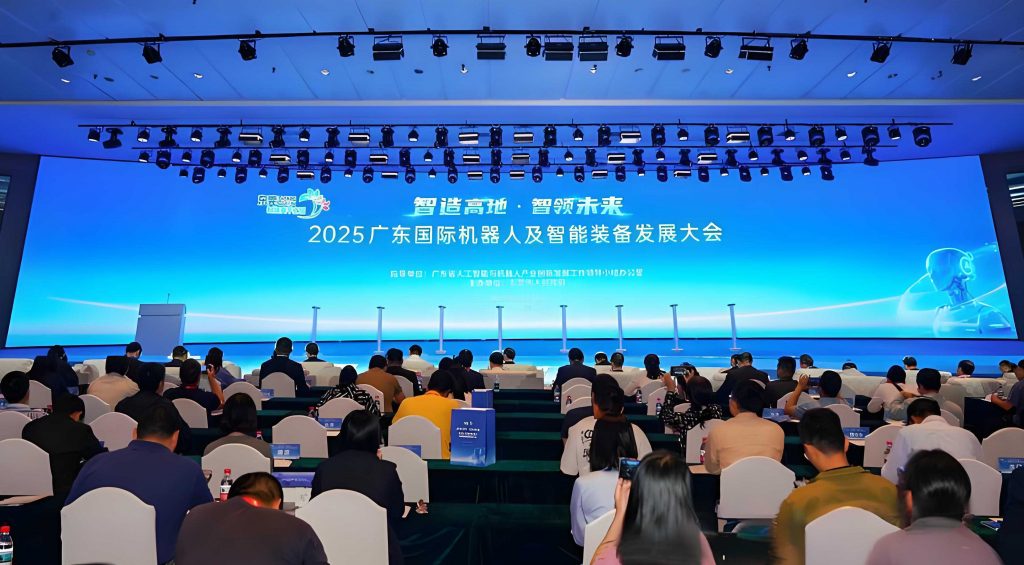
Looking ahead, I believe the integration of robots with humans will define the next era. Historically, robots were invented to assist, not replace, humans. In future manufacturing—such as aircraft assembly or ship welding—robots will collaborate closely with people, addressing tasks that require flexibility and dexterity. Current robots often fall short due to limited online perception, inability to interpret abstract commands, inefficient human interaction, and inadequate safety mechanisms. To overcome this, human-robot collaboration (HRC) is essential, where robots become ideal tools that blend seamlessly with humans. The degree of this symbiosis will be a key metric for China robot development. This vision aligns with cross-disciplinary advancements that will propel robot technology. For example, artificial intelligence and internet technologies will provide a robust “backbrain” for robots, enhancing intelligence. Materials science may lead to “soft robots” with artificial muscles, revolutionizing design. Intersections with brain science could enable direct human control of robot behaviors, while life science integrations might yield bio-inspired robots. These trends can be expressed through formulas that model hybrid systems. For AI-enhanced robots, we might use a reinforcement learning update rule: $$ Q(s,a) \leftarrow Q(s,a) + \alpha [r + \gamma \max_{a’} Q(s’,a’) – Q(s,a)] $$ where \( Q \) is the action-value function, \( \alpha \) is the learning rate, \( r \) is the reward, and \( \gamma \) is the discount factor. This symbolizes the intelligent evolution of China robot. Similarly, for soft robotics, material strain can be described by Hooke’s law for viscoelastic materials: $$ \sigma = E \epsilon + \eta \frac{d\epsilon}{dt} $$ where \( \sigma \) is stress, \( E \) is Young’s modulus, \( \epsilon \) is strain, and \( \eta \) is viscosity. Such innovations will redefine what China robot can achieve.
In conclusion, from my perspective, the China robot industry stands at a pivotal juncture. With growing global emphasis, surging domestic demand, significant R&D breakthroughs, and ongoing challenges, the path forward requires concerted effort. By focusing on human-robot collaboration and leveraging cross-disciplinary technologies, China robot can not only dominate markets but also enrich human work and life. I am confident that the future holds a bright and expansive horizon for robots, with China playing a central role in this transformation. As we advance, continuous innovation and integration will ensure that China robot remains at the forefront of the global robotics revolution, driving smart manufacturing and meeting societal needs in ways we are only beginning to imagine.
To further illustrate the technical landscape, I include Table 4, which compares key performance metrics between China robot components and international benchmarks, highlighting areas for improvement. This table underscores the need for ongoing research and development in the China robot sector.
| Component | Metric | China Robot Average | International Advanced Average | Gap Analysis |
|---|---|---|---|---|
| Reducers | Precision (arcmin) | 3-5 | 1-2 | Moderate, needs refinement |
| Controllers | Response Time (ms) | 10-15 | 5-8 | Significant, requires optimization |
| Sensors | Accuracy (%) | 95-98 | 99-99.9 | Notable, impacts perception |
| Actuators | Efficiency (%) | 80-85 | 90-95 | Substantial, affects energy use |
| Software | AI Integration Level | Medium | High | Critical, limits autonomy |
Moreover, the economic impact of China robot can be modeled using growth equations. For instance, the contribution of robotics to GDP growth in China can be expressed as: $$ \Delta GDP = \alpha \cdot I_r + \beta \cdot L_r $$ where \( \Delta GDP \) is the change in GDP, \( I_r \) is investment in robot technology, \( L_r \) is labor productivity gains from robots, and \( \alpha \) and \( \beta \) are coefficients derived from empirical data. As China robot adoption increases, these factors will amplify, reinforcing its strategic importance. In summary, the journey of China robot is one of rapid ascent and boundless potential, guided by innovation and a commitment to human-centric design. I eagerly anticipate the continued evolution of this field, where robots will not only augment our capabilities but also become trusted partners in shaping a smarter, more connected world.