
We stand at a pivotal moment in the history of technology and industry, where the convergence of artificial intelligence, robotics, and cyber-physical systems is giving birth to a new paradigm: the embodied AI robot. As members of a global initiative dedicated to advancing this transformative field, we recently convened to formally establish a collaborative body aimed at steering the development and integration of embodied AI robots. This gathering marked not just a meeting, but the launch of a concerted effort to bridge the gap between intelligent cognition and physical action, to turn visionary concepts into tangible realities that will reshape manufacturing, healthcare, logistics, and daily life.
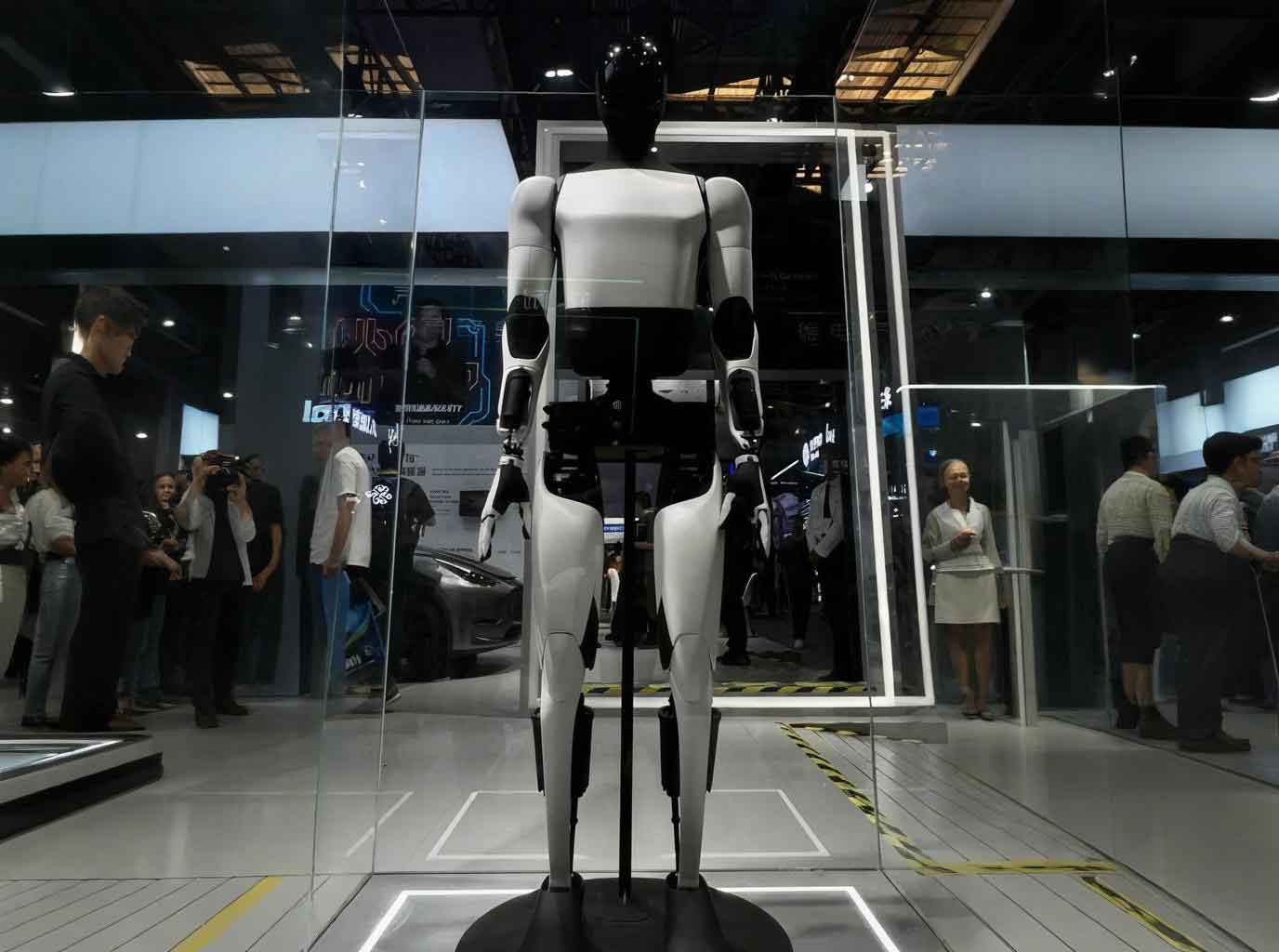
The journey toward advanced embodied AI robot systems is inherently a multidisciplinary endeavor. It requires seamless integration across perception, decision-making, and control—a synergy often described as moving from a “smart brain” to “dexterous hands.” Yet, significant technical chasms remain. The development of embodied AI robot is a complex, systemic engineering challenge that demands breakthroughs in software-hardware co-design and the dismantling of data silos and technological barriers through unified standards and protocols. Our collective mission is to transform strategic guidance into actionable initiatives and theoretical discussions into innovative practices. We envision a future where embodied AI robot platforms are open, interoperable, and capable of widespread adoption.
To ground our vision, we have identified three core pillars of work that will guide our efforts in the coming years. These pillars encapsulate the fundamental requirements for scaling embodied AI robot technologies from labs to global industries.
| Pillar | Key Focus Areas | Expected Outcomes |
|---|---|---|
| Core Technology Breakthroughs | Development of large-scale brain models for embodied AI robot, multimodal fusion perception, autonomous decision-making algorithms, and adaptive control systems. | Reduction of the cognition-action gap, improved robot autonomy in dynamic environments, and enhanced learning efficiency. |
| Standard System Construction | Establishment of foundational common standards, progressing to comprehensive chains covering product performance, application scenarios, and safety regulations for embodied AI robot. | Interoperability across different embodied AI robot platforms, accelerated certification processes, and increased market trust. |
| Ecosystem Prosperity | Organizing industry forums, technical exchanges, and fostering deep collaboration networks among academia, research, industry, and end-users for embodied AI robot. | A vibrant, innovative community, faster technology transfer, and scalable deployment of embodied AI robot solutions. |
The mathematical foundation of an embodied AI robot can be conceptualized through a perception-decision-action loop. Let \( \mathcal{S} \) represent the state space derived from multimodal sensor inputs, \( \mathcal{A} \) the action space for physical manipulation, and \( \mathcal{P} \) the policy mapping states to actions. The core challenge is to optimize a policy \( \pi \) that maximizes cumulative reward \( R \) over time, often formalized as:
$$ \pi^* = \arg\max_{\pi} \mathbb{E} \left[ \sum_{t=0}^{T} \gamma^t r(s_t, a_t) \right] $$
where \( s_t \in \mathcal{S} \) is the state at time \( t \), \( a_t = \pi(s_t) \in \mathcal{A} \) is the action, \( r \) is the reward function, and \( \gamma \) is a discount factor. For an embodied AI robot, the state \( s_t \) is obtained through multimodal fusion, which can be expressed as:
$$ s_t = F_{\theta}(v_t, a_t, t_t, \ldots) $$
Here, \( F_{\theta} \) is a fusion model parameterized by \( \theta \), integrating visual data \( v_t \), auditory data \( a_t \), tactile data \( t_t \), and other sensory inputs. The embodiment aspect necessitates that actions \( a_t \) are translated into physical control signals \( u_t \) via an actuator model \( g \):
$$ u_t = g(a_t; \phi) $$
where \( \phi \) represents the hardware-specific parameters. The integration of these components into a cohesive embodied AI robot system is non-trivial, requiring advancements in both algorithmic robustness and real-time execution.
Our collaborative body emerged from a recognition that isolated efforts in robotics, AI, and industrial automation have led to fragmented ecosystems—akin to historical issues of proprietary, incompatible systems in industrial control. The embodied AI robot industry is at a nascent stage where convergence has not yet occurred; multiple technical pathways coexist, and standards are largely absent. This fragmentation hinders large-scale adoption. Therefore, our initiative aims to build a platform-based, open industrial blueprint that connects downstream robots, industrial automation, and upstream computing and AI software, forming a complete ecosystem from chips and software to integrated systems. We believe that by pooling resources and expertise, we can accelerate the transition of embodied AI robot from key technology breakthroughs to widespread industrial application.
Representatives from diverse sectors—including research institutions, telecommunications firms, technology companies, and academic bodies—united under this common cause. While specific entities are not named here to maintain focus on the collective, their shared insights highlight the multifaceted nature of advancing embodied AI robot. One perspective emphasized that information and communication technologies are core drivers of industrial transformation, and their fusion with embodied AI robot holds strategic value. Issues like point-like distribution of technologies and insufficient coordination in past efforts can be addressed through a unified industrial ecology that our committee provides. Another viewpoint underscored that the primary goal is not necessarily to manufacture robot terminals directly, but to create open, enabling platforms that empower other companies and researchers to develop products efficiently. This approach fosters synergy and supports the integration of hardware, software platforms, and upper-layer applications for embodied AI robot. Furthermore, the timing of this initiative is opportune, as it can play a leading role in an early phase where industry standards are not yet unified and development paths are diverse. Efforts are already underway to establish software platform working groups, with plans to advance related documentation in the near future.
Communication infrastructure is another critical enabler for embodied AI robot. As the scale of intelligent agents approaches billions, communication networks become key infrastructure. They enable closed-loop perception and execution, enhance coordination among multi-agent systems, terminals, algorithms, and cloud computing power, and provide low-latency, high-reliability connectivity for scenarios like industry, healthcare, and smart homes. Our focus includes advancing high-end network architectures, efficient communication protocols, and comprehensive security supervision mechanisms to build a new network environment supporting efficient, reliable, and secure interconnection for massive embodied AI robot populations. The synergy between embodied AI robot and communication technologies will be pivotal for scalability.
In parallel, the demand for embodied AI robot is driven by societal needs such as aging population care, labor substitution, and the unique global advantages in smart manufacturing and hardware-software integration. Universities and research entities are actively exploring areas like robot swarm communication and open-source robotics. The current lack of convergence in robot embodiments and technical routes presents an ideal opportunity for our committee to promote standardization and ecological construction. We are committed to clarifying directions and contributing to this significant field collectively.
| Domain | Challenges | Potential Impact of Embodied AI Robot |
|---|---|---|
| Industrial Manufacturing | High precision, dynamic environments, interoperability issues. | Enhanced automation in semiconductor,新能源 (new energy) production; standardized applications leading to global leadership in smart manufacturing. |
| Healthcare & Rehabilitation | Safety, adaptability, human-robot interaction. | Assistive devices for elderly care, surgical robots, personalized therapy systems. |
| Logistics & Delivery | Navigation in complex spaces, load handling, efficiency. | Autonomous warehouses, last-mile delivery robots, optimized supply chains. |
| Smart Cities & Services | Scalability, public safety, integration with IoT. | Surveillance, maintenance, public assistance, and consumer service robots. |
| Energy & Utilities | Hazardous environments, remote operations. | Inspection robots for power grids, pipelines, and renewable energy sites. |
To operationalize our strategy, we have established several dedicated working groups that will tackle specific bottlenecks. These groups are already formulating plans to address pressing issues in the embodied AI robot landscape.
The Industrial Application and Standardization Working Group focuses on the core battlefield of industrial manufacturing. It aims to破解 (break through) the current industrial bottleneck where embodied AI robot technologies are “not yet converged and difficult to land.” By building technical standards, creating demonstration applications, and co-constructing industrial ecology, this group strives to promote the standardization and scaled application of intelligent technologies in high-end manufacturing fields. Success here will lay a solid foundation for a globally leading smart manufacturing ecosystem powered by embodied AI robot.
The Communication Network for Embodied Agents Working Group addresses the infrastructure needed for massive-scale deployment. As intelligent agents proliferate, communication networks must evolve to support high-efficiency, reliable, and secure inter-agent coordination. This group will tackle advanced network architectures, efficient communication protocols, and全域 (domain-wide) security supervision mechanisms. The goal is to create a new network environment that serves as the backbone for ubiquitous embodied AI robot operations.
The Standards and Testing Working Group confronts the primary pain point of “lack of standards” that currently constrains industry development. With a mission of “strengthening industry through standards and promoting development through evaluation,” this group will drive from both ends—simulation platforms (“soft”) and robot embodiments (“hard”)—to advance key standard formulation and test verification. This effort seeks to close the industrial loop from data and models to physical本体 (entities), building a trustworthy and efficient development cornerstone for the entire embodied AI robot sector.
The technical roadmap for embodied AI robot involves iterative refinement across multiple layers. We can model the overall system performance \( \mathcal{J} \) as a function of perceptual accuracy \( A_p \), decision-making efficiency \( E_d \), control precision \( P_c \), and interoperability \( I_o \) afforded by standards:
$$ \mathcal{J} = \alpha \cdot A_p + \beta \cdot E_d + \gamma \cdot P_c + \delta \cdot I_o $$
where \( \alpha, \beta, \gamma, \delta \) are weighting coefficients reflecting domain-specific priorities. For instance, in industrial settings, \( P_c \) and \( I_o \) might be heavily weighted, whereas in service robots, \( A_p \) and \( E_d \) could dominate. Our standard system aims to maximize \( I_o \) across all domains, which in turn enhances \( \mathcal{J} \) collectively.
Moreover, the learning paradigm for embodied AI robot often involves reinforcement learning in simulation before real-world deployment. Let \( \mathcal{M}_{\text{sim}} \) be a simulation model and \( \mathcal{M}_{\text{real}} \) the real-world environment. The domain adaptation challenge can be framed as minimizing the discrepancy \( \mathcal{D} \) between the two:
$$ \min_{\pi} \mathcal{D}(\mathcal{M}_{\text{sim}}, \mathcal{M}_{\text{real}}) + \lambda \cdot \mathcal{L}_{\text{task}}(\pi) $$
where \( \mathcal{L}_{\text{task}} \) is the task-specific loss, and \( \lambda \) balances adaptation and performance. Standardized simulation platforms and testing protocols, as pursued by our working groups, will help reduce \( \mathcal{D} \), accelerating the training and deployment of embodied AI robot systems.
| Layer | Scope | Example Standards |
|---|---|---|
| Foundation & Common | Terminology, reference architectures, data formats. | Unified ontology for embodied AI robot, API specifications for sensor fusion. |
| Product Performance | Benchmarks for accuracy, speed, durability, energy efficiency. | Testing protocols for manipulation tasks, battery life metrics. |
| Application Scenario | Domain-specific requirements and interfaces. | Safety standards for human-robot collaboration in factories, communication protocols for swarm robotics. |
| Safety & Regulation | Ethical guidelines, cybersecurity, fail-safe mechanisms. | Certification frameworks for autonomous decision-making, data privacy protocols. |
Our vision extends beyond immediate technical hurdles. We aim to汇聚 (gather) resources from across the “产学研用” (industry-academia-research-application) spectrum, focusing on four strategic directions: promoting industry consensus, constructing standards and certification, building ecosystem frameworks, and facilitating industrial promotion. This holistic approach will nurture an open, collaborative, and prosperous new ecological system for embodied AI robot. The potential economic and social impacts are vast. For example, in an aging society, embodied AI robot can provide companionship and physical assistance, improving quality of life. In manufacturing, they can elevate productivity and flexibility, enabling customized production at scale. The integration of embodied AI robot into smart grids can enhance monitoring and maintenance, boosting energy efficiency.
As we look ahead, the embodied AI robot revolution is not merely about creating smarter machines; it is about architecting a future where intelligence is seamlessly embedded into the physical world, augmenting human capabilities and addressing global challenges. Our committee serves as a catalyst for this transformation. By fostering cross-border cooperation and aligning with forward-looking national strategies that prioritize future industries like embodied AI robot, we are taking decisive steps toward a world where these systems are ubiquitous, reliable, and beneficial to all. The journey has just begun, and we invite stakeholders worldwide to join us in shaping the destiny of embodied AI robot—for it is through collective endeavor that we will turn the promise of embodied intelligence into everyday reality.
In conclusion, the establishment of this collaborative body marks a milestone in the evolution of embodied AI robot. We are committed to driving core technology innovations, establishing robust standard systems, and cultivating a thriving ecosystem. Through dedicated working groups and sustained partnership, we will overcome the technical gaps, enable scalable deployment, and ensure that embodied AI robot technologies contribute meaningfully to industrial upgrade and the development of new quality productive forces. The path forward is clear: unite, innovate, and standardize to unlock the full potential of embodied AI robot for a smarter, more connected world.