
As an observer and participant in the robotics industry, I have witnessed a remarkable shift in recent years. The once-futuristic concept of humanoid robots has transcended laboratories and entered the mainstream marketplace. During major shopping events, these machines have become available as consumer products, with prices dipping below certain thresholds, hinting at an impending competitive landscape. The year 2025 is widely regarded as the commercial inception year for humanoid robots. Orders have surged into the billions, and several key players have progressed toward public listings, signaling robust market confidence. Challenges like hundred-kilometer cross-provincial walks have been successfully completed by advanced models, validating the operational stability of mass-production units. From experimental prototypes to industrial commodities, humanoid robots are accelerating their integration into diverse sectors, truly knocking on the door of practical application. This article, from my first-person perspective, delves into the genuine operational capabilities of humanoid robots, exploring their technical principles, functional characteristics, and application outcomes to sketch a new chapter in human-robot symbiosis.
The core of a humanoid robot’s functionality lies in its ability to mimic human form and movement. This requires a sophisticated integration of mechanical design, actuation, sensing, and artificial intelligence. From a technical standpoint, the kinematics and dynamics of a humanoid robot are governed by complex equations. For instance, the forward kinematics for a limb can be represented using the Denavit-Hartenberg (D-H) parameters. The position and orientation of an end-effector (like a hand) relative to the base frame are given by a homogeneous transformation matrix. For a serial chain with n joints, this is computed as:
$$ ^{0}T_{n} = \prod_{i=1}^{n} ^{i-1}T_{i} $$
where each \( ^{i-1}T_{i} \) is the transformation from link i-1 to link i. The dynamics, which account for forces and torques, are described by the Lagrangian formulation or the Newton-Euler equations. The equation of motion is often expressed as:
$$ M(q)\ddot{q} + C(q, \dot{q})\dot{q} + G(q) = \tau $$
where \( M(q) \) is the inertia matrix, \( C(q, \dot{q}) \) represents Coriolis and centrifugal forces, \( G(q) \) is the gravitational vector, \( q \) is the vector of joint angles, and \( \tau \) is the vector of joint torques. Achieving stable bipedal locomotion, a hallmark of humanoid robots, involves solving these equations in real-time while maintaining balance. The Zero Moment Point (ZMP) criterion is a fundamental stability measure used in gait planning. The ZMP must lie within the support polygon formed by the feet on the ground. The condition is:
$$ x_{ZMP} = \frac{\sum_{i} m_i (z_i \ddot{x}_i – (x_i – x_{ZMP}) (\ddot{z}_i + g))}{\sum_{i} m_i (\ddot{z}_i + g)} $$
and similarly for \( y_{ZMP} \), where \( m_i \) is the mass of link i, \( (x_i, z_i) \) are its coordinates, and \( g \) is gravity. Modern humanoid robots leverage model predictive control (MPC) to optimize trajectories that satisfy such constraints.
Beyond locomotion, perception and cognition are critical. A humanoid robot typically employs a suite of sensors: cameras for vision, LiDAR for mapping, inertial measurement units (IMUs) for orientation, and force-torque sensors for interaction. Sensor fusion algorithms, like the Kalman filter, combine these data streams. For state estimation, the filter operates as:
$$ \hat{x}_{k|k-1} = F_k \hat{x}_{k-1|k-1} + B_k u_k $$
$$ P_{k|k-1} = F_k P_{k-1|k-1} F_k^T + Q_k $$
$$ K_k = P_{k|k-1} H_k^T (H_k P_{k|k-1} H_k^T + R_k)^{-1} $$
$$ \hat{x}_{k|k} = \hat{x}_{k|k-1} + K_k (z_k – H_k \hat{x}_{k|k-1}) $$
$$ P_{k|k} = (I – K_k H_k) P_{k|k-1} $$
where \( \hat{x} \) is the state estimate, \( P \) is the error covariance, \( F \) is the state transition model, \( B \) is the control-input model, \( u \) is control vector, \( Q \) is process noise covariance, \( H \) is observation model, \( R \) is measurement noise covariance, \( K \) is Kalman gain, and \( z \) is measurement. This enables the humanoid robot to navigate and interact with dynamic environments.
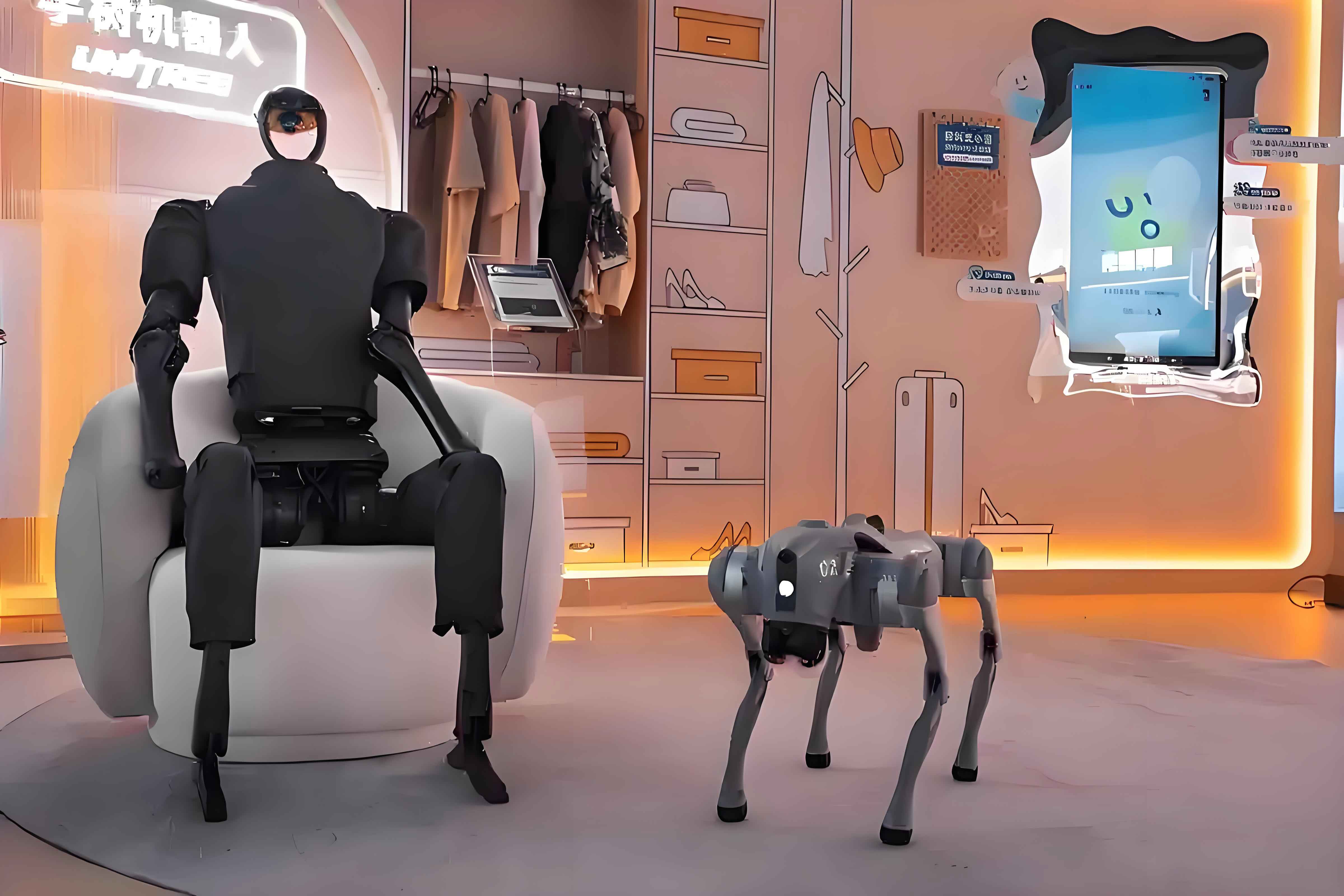
The image above captures the evolving landscape where humanoid robots and other robotic forms coexist. It symbolizes the tangible progress from concept to physical embodiment, highlighting the diverse morphologies entering our world. As I reflect on this visual, it reinforces the idea that humanoid robots are not isolated novelties but part of a broader ecosystem of intelligent machines.
Functionally, humanoid robots offer a unique set of characteristics. Their anthropomorphic design allows them to operate in environments built for humans, using tools and interfaces designed for human use. Key functional areas include:
- Locomotion: Bipedal walking, running, stair climbing, and navigating uneven terrain.
- Manipulation: Dexterous hand movements for grasping, lifting, and fine manipulation of objects.
- Interaction: Voice recognition, natural language processing, and facial expressions for social engagement.
- Autonomy: Task planning, obstacle avoidance, and decision-making using AI models.
These functions are enabled by advances in materials (e.g., lightweight composites), actuators (e.g., harmonic drives, electric motors), and computing power. The software stack often includes ROS (Robot Operating System) for middleware, along with machine learning frameworks like TensorFlow or PyTorch for training perception and control models. Reinforcement learning has been particularly impactful for teaching humanoid robots complex skills. The objective is to maximize the cumulative reward:
$$ J(\theta) = \mathbb{E}_{\tau \sim \pi_\theta} \left[ \sum_{t=0}^{T} \gamma^t r(s_t, a_t) \right] $$
where \( \pi_\theta \) is the policy parameterized by \( \theta \), \( \tau \) is a trajectory, \( \gamma \) is the discount factor, and \( r \) is the reward function.
To summarize the technological progression, consider the following table that contrasts key generations of humanoid robot development:
| Generation | Time Period | Key Technologies | Primary Capabilities | Typical Cost Range |
|---|---|---|---|---|
| First (Early Prototypes) | 2000-2010 | Basic servos, pre-programmed gaits | Static walking, simple demos | > $500,000 |
| Second (Research Platforms) | 2011-2020 | Torque control, dynamic balancing, stereo vision | Dynamic walking, object recognition | $100,000 – $500,000 |
| Third (Commercial Emergence) | 2021-Present | AI-driven perception, reinforcement learning, modular design | Complex manipulation, adaptive locomotion, human-robot collaboration | < $50,000 (for some models) |
The drastic cost reduction is a pivotal factor driving adoption. It stems from economies of scale, cheaper sensors (e.g., consumer-grade cameras), and open-source software. As prices approach consumer electronics levels, humanoid robots become accessible not just to corporations but to individuals and small businesses.
Now, let’s examine the application efficacy of humanoid robots across various industries. Their versatility stems from their form factor, which minimizes the need for environmental modification. In manufacturing, humanoid robots can perform assembly, quality inspection, and logistics tasks alongside human workers. They can handle repetitive or hazardous jobs, improving safety and productivity. The productivity gain can be quantified. If a humanoid robot operates with efficiency \( \eta_r \) and uptime \( U_r \), compared to a human worker with efficiency \( \eta_h \) and uptime \( U_h \), the relative output \( O \) over time \( T \) is:
$$ O = \frac{\eta_r U_r T}{\eta_h U_h T} $$
Given that a humanoid robot can work 24/7 with consistent performance, \( U_r \) approaches 1, while \( U_h \) is typically 0.3-0.4 for an 8-hour shift. Thus, even with lower initial efficiency, the humanoid robot can surpass human output over extended periods.
In healthcare, humanoid robots assist in patient care, rehabilitation, and surgery. Their dexterity allows for precise movements in minimally invasive procedures. Socially assistive humanoid robots provide companionship to the elderly or individuals with disabilities, leveraging emotional AI to detect and respond to human emotions. The emotional response can be modeled as a state machine, where the robot’s action \( a_t \) at time \( t \) depends on the perceived human emotion state \( e_t \), updated via:
$$ e_{t+1} = f(e_t, a_t, c_t) $$
where \( c_t \) is contextual data. This enables the humanoid robot to build rapport and provide tailored support.
In domestic settings, humanoid robots serve as household helpers, performing chores like cleaning, cooking, and security monitoring. Their ability to climb stairs and navigate cluttered spaces gives them an edge over wheeled robots. The service robotics market is poised for exponential growth as these machines become more affordable and capable.
Education and research are other fertile grounds. Humanoid robots are used as teaching tools for STEM education and as platforms for advancing AI and robotics research. Their human-like interface makes them engaging for students. The learning outcome improvement when using a humanoid robot as a tutor versus traditional methods can be expressed as an effect size \( d \):
$$ d = \frac{\bar{X}_{robot} – \bar{X}_{control}}{s_{pooled}} $$
where \( \bar{X} \) are mean scores and \( s_{pooled} \) is the pooled standard deviation. Studies have shown positive effect sizes, indicating enhanced engagement and retention.
To illustrate the application spectrum, here is a table detailing use cases, benefits, and challenges:
| Application Domain | Specific Tasks | Key Benefits | Technical Challenges | Market Readiness (1-5 scale) |
|---|---|---|---|---|
| Industrial Manufacturing | Assembly, pick-and-place, quality control | Flexibility, reduced downtime, safety | Precision in unstructured environments, real-time adaptation | 4 |
| Healthcare & Surgery | Rehabilitation exercises, surgical assistance, patient monitoring | High precision, consistency, reduced fatigue | Sterility, safety-critical reliability, regulatory approval | 3 |
| Domestic Service | Cleaning, elder care, child education | Natural interaction, multi-functionality | Cost, safety in home settings, long-term autonomy | 2 |
| Logistics & Warehousing | Sorting, packing, inventory management | Autonomy, scalability, 24/7 operation | Navigation in dense spaces, handling diverse objects | 4 |
| Entertainment & Hospitality | Guiding,表演, customer service | Novelty, engagement, multilingual support | Durability, natural conversation, emotional intelligence | 3 |
The journey from lab to real-world deployment involves overcoming significant hurdles. Energy efficiency is a major constraint. The specific cost of transport (COT), a measure of locomotion efficiency, is defined as:
$$ COT = \frac{P}{m g v} $$
where \( P \) is power consumption, \( m \) is mass, \( g \) is gravity, and \( v \) is velocity. For humanoid robots, COT is often higher than for wheeled robots or animals, limiting operational time. Advances in battery technology (e.g., solid-state batteries) and energy-recapture mechanisms (e.g., regenerative braking in joints) are crucial. Another challenge is the sim-to-real gap: policies trained in simulation often fail in physical world due to modeling errors. Domain randomization and adaptive control help bridge this gap. The loss function for adaptation might be:
$$ L(\phi) = \mathbb{E}_{s \sim p_{real}} [ D(\pi_\theta(s), \pi_\phi(s)) ] $$
where \( \pi_\theta \) is the simulation policy, \( \pi_\phi \) is the adapted policy, and \( D \) is a divergence measure.
From my perspective, the evolution of humanoid robots is intertwined with broader trends in AI and IoT. The concept of embodied AI, where intelligence is grounded in physical interaction, is central. A humanoid robot serves as the ultimate embodiment of this principle, requiring seamless integration of perception, reasoning, and action. The cognitive architecture can be viewed as a hierarchical system. At the lowest level, reflex loops ensure immediate responses to stimuli (e.g., balancing when pushed). Mid-level controllers handle locomotion and manipulation sequences. The highest level involves task planning and social interaction, often using large language models (LLMs) for natural language understanding. The planning problem can be formalized as a Markov Decision Process (MDP) with state space \( S \), action space \( A \), transition probability \( P(s’|s,a) \), reward function \( R(s,a) \), and discount factor \( \gamma \). The goal is to find a policy \( \pi: S \rightarrow A \) that maximizes expected cumulative reward.
Interoperability is another key consideration. As humanoid robots proliferate, standards for communication and data exchange will become essential. The ROS 2 framework, with its support for real-time systems and security, is emerging as a de facto standard. This allows humanoid robots from different manufacturers to collaborate in shared spaces, unlocking swarm applications. The collective behavior of a swarm of humanoid robots can be analyzed using multi-agent reinforcement learning, where each agent learns a policy \( \pi_i \) to maximize a shared or individual reward.
Ethical and societal implications cannot be overlooked. The deployment of humanoid robots raises questions about job displacement, privacy, and safety. Proactive measures, such as reskilling programs and robust safety protocols (e.g., ISO 13482 for personal care robots), are necessary. From a technical standpoint, safety can be enhanced via constraint-based control. For example, a control input \( u \) can be modified to ensure the humanoid robot remains within a safe set \( C \), defined by a barrier function \( h(x) \geq 0 \). The control law becomes:
$$ u = \arg \min_{u} \| u – u_{nom} \|^2 \quad \text{subject to} \quad \dot{h}(x,u) \geq -\alpha(h(x)) $$
where \( u_{nom} is the nominal control and \alpha is a class-\mathcal{K} function. This ensures the humanoid robot avoids collisions or dangerous configurations.
Looking ahead, the trajectory for humanoid robots is steeply upward. We are on the cusp of a paradigm shift where these machines transition from tools to partners. The vision of human-robot symbiosis involves humanoid robots that understand context, anticipate needs, and act autonomously yet collaboratively. This requires advances in general-purpose AI, often termed artificial general intelligence (AGI). While full AGI remains distant, narrow AI systems tailored for specific domains are already empowering humanoid robots. The convergence of 5G/6G connectivity, edge computing, and cloud AI will further enhance their capabilities, enabling real-time data processing and collective learning.
In conclusion, as I survey the landscape, the humanoid robot stands as a testament to human ingenuity. Its journey from fiction to reality is accelerating, driven by technological breakthroughs and market forces. The key to unlocking its full potential lies in continued innovation across hardware, software, and AI, coupled with thoughtful integration into societal frameworks. The future is not about robots replacing humans, but about humanoid robots augmenting human abilities, taking on mundane or dangerous tasks, and opening new frontiers of exploration and creativity. The door to application is not just being knocked on; it is being pushed wide open.
To encapsulate the technical parameters and performance metrics of contemporary humanoid robots, here is a comprehensive table:
| Parameter Category | Typical Specification | Mathematical Representation | Impact on Performance |
|---|---|---|---|
| Degrees of Freedom (DoF) | 20-40 joints | \( n_{DoF} = \sum \text{joints per limb} \) | Determines dexterity and range of motions. |
| Payload Capacity | 5-20 kg per arm | \( \tau_{max} = J^T F_{ext} \) where \( J \) is Jacobian | Limits the weight of manipulable objects. |
| Walking Speed | 0.5-3.0 km/h | \( v = \frac{\Delta x}{\Delta t} \) from gait cycle | Affects efficiency in task completion. |
| Battery Life | 1-4 hours active | \( E = \int P(t) dt \) where \( P(t) \) is power | Constrains operational duration. |
| Computational Power | 10-100 TOPS (AI inference) | \( C = \sum cores \times frequency \times ops/cycle \) | Enables real-time perception and control. |
| Force/Torque Sensing | 6-axis sensors at wrists/ankles | \( \vec{\tau} = \vec{r} \times \vec{F} \) | Provides impedance control for safe interaction. |
| Vision System | Stereo cameras, depth sensors | \( z = \frac{f B}{d} \) for stereo depth | Critical for 3D environment understanding. |
The development cycle of a humanoid robot can be modeled as an iterative optimization process. Let \( \mathcal{D} \) represent the design space encompassing mechanical, electrical, and software parameters. The goal is to find a design \( d^* \in \mathcal{D} \) that minimizes a cost function \( C(d) \) while satisfying constraints \( g_i(d) \leq 0 \). Formally:
$$ d^* = \arg \min_{d \in \mathcal{D}} C(d) \quad \text{subject to} \quad g_i(d) \leq 0, \quad i=1,\ldots,m $$
where \( C(d) \) might include production cost, energy consumption, and weight, and constraints include stability margins, speed requirements, and safety standards. This optimization is often solved using simulation-based design and Bayesian optimization techniques.
In summary, the humanoid robot is more than a machine; it is a platform for exploring the boundaries of intelligence and embodiment. As we refine these creations, we not only advance technology but also deepen our understanding of ourselves. The path forward is filled with challenges, but the progress to date assures me that the era of humanoid robots is not just coming—it is already here, transforming industries and daily life one step at a time.