
As an observer and participant in the robotics and logistics industries, I have witnessed a remarkable transformation driven by technological advancements. The emergence of humanoid robots, once a concept confined to science fiction, is now becoming a tangible reality with profound implications for various sectors, particularly logistics. In this article, I will explore the definition, development, technological underpinnings, and immense potential of humanoid robots in logistics, drawing from industry trends and insights. I aim to provide a comprehensive analysis, enriched with tables and formulas, to underscore the pivotal role these machines are poised to play.
The term “humanoid robot” refers to a robot with a body structure resembling that of a human, capable of mimicking human morphology and behavior to perform tasks across multiple industries and scenarios. While not all general-purpose robots are humanoid, there is a growing consensus among experts that the humanoid form is the optimal morphology for future general-purpose robots. This is because humanoid robots can leverage existing human-centric environments and tools, reducing the need for extensive infrastructure modifications. Historically, humanoid robots date back to the 1960s, with early prototypes developed in Japan. However, for decades, progress was limited by hardware constraints and simplistic software. Today, the convergence of advanced control systems and artificial intelligence (AI) has catapulted humanoid robots from conceptual novelties to commercially viable solutions. The logistics sector, characterized by dynamic and labor-intensive operations, stands out as a prime arena for humanoid robot deployment, offering opportunities to enhance efficiency, flexibility, and safety.
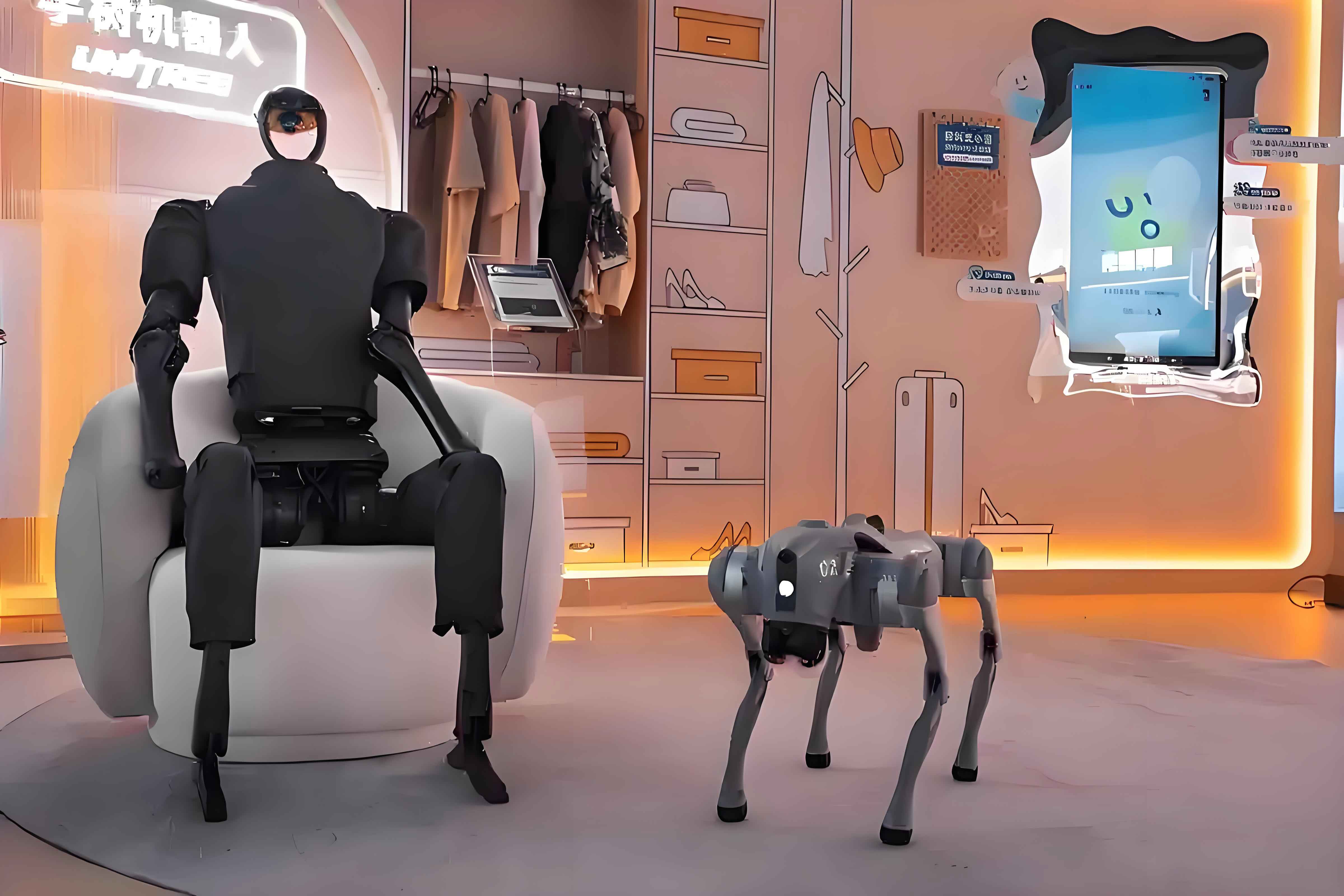
The evolution of humanoid robots can be segmented into distinct phases, marked by breakthroughs in hardware and software. Initially, focus was on achieving basic bipedal locomotion and stability, which involved complex mechanical design and control algorithms. Over time, sensors and actuators improved, enabling more fluid movements. However, the true inflection point arrived with the advent of AI large-scale models, which empowered humanoid robots with enhanced perception, decision-making, and learning capabilities. This shift has accelerated the “explosion” of the humanoid robot industry, with numerous companies worldwide unveiling ambitious products and roadmaps. For instance, recent demonstrations by tech giants and startups showcase humanoid robots performing tasks in manufacturing and logistics settings, signaling a move toward practical integration. The market for humanoid robots is projected to grow exponentially; estimates suggest a global market value reaching billions by 2030, with logistics applications contributing significantly to this expansion. This growth is fueled by increasing automation demands, labor shortages, and the pursuit of operational resilience in supply chains.
| Decade | Key Advances | Impact on Logistics |
|---|---|---|
| 1960s-1970s | First humanoid prototypes; basic bipedal walking | Conceptual foundation; limited practical use |
| 1980s-1990s | Improved actuators and sensors; static stability | Early research into automated material handling |
| 2000s-2010s | Dynamic walking; integration of vision systems | Potential for navigation in structured warehouses |
| 2020s onward | AI large models; real-time adaptation; cloud robotics | Deployment in flexible logistics tasks (e.g., unloading, sorting) |
The proliferation of humanoid robots hinges critically on advancements in large model technologies. While hardware aspects like servo drives, joints, and balance mechanisms have matured over years, the software stack—particularly algorithms for perception, planning, and control—remains the core challenge. A humanoid robot relying solely on pre-programmed routines is essentially an anthropomorphic industrial robot, lacking the general intelligence desired for complex environments. True embodied humanoid robots require sophisticated AI to interpret multi-modal sensory data, make real-time decisions, and execute tasks adaptively. Thus, the humanoid robot can be viewed as a new physical载体 for AI, merging robotics with cutting-edge machine learning. Key technological components include high-performance伺服 drivers, semantic visual SLAM (Simultaneous Localization and Mapping), learning-based motion control, multi-modal interaction, and vision感知 systems. These elements enable skills such as task planning, dexterous manipulation, navigation, and human-robot interaction, all essential for logistics applications.
Mathematically, the motion control of a humanoid robot can be described using dynamics equations. For a robot with $n$ degrees of freedom, the equation of motion is often expressed as:
$$ \tau = M(q)\ddot{q} + C(q,\dot{q})\dot{q} + G(q) + J^T F $$
where $\tau$ represents the joint torques, $q$ denotes the joint angles, $M(q)$ is the inertia matrix, $C(q,\dot{q})$ accounts for Coriolis and centrifugal forces, $G(q)$ is the gravitational vector, and $J^T F$ handles external forces (e.g., from contacts). This formulation underscores the complexity of maintaining balance and executing movements in humanoid robots, which is crucial for tasks like lifting boxes or traversing uneven floors in warehouses.
In AI, large models enhance perception and decision-making. For example, a deep learning model for object recognition in logistics might minimize a loss function:
$$ L(\theta) = \frac{1}{N} \sum_{i=1}^{N} \ell(y_i, f(x_i; \theta)) + \lambda R(\theta) $$
Here, $f(x_i; \theta)$ is the model prediction for input $x_i$ (e.g., sensor data), $y_i$ is the ground truth label, $\ell$ is a loss function (e.g., cross-entropy), and $R(\theta)$ is a regularization term to prevent overfitting. Such models allow humanoid robots to identify packages, avoid obstacles, and optimize paths in real-time.
| Technology Domain | Description | Relevance to Logistics |
|---|---|---|
| 伺服 Actuation | High-torque, responsive motors for precise joint control | Enables lifting, carrying, and placing items of varying weights |
| Computer Vision | Cameras and depth sensors for environment perception | Facilitates package identification, navigation, and safety monitoring |
| AI Large Models | Transformer-based models for reasoning and planning | Allows adaptive task execution in unstructured settings |
| Motion Planning | Algorithms for trajectory generation and optimization | Ensures efficient and collision-free movement in cramped spaces |
| Cloud Connectivity | Remote data processing and fleet management | Supports scalability and updates for logistics fleets |
The logistics sector presents a fertile ground for humanoid robot applications due to its inherent variability and need for flexibility. While specialized automation equipment like conveyor belts, AGVs (Automated Guided Vehicles), and robotic arms dominate modern warehouses, they often require tailored environments and high upfront investments. Humanoid robots, with their human-like form, can navigate existing infrastructure—such as narrow aisles, staircases, or standard trucks—without major modifications. This makes them ideal for tasks that are intermittent or spatially constrained, such as loading/unloading vehicles, picking items from shelves, or conducting inventory counts in tight spaces. Moreover, humanoid robots can collaborate with humans, taking over repetitive or hazardous duties, thus reducing ergonomic risks and labor costs. The adaptability of humanoid robots is a key advantage; they can be reprogrammed or learn new tasks via AI, unlike fixed-purpose machines.
Consider a typical logistics operation: receiving goods from a truck. A humanoid robot equipped with vision and grasping capabilities can approach the truck, identify packages, lift them using compliant grip, and transport them to a staging area. The robot’s ability to handle diverse package sizes and weights, while maintaining balance on ramps or uneven surfaces, showcases its versatility. In sorting facilities, humanoid robots can work alongside automated systems, handling exceptions or irregular items that require dexterous manipulation. This synergy between humanoid robots and traditional automation can elevate overall system robustness, pushing intelligent logistics to new heights.
Globally, major logistics firms are embracing humanoid robots. For instance, some companies have entered into multi-year agreements to deploy humanoid robots in warehouses, aiming to streamline operations and address labor shortages. These partnerships highlight the commercial viability of humanoid robots and signal a shift toward more adaptive automation. The economic rationale can be modeled using a cost-benefit analysis. Let $C_r$ be the annualized cost of a humanoid robot (including purchase, maintenance, and energy), $C_h$ the annual cost of human labor for equivalent tasks, and $E$ the efficiency gain from continuous operation. The net benefit $B$ over time $t$ can be expressed as:
$$ B(t) = \int_0^t [ (C_h – C_r) + \Delta E ] \, dt $$
where $\Delta E$ represents productivity improvements. As technology advances, $C_r$ is expected to decrease due to economies of scale, making humanoid robots increasingly attractive.
| Application Scenario | Tasks Performed | Advantages Over Traditional Automation |
|---|---|---|
| Truck Loading/Unloading | Lifting boxes, palletizing, verifying shipments | No need for dock modifications; handles varied cargo |
| Warehouse Picking | Selecting items from shelves, placing in carts | Navigates narrow aisles; adapts to layout changes |
| Inventory Management | Scanning barcodes, counting stock, reporting discrepancies | Accesses high or tight spaces; reduces manual errors |
| Sortation and Packing | Sorting parcels by destination, packing boxes | Handles irregular shapes; collaborates with conveyors |
| Safety and Inspection | Monitoring facility conditions, detecting hazards | Mobile and versatile; can respond to emergencies |
Looking ahead, the integration of humanoid robots into logistics will likely unfold in stages, mirroring technological maturation and market acceptance. Based on industry roadmaps, we can anticipate three phases: an initial phase focused on proof-of-concept in controlled settings (e.g., repetitive搬运 tasks), a middle phase expanding to中等难度 applications like collaborative sorting, and a final phase achieving general-purpose capabilities across complex scenarios. This progression aligns with improvements in AI, sensor fusion, and cost reduction. The growth of the humanoid robot market can be approximated by a logistic function, common in technology adoption curves:
$$ N(t) = \frac{K}{1 + e^{-r(t – t_0)}} $$
where $N(t)$ is the number of deployed humanoid robots in logistics at time $t$, $K$ is the carrying capacity (market saturation), $r$ is the growth rate, and $t_0$ is the inflection point. Current trends suggest $r$ is accelerating due to AI breakthroughs.
In the near term, humanoid robots may complement rather than replace existing automation. For example, in a hybrid warehouse, humanoid robots could handle tasks that require mobility and dexterity, while fixed robots manage high-throughput conveyor lines. This collaborative model maximizes overall system efficiency. Furthermore, as humanoid robots become more intelligent through continuous learning, they will able to tackle unpredictable tasks, such as managing returns or custom packaging, which are challenging for conventional machines.
Despite the optimism, challenges remain. The high initial cost of humanoid robots, safety concerns in human-robot interaction, and regulatory hurdles must be addressed. However, rapid advancements in AI and robotics are mitigating these issues. For instance, reinforcement learning algorithms allow humanoid robots to learn from simulation and real-world data, improving safety and performance. A common framework is the Markov Decision Process (MDP), where a robot learns a policy $\pi(a|s)$ to maximize cumulative reward $R$:
$$ \max_\pi \mathbb{E} \left[ \sum_{t=0}^\infty \gamma^t R(s_t, a_t) \right] $$
with $s_t$ as the state (e.g., sensor readings), $a_t$ as the action (e.g., joint movements), and $\gamma$ as a discount factor. Such approaches enable humanoid robots to adapt to dynamic logistics environments autonomously.
In conclusion, humanoid robots represent a transformative force in logistics, offering unparalleled flexibility and intelligence. While current applications are nascent, the trajectory points toward widespread adoption as technology evolves. The synergy between humanoid robots and AI large models is unlocking capabilities previously unimaginable, from autonomous navigation to adaptive task execution. For logistics operators, investing in humanoid robot research and pilot projects today could yield significant competitive advantages tomorrow. The future of logistics will likely feature fleets of humanoid robots working seamlessly alongside humans and machines, driving efficiency, reducing costs, and enhancing resilience. As an enthusiast of this field, I believe we are on the cusp of a new era where humanoid robots become integral to global supply chains, reshaping how goods are stored, moved, and delivered. The journey has just begun, and the potential is limitless.