
The integration of advanced robotics into healthcare represents one of the most profound shifts in medical practice I have witnessed. As a technology deeply embedded in clinical, rehabilitative, and assistive settings, the medical robot is no longer a speculative concept but a tangible partner in care. Its capabilities—from performing micro-scale surgical maneuvers to providing constant, data-rich companionship—promise a new paradigm of precision, accessibility, and support. However, my close engagement with this field compels me to look beyond the remarkable functionalities. The very act of weaving intelligent machines into the intimate fabric of healing and daily life surfaces a complex landscape of ethical risks. This exploration is a necessary dialogue, not to halt progress, but to navigate it with foresight and responsibility, ensuring that the trajectory of the medical robot aligns firmly with core human values and welfare.
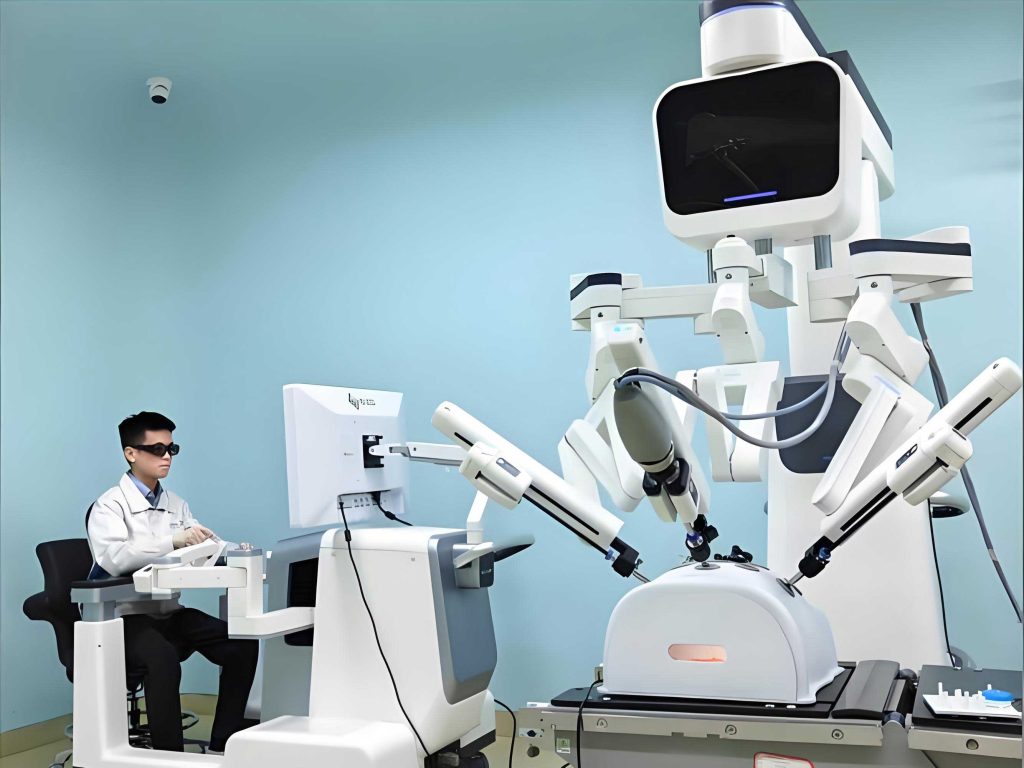
My analysis begins with a systematic overview of the primary functional domains where medical robot systems are making their mark. Understanding these applications is crucial to contextualizing the subsequent ethical challenges.
| Primary Domain | Key Functions & Examples | Core Technological Enablers |
|---|---|---|
| Clinical & Surgical Intervention | Minimally invasive surgery (e.g., Da Vinci), remote telesurgery, diagnostic precision, automated laboratory analysis. | High-fidelity 3D vision, haptic feedback systems, multi-degree-of-freedom manipulators, stable telepresence networks. |
| Rehabilitation & Physical Assistance | Gait training for stroke patients, robotic exoskeletons for spinal cord injuries, actuated prosthetic limbs, assistive feeding arms. | Adaptive control algorithms, biosignal interfaces (EMG, EEG), compliant actuators, real-time motion analysis. |
| Supportive Care & Companionship | Monitoring vital signs, medication reminders, cognitive stimulation for dementia, social interaction for autism spectrum disorder. | Affective computing, natural language processing, sensor fusion for activity recognition, empathetic user interface design. |
This functional matrix illustrates the medical robot‘s evolution from a specialized tool to a pervasive agent in the care continuum. The sophistication, however, grows in tandem with potential pitfalls. I perceive the ethical risks not as distant possibilities, but as inherent dimensions of this deep human-machine integration.
Deconstructing the Labyrinth of Ethical Risk
The ethical challenges posed by medical robot systems are multifaceted. They stem from their autonomy, their data-centric nature, their reconfiguration of traditional care relationships, and their socioeconomic implications.
1. Safety in Symbiosis: The Haptic and Psychological Dimensions
Physical safety in human-robot interaction is paramount. A medical robot acting on or near the human body operates under a fundamental imperative: to minimize harm. Yet, risk persists. A malfunction in a surgical manipulator or a control lag in a telesurgery setup can have immediate, grave consequences. We must model not just optimal performance, but failure modes. One can conceptualize a simplified risk exposure metric:
$$ R = P_f \\times S \\times I $$
Where \( R \) is the aggregated risk exposure, \( P_f \) is the probability of a functional failure (software glitch, hardware fault), \( S \) is the severity of potential physical harm, and \( I \) is the level of intimacy/intervention (e.g., non-invasive monitoring vs. internal surgery). The design goal for any medical robot is to drive \( R \) toward zero through redundancy, fail-safes, and rigorous validation.
Beyond physical harm lies a subtler, psychological risk: emotional dependency and misplaced trust. A socially assistive medical robot, designed to be engaging and supportive, can become a primary source of companionship for an isolated individual. The potential trauma of its removal or the user’s attribution of genuine empathy to a machine raises profound questions about the ethics of attachment and the nature of care.
2. The Privacy Paradox: Data as both Diagnosis and Vulnerability
Every medical robot is a voracious data node. It collects not just explicit health metrics (heart rate, blood pressure, kinematic data) but also ambient, behavioral data—conversation snippets, daily routines, emotional responses. This creates a “super-panopticon” of health information. The ethical breach occurs when this data is accessed, shared, or interpreted without meaningful consent or for purposes beyond the immediate therapeutic context. A data privacy risk surface can be envisioned:
| Data Type | Collection Point (Medical Robot) | Potential Misuse/Leak Vector |
|---|---|---|
| Biometric & Physiological | Surgical logs, rehab sensor streams, continuous monitors. | Insurance premium adjustment, employment discrimination, unauthorized research. |
| Behavioral & Contextual | In-home assistive robots, companion robots. | Commercial profiling, familial surveillance, psychological manipulation. |
| Audio-Visual & Locational | Telepresence robots, mobile assistive devices. | Identity theft, physical security breach, social embarrassment. |
The challenge is to implement robust encryption, granular access controls, and data minimization principles without crippling the analytical power that makes these systems valuable. The medical robot must be a guardian of data, not merely a conduit.
3. The Accountability Gap: Moral Agency in a Hybrid System
When a treatment outcome is negative, who is responsible? The traditional medico-legal model centers on human agents—the surgeon, the therapist, the manufacturer. The medical robot, especially one with learning algorithms, disrupts this model. If a surgical robot’s AI suggests an unconventional maneuver that leads to a complication, is the liability with the surgeon who approved it, the engineers who trained the algorithm, or the “black box” algorithm itself? We face a “responsibility gap.”
One proposed framework involves distributed accountability, modeled as a weighted function:
$$ A_{total} = \\sum_{i=1}^{n} (w_i \\cdot C_i) $$
Here, \( A_{total} \) represents the total accountability for an adverse event. \( C_i \) and \( w_i \) represent the component and its assigned accountability weight, respectively. Components include: Human Operator (Surgeon/Therapist) (\( C_h \)), Design & Manufacturing Entity (\( C_d \)), Algorithmic Decision System (\( C_a \)), and Institutional Oversight Body (\( C_o \)). The weights \( w_i \) are not fixed but are context-dependent, shifting based on the level of robot autonomy and the foreseeability of the failure. A key ethical imperative is to make \( C_a \)—the algorithmic component—as transparent and auditable as possible to allow for meaningful assignment of \( w_a \).
4. Justice and Access: The Threat of a Robotic Divide
The development and deployment of advanced medical robot technology are capital- and expertise-intensive. This inherently risks creating a multi-tiered healthcare system: one for those with access to robotic precision surgery and personalized AI-driven rehab, and another reliant on traditional, potentially less effective methods. This “robotic divide” exacerbates existing health disparities along socioeconomic, geographic, and demographic lines.
The cost function for a medical robot service includes not only the unit price (\( P_u \)) but also maintenance (\( P_m \)), specialized training (\( P_t \)), and infrastructure (\( P_i \)):
$$ C_{service} = P_u + P_m + P_t + P_i $$
If \( C_{service} \) remains prohibitively high, diffusion is limited to well-resourced institutions. The ethical challenge is to innovate in ways that reduce \( C_{service} \) through modular design, open-source platforms (where safe), and novel financing models, ensuring that the benefits of the medical robot are not a luxury good but a scalable component of public health.
Navigating the Terrain: Principles for Ethical Integration
Acknowledging these risks is not an endpoint but the starting point for constructive navigation. From my perspective, a robust framework for the ethical integration of medical robot systems must be built on three pillars.
Pillar 1: Responsible Innovation by Design
Ethics cannot be an afterthought or a mere compliance checklist. It must be embedded in the innovation process from the outset—a concept known as Value-Sensitive Design or Responsible Research and Innovation (RRI). For a medical robot, this means:
- Anticipatory Design: Proactively conducting ethical impact assessments during R&D, using scenarios and stakeholder engagement to identify potential misuses and unintended consequences.
- Value Transparency: Making the ethical choices baked into the algorithm (e.g., how it prioritizes tasks, handles uncertain data) explicit and explainable to developers, clinicians, and, where appropriate, patients.
- Interdisciplinary Collaboration: Ensuring that engineering teams work alongside ethicists, clinicians, sociologists, and patient advocates throughout the development lifecycle.
Pillar 2: Fortifying Human Rights and Agency
The deployment of a medical robot must actively reinforce, not undermine, the rights of the patient or user. This requires:
- Meaningful Informed Consent: Moving beyond legalese to clear communication about what the robot does, what data it collects, how long data is retained, and the boundaries of its capabilities. Consent must be an ongoing process, not a one-time signature.
- Privacy by Default and Design: Implementing technical architectures that minimize data collection, anonymize data where possible, and provide users with intuitive controls over their information.
- Preservation of Human Connection: Designing systems that augment, rather than replace, human care. The medical robot should be a tool that frees up human clinicians for more complex, empathetic interactions, not a cost-cutting replacement for them.
Pillar 3: Cultivating Operational Moral Competence
While full moral agency may reside with humans, we can engineer functional moral competence into the medical robot itself. This involves implementing operational principles that allow it to act in alignment with ethical norms:
- Implementable Ethical Rules: Encoding fundamental directives akin to Asimov’s laws, but more nuanced, such as: “Maximize therapeutic benefit as defined by the care plan,” “Minimize predictable physical harm,” and “Yield immediate control to a human operator upon request or detected uncertainty.”
- Transparent Decision Logs: Ensuring the robot can provide an audit trail for its actions, answering “why did you do that?” in a way that is traceable to sensor data, algorithmic weights, and predefined rules. This is crucial for accountability.
- Dignity-Preserving Interaction: Programming social robots to avoid deceptive behaviors that falsely imply human-like consciousness or emotion. Their interactions should support user dignity without fostering delusion.
The following table synthesizes the core risks and aligns them with these strategic pillars of mitigation:
| Ethical Risk Domain | Primary Concerns | Key Mitigation Strategies |
|---|---|---|
| Safety & Dependency | Physical malfunction, psychological over-reliance, misplaced trust. | Rigorous failure-mode engineering (Pillar 1); clear setting of user expectations (Pillar 2); implementing safety-first operational rules (Pillar 3). |
| Privacy & Data Security | Unauthorized data collection, profiling, sensitive information leaks. | Privacy-by-design architecture (Pillar 1); robust consent mechanisms and user data control (Pillar 2); data minimization algorithms (Pillar 3). |
| Accountability & Liability | Diffused responsibility, “black box” algorithms, legal gaps. | Designing for transparency and auditability (Pillar 1); establishing clear human-over-the-loop protocols (Pillar 2); creating detailed activity logs (Pillar 3). |
| Justice & Access | Exacerbating health inequities, creating a two-tier system. | Pursuing cost-reducing and open-platform innovations (Pillar 1); advocating for policy that promotes equitable access (Pillar 2). |
Conclusion: Toward a Symbiotic Ethos
The journey of integrating the medical robot into our healthcare ecosystem is ultimately a journey about ourselves—our values, our priorities, and our vision for a humane future. The technology presents a double-edged sword of immense potential and significant peril. My perspective is one of cautious optimism, grounded in the belief that through deliberate, interdisciplinary, and ethically-engaged effort, we can steer this development. We must design not just for efficiency and capability, but for safety, dignity, justice, and transparency. The goal is not to create autonomous healers, but to forge symbiotic partnerships where the precision and endurance of the medical robot are seamlessly guided by the wisdom, empathy, and moral responsibility of human caregivers. In this symbiotic ethos, the medical robot finds its true purpose: not as a replacement for human touch, but as its powerful amplifier, extending the reach and depth of care for all.