
As I delve into the realm of robotics, the development of dexterous robotic hands stands out as a profound journey of innovation. These intricate systems, designed to mimic the human hand’s versatility, have evolved from simple grippers to complex, sensor-rich manipulators. In this article, I will explore the historical progression, dissect the core technologies, and project future trajectories of dexterous robotic hands. The goal is to provide a comprehensive overview that highlights the interdisciplinary efforts driving this field forward, emphasizing the keyword ‘dexterous robotic hand’ throughout our discussion.
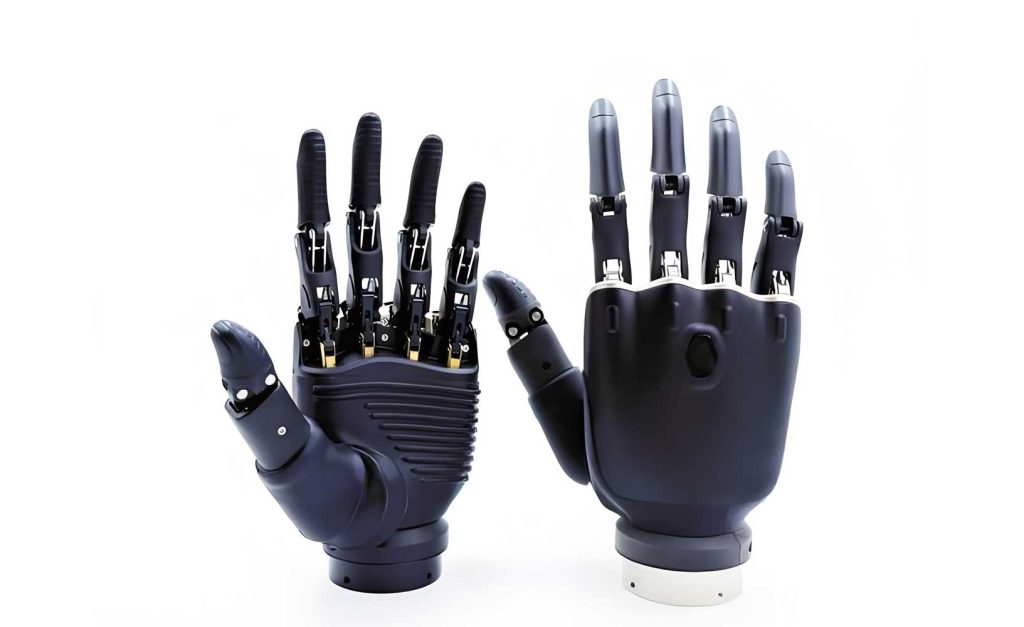
The inception of dexterous robotic hands can be traced back to the mid-20th century, when early prototypes focused on basic grasping for prosthetic applications. However, it wasn’t until the 1970s that systematic research began, fueled by industrial demands for flexible automation. I recall that initial designs, such as the Okada hand, featured limited degrees of freedom and external actuation, but they laid the groundwork for more sophisticated models. The 1980s marked a pivotal era, with dexterous robotic hands like the Utah/MIT hand introducing multi-fingered architectures and integrated sensing, setting a precedent for modern manipulators. This period established the dexterous robotic hand as a key research area, blending mechanics, electronics, and control theory.
To better illustrate the evolution, I have compiled a table summarizing representative dexterous robotic hands across decades. This table encapsulates key indices such as degrees of freedom, actuation methods, transmission systems, sensing capabilities, and structural integration, providing a snapshot of technological advancements.
| Decade | Dexterous Robotic Hand | Degrees of Freedom | Actuation | Transmission | Sensing | Structure |
|---|---|---|---|---|---|---|
| 1970s | Early Prototype Hand | 3 | Electric Motor | Tendon | Motor Position | External |
| 1980s | Advanced Multi-Finger Hand | 4 | Pneumatic | Tendon | Position, Force | External |
| 1990s | Integrated Sensor Hand | 4 | Linear Motor | Tendon | 6-Axis Force/Torque | External |
| 2000s | Modular Dexterous Hand | 5 | Brushless DC Motor | Gear/Belt | Multi-Modal Sensors | Internal |
| 2010s-Present | Humanoid Dexterous Hand | 15+ | Micro Actuators | Hybrid Systems | Full Tactile Array | Highly Integrated |
This progression underscores a shift from external, bulky designs to compact, internally integrated systems. For instance, early dexterous robotic hands relied on tendon-driven mechanisms with actuators placed remotely, limiting their portability and speed. In contrast, contemporary dexterous robotic hands, such as those developed in recent collaborations, embed all components within the palm, achieving a form factor close to the human hand. I attribute this to advances in miniaturization and materials science, which have enabled higher power-density actuators and robust transmission elements. The dexterous robotic hand thus embodies a convergence of mechanical elegance and electronic sophistication.
Moving deeper into the mechanics, the kinematics and dynamics of a dexterous robotic hand are fundamental to its performance. I often model the finger joints as a series of revolute linkages, where the forward kinematics for a finger with \(n\) joints can be expressed as:
$$ \mathbf{x} = f(\mathbf{q}) $$
Here, \(\mathbf{x}\) represents the fingertip position in Cartesian space, \(\mathbf{q}\) is the vector of joint angles, and \(f\) denotes the kinematic mapping derived from Denavit-Hartenberg parameters. For dexterous manipulation, inverse kinematics becomes crucial, solved through numerical methods like the Jacobian pseudo-inverse:
$$ \Delta \mathbf{q} = \mathbf{J}^+ \Delta \mathbf{x} $$
where \(\mathbf{J}\) is the Jacobian matrix relating joint velocities to Cartesian velocities. Dynamics further complicate control, as the equation of motion for a dexterous robotic hand finger is given by:
$$ \mathbf{M}(\mathbf{q}) \ddot{\mathbf{q}} + \mathbf{C}(\mathbf{q}, \dot{\mathbf{q}}) + \mathbf{G}(\mathbf{q}) = \boldsymbol{\tau} $$
In this equation, \(\mathbf{M}\) is the inertia matrix, \(\mathbf{C}\) captures Coriolis and centrifugal forces, \(\mathbf{G}\) accounts for gravitational effects, and \(\boldsymbol{\tau}\) is the torque vector applied by actuators. These formulations are essential for simulating and optimizing the dexterous robotic hand’s movements, especially during complex tasks like grasping deformable objects.
Another critical aspect is grasp analysis, which I frequently analyze using force closure conditions. For a stable grasp with \(m\) contact points, the net wrench must be zero:
$$ \sum_{i=1}^{m} \mathbf{w}_i = \mathbf{0} $$
where \(\mathbf{w}_i\) is the wrench (force and torque) at contact \(i\). In dexterous robotic hands, this involves coordinating multiple fingers to exert appropriate forces, often modeled as a linear feasibility problem. I leverage concepts from convex optimization to ensure that the grasp resists external disturbances, a key requirement for reliable dexterous robotic hand operation in unstructured environments.
The actuation systems in dexterous robotic hands have undergone significant evolution. Initially, pneumatic and hydraulic drives were popular due to their high force output, but they posed challenges in miniaturization and energy efficiency. I have observed a shift toward electric motors, particularly brushless DC and servo motors, which offer precise control and compact form factors. The torque output of such motors can be approximated by:
$$ \tau_m = K_t \cdot I $$
where \(K_t\) is the torque constant and \(I\) is the current. To achieve the necessary torque for a dexterous robotic hand, gear reducers like harmonic drives are employed, with the output torque \(\tau_o\) related to motor torque \(\tau_m\) by the gear ratio \(N\) and efficiency \(\eta\):
$$ \tau_o = N \cdot \eta \cdot \tau_m $$
However, backlash and friction in gears can degrade performance, prompting the use of tendon-driven or direct-drive alternatives in some dexterous robotic hand designs. I have compiled a table comparing actuation methods to highlight trade-offs.
| Actuation Type | Power Density | Control Precision | Integration Ease | Typical Use in Dexterous Robotic Hand |
|---|---|---|---|---|
| Pneumatic | High | Moderate | Low | Early prototypes, high-force tasks |
| Hydraulic | Very High | Moderate | Low | Industrial applications |
| Electric Motor | Moderate to High | High | High | Modern integrated hands |
| Artificial Muscle | Variable | Low to Moderate | Moderate | Bio-inspired designs |
Sensing technology is another pillar of dexterous robotic hand development. I emphasize that without rich sensory feedback, a dexterous robotic hand cannot achieve true dexterity. Early models incorporated basic position encoders, but contemporary systems integrate multi-axis force/torque sensors, tactile arrays, and even vision. For example, a 6-axis force sensor at the fingertip measures forces \(F_x, F_y, F_z\) and torques \(T_x, T_y, T_z\), often modeled as:
$$ \mathbf{F} = \mathbf{K} \cdot \mathbf{\epsilon} $$
where \(\mathbf{K}\) is a calibration matrix and \(\mathbf{\epsilon}\) is the strain gauge output. Tactile sensors, mimicking human skin, provide pressure distribution data, crucial for handling fragile objects. I have seen dexterous robotic hands with over 100 taxels (tactile elements) per finger, enabling slip detection through algorithms that monitor force gradients over time. The integration of these sensors into a dexterous robotic hand requires careful signal processing and fusion, often handled by embedded microcontrollers.
Control strategies for dexterous robotic hands are multifaceted. At the low level, I implement PID controllers for joint position tracking, with the control law:
$$ u(t) = K_p e(t) + K_i \int e(t) dt + K_d \frac{de(t)}{dt} $$
where \(e(t)\) is the error between desired and actual positions. For force control, impedance and admittance frameworks are common, adjusting the dexterous robotic hand’s dynamics to interact softly with environments. Higher-level coordination involves grasp planning algorithms, which I often formulate as optimization problems maximizing contact stability. Reinforcement learning has emerged as a powerful tool for dexterous robotic hand control, allowing self-improvement through trial and error. The complexity arises from the high dimensionality; a dexterous robotic hand with 15 degrees of freedom has a state space that grows exponentially, necessitating efficient algorithms like deep Q-networks.
Electronic systems form the backbone of modern dexterous robotic hands. I design these using system-on-chip platforms that combine FPGAs for real-time processing with microcontrollers for sensor interfacing. Communication protocols like CAN bus and Ethernet enable seamless data exchange within the dexterous robotic hand and with external controllers. Power management is critical, as the dexterous robotic hand must operate autonomously; I often model energy consumption \(E\) as:
$$ E = \sum_{i=1}^{n} \int (V_i I_i + P_{loss,i}) dt $$
where \(V_i\) and \(I_i\) are voltage and current for each actuator, and \(P_{loss,i}\) accounts for inefficiencies. Advances in battery technology and low-power electronics have extended operational times, making dexterous robotic hands viable for field applications.
Looking ahead, I envision three dominant trends for dexterous robotic hands. First, anthropomorphic design will intensify, pushing dexterous robotic hands to match human hand dimensions and dexterity. This involves not only mechanical mimicry but also cognitive integration, where the dexterous robotic hand learns from human demonstrations. Second, intelligent autonomous operation will reduce reliance on pre-programming. I anticipate dexterous robotic hands employing AI to adapt to novel objects, using sensor fusion and cloud-based knowledge sharing. Third, industrialization will drive cost reduction and reliability improvements. As dexterous robotic hands become more affordable, they will permeate sectors like logistics, healthcare, and home assistance.
To quantify these trends, I have developed a formula for the “dexterity index” \(D\) of a dexterous robotic hand, combining factors like degrees of freedom \(d\), sensor density \(s\), and control bandwidth \(b\):
$$ D = \alpha \log(d) + \beta s + \gamma \sqrt{b} $$
where \(\alpha, \beta, \gamma\) are weighting coefficients based on application needs. This metric helps compare different dexterous robotic hand designs and guide future development. Additionally, I project that within a decade, dexterous robotic hands will achieve seamless human-robot collaboration, enabled by advancements in soft robotics and haptic feedback.
In conclusion, the journey of dexterous robotic hands is a testament to human ingenuity. From rudimentary beginnings to today’s sophisticated systems, each iteration has expanded the boundaries of manipulation. I firmly believe that continued innovation in actuators, sensors, and AI will unlock new potentials, making the dexterous robotic hand an indispensable tool in our automated future. As I reflect on this progress, the dexterous robotic hand stands not just as a mechanical device, but as a symbol of our quest to replicate and enhance natural abilities through technology.
To further illustrate technical comparisons, here is a table on sensor integration levels in dexterous robotic hands over time.
| Era | Primary Sensors | Resolution | Integration Method | Impact on Dexterous Robotic Hand Performance |
|---|---|---|---|---|
| 1980s | Position Encoders | Low | Discrete Components | Basic motion control |
| 1990s | Force/Torque Sensors | Medium | Modular Blocks | Improved grasp stability |
| 2000s | Tactile Arrays | High | Embedded Circuits | Fine manipulation and slip detection |
| 2010s-Present | Multi-Modal Fusion | Very High | System-on-Chip | Autonomous adaptive behavior |
Finally, the mathematical modeling of contact forces in a dexterous robotic hand can be refined using Hertzian contact theory for elastic deformations. The contact force \(F_c\) between a fingertip and object is given by:
$$ F_c = \frac{4}{3} E^* \sqrt{R^*} \delta^{3/2} $$
where \(E^*\) is the effective modulus, \(R^*\) the effective radius, and \(\delta\) the indentation depth. Such models enhance the realism of simulations for dexterous robotic hand training and optimization. As we push forward, the synergy between theory and practice will undoubtedly yield even more capable dexterous robotic hands, transforming how we interact with the physical world.