
As I reflect on the rapid advancements in robotics, I am struck by how humanoid robots have transitioned from mere spectacles on stage to indispensable tools in industrial settings. My journey into understanding this shift began with witnessing their captivating performances, such as the秧歌 dance at the 2025 Spring Festival Gala, where a group of humanoid robots adorned in traditional attire mesmerized audiences nationwide. This was not just entertainment; it was a demonstration of profound technological leaps in dynamic balance, terrain perception, control systems, and endurance. Shortly after, the world’s first half-marathon for humanoid robots in Beijing further captured global attention, underscoring the race toward achieving “stable standing, steady walking, and fast running” capabilities. These events symbolize a broader narrative: the humanoid robot is no longer a futuristic concept but a tangible innovation poised to reshape industries.
In my analysis, the humanoid robot represents a seminal product of future industries, integrating artificial intelligence, advanced manufacturing, and new materials. It is widely regarded as a disruptive technology following computers, smartphones, and new energy vehicles, with the potential to revolutionize human production and lifestyle while reconfiguring global industrial landscapes. From my perspective, the core value of humanoid robots lies in their environmental adaptability and task flexibility, which enable them to address real-world challenges like hazardous job replacement, rising labor costs, and demands for flexible production. As I delve deeper, I see this transition from stage to factory as an inevitable resonance between technological value and industrial needs. While stage performances showcase scientific charm, their commercial impact is limited; factories, as the heart of the real economy, provide fertile ground for scalable application and continuous iteration of humanoid robots.
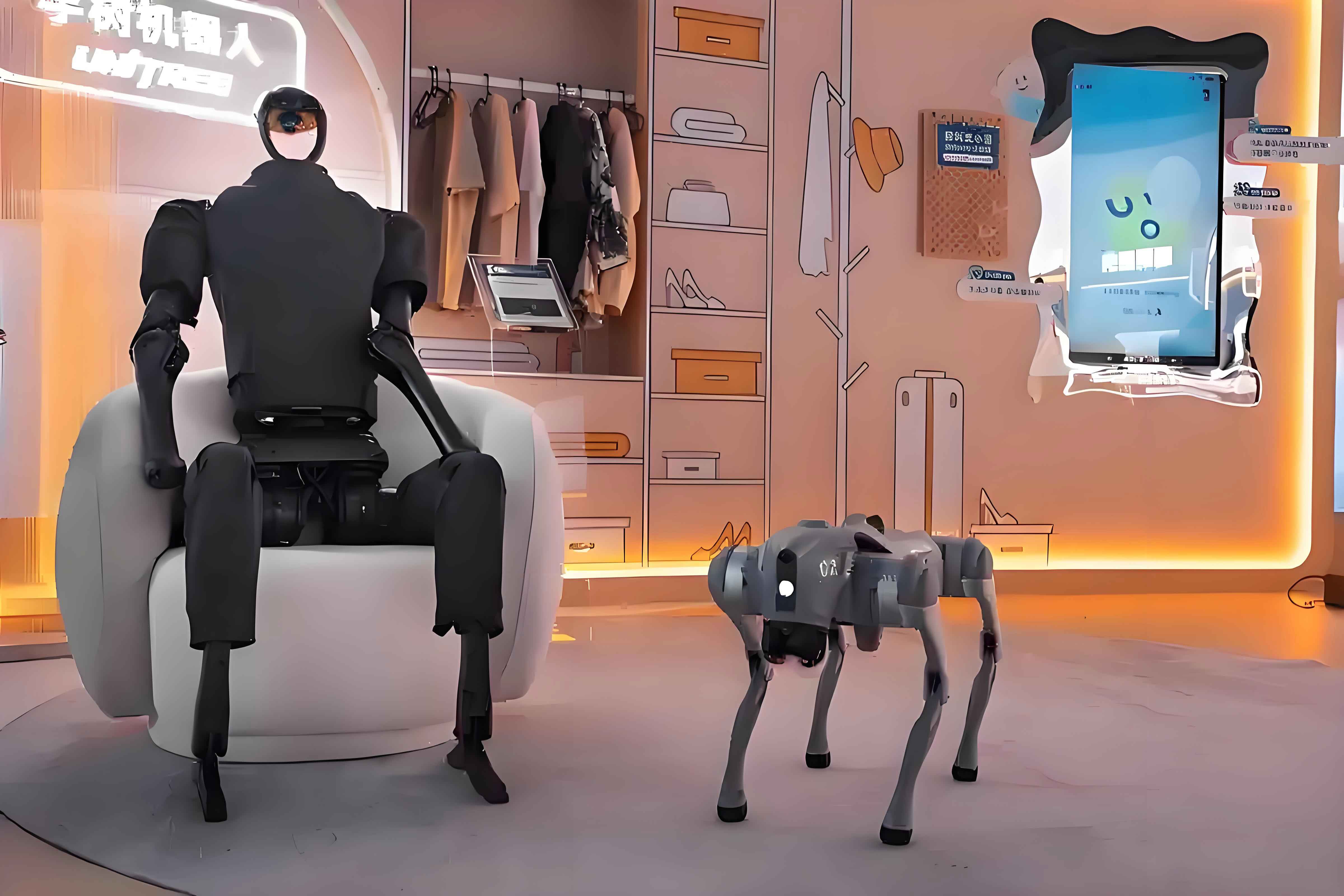
The technological foundation of humanoid robots hinges on complex systems that ensure stability and efficiency. One critical aspect is dynamic balance, often modeled using an inverted pendulum system. The torque required to maintain balance can be expressed as: $$ \tau = I \alpha + m g l \sin(\theta) $$ where \( \tau \) is the torque, \( I \) is the moment of inertia, \( \alpha \) is the angular acceleration, \( m \) is the mass, \( g \) is gravitational acceleration, \( l \) is the length, and \( \theta \) is the angle from vertical. This formula highlights the intricate control needed for a humanoid robot to stand and move without falling. Additionally, ground perception involves sensor fusion algorithms, such as: $$ s(t) = \sum_{i=1}^{n} w_i x_i(t) + \epsilon $$ where \( s(t) \) represents the perceived terrain signal, \( w_i \) are weights from multiple sensors (e.g., LiDAR, cameras, force sensors), \( x_i(t) \) are sensor inputs, and \( \epsilon \) is noise. Control systems often employ PID controllers for motion regulation: $$ u(t) = K_p e(t) + K_i \int_0^t e(\tau) d\tau + K_d \frac{de(t)}{dt} $$ where \( u(t) \) is the control output, \( e(t) \) is the error signal, and \( K_p \), \( K_i \), \( K_d \) are proportional, integral, and derivative gains, respectively. These equations underscore the mathematical rigor behind the seemingly fluid movements of humanoid robots.
From an industrial standpoint, the adoption of humanoid robots is driven by their ability to enhance manufacturing intelligence. Robot density, measured as the number of robots per 10,000 employees, is a key indicator of smart manufacturing levels. The integration of humanoid robots can significantly boost this metric, leading to more efficient and agile production lines. In my assessment, the flexibility of humanoid robots allows them to perform diverse tasks, from assembly and welding to inspection and logistics, adapting to changing production needs without extensive reprogramming. This versatility is quantified through task-switching efficiency, which can be modeled as: $$ \eta = \frac{T_{\text{total}} – T_{\text{switch}}}{T_{\text{total}}} \times 100\% $$ where \( \eta \) is efficiency, \( T_{\text{total}} \) is total operation time, and \( T_{\text{switch}} \) is time lost during task transitions. Such metrics demonstrate why humanoid robots are pivotal for future factories.
| Year | Global Market Size (USD billions) | Chinese Market Size (USD billions) | China’s Share of Global Market (%) |
|---|---|---|---|
| 2023 | 1.5 | 0.6 | 40 |
| 2024 | 2.2 | 1.0 | 45 |
| 2025 | 3.3 | 1.65 | 50 |
| 2026 | 5.0 | 2.6 | 52 |
| 2027 | 7.5 | 4.1 | 55 |
As shown in Table 1, the humanoid robot market is expanding rapidly, with China projected to account for over 50% of the global market by 2025, reaching approximately USD 1.65 billion. This growth is fueled by robust government support, technological innovation, and strong industrial demand. In my view, China’s prominence in this field is no accident; it stems from strategic investments in AI and robotics, making it one of the few countries capable of mass-producing humanoid robots. The synergy across the supply chain—from components like actuators and sensors to software and AI algorithms—enhances China’s competitive edge. However, challenges persist, such as high-end supply shortages and the need to broaden application scenarios. I believe that continued innovation will mitigate these issues, positioning humanoid robots as engines for high-quality economic development and a new hallmark of “Made in China.”
The role of artificial intelligence cannot be overstated in the evolution of humanoid robots. AI algorithms empower these machines with perception, decision-making, and learning capabilities. For instance, deep reinforcement learning models optimize motion policies through reward maximization: $$ J(\theta) = \mathbb{E}_{\tau \sim \pi_\theta} \left[ \sum_{t=0}^{T} \gamma^t r_t \right] $$ where \( J(\theta) \) is the objective function, \( \theta \) represents policy parameters, \( \tau \) is a trajectory, \( \pi_\theta \) is the policy, \( \gamma \) is a discount factor, and \( r_t \) is the reward at time \( t \). This enables humanoid robots to adapt to unstructured environments, a critical feature for industrial deployment. Moreover, computer vision systems utilize convolutional neural networks (CNNs) for object recognition: $$ y = f(W * x + b) $$ where \( y \) is the output, \( f \) is an activation function, \( W \) are weights, \( * \) denotes convolution, \( x \) is the input image, and \( b \) is bias. Such AI-driven advancements ensure that humanoid robots can perform complex tasks with precision.
| Parameter | Model A | Model B | Model C | Unit |
|---|---|---|---|---|
| Height | 1.6 | 1.8 | 1.5 | meters |
| Weight | 55 | 75 | 45 | kilograms |
| Degrees of Freedom | 40 | 50 | 35 | units |
| Battery Life | 4 | 6 | 3 | hours |
| Maximum Speed | 5 | 8 | 4 | km/h |
| Payload Capacity | 20 | 30 | 15 | kilograms |
| AI Processing Power | 50 | 100 | 30 | TOPS |
Table 2 compares technical specs of prominent humanoid robot models, highlighting variations in design and capability. These parameters influence performance in industrial settings; for example, higher degrees of freedom allow more nuanced movements, while greater battery life supports longer operations. In my experience, optimizing these factors involves trade-offs, such as balancing weight against speed or power consumption against processing capacity. The humanoid robot’s design often mimics human biomechanics to navigate human-centric environments seamlessly. This biomimicry is expressed through kinematic equations, like forward kinematics for limb positioning: $$ \mathbf{x} = f(\mathbf{q}) $$ where \( \mathbf{x} \) is the end-effector position, \( \mathbf{q} \) is the joint angle vector, and \( f \) is the kinematic function. Such models enable precise control, essential for tasks like assembling delicate components.
Looking at the broader landscape, I observe that China’s advancements in AI provide a strong backbone for humanoid robot development. According to the World Intellectual Property Organization, China holds about 60% of global AI patents, reflecting its leadership in innovation. This patent dominance translates into accelerated R&D for humanoid robots, as AI technologies like machine learning and computer vision are directly applicable. The government has been proactive in fostering this ecosystem, with initiatives to establish IP protection rules for AI and big data, creating patent pools, and facilitating technology transfer from labs to industries. From my perspective, this institutional support is crucial for sustaining momentum. The National Intellectual Property Administration has revised patent examination guidelines and issued directives on AI-related inventions, addressing issues like patent eligibility and审查标准. These steps ensure that innovations in humanoid robots are safeguarded and commercialized effectively.
The integration of humanoid robots into factories is not without hurdles. In my assessment, key challenges include high costs of deployment, interoperability with existing systems, and safety concerns in collaborative environments. To address these, researchers are developing cost-effective materials and modular designs. Safety protocols often rely on force-limiting algorithms: $$ F_{\text{max}} = k \cdot \Delta x $$ where \( F_{\text{max}} \) is the maximum allowable force, \( k \) is a stiffness constant, and \( \Delta x \) is displacement. This ensures that humanoid robots can work alongside humans without causing harm. Additionally, standardization efforts are underway to create common interfaces and communication protocols, enhancing compatibility across different robotic platforms. I believe that as these challenges are overcome, humanoid robots will become ubiquitous in smart factories, driving productivity and innovation.
| Industry Sector | Primary Tasks | Benefits | Adoption Rate (Projected by 2030) |
|---|---|---|---|
| Automotive Manufacturing | Assembly, painting, quality inspection | Increased precision, reduced cycle time | High (70%) |
| Electronics | PCB handling, soldering, testing | Minimized human error, scalability | Medium-High (60%) |
| Logistics and Warehousing | Picking, packing, inventory management | 24/7 operation, flexibility in sorting | High (75%) |
| Construction | Bricklaying, welding, site monitoring | Safety in hazardous conditions, efficiency | Medium (50%) |
| Healthcare and Laboratories | Sample handling, sterile environment tasks | Contamination reduction, consistency | Medium (40%) |
Table 3 outlines how humanoid robots are being deployed across various industries, each with unique demands. In automotive plants, for instance, humanoid robots can perform repetitive tasks with high accuracy, leveraging their dexterity to handle tools and parts. The benefits extend beyond efficiency; they also improve worker safety by taking over dangerous jobs. I foresee that as AI capabilities grow, humanoid robots will take on more cognitive roles, such as predictive maintenance using anomaly detection models: $$ \text{Anomaly Score} = \frac{|x – \mu|}{\sigma} $$ where \( x \) is a data point, \( \mu \) is the mean, and \( \sigma \) is the standard deviation of normal operation data. This predictive ability can prevent downtime, further enhancing factory productivity.
From a macroeconomic angle, the rise of humanoid robots contributes to economic growth by boosting manufacturing output and creating new job opportunities in robotics maintenance and programming. However, it also necessitates workforce reskilling to manage these advanced systems. In my analysis, the net effect is positive, as automation historically generates more jobs than it displaces. The humanoid robot industry itself is becoming a significant economic sector, with spillover effects into related fields like software development and material science. Investment in R&D for humanoid robots is accelerating, driven by both public and private funding. This is evident in the increasing number of startups and collaborations between academia and industry focused on humanoid robot innovations.
As I contemplate the future, I am convinced that humanoid robots will play a central role in the fourth industrial revolution. Their ability to learn and adapt makes them ideal for dynamic production environments. For example, in flexible manufacturing cells, humanoid robots can be reprogrammed on-the-fly using cloud-based AI: $$ \text{New Policy} \leftarrow \text{Policy}_{\text{old}} + \alpha \nabla J(\theta) $$ where \( \alpha \) is a learning rate and \( \nabla J(\theta) \) is the policy gradient. This continuous improvement loop ensures that humanoid robots evolve with changing requirements. Moreover, the convergence of 5G, edge computing, and IoT will enhance their connectivity, enabling real-time data exchange and remote operation. I envision a future where humanoid robots are as common in factories as conveyor belts are today, driving unprecedented levels of automation and customization.
In conclusion, the journey of humanoid robots from stage performances to factory floors marks a pivotal shift in technology adoption. My exploration reveals that this transition is underpinned by breakthroughs in AI, control systems, and materials, supported by favorable market conditions and policy frameworks. The humanoid robot is not just a machine; it is a symbol of human ingenuity, capable of transforming industries and improving lives. As development continues, I expect to see even more sophisticated humanoid robots that seamlessly integrate into our world, from manufacturing hubs to everyday services. The emphasis on知识产权 protection and innovation will further fuel this progress, solidifying the humanoid robot’s status as a cornerstone of modern industry. Through sustained effort and collaboration, the potential of humanoid robots will be fully realized, ushering in a new era of intelligent automation.