
From the mythical bronze guardian Talos to the humanoid robots performing on a contemporary stage, the dream of creating artificial beings has captivated humanity for millennia. Today, the development of the intelligent robot industry has ascended to a strategic national priority. As a researcher tracing this profound arc, I observe that the history of intelligent robots is not merely a chronicle of technological invention but a mirror reflecting our deepest desires, fears, and intellectual ambitions. This evolutionary path can be systematically divided into eight significant phases: the embryonic forms in myth and literature; the era of ancient automata; the rise of近代自动机; the conceptual萌芽 of modern robotics; the age of示教再现; the empowerment through感知; the era of technological acceleration; and the current frontier of embodied development. Throughout this journey, the intelligent robot has progressively approximated human characteristics and integrated deeper into the fabric of human society, assuming increasingly vital and complex roles.
I. Prototypes in Myth and Literature: The Conceptual Genesis
The image and the very concept of the robot first emerged not in laboratories, but in the fertile grounds of myth, literature, and speculative fiction. For centuries, narratives and debates have swirled around these artificial beings, often shrouding them in an aura of mystery and wonder. These early imaginings were not machines as defined by modern engineering, but vessels for human aspirations towards automated tools, artificial life, and superhuman assistants—creations of gods, master craftsmen, or sages designed for labor, protection, or service, sometimes endowed with a semblance of consciousness or agency.
A pivotal figure in this mythological prehistory is the bronze giant Talos from Greek mythology (circa 700 BC). Scholars note that the essence of a robot lies in being “made, not born.” Talos, forged by the god Hephaestus, was a guardian of Crete. His brazen shell contained a single vein filled with divine ichor, a source of power and his sole vulnerability. This narrative established enduring themes: immense mechanical power juxtaposed with inherent fragility, and the role of the created as a servant or potential threat to its creator. This trope of the threatening artificial being persisted through later cultural works, from Mary Shelley’s Frankenstein (1818) to Karel Čapek’s coining of the word “robot” (from Czech “robota,” meaning forced labor) in R.U.R. (1920), and the manipulative robot Maria in Fritz Lang’s Metropolis (1927).
Parallel traditions existed in ancient China. While lacking a direct equivalent to the modern “robot,” Chinese texts described remarkable automated mechanical devices. One of the earliest accounts, from the Liezi (circa 4th century BC), tells of the craftsman Yan Shi who presented King Mu of Zhou with a lifelike “wooden automaton.” This artifact could walk, sing, dance, and even flirt, astonishing the king with its realism. When disassembled, it revealed an intricate internal structure of leather, wood, glue, and paint, mimicking organs and limbs—a sophisticated early vision of a humanoid automaton.
II. Ancient Automata: Mechanical Ingenuity Before the Modern Age
The journey from myth to mechanism began with ancient automata—devices that performed pre-programmed actions using mechanical means. These were the direct technological ancestors of the modern intelligent robot, demonstrating early principles of automation, control, and biomimicry.
Chinese Mechanical Marvels
Ancient Chinese records document a wide array of self-operating devices powered by water, sand, gravity, elasticity, animal, or human force. Their applications were diverse:
- Navigation & Measurement: The “Li Drum Chariot” (记里鼓车) used geared mechanisms to automatically strike a drum every li (approx. 500m) traveled. The “South-Pointing Chariot” (指南车) employed a differential gear system to keep a figure’s arm perpetually pointing south, regardless of the chariot’s turns.
- Astronomy & Seismology: Zhang Heng’s seismoscope (132 AD) detected distant earthquakes. The water-driven armillary spheres of the Tang and Song dynasties, like Su Song’s Astronomical Clock Tower (1092 AD), simulated celestial motions and automatically reported time with striking jack figures.
- Court Entertainment: “Water-powered Variety Shows” (水转百戏) and other automata, such as wooden dancers and musician figures, showcased mechanical artistry for royal amusement.
Despite this ingenuity, these inventions did not catalyze a widespread “robotic” revolution. The reasons were sociotechnical: an agrarian economy lacked the demand for industrial automation; technological development was often isolated and master-craftsman dependent; and a cultural emphasis on humanistic studies over “clever技巧” limited broader institutional support for mechanization.
Western Automata: From Greece to the Renaissance
The Western trajectory of automata evolved through distinct cultural epochs, each layering new purposes and complexities onto mechanical design.
1. Greco-Roman Foundations: Beyond Talos, legends spoke of Hephaestus’s golden assistants. Historical figures like Hero of Alexandria (10-70 AD) designed practical and wondrous devices using steam, water, and air pressure, including automatic temple doors, a rudimentary steam engine (aeolipile), and intricate vending machines. The Antikythera mechanism (c. 150-100 BC) stands as a stunning example of a complex, geared analog computer for astronomical calculation.
2. Medieval Synthesis: In medieval Europe, automata primarily served religious symbolism (automatic church bells, moving icons), courtly spectacle, and practical urban functions (public fountain controls, mill regulators). The transmission of mechanical knowledge from the Islamic world during the “Translation Movement” was crucial for later advancements.
3. Renaissance Flourishing: The Renaissance blended technical skill with humanist expression. Automata became vehicles for religious awe (mechanical altars), political power (diplomatic gifts like mechanical lions), scientific inquiry (Leonardo da Vinci’s studies of robotic knights and flying machines), and public entertainment. This period cemented the idea of technology in service to humanistic exploration—understanding and emulating nature and humanity itself.
4. Enlightenment Refinement: The 18th century saw automata reach peak mechanical sophistication, intertwined with Enlightenment philosophy. Jacques de Vaucanson’s Digesting Duck (1739) and the Jaquet-Droz writers and musicians (1770s) were masterpieces that blurred the line between machine and life. They were used to demonstrate physiological principles, explore educational tools, and provoke philosophical debates about materialism, as in Julien Offray de La Mettrie’s Man a Machine (1748). The core equation of this era could be framed as a pursuit of mechanical perfection: $$ \text{Precision} = f(\text{Craftsmanship}, \text{Scientific Principle}) $$ where the function sought to maximize the lifelike fidelity of the automaton’s actions.
| Civilization / Period | Primary Drivers | Key Technologies | Primary Applications | Philosophical/Cultural Role |
|---|---|---|---|---|
| Ancient China | Hydraulics, Gravity, Clockwork | Geared systems, water wheels, linkage mechanisms | Timekeeping, measurement, court entertainment, seismology | Practical utility, demonstration of imperial prowess and cosmic harmony |
| Ancient Greece & Rome | Water, Steam, Pneumatics | Gears, levers, pumps, simple feedback systems | Religious spectacle, scientific demonstration, theater, warfare | Exploration of natural philosophy, bridging myth and mechanics |
| Medieval Europe & Islamic World | Water, Weight-driven Clockwork | Escapements, complex gearing, astrolabe integration | Religious ritual, timekeeping (clocks), astronomical calculation | Symbol of divine order, tool for scholarly and religious practice |
| Renaissance Europe | Spring-driven Clockwork, Hydraulics | Miniaturized gearing, cams, humanoid articulation | Courtly display, scientific modeling, public entertainment | Expression of humanist ideals, power, and the mastery of nature |
| Enlightenment Europe | Refined Spring-driven Clockwork | Extremely complex cams, programmable cylinders, miniaturization | Philosophical demonstration, elite entertainment, scientific education | Embodiment of mechanistic philosophy and debates on life/machine duality |
III. The Age of Automatic Machinery: Laying the Industrial Groundwork
The period from the late 18th to early 20th centuries marked a critical transition from ingenious mechanical toys to systems that drove industrial production. This era, powered by the Industrial Revolution, was defined by the pursuit of automation—the ability of machines to operate with minimal human intervention. The key shift was from natural, variable power sources (water, wind) to controlled, consistent ones (steam, electricity), enabling stable, large-scale, and efficient autonomous operation.
The core value of近代自动机 was solving the industrial pain points of stability, scale, and reduced labor dependency. Pioneering inventions include James Watt’s centrifugal governor (1788) for steam engines, which introduced the principle of negative feedback control: $$ \text{Error} = \text{Desired Speed} – \text{Measured Speed} $$ The control action adjusts the throttle proportionally to this error. Joseph Marie Jacquard’s punch-card loom (1804) introduced programmability, separating instruction from mechanism. Oliver Evans’s automated flour mill (1780s) created a continuous production line. These developments revolutionized textiles, milling, and manufacturing, drastically reducing costs and shaping modern industrial society. They established the conceptual and technical bridge between clockwork automata and the programmable, electronic automation of the 20th century.
IV. The Germination of the Modern Robot (Early to Mid-20th Century)
The modern robot, as we define it today—a reprogrammable, multifunctional manipulator—began to take conceptual shape in the early 20th century, fueled by the convergence of electricity, new materials, and theoretical breakthroughs. This period was less about physical prototypes and more about establishing the essential intellectual frameworks.
Karel Čapek’s play R.U.R. (1920) gave the world the word “robot.” Soon after, science fiction author Isaac Asimov formulated his famous “Three Laws of Robotics” (1942), providing an ethical blueprint for human-robot interaction that remains influential. Concurrently, mathematician Norbert Wiener founded the field of Cybernetics (1948), defining it as the study of “control and communication in the animal and the machine.” This provided the theoretical bedrock for robot control systems, formalizing concepts like feedback loops essential for an intelligent robot’s stability and adaptation. The relationship can be modeled as part of a control system: $$ C(s) = \frac{U(s)}{E(s)} $$ where \( C(s) \) is the controller (the “brain” of the early robot), \( U(s) \) is the control signal to the actuators, and \( E(s) \) is the error signal based on desired vs. actual state.
V. The First Generation: “Teaching and Playback” Industrial Robots
The 1950s and 1960s witnessed the birth of the first physical, programmable industrial robots. This was the era of the “示教再现” (Teach and Playback) robot, or the first generation. The key development was the shift from fixed automation to flexible, reprogrammable automation.
The pivotal moment came in 1954 with the invention of the first programmable robotic arm. In 1959, the world’s first true industrial robot, Unimate, was developed. In 1961, it began work on a General Motors assembly line, handling hot die-cast parts—a dirty, dangerous, and dull job perfectly suited for automation. These early robots had no sensors; they blindly repeated a sequence of motions taught by a human operator using a teach pendant. Their intelligence was minimal, confined to precise repetition. The kinematic equation governing their movement was predefined: $$ \mathbf{x} = f(\mathbf{q}) $$ where \( \mathbf{x} \) is the position/orientation of the end-effector in space, and \( \mathbf{q} \) is the vector of joint angles. The robot simply retraced a recorded path of \( \mathbf{q} \).
| Decade | Key Technological Enabler | Capability Leap | Primary Application | Limitation |
|---|---|---|---|---|
| 1950s | Programmable controller, hydraulic actuators | From fixed automation to recordable, replayable motion sequences. | Material handling (die casting, forging) | No sensing; requires perfectly structured environment. |
| 1960s | Commercialization (Unimation), solid-state electronics | Establishment of the industrial robot as a reliable factory asset. | Spot welding, machine loading/unloading | Large, expensive, limited to heavy industry. |
| 1970s | Microprocessors, Electric Servo Motors | Improved precision, repeatability, and energy efficiency. Birth of the PLC. | Assembly, painting, palletizing | Beginning of sensor integration but largely blind and deaf. |
VI. The Second Generation: Perception and Empowerment
The 1970s through the 1990s marked the advent of the “perception-empowered” or second-generation robot. The defining characteristic was the integration of external sensors—vision, force, torque, tactile—allowing the robot to react to its environment. This was a fundamental step towards a more capable intelligent robot.
Landmarks include the development of the first mobile robot with visual perception and reasoning in the late 1960s. In the 1970s, force sensing allowed for “compliant” assembly, where a robot could insert a peg in a hole by feeling the contact forces. Vision systems began guiding robots for part identification and inspection in the 1980s. This era transformed robots from isolated, caged machines into interactive systems that could adapt to minor variations. The control logic now incorporated sensor feedback \( \mathbf{s} \): $$ \mathbf{u} = g(\mathbf{q}, \dot{\mathbf{q}}, \mathbf{s}, \mathbf{x}_{desired}) $$ where \( \mathbf{u} \) is the control output, making the robot’s actions dependent on both its internal state and external sensory input. Japan’s focus on flexible manufacturing during this period solidified the industrial robot’s role in high-mix production.
VII. Acceleration and the AI Convergence (1990s – 2020s)
This period has been defined by exponential growth in computing power, the rise of the internet (providing vast data), and revolutionary advances in Artificial Intelligence (AI). The goal shifted from reactive machines to truly cognitive systems, leading to the exploration of the third-generation intelligent robot.
The journey of AI itself, crucial for robot intelligence, evolved through dominant paradigms:
- Symbolic AI (1960s-1980s): Relied on explicit rules and knowledge bases (Expert Systems). Useful for logical reasoning but brittle in unstructured environments.
- Statistical Learning & Early Neural Networks (1990s-2000s): Enabled pattern recognition (e.g., visual object classification) from data, moving away from hand-coded rules.
- Deep Learning & Reinforcement Learning Revolution (2010s-present): The breakthrough in deep neural networks, particularly after 2012, enabled machines to learn hierarchical features directly from raw data. The 2016 victory of AlphaGo over Lee Sedol was a watershed moment, demonstrating AI’s ability to master complex, intuitive tasks through self-play. The fundamental learning process in a neural network can be simplified as an optimization: $$ \min_{\theta} \mathcal{L}(f_{\theta}(\mathbf{x}), \mathbf{y}) $$ where \( \theta \) represents the network’s weights, \( \mathcal{L} \) is a loss function, \( f_{\theta} \) is the network, \( \mathbf{x} \) is input data, and \( \mathbf{y} \) is the desired output.
This AI revolution powered a new wave of robotics. Robots like Honda’s ASIMO achieved dynamic bipedal walking. Commercial successes like the Roomba vacuum cleaner brought robots into homes. Surgical robots like da Vinci demonstrated superhuman precision. Service and social robots began to appear in healthcare and hospitality. The intelligent robot was no longer just an industrial arm; it was becoming a mobile, interactive, and increasingly autonomous agent.
| Domain | Capability | Enabling Technology | Example |
|---|---|---|---|
| Perception | 3D Scene Understanding, Semantic Segmentation | LiDAR, RGB-D cameras, Deep Learning (CNNs, Transformers) | Self-driving car identifying pedestrians, vehicles, and lanes. |
| Locomotion & Manipulation | Dynamic Balance, Dexterous Gripping | Advanced control theory, force-torque sensing, simulation-trained policies | Humanoid robot walking on rubble; robotic hand manipulating a tool. |
| Decision & Planning | Real-time Path Planning in Dynamic Environments | SLAM (Simultaneous Localization and Mapping), Reinforcement Learning | Delivery robot navigating a busy sidewalk. |
| Interaction | Natural Language Processing, Affective Computing | Large Language Models (LLMs), sentiment analysis from voice/face | Social robot conducting a simple conversation or recognizing user emotion. |
VIII. The Era of Embodiment and Spatial Intelligence (2020s – Present and Beyond)
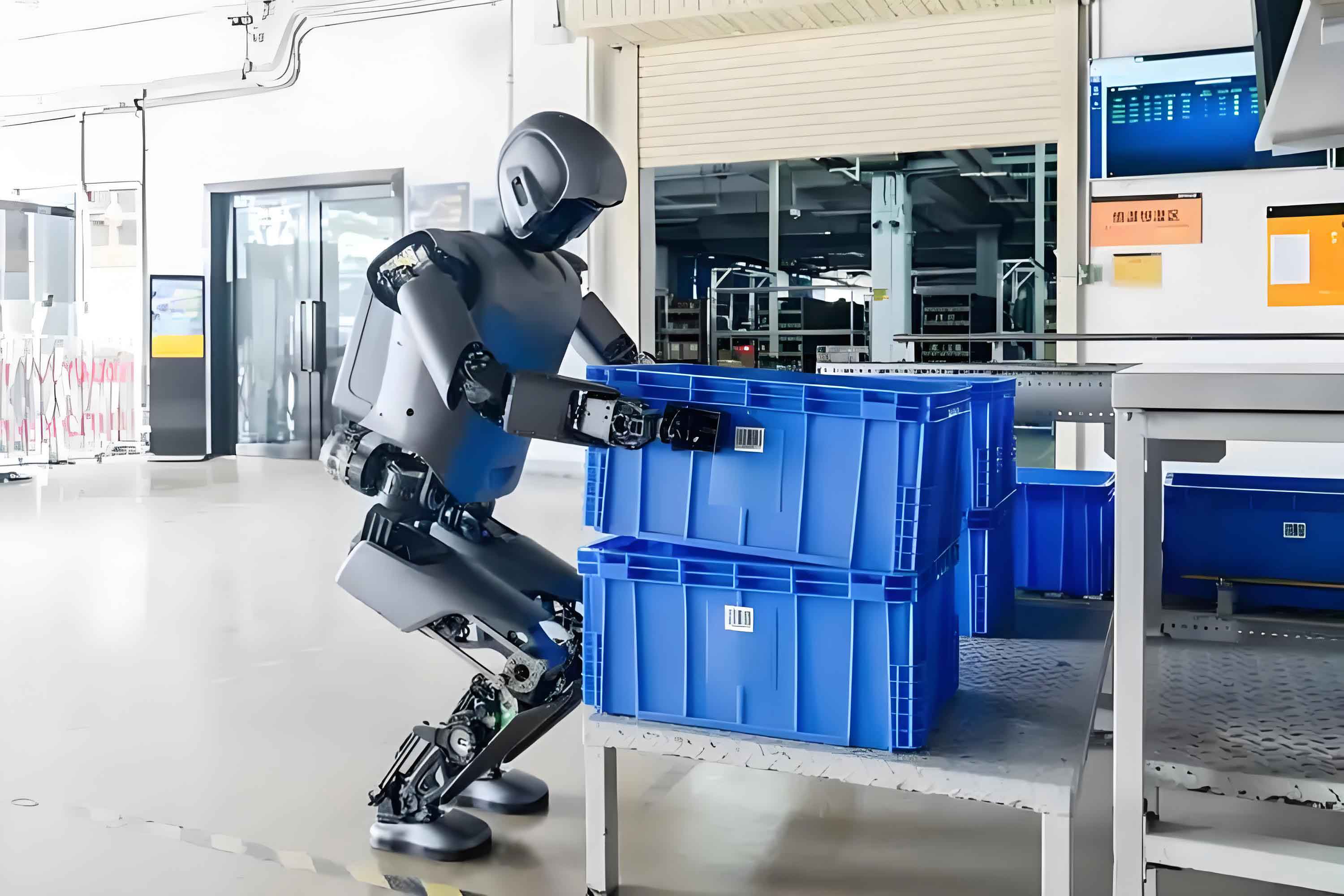
The current frontier is Embodied Artificial Intelligence. This paradigm posits that true intelligence arises from an agent’s interaction with the physical world through a body. It addresses a key limitation of pure data-driven AI: the lack of common-sense physical understanding. An embodied intelligent robot learns by doing, building internal models of the world through sensorimotor experience.
The convergence of large multimodal AI models (understanding text, image, sound) with robotic control is the engine of this era. These models provide the high-level reasoning and task understanding, while the robot’s body executes actions and gathers new sensory data, creating a continuous learning loop. The next critical breakthrough is Spatial Intelligence—the ability to understand, reason about, and interact with 3D space. This goes beyond recognizing an object to understanding its physical properties, geometry, and how forces act upon it. It is the key to enabling robots to operate fluidly in human-centric environments and to power immersive digital worlds. The development of world models that can simulate physical interactions is central to this goal. The future intelligent robot will be governed by a cycle: $$ \text{Perception} \rightarrow \text{World Model Update} \rightarrow \text{Reasoning/Planning} \rightarrow \text{Action} \rightarrow (\text{New Perception}) $$ where the World Model is a learned, internal simulation of physics and causality.
| Paradigm | Core Principle | Robot Intelligence Manifestation | Key Limitation |
|---|---|---|---|
| Symbolic AI | Explicit knowledge representation and logical rules. | Task planning in well-defined domains (e.g., assembly sequence). | Brittle; fails in novel or ambiguous situations. |
| Statistical/Connectionist AI | Learning patterns and representations from data. | Object recognition, speech understanding, predictive maintenance. | Often a “black box”; requires massive data; lacks common-sense reasoning. |
| Embodied AI | Intelligence emerges from sensorimotor interaction with an environment. | Learning manipulation skills through trial and error; acquiring physical intuition. | Extremely data-inefficient and slow if learned only in the real world. |
| World Models & Spatial AI | Learning predictive models of 3D physical dynamics. | Simulating actions before execution; planning complex maneuvers; understanding affordances. | Developing accurate, generalizable models of complex physics remains a grand challenge. |
Reflecting on this vast historical continuum, from the mythical guardians of ancient epics to the learning, embodied agents of today, the trajectory is clear. The intelligent robot has evolved from a concept of servitude or threat to a tool of immense utility, and now stands at the threshold of becoming a collaborative partner. Its development is a story of our persistent drive to extend our capabilities, understand our own nature by creating it, and ultimately reshape the world we share. The next chapter in the history of the intelligent robot will be written not just by engineers and algorithms, but through the complex, ongoing dance of interaction between these machines and the human societies they are destined to inhabit.