
The landscape of healthcare is undergoing a profound transformation, one driven not by a single revolutionary device, but by a diverse and growing ecosystem of intelligent machines. While the da Vinci Surgical System often serves as the public face of this revolution, my observations and analysis confirm that the domain of the medical robot has blossomed far beyond the confines of the operating room. The current era is characterized by a proliferation of robotic assistants across rehabilitation, nursing, health management, and remote care, each addressing critical gaps and enhancing capabilities within the modern healthcare system.
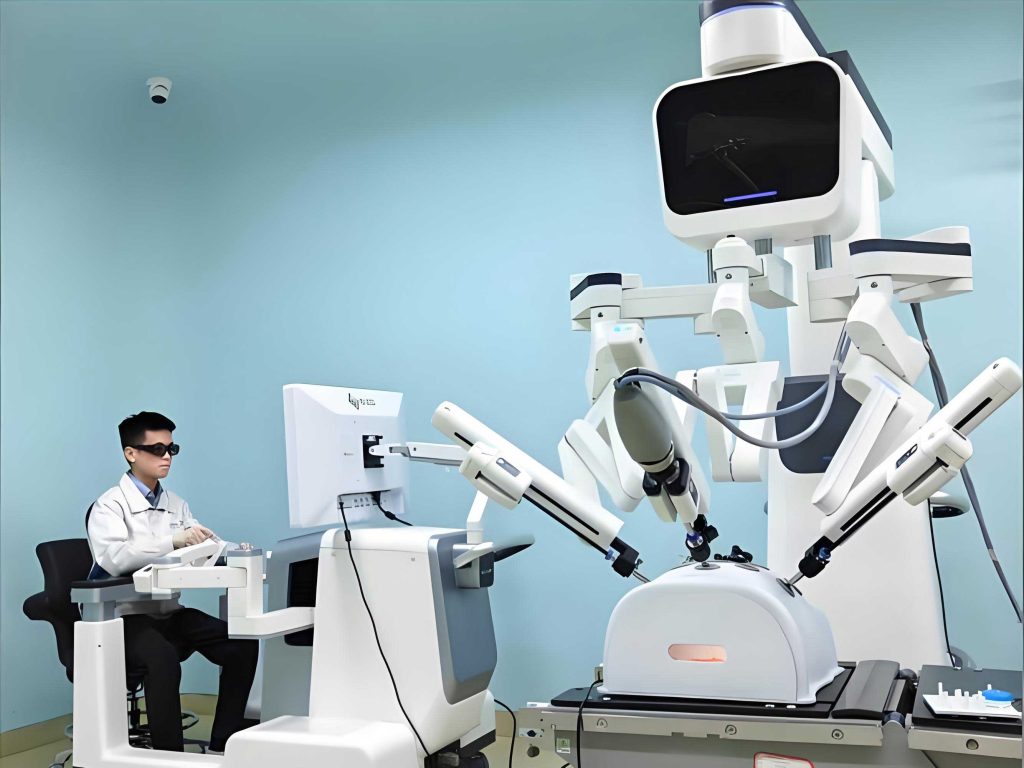
The driving forces behind this expansion are multifaceted. Demographically, aging populations worldwide correlate with increased incidence of disabilities and chronic conditions. The traditional acute-care model often falls short for long-term management and recovery, creating a pressing need for sustained, consistent therapeutic intervention. Economically, healthcare systems face perennial challenges of cost containment and workforce shortages. Technologically, advancements in sensors, actuators, artificial intelligence, and materials science have converged to make sophisticated, safe, and affordable medical robot solutions feasible. From my standpoint, this is not a story of machines replacing humans, but of machines augmenting human care, filling logistical voids, and performing tasks that are dangerous, repetitive, or require superhuman precision.
The Rehabilitation Paradigm: Quantifying Recovery
In the realm of rehabilitation, the medical robot transitions from a tool to a therapeutic partner. For patients recovering from stroke, spinal cord injury, or neurological disorders, repetitive, task-oriented movement is crucial for neuroplasticity and functional recovery. Human therapists cannot provide perfectly consistent, quantifiable, and high-intensity sessions indefinitely. This is where robotic exoskeletons and end-effector-based systems excel.
These devices can be programmed to provide assist-as-needed therapy, challenging the patient just enough to promote learning without causing frustration or injury. The core principle can be modeled by an adaptive impedance control law, where the robot’s behavior changes based on the patient’s performance:
$$ \tau = K_p(q_d – q) + K_d(\dot{q}_d – \dot{q}) + F_{assist} $$
Where \(\tau\) is the torque applied by the medical robot, \(K_p\) and \(K_d\) are stiffness and damping gains, \(q_d\) and \(\dot{q}_d\) are the desired position and velocity, \(q\) and \(\dot{q}\) are the actual patient-driven position and velocity, and \(F_{assist}\) is an adaptive force term that diminishes as patient capability improves. This allows for a smooth transition from full robot assistance to patient-initiated movement.
The quantitative data captured by these robots—range of motion, force output, movement smoothness—provides an objective, longitudinal measure of progress far more granular than traditional assessment scales. The table below categorizes primary types of rehabilitation robots and their key applications:
| Robot Type | Mechanical Structure | Targeted Anatomy | Primary Clinical Application | Key Measurable Metrics |
|---|---|---|---|---|
| Upper-Limb Exoskeleton | Wearable, aligns with limb segments | Shoulder, Elbow, Wrist | Post-stroke hemiparesis, Traumatic Brain Injury | Fugl-Meyer Score, Active Range of Motion (AROM), Movement Units |
| End-Effector Robot | Patient interacts with a handle/grip | Hand, Arm (kinematic chain) | Reaching/grasping therapy, Motor re-learning | Path Ratio, Smoothness (Jerk), Force Modulation |
| Lower-Limb Exoskeleton | Wearable for legs and torso | Hip, Knee, Ankle | Spinal Cord Injury, Gait training post-stroke | Walking Speed, Stride Length, Weight-Bearing Symmetry |
| Portable Assistive Robot | Lightweight, often for single joint | Hand, Ankle | Chronic conditions (e.g., Arthritis), Home-based therapy | Compliance (usage hours), Pain Score (VAS), Grip Strength |
The Nursing and Logistics Revolution
Beyond direct therapy, the hospital environment presents numerous opportunities for robotic assistance. Nursing staff are burdened with high workloads, administrative tasks, and exposure to hazards like infectious diseases or cytotoxic drugs. The integration of a medical robot into nursing logistics represents a pragmatic solution to enhance safety and efficiency.
A prime example is the use of robotic systems in oncology pharmacies for the precise compounding of chemotherapy drugs. This process minimizes aerosol exposure and ensures dosage accuracy, directly protecting human staff. The operational workflow can be optimized using queuing theory models. For instance, the average time a medication order spends in the system (from request to delivery) with a robotic compounder can be analyzed with an M/M/1 queue model:
$$ W = \frac{1}{\mu – \lambda} $$
Where \(W\) is the average wait time in the system, \(\mu\) is the service rate of the robotic system (orders per hour), and \(\lambda\) is the arrival rate of medication orders. By increasing \(\mu\) through automation and reducing human error-related reprocessing, the overall efficiency (\(W\)) improves significantly.
Other nursing-focused robots include autonomous delivery carts for linens and supplies, disinfection robots using UV-C light, and patient-lifting robots that reduce physical strain on caregivers and improve patient dignity. The value proposition here is clear: delegate the repetitive, heavy, or hazardous tasks to the medical robot, freeing highly skilled nurses to focus on direct patient care, education, and emotional support—tasks that deeply require human empathy and judgment.
Health Management and Remote Presence
The reach of the medical robot extends into the home and community through health management platforms and telepresence solutions. Health management robots often serve as interactive hubs, integrating vital sign monitors, medication dispensers, and communication interfaces. They can collect data (e.g., blood pressure, weight, glucose levels) and, using simple algorithms, flag anomalies for clinical review:
$$ Alert = \begin{cases}
1 & \text{if } |x_t – \bar{x}_{historical}| > k \cdot \sigma_{historical} \\
0 & \text{otherwise}
\end{cases} $$
Where \(x_t\) is the current reading, \(\bar{x}_{historical}\) and \(\sigma_{historical}\) are the patient’s historical mean and standard deviation, and \(k\) is a clinician-set threshold (e.g., 2 or 3). This facilitates early intervention for patients with chronic heart failure, diabetes, or hypertension.
Telepresence robots, equipped with cameras, screens, and microphones, allow clinicians to conduct remote rounds. While not suitable for hands-on procedures, they enable visual assessment, family conferences, and follow-up visits, improving access to specialist care. However, the application of telerobotics in direct, real-time intervention (e.g., remote surgery) carries significant risk. The critical constraint is network latency (\(\Delta t\)). For stable closed-loop control, the total latency must be below a human-perceptible threshold, often cited as 100-300ms. The stability criterion can be related to the phase margin (\(\phi_m\)) degradation caused by the time delay:
$$ \phi_m \approx \phi_{m0} – \omega_c \cdot \Delta t \cdot \frac{180}{\pi} $$
Where \(\phi_{m0}\) is the phase margin without delay and \(\omega_c\) is the crossover frequency. Excessive \(\Delta t\) can drive \(\phi_m\) to zero or negative, causing instability. Therefore, while remote consultation robots are viable, the safety-critical nature of surgical robotics demands near-zero latency, local networks, or highly predictive autonomous functions to mitigate this fundamental risk.
| Robot Domain | Core Technology Focus | Primary Safety Concern | Regulatory Class (FDA Example) | Key Performance Indicator (KPI) |
|---|---|---|---|---|
| Surgical Robotics | Precision control, Haptics, 3D Vision | Tissue damage, Mechanical failure | Class II/III (PMA often required) | Procedure time, Complication rate vs. standard laparoscopy |
| Rehabilitation Robotics | Adaptive control, Biomechanical modeling | Over-exertion, Incorrect gait patterning | Class II (510(k) common) | Functional Independence Measure (FIM) improvement, Patient adherence |
| Nursing/Logistics Robots | Autonomous Navigation, SLAM, Human-Robot Interaction | Collision, Task error (e.g., wrong drug) | Class I/II | Task completion rate, Staff time saved, Error reduction |
| Telepresence Robots | Communication, Mobility, UI/UX | Privacy breaches, Network failure | Class I (General Controls) | Consultation frequency, Patient satisfaction, Travel cost reduction |
Policy as a Catalyst and Framework
The flourishing of the medical robot field is not merely a technological phenomenon; it is increasingly shaped by proactive governmental policy. National strategies recognize the dual promise of improving healthcare outcomes and fostering a high-tech industrial sector. Key policy instruments include funding for research and development, creating regulatory sandboxes for testing, establishing reimbursement pathways, and promoting “med-tech” or “doctor-engineering” collaboration.
The fundamental goal of these policies is to accelerate the transition from laboratory prototype to clinically validated product. This journey’s success probability (\(P_{success}\)) can be conceptualized as a function of multiple factors:
$$ P_{success} \propto \frac{(R\&D \cdot Clinical \ Evidence) \times Policy\ Support}{Regulatory\ Hurdle \times Cost\ of\ Development} $$
Effective policy acts on both the numerator—by increasing R&D grants and facilitating pilot studies—and the denominator—by providing regulatory clarity and cost-sharing mechanisms. Initiatives that mandate or incentivize the inclusion of robotics in clinical training programs further ensure that the human workforce is prepared to partner effectively with these new technologies.
Conclusion: A Symbiotic Future
In my assessment, the narrative surrounding the medical robot is often misconstrued as a clash between human and machine. The reality is far more collaborative. The true value of a surgical medical robot lies in extending a surgeon’s skill, filtering tremor, and enabling minimally invasive techniques previously impossible. The rehabilitation medical robot acts as a tireless, data-driven extension of the therapy team. The logistics medical robot operates as a reliable teammate that handles defined, physical tasks.
The ultimate objective is not replacement, but augmentation. It is about leveraging the precision, endurance, and computational power of robots to address systemic weaknesses: workforce shortages, geographic disparities in care access, procedural inconsistency, and occupational hazards. The future healthcare ecosystem will be a tightly integrated one, where medical robot platforms handle an expanding set of procedural and analytical tasks, while human professionals focus on complex decision-making, patient communication, and providing the compassionate care that remains uniquely human. This synergy promises the overarching goal: higher quality, more accessible, and safer healthcare for all.