
As a researcher deeply engaged in the evolution of laboratory safety protocols, I have observed a persistent and critical gap between traditional risk management methods and the dynamic, high-stakes environment of modern laboratories. Among these, chemical laboratories represent the most significant concentration of risk, with fire and explosion incidents being disproportionately frequent. The root cause analysis consistently points to human error or procedural violations, exacerbated by the inherent limitations of manual inspections, which often cover less than 60% of potential hazard zones. This coverage is not only inefficient but also leaves dangerous blind spots, failing to meet the need for real-time, comprehensive situational awareness. The advent of the explosion-proof robot dog, equipped with advanced sensing and intelligent navigation, presents a transformative solution. This article explores the integration of this technology into laboratory ecosystems, systematically analyzing its technical foundations and application scenarios to unlock its potential for elevating safety management to new levels of intelligence, automation, and reliability.
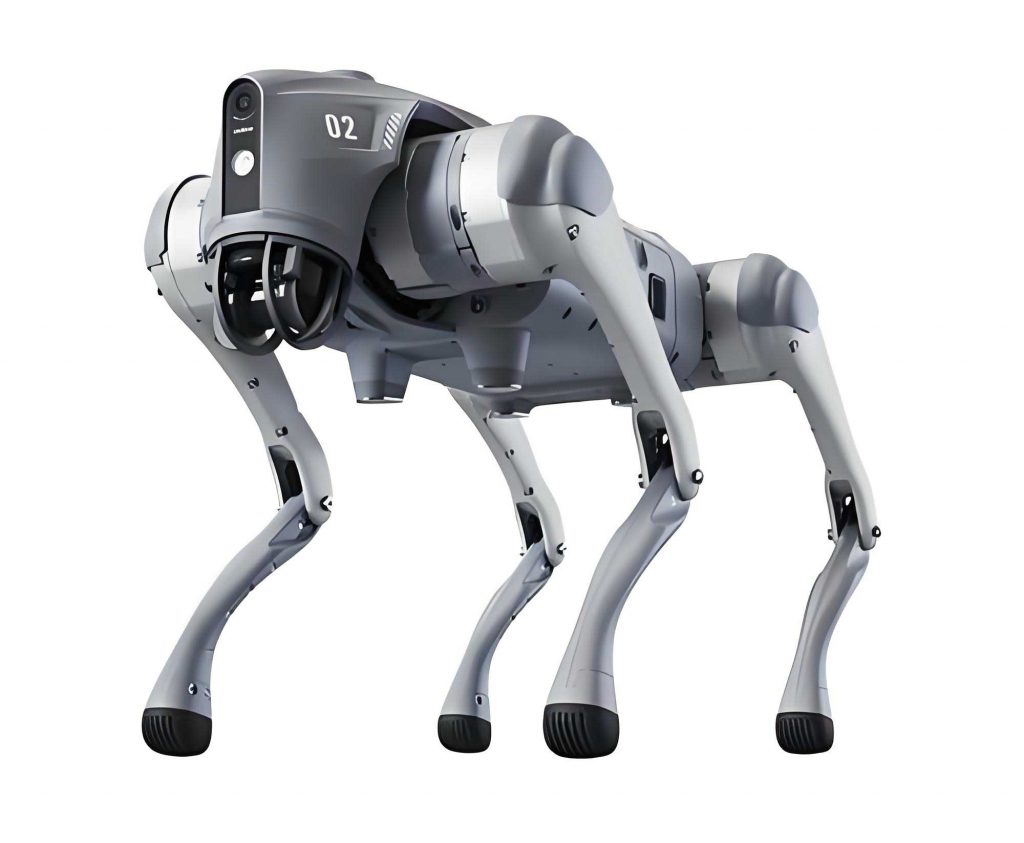
The transition from early, purely mechanical isolation methods to today’s integrated, intelligent systems marks a significant technological journey. Initial approaches relied heavily on robust containment (explosion-proof enclosures) and energy-limiting circuits (intrinsic safety). The modern robot dog represents a convergence of these principles with breakthroughs in robotics, artificial intelligence, and multi-sensor fusion. Contemporary systems leverage arrays of sensors—for combustible gases, toxic vapors, temperature, and particulate matter—coupled with autonomous navigation to perform proactive, data-driven hazard detection. This shift mirrors broader trends in laboratory automation, where Laboratory Information Management Systems (LIMS) and collaborative robots enhance throughput and data integrity. However, a specific research gap exists in the holistic integration of explosion-proof robotics within the unique “human-machine-environment” triad of a laboratory, particularly for real-time, multi-risk monitoring and automated incident response. This gap forms the core focus of our investigation.
Laboratory Environment: A Nexus of Complexity and Risk
The laboratory is a crucible of innovation but also a carefully balanced, high-risk environment. Its spatial layout is typically complex, featuring:
- High-Density Instrumentation: Precision equipment often occupies confined spaces, creating narrow passages and obstacle-rich terrains.
- Diverse Hazardous Materials: Flammable solvents, corrosive acids, toxic reagents, and biological agents co-exist, each with strict and often conflicting storage and handling requirements.
- Dynamic Operational States: Experiments can rapidly alter local conditions, generating heat, pressure, fumes, or aerosols.
Traditional safety measures, primarily reliant on scheduled human inspections and fixed sensors, struggle in this environment. Human inspections are intermittent, subjective, and expose personnel to potential danger. Fixed sensors offer only point-in-space data, leaving gaps in coverage. The fundamental requirements for next-generation laboratory safety are therefore: continuous, mobile monitoring; early, accurate anomaly detection; and automated, initial emergency response. The mobile, intelligent robot dog is uniquely positioned to fulfill these requirements.
Technical Core of the Explosion-Proof Robot Dog
The deployment of a robot dog in a hazardous laboratory is predicated on a suite of specialized technologies that ensure its safe and effective operation.
1. Explosion-Proof Design Principles
The foundational requirement is preventing the robot dog from becoming an ignition source. This is achieved through a multi-layered approach:
- Explosion-Proof Enclosure (Ex-d): The robot’s body and electronic compartments are housed within a rugged shell, typically made from high-strength aluminum alloy or composite materials. This enclosure is designed to withstand an internal explosion of a specific hazardous gas/air mixture without rupturing and to prevent the transmission of the explosion to the surrounding atmosphere. The joints are precision-machined with flame paths long enough to cool escaping gases below the ignition temperature.
- Intrinsic Safety (Ex-i): All internal electrical circuits are designed to limit both current and voltage to levels below what is required to generate a spark or create a hotspot with sufficient energy to ignite a specified hazardous atmosphere. This involves using zener diode barriers, galvanic isolation, and current-limiting resistors. The energy stored in any capacitor or inductor is kept minimal, governed by the formula for spark ignition energy:
$$E_{max} < k \cdot E_{ignition}$$
where \(E_{max}\) is the maximum available electrical energy in the circuit, \(E_{ignition}\) is the minimum ignition energy of the target gas group, and \(k\) is a safety factor (typically 0.5). - Pressurization (Ex-p): In some designs, critical compartments are maintained at a pressure higher than the external atmosphere using clean air or inert gas, preventing the ingress of flammable gases.
2. Multi-Sensor Fusion for Environmental Perception
The intelligence of the robot dog is derived from its senses. A sophisticated sensor suite creates a comprehensive real-time map of environmental threats.
| Sensor Type | Detection Principle | Target Parameters | Key Output & Role |
|---|---|---|---|
| Gas Sensors | Catalytic Bead (LEL), Electrochemical, NDIR | CH₄, H₂, CO, H₂S, VOCs, O₂ depletion | Concentration (ppm/LEL%). Early leak detection. |
| Temperature & Thermal Imaging | Pt100 RTD, Thermocouple, Microbolometer (IR) | Surface/Ambient Temperature | Temperature (°C), Thermal image. Overheat warning, electrical fault detection. |
| Particulate & Aerosol | Laser Scattering | PM2.5, PM10, Airborne particles | Mass concentration (µg/m³). Spill/leak indication, air quality monitoring. |
| UVC Sterilization Module | Ultraviolet-C Germicidal Irradiation | Bacteria, Viruses, Spores | Automated surface/air disinfection in biosafety zones post-experiment or as scheduled. |
| Optical & Acoustic | HD Camera, Microphone | Visual anomalies, unusual sounds (hissing, alarms) | Video/audio stream. Visual confirmation, procedural compliance check. |
The data fusion from these sensors allows for correlated threat assessment. For instance, a slight temperature rise near a solvent storage cabinet, coupled with a rising VOC reading, provides a much higher confidence alarm than a single sensor trigger.
3. Mobility, Navigation, and Autonomy
Navigating the cluttered, unpredictable laboratory floor is a non-trivial challenge. The quadrupedal robot dog platform offers superior stability and adaptability compared to wheeled or tracked robots, especially over cables, thresholds, or around tight corners.
Navigation Stack: It typically employs a combination of:
- LiDAR-based SLAM: A rotating laser rangefinder creates a precise, high-fidelity 2D/3D point cloud map of the environment. The SLAM algorithm uses this to localize the robot dog within the map in real-time. The core localization problem can be framed as a Bayesian estimation:
$$P(x_t | z_{1:t}, u_{1:t})$$
where \(x_t\) is the robot’s pose (position and orientation) at time \(t\), \(z_{1:t}\) is the sequence of sensor observations (LiDAR scans), and \(u_{1:t}\) is the sequence of control commands. - Visual-Inertial Odometry (VIO): Cameras and an Inertial Measurement Unit (IMU) work together to track motion by analyzing visual features and integrating acceleration/gyro data. This supplements LiDAR, especially in feature-rich environments.
- Obstacle Avoidance: A reactive layer uses inputs from short-range ultrasonic and infrared sensors to detect and avoid dynamic or un-mapped obstacles not captured in the pre-built map.
The motion control of the robot dog involves solving complex inverse kinematics and dynamics problems for its legs. A simplified model for the body velocity \(\dot{\mathbf{p}}\) based on foot placements can be represented as:
$$\dot{\mathbf{p}} = \mathbf{J} \dot{\mathbf{q}}$$
where \(\mathbf{J}\) is the Jacobian matrix relating the body velocity to the joint velocity vector \(\dot{\mathbf{q}}\) of the legs in stance phase.
| Technology | Advantages for Lab Use | Limitations |
|---|---|---|
| LiDAR SLAM | Highly accurate mapping and localization; works in low light. | Can be confused by highly reflective or transparent surfaces (glass). |
| Visual SLAM / VIO | Rich semantic information; can read labels and signs. | Performance degrades in poor lighting, low-texture, or smoky environments. |
| Quadrupedal Locomotion | Excellent terrain adaptability; stable, balanced movement. | Higher mechanical complexity and power consumption than wheeled bases. |
| Ultrasonic/IR Sensors | Reliable for short-range, low-profile obstacle detection. | Limited range and field of view; can have false echoes. |
Application Scenarios: Transforming Laboratory Operations
The integration of the robot dog creates tangible safety and efficiency improvements across multiple laboratory domains.
1. Autonomous Patrol and Inspection of High-Risk Zones
The robot dog executes pre-defined or dynamically generated patrol routes through areas like chemical storage rooms, solvent cabinets, and gas cylinder banks. It performs tasks impossible for fixed systems:
- 3D Gas Cloud Mapping: By moving through a space, it can trace leak sources and model gas dispersion patterns, providing concentration gradients rather than single-point readings.
- Comprehensive Environmental Logging: It records spatially correlated data (Temperature \(T\), Humidity \(H\), Gas concentration \(C_g\)) along its path, creating a time-series log for each location \((x, y)\):
$$D_{(x,y,t)} = \{ T, H, C_{g1}, C_{g2}, … \}_{t}$$ - Visual Verification: Its cameras can check for improper storage (e.g., incompatible chemicals together), missing labels, or open container lids, cross-referencing with inventory databases.
2. In-Process Experiment Monitoring and Immediate Response
The robot dog can be stationed to monitor ongoing high-risk experiments (e.g., high-pressure reactions, distillations).
- Parameter Threshold Monitoring: It monitors key parameters against safety limits. An alarm is triggered if, for example, the temperature of a reactor exceeds a setpoint \(T_{set}\) with a dangerous rate of change:
$$\text{Alarm Condition: } (T > T_{set}) \land \left(\frac{dT}{dt} > r_{critical}\right)$$ - Automated Sterilization Protocols: In biosafety labs, after a procedure, the robot dog can autonomously enter the containment area. Its UVC module, often on a pan-tilt mechanism, performs a timed, systematic irradiation of surfaces (benches, equipment) following a calculated dosage model \(Dose = Intensity \times Time\), ensuring pathogen inactivation without human exposure.
- First-Response Action: Upon confirming a significant gas leak or fire (via thermal camera), the robot dog can initiate local alarms, broadcast audio warnings, and even activate local suppression systems if interfaced, while simultaneously streaming live footage to safety officers.
3. Deep Integration with Laboratory Management Systems
The true power of the robot dog is realized when it becomes a node in the laboratory’s digital nervous system (LIMS, EHS software).
- Data Integration & Analytics: Patrol data is streamed via secure Wi-Fi/5G to a central dashboard. Machine learning algorithms analyze historical and real-time data to predict equipment failure (e.g., a freezer trending warmer) or identify subtle, correlated risk patterns.
- Automated Workflow Triggering: The LIMS can schedule the robot dog for specific tasks. For example, after the LIMS logs the completion of a PCR run, it automatically tasks a robot dog with a post-procedural UV sterilization cycle for the relevant biosafety cabinet.
- Predictive Risk Scoring: A unified risk score \(R\) for a lab zone can be computed dynamically by fusing inputs from the robot dog \((D_{robot})\) and other systems (access logs \(L\), maintenance records \(M\)):
$$R = f(D_{robot}, L, M) = \alpha \cdot \text{Norm}(C_g) + \beta \cdot \text{Norm}(T_{dev}) + \gamma \cdot (\text{Personnel Count}) + …$$
where \(\alpha, \beta, \gamma\) are weighting coefficients.
| Application Area | Core Activities | Key Safety & Efficiency Outcomes |
|---|---|---|
| Chemical Storage Patrol | Mobile gas detection, thermal scanning, visual inventory check. | ~100% area coverage; early leak detection; reduced human exposure; automated compliance logs. |
| Experiment Oversight | Parameter monitoring (T, P), anomaly detection, standby for response. | Continuous, objective monitoring; faster incident response; freeing researchers for cognitive tasks. |
| Biosafety Management | Autonomous UVC disinfection, aerosol monitoring post-procedure. | Consistent, documented decontamination; reduced infection risk; optimized turnaround time for containment areas. |
| Infrastructure Check | Checking fume hood face velocity alarms, electrical panel temperatures. | Preventive maintenance alerts; ensures engineering controls are functional. |
| Integration with LIMS/EHS | Data streaming, automated tasking, predictive analytics. | Holistic risk view; data-driven decision making; closed-loop safety management. |
Challenges and Future Research Directions
Despite its promise, the widespread deployment of the explosion-proof robot dog faces several hurdles.
1. Endurance and Power Management: The high energy demands of locomotion, computation, and sensor operation limit mission duration. Current battery technology constrains active duty cycles. Future solutions involve dynamic power management algorithms, opportunistic wireless charging stations at patrol waypoints, or the use of hybrid power systems. The fundamental limitation is expressed by the energy balance:
$$E_{total} = E_{battery} = \int_{0}^{t_{mission}} (P_{compute} + P_{sensors} + P_{locomotion} + P_{comms}) \, dt$$
2. Navigation in Extreme Chaos: Laboratories can change configuration rapidly. Advanced semantic SLAM and AI-based scene understanding are needed for the robot dog to distinguish between a permanent obstacle and a temporarily placed box, and to navigate safely regardless.
3. Data Security and Integrity: The robot dog collects sensitive operational data. Secure, encrypted communication channels (e.g., using TLS 1.3) and robust data authentication mechanisms are essential to prevent tampering or spoofing of safety-critical alerts.
Future research should prioritize:
- Multi-Robot Dog Swarms: Investigating coordinated patrol strategies for teams of robot dogs to cover larger facilities more efficiently, using algorithms for distributed task allocation and cooperative mapping.
- Advanced Human-Robot Interaction (HRI): Developing intuitive interfaces (AR overlays showing sensor data in real-time) for safety officers to interact with and command the robot dog naturally.
- Enhanced AI for Prognostics: Moving beyond detection to prediction. Using deep learning on multimodal time-series data to forecast equipment failure or chemical instability before it becomes an incident.
- Standardization and Certification: Developing industry-wide standards for the performance, safety, and data interoperability of mobile robots in explosive atmospheres (ATEX, IECEx for mobile platforms).
In conclusion, the explosion-proof robot dog is far more than a mobile sensor platform; it is the cornerstone of a new, proactive laboratory safety paradigm. By providing persistent, intelligent, and physically capable presence in hazardous zones, it directly addresses the critical weaknesses of legacy systems. The integration of this robot dog into the laboratory’s digital and physical infrastructure marks a definitive shift from reactive, human-centric checklists to a continuous, data-driven, and automated safety culture. As the underlying technologies in batteries, AI, and materials advance, the capabilities of these robotic guardians will only expand, making the high-risk laboratory environment safer, more efficient, and more resilient than ever before.