
As an observer of the rapid evolution in intelligent systems, I see embodied AI as a transformative force that is gradually stepping into our daily lives and industrial landscapes. Embodied AI refers to intelligent systems based on physical entities that can interact with their environment to perceive, cognize, make autonomous decisions, and take actions, continuously learning from feedback to achieve adaptive behavior and growth in intelligence. The core of embodied AI lies in emphasizing that the intelligent agent interacts with the environment through a physical body, thereby realizing intelligent behavior. This paradigm breaks the limitations of traditional AI, which relies on abstract symbolic computation and virtual models, by integrating concrete bodily perception with action.
The essence of embodied AI is rich, where “embodiment” is the prerequisite. The body of an intelligent agent is no longer merely a tool for executing instructions but becomes a key element in forming intelligence. The morphology, structure, and motor capabilities of the body influence how the embodied AI robot perceives, understands, and interacts with the environment. For example, humanoid robots that mimic human body structures and movements can better adapt to complex and variable scenarios, such as those seen in cultural performances. Compared to traditional sensor technology, embodied AI offers significant advantages. Sensors primarily focus on perceiving and collecting environmental information. In contrast, an embodied AI robot can not only perceive the environment but also take actions to actively change it, achieving autonomous learning and intelligence enhancement in the process. In industrial production, traditional sensors can monitor parameters like equipment status, temperature, and pressure, but adjusting production processes or efficiency based on these parameters often requires human intervention. An embodied AI robot, however, can autonomously judge production states and take corresponding actions, such as adjusting production speed or changing tools, thereby realizing automation and intelligence in industrial processes.
The technological system of embodied AI is vast, encompassing sensor technology, algorithms, and robotics as critical components. These elements work synergistically to enable the embodied AI robot to function effectively in real-world applications.
Sensor technology is the foundation for environmental perception in embodied AI. In an embodied AI system, various types of sensors—visual, tactile, auditory—work together to provide comprehensive and accurate environmental information, serving as a key link for interaction with the physical world. Visual sensors, represented by cameras, capture image information from the environment, offering rich visual perception for the embodied AI robot. Through computer vision techniques, the robot can analyze and process images to achieve functions like object recognition, detection, and scene understanding. In factories, visual sensors help the embodied AI robot identify components on production lines, judging their shape, size, and position. In electronics manufacturing, visual sensors can detect appearance defects in products, ensuring quality. With the widespread application of deep learning algorithms in computer vision, the perceptual capabilities of visual sensors have greatly improved, aiding the embodied AI robot in quickly and accurately identifying target objects under complex conditions.
Tactile sensors simulate the tactile perception function of human skin, enabling the embodied AI robot to perceive surface features, contact forces, and pressure distribution of objects. This perceptual ability helps the robot adjust gripping force to avoid damaging objects or causing slippage. In precision assembly tasks, tactile sensors provide real-time feedback on gripping force, facilitating the assembly of tiny components. Some advanced tactile sensors have distributed perception capabilities, sensing pressure distribution on object surfaces for more delicate operations.
Auditory sensors are primarily used to perceive sound signals. In industrial environments, auditory sensors help the embodied AI robot identify abnormal sounds from equipment, promptly detecting faults. In human-robot collaboration scenarios, the robot can receive voice commands from humans via auditory sensors, enabling more natural and efficient interaction. For instance, in factories, workers can use voice commands to direct the embodied AI robot to perform specific tasks.
The information obtained from sensors is not isolated; integrating multiple sensor technologies provides more comprehensive and accurate environmental perception. By acquiring data from various sources, AI applications leverage sensor fusion to enhance the accuracy of event predictions. For example, in autonomous vehicles, sensors like LiDAR, radar, cameras, and ultrasonic sensors are fused to assess road conditions and achieve precise object detection. In smart robot navigation, visual sensors provide visual information about the surroundings, while inertial sensors offer motion posture data; fusing these enables more accurate positioning and navigation. Moreover, multi-sensor fusion improves system reliability and robustness—in complex industrial environments, if one sensor fails, data from others can ensure the embodied AI robot continues operating.
To summarize key sensor types and their roles in embodied AI robots, consider the following table:
| Sensor Type | Primary Function | Example Applications in Embodied AI Robots |
|---|---|---|
| Visual Sensors | Capture image data for object recognition and scene analysis | Industrial inspection, quality control, navigation |
| Tactile Sensors | Perceive force, pressure, and surface texture | Precision grasping, assembly, human-robot interaction |
| Auditory Sensors | Detect sound signals for voice commands and anomaly detection | Voice-controlled operations, equipment monitoring |
| Multi-Sensor Fusion | Combine data from multiple sources for enhanced perception | Autonomous navigation, robust decision-making in dynamic environments |
Algorithms are the foundation for autonomous learning and decision-making in embodied AI. By inputting large amounts of learning data, the embodied AI robot extracts patterns and regularities to predict and decide on unknown data. Supervised learning algorithms train the robot to recognize specific objects or scenes. By feeding labeled image data, the robot learns features of different objects to accurately identify targets. In industrial inspection, supervised learning helps the embodied AI robot detect product defects.
Unsupervised learning algorithms discover latent structures and patterns in data without pre-labeled data. They assist the embodied AI robot in modeling and understanding the environment. Through unsupervised learning, the robot analyzes collected environmental data to uncover regularities and features, enabling better adaptation.
Deep learning algorithms, a subset of machine learning, have shown significant progress in embodied AI applications. By constructing multi-layer neural networks, deep learning automatically learns complex feature representations from vast data, greatly enhancing the learning and decision-making capabilities of the embodied AI robot. Deep neural networks provide strong technical support for perception in areas like image and speech recognition. In industrial production, deep neural networks analyze images from visual sensors to accurately identify components and products, enabling efficient inspection and quality control.
Generative Adversarial Networks (GANs) are a deep learning model that has shown promise for unsupervised learning on complex distributions. GANs consist of a generator and a discriminator, where the generator can produce realistic data samples, providing more training data for embodied AI. This allows robots to train in virtual environments, improving training efficiency and effectiveness. In complex industrial scenarios, deep reinforcement learning algorithms enable the embodied AI robot to make optimal decisions based on real-time environmental information to complete intricate tasks.
To illustrate some algorithmic frameworks, consider the following formulas commonly used in embodied AI robots. For deep learning, the forward propagation in a neural network layer can be represented as:
$$ \mathbf{z} = \mathbf{W} \mathbf{x} + \mathbf{b} $$
where $\mathbf{x}$ is the input vector, $\mathbf{W}$ is the weight matrix, $\mathbf{b}$ is the bias vector, and $\mathbf{z}$ is the pre-activation output. The activation function, such as ReLU, is applied as:
$$ \mathbf{a} = \max(0, \mathbf{z}) $$
For reinforcement learning in an embodied AI robot, the Q-learning update rule can be expressed as:
$$ Q(s, a) \leftarrow Q(s, a) + \alpha [r + \gamma \max_{a’} Q(s’, a’) – Q(s, a)] $$
where $Q(s, a)$ is the action-value function, $\alpha$ is the learning rate, $r$ is the reward, $\gamma$ is the discount factor, and $s’$ is the next state.
In motion control, PID control is widely used for precise movement of the embodied AI robot. The PID controller output $u(t)$ is given by:
$$ u(t) = K_p e(t) + K_i \int_0^t e(\tau) d\tau + K_d \frac{de(t)}{dt} $$
where $e(t)$ is the error signal, and $K_p$, $K_i$, $K_d$ are proportional, integral, and derivative gains, respectively.
As the physical carrier of embodied AI, robot structural design must consider adaptability and task execution capabilities in different environments, while motion control technology determines whether the robot can perform actions precisely and flexibly. The two complement each other, driving the application and development of embodied AI in industrial fields. In structural design, the form and structure of the robot are optimized based on specific application scenarios and task requirements. For handling and assembly tasks in industrial production, robotic arm robots typically have high load capacity and precise positioning. For mobile robots operating in complex environments, such as logistics robots in warehouses, structural design emphasizes flexibility and mobility. Humanoid robots are a special form with high flexibility and adaptability. In industrial settings, humanoid robots can operate in confined spaces or collaborate with human workers.
Motion control technology enables the embodied AI robot to achieve precise movements. By accurately controlling hardware like motors and drivers, the robot can move according to predefined trajectories and action requirements. Common motion control algorithms in industrial robots include PID control and adaptive control. PID control algorithms process feedback on position, velocity, and acceleration to adjust motor output, achieving precise motion control. Adaptive control algorithms automatically adjust control parameters based on the robot’s operating state and environmental changes to suit different working conditions. Motion control algorithms based on deep learning are gradually being applied in robotics. These algorithms learn from large amounts of motion data to generate optimal motion trajectories in real time, enabling intelligent control of robot movements. In smart warehouse robots, deep learning-based motion control allows the embodied AI robot to autonomously plan optimal paths, improving logistics efficiency.
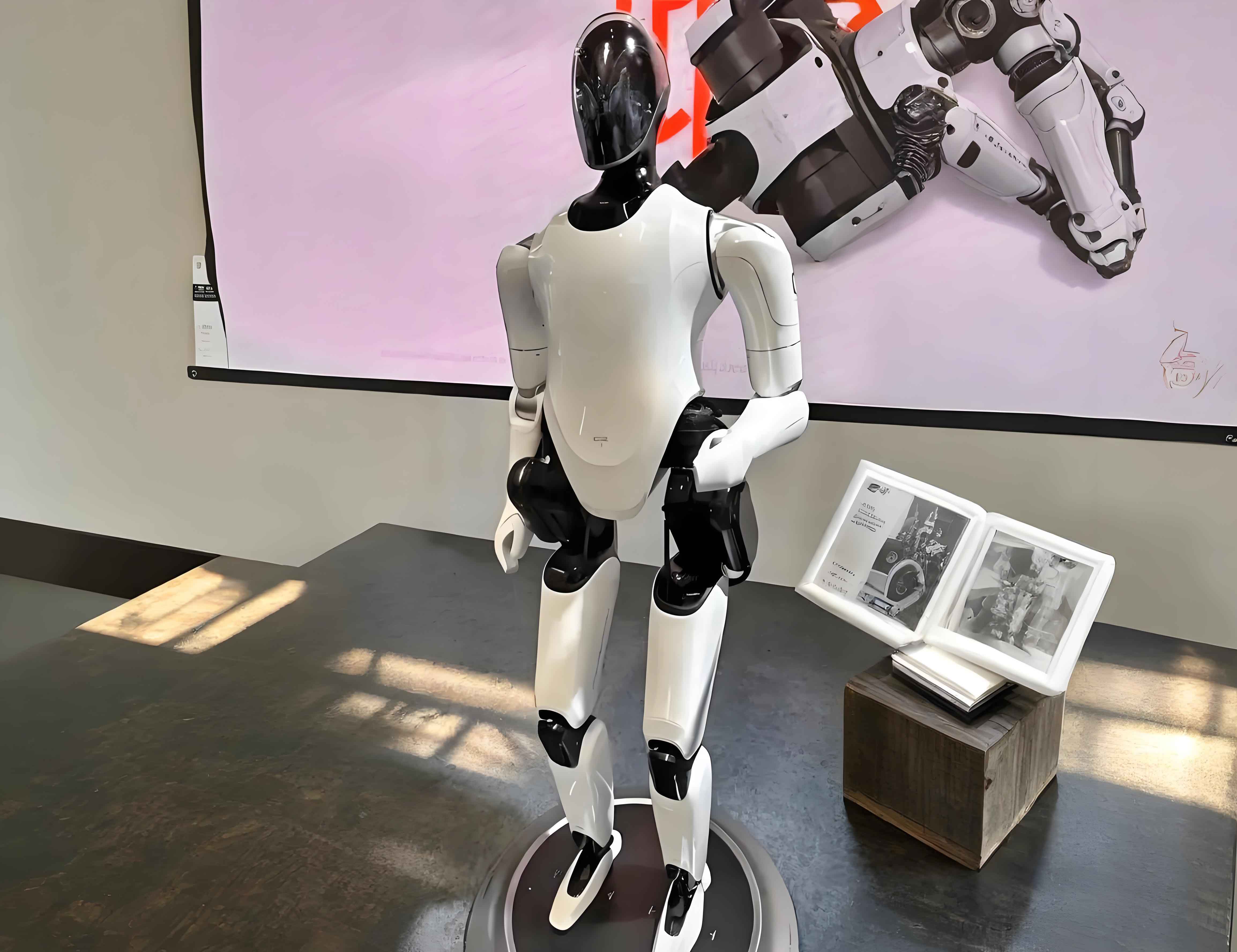
The integration of large models with embodied AI endows the embodied AI robot with a “brain,” enabling a qualitative leap in intelligence. Large models provide powerful capabilities in semantic understanding, dynamic planning, and multimodal signal comprehension, allowing the robot to better understand and execute complex tasks. In industrial production, the embodied AI robot often needs to perform various operations based on natural language instructions. Large models enable the robot to accurately parse these instructions, converting natural language into specific action steps. Upon receiving an instruction like “move the red component from area A to the designated location in area B,” the embodied AI robot powered by a large model analyzes the instruction’s semantics, understands the task’s goals and requirements, then uses visual perception to identify the red component and the locations of areas A and B, plans an optimal搬运 path through algorithms, and accurately completes the搬运 task.
In smart factory production flows, which may involve multiple processes and collaborative tasks, the embodied AI robot needs to合理安排 task execution order and timing based on production plans and real-time conditions to ensure efficiency. Driven by large models, the robot can comprehensively consider factors like equipment status, material supply, and task priority to dynamically adjust execution strategies and generate optimal task plans. In industrial inspection tasks, the embodied AI robot not only uses visual sensors to detect product appearance defects but also combines tactile sensors to perceive surface quality and dimensional accuracy. Large models can fuse and analyze these multimodal signals to comprehensively judge product qualification or more accurately identify subtle defects, improving inspection accuracy and reliability.
However, the fusion of large models with embodied AI also faces practical challenges. For instance, macroscopically, large models are generalists in a broad sense, whereas specific embodied tasks often require specialized intelligent agents. How can we leverage the emergent general knowledge from large models to achieve precise object manipulation and stable motion control in robot tasks? In solving complex tasks, multiple intelligent agents often need to collaborate, involving traditional multi-agent issues like task allocation, cooperative博弈, and communication feedback. In the context of large models, how can we enable large-model-driven multi-agent efficient collaboration? Additionally, there are challenges in addressing the real-time requirements of large models in planning and decision-making. As AI technology advances, we can expect more完善 embodied AI applications in the future.
The development and evolution of the embodied AI robot involve the fusion and interaction of multimodal information such as vision, touch, and hearing. In practical applications, as demands for embodied AI升级, challenges in multimodal fusion and interaction are being addressed through breakthroughs in multiple directions.
From a visual perception perspective, in industrial environments, varying lighting intensities and angles can cause glare or shadows on product surfaces, making it difficult for visual sensors to accurately identify product features and defects. Object occlusion also affects the completeness of visual perception; when multiple products are stacked, some may be obscured, preventing visual sensors from capturing full information. To overcome these difficulties, on one hand, more advanced image enhancement algorithms are needed to improve image quality under different lighting conditions, reducing the impact of light variations on recognition. On the other hand, deep learning-based object detection and recognition algorithms must be developed to enhance adaptability to complex backgrounds and occluded objects. For example, to inspect parts, software algorithms can analyze 3D or 2D point cloud data of the parts. Comparatively, 2D point cloud solutions are more sensitive to light, while 3D point clouds offer better resistance to light interference.
Existing tactile sensors still have limitations in measuring微小 forces and precisely perceiving surface textures. To enhance tactile perception performance, innovations in sensor design and structure are required, or novel tactile sensing materials must be sought to improve accuracy and sensitivity. For instance, using nanomaterials to fabricate tactile sensors can enhance sensitivity to微小 forces; designing distributed tactile sensor arrays enables precise perception of pressure distribution on object surfaces. Correspondingly, tactile signal processing algorithms and parsing capabilities will be adjusted accordingly.
Auditory perception in industrial scenarios often faces issues like noise interference and speech recognition accuracy. In industrial environments, noise interference mainly comes from machinery operation and ambient sounds, which can reduce speech recognition accuracy. To overcome these problems, more effective noise suppression algorithms are needed to minimize noise impact on speech signals. Currently, adaptive filtering algorithms are commonly used to suppress noise, or deep learning techniques are combined to enhance the robustness of speech recognition models for accurate command recognition in noisy environments. In the future, training speech recognition models with大量 speech data from noisy environments could help them adapt to different noise conditions, improving recognition accuracy.
In terms of multimodal information fusion, establishing effective fusion models to achieve efficient integration and协同工作 of different modal information is a key focus and难点. New fusion strategies and algorithms must be explored, such as deep learning-based multimodal fusion networks. Through joint learning on multimodal data, these networks enable信息互补 and synergy, enhancing the environmental perception and understanding capabilities of the embodied AI robot. Many professionals have率先 explored viable paths—for example, rapidly reconstructing real-world data into simulators, allowing robots to train in virtual environments, and finally deploying the trained model onto physical robots to form large models for embodied AI.
The following table summarizes key challenges and solutions in multimodal fusion for embodied AI robots:
| Modality | Key Challenges | Potential Solutions | Impact on Embodied AI Robot |
|---|---|---|---|
| Vision | Lighting variations, occlusion, complex backgrounds | Advanced image enhancement, deep learning-based detection, 3D point cloud analysis | Improves object recognition and scene understanding in dynamic environments |
| Tactile | Measuring微小 forces, surface texture感知 | Nanomaterial sensors, distributed sensor arrays, improved signal processing algorithms | Enables delicate manipulation and precise control in tasks like assembly |
| Auditory | Noise interference, speech recognition accuracy | Adaptive noise suppression, deep learning-enhanced models, large noisy dataset training | Facilitates robust voice command interaction and anomaly detection |
| Multimodal Fusion | Integrating diverse data sources effectively | Deep fusion networks, simulation-to-real training, joint learning frameworks | Boosts overall perception, decision-making, and adaptability of the embodied AI robot |
Embodied AI, as an intelligent carrier moving into practical applications, will increasingly integrate with emerging technologies like the Internet of Things (IoT), big data, and cloud computing. This fusion is set to bring profound changes to industrial fields.
First, integration with IoT will enable the embodied AI robot to实时 acquire information from various devices, products, and environments in industrial production, achieving more precise perception and control. In smart factories, the embodied AI robot can connect with production line equipment via IoT to obtain real-time data on equipment status and production progress, facilitating better coordination of tasks. IoT can also link the embodied AI robot with supply chain systems, ensuring timely material supply and rapid product distribution, thereby enhancing the efficiency of the entire production supply chain.
Second, fusion with big data leverages the vast amounts of data generated by the embodied AI robot during production. This big data is collected, stored, and analyzed to extract valuable insights for production decision-making. For example, by analyzing production data, inefficiencies in processes can be identified and optimized to improve productivity. Big data can also predict equipment failures and product quality issues, allowing preventive measures to reduce costs.
Third, integration with cloud computing provides the embodied AI system with stronger computing and storage capabilities. Cloud computing offers real-time computational resources for the embodied AI robot, enabling it to quickly process large amounts of perceptual data and decision tasks. In complex industrial tasks, where the embodied AI robot requires significant computation and data processing, cloud computing meets these demands, ensuring fast and accurate decision-making. Additionally, cloud computing allows for云端 storage and sharing of data,方便 enterprises in managing and analyzing production data.
To quantify the benefits of these integrations, consider the following formula for efficiency improvement in an embodied AI robot system. Let $E_{\text{base}}$ be the base efficiency without integration, and $E_{\text{integrated}}$ be the efficiency with IoT, big data, and cloud computing integration. The relative improvement $\Delta E$ can be modeled as:
$$ \Delta E = \alpha \cdot I_{\text{IoT}} + \beta \cdot I_{\text{BigData}} + \gamma \cdot I_{\text{Cloud}} $$
where $I_{\text{IoT}}$, $I_{\text{BigData}}$, and $I_{\text{Cloud}}$ are indices representing the contribution levels of IoT, big data, and cloud computing, respectively, and $\alpha$, $\beta$, $\gamma$ are weighting coefficients that depend on the specific application of the embodied AI robot.
Moreover, the overall performance $P$ of an embodied AI robot in an industrial setting can be expressed as a function of its感知 capability $S$, decision-making ability $D$, and action execution $A$, integrated with technological factors:
$$ P = f(S, D, A, T_{\text{IoT}}, T_{\text{BigData}}, T_{\text{Cloud}}) $$
where $T_{\text{IoT}}$, $T_{\text{BigData}}$, $T_{\text{Cloud}}$ represent the technological enhancements from IoT, big data, and cloud computing, respectively. This highlights how the embodied AI robot evolves through synergistic fusion.
In conclusion, embodied AI is stepping into reality, entering more factories and households. With the support of emerging technologies, the embodied AI robot will catalyze new industrial models and application scenarios, bringing innovative opportunities for high-level development in industrial societies. The continuous fusion of sensors, algorithms, robotics, large models, and other technologies ensures that the embodied AI robot becomes increasingly adept at navigating complex environments, making autonomous decisions, and collaborating efficiently. As we advance, the embodied AI robot will not only enhance productivity and quality but also redefine human-robot interaction, paving the way for a more intelligent and connected world. The journey of the embodied AI robot from concept to ubiquitous tool is a testament to the power of technological convergence, and I am optimistic about its transformative potential across diverse sectors.