
As the founder and leader of a pioneering incubator dedicated to the humanoid robot industry, I am thrilled to share our journey and vision. The humanoid robot sector is on the cusp of a revolution, and our incubator stands at the forefront, nurturing the next generation of innovators who will shape this future. Our mission is clear: to build the world’s first ecosystem matrix focused exclusively on the core track of humanoid robotics, fostering local enterprises that push the boundaries of what is possible with humanoid robot technology.
The inception of our incubator was driven by a recognition of the unique challenges and opportunities in the humanoid robot field. Unlike general tech incubators, we specialize in a vertical赛道, providing tailored support that addresses the specific needs of humanoid robot startups. Our approach is built on three interconnected pillars: a technical closed loop, a financial closed loop, and a support closed loop. These pillars form the foundation of our strategy, ensuring comprehensive backing in research, funding, and application for every humanoid robot venture we nurture.
| Pillar | Description | Key Initiatives |
|---|---|---|
| Technical Closed Loop | Integrates cutting-edge research with practical product development to accelerate innovation in humanoid robot systems. | Establishment of scientist studios, collaboration with top researchers, and provision of advanced R&D facilities like 3D printing and testing grounds. |
| Financial Closed Loop | Ensures seamless access to capital through strategic partnerships, investor networks, and funding opportunities tailored for humanoid robot startups. | Organizing exhibitions, connecting enterprises with investors, and facilitating seed and venture capital rounds. |
| Support Closed Loop | Offers end-to-end operational and strategic guidance, from market entry to scalability, specifically for humanoid robot applications. | Supply chain services, mentorship from expert committees, and regular communication forums like breakfast meetings. |
Our incubator’s environment is designed to inspire creativity and collaboration. Nestled in a serene setting with green spaces and modern low-rise buildings, it provides an ideal atmosphere for deep work on humanoid robot projects. Since our establishment, we have attracted 15 enterprises, with plans to expand to 20 by next year. Each of these companies is carefully selected based on stringent criteria that emphasize original innovation and local roots. We prioritize startups that demonstrate disruptive potential in humanoid robot technology, aligning with broader initiatives to champion groundbreaking advancements.
To maintain high standards, we have formed an expert advisory committee comprising seasoned professionals from diverse fields such as technology, industry, finance, taxation, and intellectual property. This committee conducts thorough evaluations of prospective entrants, ensuring that only the most promising humanoid robot ventures join our ecosystem. For those accepted, we provide a suite of孵化 services akin to a保姆-style support system. We see our role as “carrying the sedan chair” for these startups—offering meticulous, hands-on assistance that helps them navigate the complexities of the humanoid robot market.
One of our core services is the scientist studio, which brings together顶尖 scientists from around the world to work on humanoid robot innovations. This initiative fosters a研发 ecology centered on foundational scientists, synergizing with leading industry players to create a robust application ecosystem. For instance, we leverage advanced technologies like 3D printing to streamline prototyping, supply专业研发测试场地, and offer efficient供应链服务. These resources significantly shorten R&D cycles, reduce costs, and enhance market adaptability for humanoid robot companies. The impact is quantifiable: we aim to accelerate time-to-market by up to 30% for many of our incubated projects.
Consider the growth trajectory of humanoid robot adoption. Based on industry trends and our internal projections, we predict that出货量 will surge in the coming decades. A simple exponential growth model can illustrate this:
$$ N(t) = N_0 \cdot e^{kt} $$
Where \( N(t) \) represents the cumulative shipments of humanoid robots at time \( t \), \( N_0 \) is the initial base, and \( k \) is the growth rate constant. For the period from 2030 to 2060, we estimate \( k \approx 0.15 \) per year, leading to projections exceeding 30 billion units globally. This underscores the immense potential of the humanoid robot industry and the urgency of我们的孵化 efforts.
Despite the optimism, the humanoid robot sector faces significant hurdles. Factors such as safety, reliability, consistency, and traceability pose challenges to the widespread deployment of humanoid robots in industrial and domestic settings. To address these, our incubator actively collaborates with regional authorities and development zones to access diverse application scenarios. This partnership accelerates the real-world testing and integration of humanoid robot solutions, bridging the gap between innovation and commercialization.
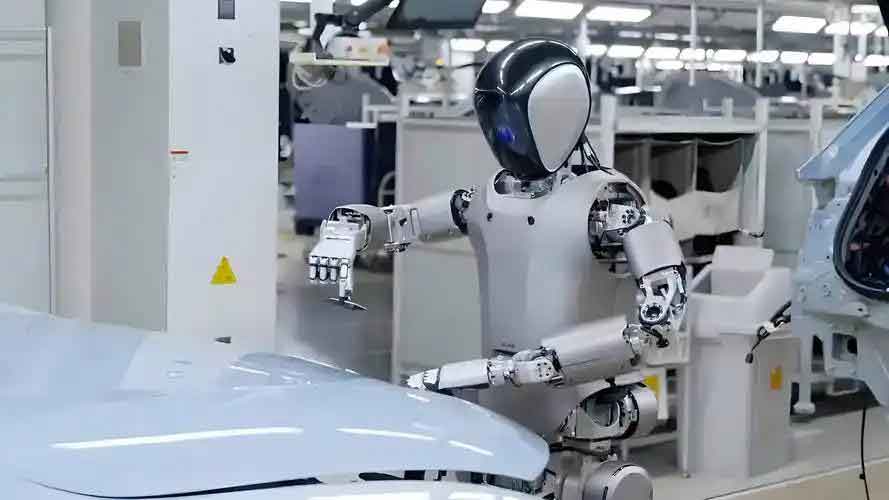
Looking beyond domestic borders, we are committed to a global strategy for humanoid robot incubation. The humanoid robot industry is inherently international, and our vision encompasses worldwide研发, cross-border孵化, and local transformation. In the coming year, we plan to establish a World Bionic Robot Technology Innovation Center in Hong Kong and an Engineering Technology Center in Japan. These initiatives will facilitate knowledge exchange and technical collaboration, positioning our incubator as a hub for global humanoid robot innovation. Recently, we signed a strategic cooperation agreement for a “Future Intelligent Technology Incubator” project in Hong Kong, involving partnerships with investment firms and academic institutions, further solidifying our international footprint.
| Location | Initiative | Focus Area | Expected Impact |
|---|---|---|---|
| Hong Kong | World Bionic Robot Technology Innovation Center | Cross-border R&D and investment for humanoid robot technologies | Enhance global collaboration and attract international talent to the humanoid robot sector |
| Japan | Engineering Technology Center | Advanced engineering and manufacturing for humanoid robot components | Leverage Japanese expertise to improve humanoid robot reliability and scalability |
| Shanghai (Base) | Local Transformation Hub | Commercialization and mass production of humanoid robot systems | Drive local economic growth and establish a leading humanoid robot cluster |
Talent is the lifeblood of any enterprise, and this holds especially true for the humanoid robot industry. Our incubator implements multiple measures to address人才 needs. We assist startups in recruiting suitable partners and forming strong teams, while also collaborating with prestigious universities to offer management training for founders. These programs enhance leadership skills and ensure that humanoid robot companies are equipped for long-term success. The人才 pipeline is strengthened through internships, joint research projects, and guest lectures, creating a sustainable flow of expertise into the humanoid robot ecosystem.
From a technical perspective, the performance of a humanoid robot can be modeled using key parameters. For example, the stability during walking—a critical aspect for humanoid robot functionality—can be expressed through a dynamic equation:
$$ \tau = I \alpha + m g h \sin(\theta) $$
Here, \( \tau \) represents the torque required for joint movement in a humanoid robot, \( I \) is the moment of inertia, \( \alpha \) is angular acceleration, \( m \) is mass, \( g \) is gravity, \( h \) is the center of mass height, and \( \theta \) is the tilt angle. Optimizing these variables is essential for achieving “拟人直膝” walking and other advanced humanoid robot capabilities. Our incubator’s technical support focuses on such innovations, helping startups refine their designs through iterative testing and simulation.
In terms of daily operations, we have introduced initiatives like regular breakfast meetings to foster open communication with incubated enterprises. These sessions allow us to identify and resolve issues related to funding, talent, market access, and sales—all critical for humanoid robot startups. By providing tailored advice on product positioning, component selection, and升级方向, we ensure that these companies stay on track. Our expert committee plays a vital role here, offering insights that mitigate risks and accelerate development cycles for humanoid robot products.
The financial aspect of humanoid robot incubation cannot be overstated. We facilitate connections with angel investors, venture capitalists, and corporate partners who are keen on the humanoid robot space. A summary of funding stages for humanoid robot startups in our incubator is shown below:
| Stage | Typical Funding Range | Key Use Cases | Success Metrics |
|---|---|---|---|
| Pre-seed | $50K – $200K | Prototyping and initial humanoid robot concept validation | Feasibility studies and minimum viable product (MVP) development |
| Seed | $200K – $1M | R&D expansion and team building for humanoid robot systems | Technical milestones and pilot testing with humanoid robot applications |
| Series A | $1M – $5M | Scaling production and market entry for humanoid robot solutions | Revenue growth and partnership agreements in the humanoid robot industry |
| Series B+ | $5M+ | Global expansion and advanced humanoid robot technology deployment | Market share increase and international footprint for humanoid robot products |
As we look to the future, the humanoid robot industry is poised for exponential growth. Our incubator will continue to evolve, adapting to emerging trends such as AI integration, modular design, and ethical considerations for humanoid robot deployment. We are exploring partnerships with更多应用场景 providers to create living labs where humanoid robots can be tested in real-world environments—from healthcare to logistics. This hands-on approach is crucial for refining the safety and reliability standards that will define the next generation of humanoid robot technology.
In conclusion, our incubator is more than just a support system; it is a catalyst for transformation in the humanoid robot landscape. Through innovative孵化 models, rigorous selection mechanisms, and a unwavering commitment to global excellence, we are injecting new vitality into the humanoid robot sector. The journey ahead is filled with challenges, but with each humanoid robot startup we nurture, we move closer to a future where humanoid robots are integral to society. Together, we are building a brighter, more automated world, powered by the endless possibilities of humanoid robot innovation.