
In what is being hailed as the “year of mass production” for humanoid robots, a surprising reality lurks beneath the surface of this futuristic, multi-trillion-dollar industry. While companies worldwide race to deploy bipedal machines in factories and homes, the manufacturing of core components for these humanoid robots remains heavily reliant on traditional, manual assembly lines and small-batch production methods. This reliance on handcrafting, a practice more akin to artisan workshops than high-tech automation, threatens to undermine the very scalability the industry promises.
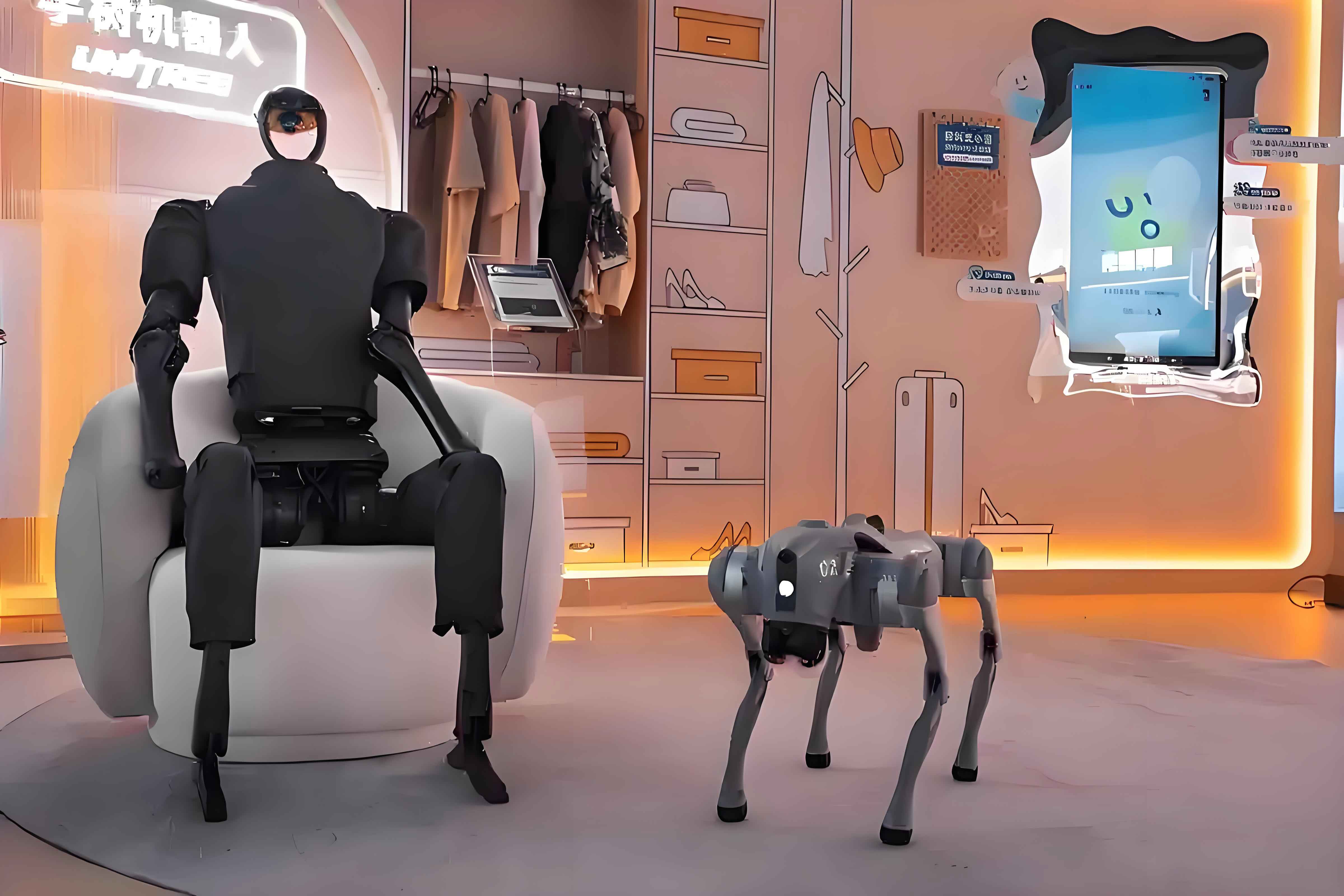
The contrast is stark. On one hand, the vision for the humanoid robot is one of autonomous helpers and industrial partners. On the other, the production of the vital parts that give these humanoid robots their movement and dexterity often involves painstaking manual labor. This disconnect between ambition and manufacturing capability represents a critical bottleneck for the entire humanoid robot ecosystem.
- High-Tech Vision, Low-Tech Manufacturing Reality
At a recent industrial embodied application summit, a small, silver magnetic ring, approximately 5 centimeters in diameter, stood as a symbol of this paradox. This component, known as a frameless torque motor, acts as the “joint muscle” for a humanoid robot, providing the power and precision for limb movement. Yet, the method of its assembly was startlingly primitive: the metal patches on the exterior of the magnetic ring were applied entirely by hand.
“The patches on the exterior of this silver magnetic ring are attached manually,” revealed Peng Zehua, Humanoid Robot Industry Director at Shenzhen Kinco Electric Co., Ltd. This admission is particularly notable because Kinco possesses mature automated production lines for core components used in industrial robots. However, for the specific frameless torque motors supplied to the humanoid robot sector, the process reverts to being “handcrafted.”
This is not an isolated case. In August 2025, Zhenyu Technology disclosed during an investor relations activity that for core components of robotic linear joints, the company had established a manual production line for small-batch manufacturing. The situation is even more pronounced within leading humanoid robot companies themselves. Visitors to a top-tier robotics firm in Hangzhou were reportedly surprised to find that some of its core components were also assembled by hand, a practice seemingly at odds with its market stature.
As the global discourse centers on the arrival of the mass production era for humanoid robots, this dependence on “handcrafting” remains an open secret within the industry. The phenomenon is far more widespread than commonly perceived. From frameless torque motors and six-axis force sensors to harmonic reducers and dexterous hands, manual assembly and calibration have become the standard operating procedure for many suppliers. For component vendors attempting to deliver samples to leading humanoid robot manufacturers, parts that precisely match the requirements of humanoid robot applications are not yet available at scale. One supplier confessed, “Currently, for the needs of certain manufacturers, we provide demo production solutions, but the production cycle is approximately twice as long as that for standard products.”
The supply chain for the humanoid robot is fragmented. Many upstream companies supplying core components for humanoid robots, such as Kinco and Xinjingcheng Sensors, were formerly suppliers for the industrial robot sector. Industrial robots, with their high shipment volumes, benefit from a mature supply chain where automated production is virtually the standard. In stark contrast, for several critical components of the humanoid robot, manual production has become a necessary, albeit inefficient, step.
- The “Transition Period” Dilemma of Handcrafted Manufacturing
The root of this issue lies in the structure of the humanoid robot industry chain, which is divided into three main segments: upstream components, midstream本体 manufacturing, and downstream applications. Because large-scale deployment in downstream applications has not yet been realized, upstream core component suppliers face instability in demand and insufficient order volumes. Many core parts have not been thoroughly validated through mass production, leading to a severe lag in supply chain development.
Consider the components for a dexterous hand. Its miniature ball screws and brushless motors demand extreme precision. However, the current demand per humanoid robot model is only in the hundreds to a few thousand units, a figure dwarfed by the tens of thousands of units typical for industrial robot orders. This low volume gives supply chain companies little incentive to invest in automation, resulting in precision assembly stages that rely heavily on manual debugging and “artisan experience.” A quintessential example is Robo-Garage, a company founded by Tomotaka Takahashi, where 28 different models of humanoid robots were entirely hand-built by Takahashi himself, encompassing everything from cutting materials to programming. This “pre-modern” production method serves as a poignant缩影 of the industry’s early developmental stage.
Furthermore, the prevalence of non-standard parts creates internal friction within the humanoid robot component supply chain. While approximately 30% to 40% of a humanoid robot’s components are based on standard 3C electronics, the remainder are highly customized. Critical parts like joint motors and ball screws often cannot be universalized due to design differences across various humanoid robot models, forcing manufacturers to “fight their own battles” and resulting in poor supply chain synergy. Zeng Bokai, an engineer at Lingyi Intelligent Manufacturing, pointed out, “The final assembly process is complex, and the customization of both hardware and software is highly challenging. Parameters calibrated for one humanoid robot cannot be directly replicated for ten others.”
The following table illustrates the stark contrast between the targeted mass-production costs and the current reality for various humanoid robot projects, highlighting the financial challenge exacerbated by manual production:
Entity / Project Target or Actual Cost/Price Current Production Status Tesla (Elon Musk’s stated target) $20,000 – $30,000 Development / Prototype Honda, NASA & General Motors, Boston Dynamics et al. Over $2,000,000 Research Prototypes / Limited Production Industry Average (Various Prototypes) Extremely High, Often Millions Small-Batch / Hand-Assembled This table underscores the immense gap between the vision of an affordable humanoid robot and the current cost structure, which is partly sustained by manual labor.
- The Hidden Perils of Handcrafted Components
Handcrafting, once a necessary evil during the prototype development phase for the humanoid robot, is now becoming a隐形 shackle as the industry pushes toward industrialization. The inherent limitations of manual manufacturing pose severe risks to the performance, reliability, and economic viability of the humanoid robot.
The most critical flaw of handcrafting is its inability to consistently meet the extreme precision requirements of humanoid robot mechanics. For instance, a knee joint design must simultaneously satisfy load-bearing strength and allow for fluid bending angles exceeding 140 degrees. If hand-assembled joint gears exhibit micron-level errors as small as 5 micrometers, it can lead to gait instability and even cause the humanoid robot to fall—a failure reflected in an industry-wide average fall rate that reportedly remains around 1%. The challenge is even more acute for finger joints. The fingers of a 2-meter-tall humanoid robot need to integrate over a dozen miniature motion units; a manually soldered sensor wire misaligned by a mere 0.1 millimeters can potentially trigger uncontrolled gripping force. In an industrial setting, such an error could have catastrophic consequences.
Simultaneously, the manual manufacturing approach inherently caps production capacity and drives up costs. Elon Musk has stated that the cost of a humanoid robot must be controlled between $20,000 and $30,000 to achieve mass production viability. Currently, however, the development, production, or outright purchase price of humanoid robots from entities like Honda, the collaboration between NASA and General Motors, and Boston Dynamics exceeds $2 million. This staggering figure encompasses not only the exorbitant manufacturing expenses but also significantly higher maintenance costs. Maintenance for a complex humanoid robot involves electrical systems, routine cleaning and upkeep of components, periodic inspections, replacement of critical parts like ball screws and sensors, and comprehensive equipment checks and repairs. The reliance on handcrafted, non-standard parts makes this maintenance more frequent, expensive, and logistically challenging.
Ultimately, when “handcrafted” parts become a widespread phenomenon in the humanoid robot赛道, the entire industry chain risks being trapped in a vicious cycle: manual production leads to insufficient capacity, which results in high costs, which in turn makes mass production of the humanoid robot an elusive goal. This cycle directly contradicts the core promise of the humanoid robot as a scalable, general-purpose machine.
- The Smart Factory: The Core Battleground for Breaking the Handcrafting Bottleneck
The path forward for the humanoid robot industry lies in a fundamental transformation of its manufacturing base. The solution is emerging in the form of the smart factory, which leverages advanced, flexible production systems to overcome the limitations of traditional rigid automation, which is ill-suited for the small-batch, high-mix demands of the current humanoid robot component market.
Traditional robot component manufacturing has long been constrained by rigid production models, which struggle with efficiency when faced with small volumes and customization. Today, smart factories are achieving a revolutionary breakthrough through Reconfigurable Manufacturing Systems (RMS). These highly flexible systems can adjust production line configurations in real-time based on order requirements, truly realizing the vision of “one production line, a thousand different products” for intelligent manufacturing. This adaptability is crucial for producing the varied components needed for different models of humanoid robot.
The next generation of robot components is undergoing a qualitative leap from “mechanical execution” to “intelligent evolution.” By integrating AI algorithms with multi-modal perception systems—including 3D vision and force-torque control—modern industrial robots now possess environmental awareness and real-time decision-making capabilities. A welding robot, for instance, can use 3D vision to accurately identify weld seam positions and dynamically adjust process parameters, improving operational precision by over 40%. Companies like Fuwei Intelligent have gone further, introducing embodied intelligent industrial robots that construct a complete “perception-cognition-execution” closed-loop system, demonstrating remarkable adaptive capabilities in complex working conditions. These technologies, when applied to the assembly of humanoid robot components, can ensure consistent, high-precision results that manual labor cannot guarantee.
The future smart factory will increasingly rely on open, interoperable industrial internet platforms. These platforms connect downward to a massive number of heterogeneous devices and systems, and upward they support various industrial applications—such as order scheduling, quality management, and energy efficiency optimization. They provide an “operating system” level of support for flexible production, supply chain collaboration (connecting upstream and downstream material and logistics information), and personalized customization. This technological foundation is key to building a resilient and scalable supply chain specifically for the humanoid robot, ultimately enabling the industry to彻底告别 the “handcrafted” era.
The integration of these smart systems is not merely about replacing human hands; it is about creating a data-driven ecosystem where every aspect of producing a humanoid robot component is optimized, traceable, and adaptable. This is the essential evolution required to move the humanoid robot from a bespoke, laboratory marvel to a reliable, mass-produced asset.
In conclusion, the journey of the humanoid robot from a concept to a commonplace reality is fraught with foundational challenges, none more critical than the current reliance on manual manufacturing for its core parts. While handcrafting served a purpose in the infancy of the humanoid robot, its persistence now threatens to cap growth and delay the widespread adoption of this transformative technology. The resolution of this paradox does not lie in simply building more robots by hand, but in fundamentally re-engineering the production processes themselves through the widespread adoption of smart, flexible, and automated factory solutions. The success of the entire humanoid robot enterprise may very well depend on winning this battle on the factory floor, moving from the artisan’s bench to the fully integrated, intelligent production line.