
As a researcher deeply immersed in the study of emerging technologies, I have observed with fascination the accelerating momentum behind the humanoid robot industry. What was once a speculative concept confined to science fiction is now rapidly evolving into a tangible economic frontier, driven by a confluence of technological breakthroughs, strategic policy support, and intense market competition. The humanoid robot, a machine designed to mimic human form and function, is poised to redefine productivity and daily life. In this analysis, I will explore the multifaceted dynamics of this sector, examining its drivers, regional ambitions, inherent challenges, and potential trajectories, all while emphasizing the central role of the humanoid robot.
The current fervor surrounding the humanoid robot is not an isolated phenomenon but the result of decades of incremental progress finally reaching an inflection point. From my perspective, the core engine of this revolution is technological convergence. Advances in artificial intelligence, particularly in large language models and machine learning algorithms, have endowed the humanoid robot with a more sophisticated “brain.” These systems enable better environmental perception, task comprehension, and autonomous decision-making. Simultaneously, breakthroughs in sensor technology, actuator design, and lightweight composite materials have dramatically improved the physical capabilities and energy efficiency of the humanoid robot. The integration of these elements can be conceptually represented by a system performance equation:
$$ P_{robot} = f(AI_{cap}, S_{precision}, M_{durability}, E_{efficiency}) $$
Where \( P_{robot} \) represents the overall performance of a humanoid robot, which is a function \( f \) of its AI capability (\( AI_{cap} \)), sensor precision (\( S_{precision} \)), material durability (\( M_{durability} \)), and energy efficiency (\( E_{efficiency} \)). Each variable has seen exponential improvement in recent years.
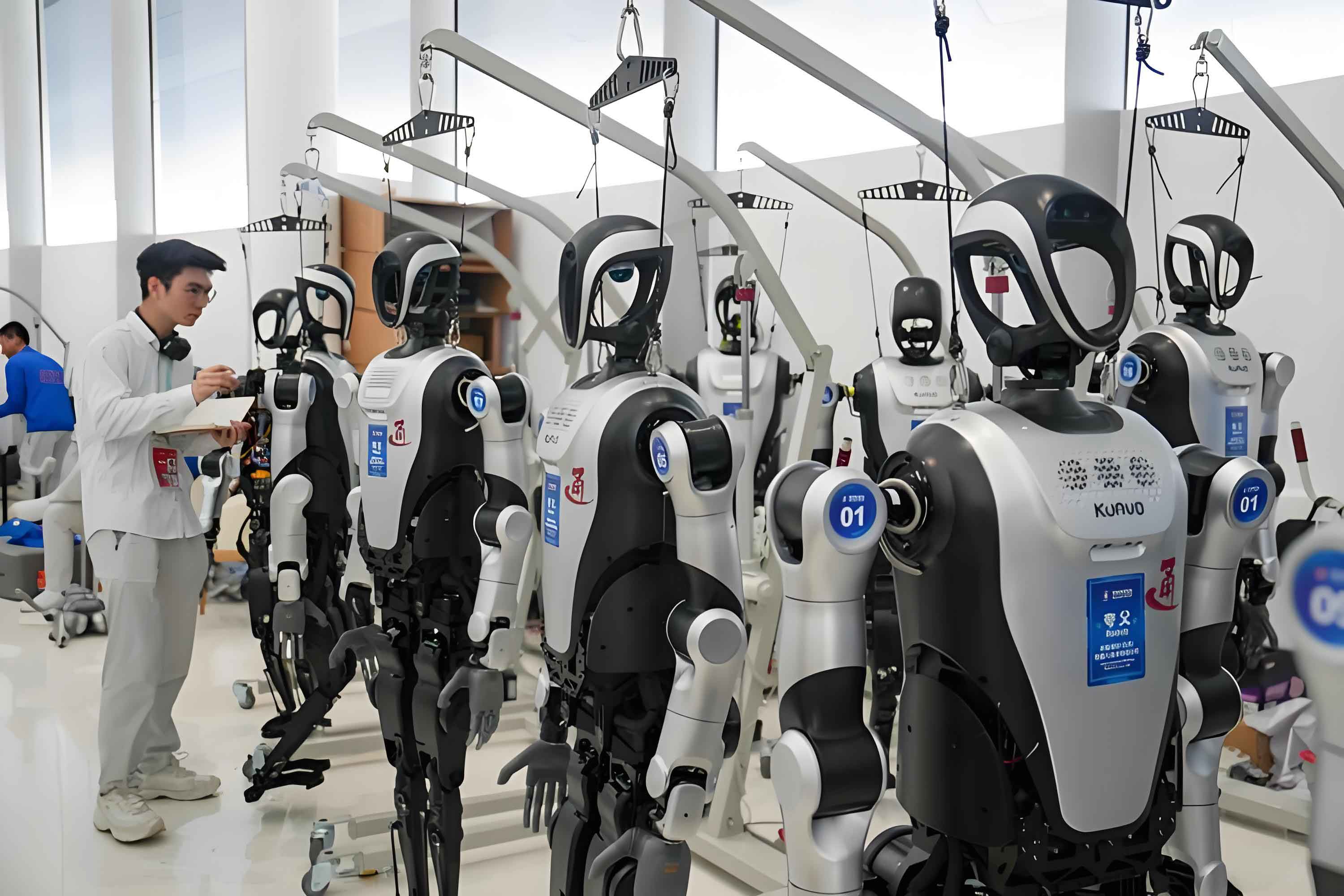
Complementing this technical evolution is a powerful policy push. I have analyzed numerous governmental documents issued over the past few years, which collectively signal a strong national commitment to cultivating the humanoid robot industry as a pillar of future economic growth. A seminal national-level guideline explicitly identified the humanoid robot as a potentially disruptive product, akin to computers and smartphones. This was swiftly followed by the inclusion of related terms in key government planning documents, effectively elevating the humanoid robot to a strategic priority. This top-down endorsement has triggered a wave of local initiatives, as provinces and municipalities vie to position themselves at the forefront of this new industrial wave. The rationale is clear: the humanoid robot is seen as a quintessential embodiment of advanced productive forces, capable of driving industrial upgrading, mitigating labor shortages in aging societies, and spawning entirely new service sectors.
From my examination, regional strategies, while varied in scale, share common themes of ambitious investment and ecosystem building. The following table summarizes the typical approaches and commitments observed across various jurisdictions, though specific geographical names are omitted to focus on the strategic patterns.
| Regional Type | Primary Strategic Focus | Typical Financial Commitment | Representative Industrial Targets (3-5 year horizon) |
|---|---|---|---|
| Major Metropolitan Hub | Core technology R&D, algorithm innovation, and standards setting. | Establishment of mega-funds, often exceeding equivalent of 10 billion currency units, with long-term horizons. | Cultivate a cluster with associated industry scale reaching equivalent of 100 billion currency units; deploy thousands of humanoid robot units. |
| Coastal Manufacturing Powerhouse | Integration with existing manufacturing base, application scenario development, and supply chain consolidation. | Project-specific support funds, with single project grants up to equivalent of 30 million currency units. | Achieve core industry scale of over 10 billion currency units; nurture multiple humanoid robot manufacturers capable of mass production. |
| Emerging Industrial Region | Focus on specialized niches or component manufacturing within the humanoid robot value chain. | Smaller, targeted industry funds, typically in the range of equivalent of 2 to 10 billion currency units. | Increase cluster enterprise count significantly; achieve industry scale of several hundred billion currency units in related sectors. |
The financial inflows are staggering. By my count, over a dozen local governments have either established or are preparing dedicated industry funds for the humanoid robot sector, with scales ranging widely. This capital is intended to de-risk innovation, attract talent, and subsidize the adoption of the humanoid robot in pilot applications. The underlying belief is that early and aggressive investment will secure a dominant position in what is anticipated to be a colossal future market.
Market projections certainly fuel this optimism. Based on synthesis of available industry reports, the growth trajectory for the humanoid robot market appears steep. The global market for embodied intelligence, a field central to the humanoid robot, is expected to see significant contributions from certain regions. A simple compound annual growth rate (CAGR) model can illustrate the projected expansion:
$$ M(t) = M_0 \times (1 + r)^t $$
Where \( M(t) \) is the market size at time \( t \) (in years), \( M_0 \) is the base market size, and \( r \) is the annual growth rate. For the humanoid robot segment specifically, analysts project a r value often cited around 23% or higher for the initial period. This leads to a doubling of the market within a short timeframe. The following table presents a consolidated view of key forecasts:
| Market Segment | Base Year Estimate (Currency Units) | Projection for 2025 (Currency Units) | Projected Annual Growth Rate (CAGR) | Long-term Forecast (2030) Key Metric |
|---|---|---|---|---|
| Embodied Intelligence Market | Not explicitly stated in base | ~5.295 billion | High double-digit | Global share ~27% |
| Humanoid Robot Market | Growing from a small base | Potential to exceed 8.239 billion | Approximately 23% or more | Potential installed base of 252,000 units |
These numbers, while impressive for a nascent industry, must be contextualized. The current absolute scale of the humanoid robot industry remains modest compared to mature sectors. The fervent competition is fundamentally a wager on its transformative potential. The humanoid robot is envisioned not just as a tool but as a platform that could permeate factories, logistics centers, disaster response, healthcare, and domestic settings.
However, in my professional assessment, this unbridled enthusiasm must be tempered by a sober analysis of persistent hurdles. The path to ubiquitous, cost-effective humanoid robots is fraught with technical and economic challenges. First, the intelligence of a humanoid robot, though enhanced by large models, remains fundamentally narrow and fragile compared to human cognition. The gap in common-sense reasoning, adaptive learning in unstructured environments, and delicate physical interaction is vast. The performance equation I mentioned earlier has limiting factors. For instance, the energy efficiency \( E_{efficiency} \) is critically low for dynamic, sustained operation, as evidenced by the limited battery life and frequent stability issues of current prototypes in outdoor tests.
Second, the cost structure presents a massive barrier to commercialization. The humanoid robot is a masterpiece of multidisciplinary engineering, requiring expensive components like high-precision force-torque sensors, customized actuators, and advanced computing hardware. The R&D expenditure is enormous. We can model the total cost \( C_{total} \) of a humanoid robot as:
$$ C_{total} = C_{R\&D}(n) + C_{materials} + C_{manufacturing} + C_{software} $$
$$ C_{R\&D}(n) \approx \frac{F_{R\&D}}{n} $$
where \( F_{R\&D} \) is the fixed R&D cost amortized over \( n \) units produced, \( C_{materials} \) is the bill of materials, \( C_{manufacturing} \) is assembly cost, and \( C_{software} \) includes AI model training and licensing. Currently, \( n \) is very small (in the low thousands for leading projects), making \( C_{R\&D}(n) \) prohibitively high. Economies of scale will only kick in at production volumes likely in the hundreds of thousands, a threshold years away. Consequently, the near-term price point for a capable humanoid robot will remain in the realm of industrial equipment, far from consumer affordability.
Third, the ecosystem for the humanoid robot is immature. Supply chains for specialized components are not robust, standardization is lacking, and proven, scalable business models are scarce. Most current applications are demonstrative or confined to controlled R&D and testing environments. The leap to reliable, large-scale deployment in complex real-world scenarios is a significant engineering and integration challenge that will take considerable time to overcome.
Given these constraints, I advocate for a nuanced and differentiated approach by regional policymakers. A one-size-fits-all strategy of heavy subsidies for full-stack humanoid robot development risks wasteful duplication and an eventual bubble. Instead, regions should leverage their comparative advantages. Areas with dense concentrations of research institutions and AI talent should focus on foundational breakthroughs in algorithms, control systems, and AI safety for the humanoid robot. Regions with strong advanced manufacturing bases should specialize in perfecting key hardware components like actuators or sensors, or in integrating humanoid robots into specific vertical applications like automated quality inspection. Less industrialized regions could find opportunities in downstream services, maintenance, or data annotation required for training these systems. The goal should be to build a complementary national and global ecosystem for the humanoid robot, not a collection of identical, competing silos.
In conclusion, the ascent of the humanoid robot industry represents one of the most compelling technological and economic narratives of our time. From my vantage point, the convergence of enabling technologies and strategic policy support has created irreversible momentum. The humanoid robot is transitioning from prototype to product. However, the journey from niche demonstrations to mass adoption is long and arduous, paved with technical hurdles and economic realities. The intense regional competition, while driving investment and innovation, must be guided by strategic specialization and a clear-eyed understanding of the development timeline. If stakeholders can navigate these challenges with patience and precision, the vision of intelligent, versatile humanoid robots seamlessly augmenting human endeavor may well transition from ambitious forecast to tangible reality, fundamentally reshaping our world in the process. The future belongs not to those who merely chase the trend, but to those who build the sustainable foundations for the humanoid robot era.
To further elaborate on the technical challenges, let’s consider the dynamics of bipedal locomotion, a hallmark of the humanoid robot. The stability control is a complex problem often governed by equations similar to the Linear Inverted Pendulum Model (LIPM), simplified here:
$$ \ddot{x} = \frac{g}{z_c} (x – p) $$
Where \( x \) is the center of mass position, \( \ddot{x} \) is its acceleration, \( g \) is gravity, \( z_c \) is the constant height of the center of mass, and \( p \) is the center of pressure on the foot. Maintaining balance in a dynamic, uneven environment requires real-time solving and adjustment of such models, a computationally intensive task that highlights the synergy needed between hardware response and software intelligence in a humanoid robot.
Another critical area is the cost-benefit analysis for adoption. The decision for a factory to deploy a humanoid robot involves calculating the Return on Investment (ROI):
$$ ROI = \frac{\sum_{t=1}^{T} (B_t – C_t)}{I_0} $$
Where \( B_t \) are the benefits (increased output, labor savings) in year \( t \), \( C_t \) are the operational costs (maintenance, power) in year \( t \), \( I_0 \) is the initial investment (purchase price of the humanoid robot), and \( T \) is the time horizon. Currently, for most applications, the high \( I_0 \) and uncertain \( B_t \) make ROI negative or marginal, inhibiting widespread adoption.
The following table explores potential application scenarios for the humanoid robot, evaluating their relative maturity and key challenges:
| Application Domain | Current Maturity Level | Primary Value Proposition | Major Technical/Commercial Hurdles |
|---|---|---|---|
| Industrial Assembly & Testing | Pilot Stage | Flexibility in unstructured production lines; handles tasks designed for humans. | Speed, precision, and cost compared to traditional robotic arms; need for fail-safe human-robot interaction. |
| Logistics & Warehousing | Research & Demonstration | Navigation and manipulation in spaces built for human workers. | Efficient grasping of diverse objects; reliable navigation in crowded, dynamic spaces; high capital cost. |
| Healthcare & Elderly Assistance | Very Early Stage | Companionship, monitoring, and physical support. | Extreme safety requirements, social acceptance, complex physical assistive tasks, and high sensitivity to cost. |
| Emergency Response | Demonstration Stage | Accessing hazardous environments unsafe for humans. | Robustness, extreme environment operation (heat, radiation, rubble), and teleoperation latency. |
The innovation cycle for the humanoid robot is also tightly linked to progress in adjacent fields. For instance, the development of more efficient and compact energy storage solutions is critical. The power requirement \( P_{req} \) for a humanoid robot in operation can be modeled as:
$$ P_{req} = \sum_{i=1}^{n} (P_{actuator_i} + P_{compute_i} + P_{sensor_i}) $$
Where each subsystem draws power. Breakthroughs in battery energy density, often following a trend like \( E_{density}(t) = E_0 \cdot e^{k t} \), will directly extend operational duration, a key performance metric for any practical humanoid robot.
In the realm of software, the training of the AI models that power the humanoid robot’s brain involves massive computational resources. The cost of training a state-of-the-art embodied AI model can be approximated by:
$$ Cost_{train} \propto N_{params} \cdot D_{data} \cdot C_{FLOP} $$
Where \( N_{params} \) is the number of model parameters, \( D_{data} \) is the size of the training dataset, and \( C_{FLOP} \) is the cost per FLOP (floating-point operation). This underscores why large-scale funding is often directed towards AI infrastructure for the humanoid robot ecosystem.
Ultimately, the story of the humanoid robot is a story of exponential convergence. My analysis suggests that while the short-term hype may lead to some disillusionment as technical realities bite, the long-term trajectory is firmly positive. Each solved problem in mobility, manipulation, or reasoning brings us closer to a threshold where the utility of the humanoid robot outweighs its cost for a broadening set of applications. The role of policymakers, investors, and engineers now is to build the bridges—technological, economic, and regulatory—that will carry the humanoid robot from its current state of promising potential to its future state of pervasive utility. The race is not just about who builds the first fully functional humanoid robot, but about who builds the most resilient and innovative ecosystem to support its evolution. In this grand endeavor, every component perfected, every algorithm optimized, and every successful pilot deployment adds another brick to the foundation of a world where humanoid robots are our partners in progress.