
As I observe the technological landscape, I am struck by the rapid evolution of humanoid robots. Just over a year ago, these machines were taking their first tentative,踉跄 steps. Today, we witness them running races, playing football, and performing complex dances. This leap from concept to near-commercial reality signals a profound shift, and it is one where automotive零部件 suppliers are poised to play a pivotal role. For these suppliers, the burgeoning humanoid robot industry represents a critical second growth curve, a necessary diversification in an era where the traditional automotive market faces saturation and intense price pressure. In this article, I will explore how the core competencies honed in electric vehicles, sensors, and autonomous driving are creating a unique opportunity for suppliers to drive the future of humanoid robotics.
The journey of the humanoid robot from laboratory curiosity to potential household or industrial assistant is accelerating at an unprecedented pace. We have moved beyond proof-of-concept demonstrations to events showcasing coordinated teams of humanoid robots performing athletic feats. This progress is underpinned by significant advancements in hardware dexterity, control algorithms, artificial intelligence, and systems integration. Many now consider the current period as the dawn of mass production for humanoid robots. The influx of capital from major technology and investment entities further validates this trend, fueling innovation and scaling efforts. The market potential is enormous; projections suggest a trajectory from a multi-billion dollar niche to a market worth hundreds of billions within this decade.
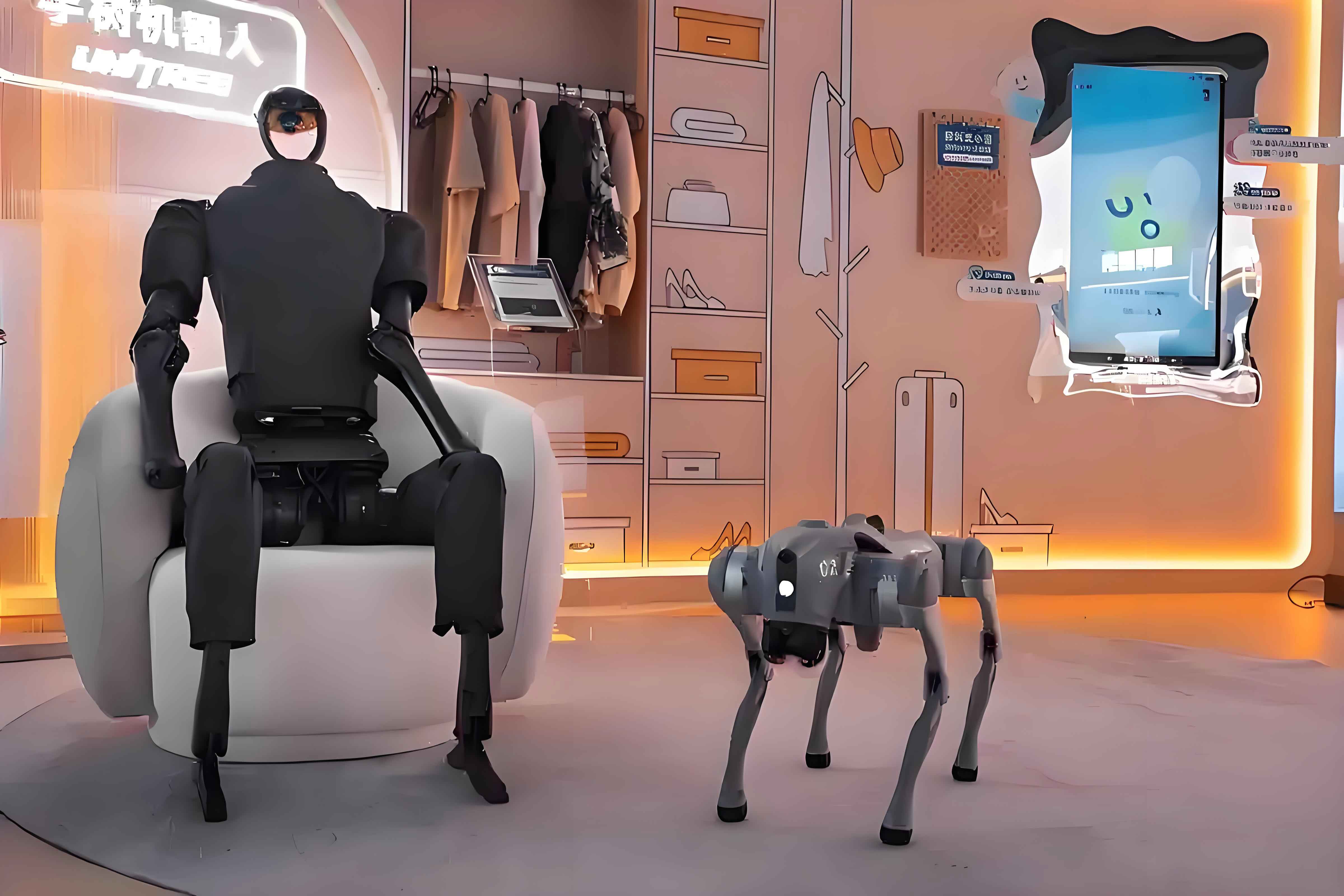
This rapid commercialization coincides with a critical juncture for the global automotive industry. In mature markets, vehicle ownership has plateaued, leading to fierce competition for market share. Even in regions with vibrant electric vehicle adoption, soaring penetration rates hint at future产能过剩. Industry data reveals growing inventory levels and extended turnover periods, significantly above healthy benchmarks. Consequently, the relentless “price war” squeezes profitability across the entire chain, from OEMs upstream to component makers. For many suppliers, growth within the traditional automotive sphere is constrained, making the pursuit of a second growth curve not just strategic but essential for survival.
Herein lies the synergy. The humanoid robot, at its core, shares a remarkable technological overlap with the modern intelligent electric vehicle. This convergence is not coincidental but foundational, allowing automotive suppliers to pivot effectively. Consider the parallels: the joint actuators of a humanoid robot are analogous to the electric drive units in a vehicle. Both systems rely on sophisticated battery packs and power management. The motion control system governing a humanoid robot’s balance and gait shares principles with vehicle stability control and by-wire chassis systems. Most significantly, the fundamental感知-规划-执行 (perception-planning-action) loop that enables a humanoid robot to navigate and interact with its environment is conceptually identical to the stack used in autonomous driving. This shared DNA means that the decade-spanning investments in precision manufacturing, quality control, and systems integration for automotive applications are directly transferable to the challenges of building a viable humanoid robot.
Let me quantify this opportunity. The market for humanoid robots is on a steep growth path. The following table summarizes the projected expansion, illustrating why this sector is so attractive.
| Year | Estimated Market Size (Billions USD) | Compound Annual Growth Rate (CAGR) Segment |
|---|---|---|
| 2024 | ~3.8 | Base Year |
| 2026 | ~12.5 | ~80% (2024-2026) |
| 2030 | ~140.0 | ~50% (2026-2030) |
The drive for a second growth curve is already manifesting in the financial performance of forward-thinking suppliers. Take, for instance, a leading provider of LiDAR sensors. While its core automotive advanced driver-assistance systems (ADAS) business faced headwinds with declining unit sales and revenue, its dedicated robotics division experienced explosive growth. In a single quarter, shipments of LiDAR units for robotics applications surged by over 600% year-over-year, contributing a substantial and growing portion of total revenue. This supplier has now strategically repositioned itself publicly as an AI-driven robotics technology company, signaling a deep commitment to this new avenue. This pattern is not isolated; it is a blueprint many are seeking to follow.
The technical储备 required to build a capable humanoid robot is vast. Suppliers are responding by developing integrated solutions that address key bottlenecks. One major challenge is the integration of the robot’s “brain” (computing) and “nervous system” (control), all within a compact, power-efficient form factor. Innovative suppliers are creating holistic域控制器 that fuse multiple control units into one, while co-packaging the battery system, battery management, and thermal management. This level of integration, akin to advanced vehicle domain architecture, is crucial for enhancing the power density and operational stability of the humanoid robot. Another area of focus is the关节模组, the electromechanical units that provide motion. Precision actuators, high-torque密度 motors, and specialized transmission components like行星滚柱丝杠 and滚珠丝杠 are being adapted from automotive and industrial applications. The performance of these joints dictates the robot’s strength, speed, and efficiency.
We can model the dynamics of a single joint in a humanoid robot using a simplified equation of motion. The required torque ($\tau$) to achieve a desired angular acceleration ($\dot{\omega}$) is given by:
$$ \tau = J \dot{\omega} + B \omega + \tau_{friction} + \tau_{load} $$
where $J$ is the moment of inertia of the limb segment, $B$ is the viscous damping coefficient, $\omega$ is the angular velocity, $\tau_{friction}$ accounts for non-linear friction, and $\tau_{load}$ is the external load torque. Optimizing this equation for low inertia, high torque, and minimal friction is where automotive-grade motor and gearbox design expertise becomes invaluable.
Similarly, the energy efficiency of the humanoid robot’s battery system is paramount for usable operational time. The total energy consumed ($E_{total}$) during a task cycle can be expressed as the integral of power draw:
$$ E_{total} = \int_{t_0}^{t_f} P(t) \, dt = \int_{t_0}^{t_f} \left( \sum_{i=1}^{n} \frac{\tau_i(t) \cdot \omega_i(t)}{\eta_i} + P_{compute}(t) + P_{sensors}(t) \right) dt $$
Here, $P(t)$ is the total instantaneous power, summed over all $n$ joints, with each joint’s mechanical power output ($\tau_i \omega_i$) divided by its efficiency ($\eta_i$). $P_{compute}$ and $P_{sensors}$ represent the constant power drain from the processing unit and perception suite. Automotive battery management systems (BMS) excel at managing such complex, dynamic loads to maximize usable capacity and cycle life, a skill directly applicable to the humanoid robot platform.
The collaboration extends beyond hardware into the AI realm. To achieve true embodied intelligence, a humanoid robot requires advanced cognitive models for perception, decision-making, and interaction. Automotive suppliers are forming alliances with AI cloud providers to integrate large foundational models tailored for robotics. These models enable the humanoid robot to understand natural language commands, plan complex sequences of actions, and learn from interaction, thereby accelerating deployment in diverse scenarios from industrial logistics to specialized service tasks.
| Automotive Component/Competency | Analogous Humanoid Robot System | Key Benefit Transferred |
|---|---|---|
| Electric Drive Unit (EDU) | Joint Actuator Module | High torque-density, efficient power conversion, precision control |
| LiDAR/Radar/Camera Sensors | Robot Perception Suite | 3D environment modeling, object detection & tracking, sensor fusion algorithms |
| Vehicle Domain Controller | Robot “Chest” Domain Controller | Centralized compute, deterministic real-time control, functional safety (ISO 26262/机器人 equivalent) |
| Battery Pack & BMS | Robot Integrated Power System | High energy density, thermal management, state-of-charge estimation, safety |
| Steering/By-Wire Control | Whole-Body Motion Control | Closed-loop feedback control, stability algorithms, redundancy concepts |
| Mass Manufacturing & Quality Assurance | Scalable Robot Production | Process automation, supply chain management, consistent part quality, cost reduction |
The industrial humanoid robot segment is a particularly logical first target. Here, the demands for safety, efficiency, and flexibility create a complex trilemma that automotive engineering principles are well-suited to address. Suppliers specializing in motion systems are developing dedicated actuator and bearing solutions. For example, customized bearing variants offer reduced friction and higher tilt stiffness, enabling more precise and efficient control of the humanoid robot’s movements. The goal is to create a humanoid robot that can work safely alongside humans while handling tasks that require the dexterity and adaptability beyond traditional robotic arms.
As we look ahead, the industry is poised for a period of分化. The initial wave of excitement will give way to a focus on tangible capabilities: stable operation, meaningful human-robot interaction, and most importantly, reliable mass production. This is the arena where automotive零部件 suppliers hold a decisive edge. Their experience in bringing complex, safety-critical systems to market at scale is the missing piece for many humanoid robot startups. The supplier ecosystem that once fueled the electric vehicle revolution is now mobilizing to power the humanoid robot revolution.
The financial metrics underscore this strategic shift. The following table illustrates a hypothetical but representative growth scenario for a diversified auto supplier expanding into humanoid robots.
| Business Segment | 2024 Revenue Mix | 2027 Projected Revenue Mix | Primary Growth Driver |
|---|---|---|---|
| Traditional Automotive | 85% | 65% | Market consolidation, selective EV programs |
| Electric Vehicle Components | 12% | 20% | Continued EV adoption |
| Humanoid Robot Components & Systems | 3% | 15% | Ramp-up of production models, design wins in关节模组 and域控 |
In conclusion, the rise of the humanoid robot is more than just a fascinating technological trend; it is a lifeline and a land of opportunity for the automotive supply base. The convergence of technological pathways has created a rare moment where deep, existing expertise can be leveraged to conquer a new frontier. By providing the critical硬件, integrated systems, and manufacturing muscle, these suppliers are not merely participating in the humanoid robot economy—they are fundamentally enabling its transition from visionary prototype to practical, ubiquitous tool. The second growth curve is no longer a mere strategic consideration; for many, it is actively being forged in the image of the humanoid robot. The journey of the humanoid robot from the laboratory to our homes and factories will be built, in no small part, on the foundation laid by the automotive industry’s relentless pursuit of innovation, quality, and scale. The race is on, and the winners will be those who can best translate the language of the car into the dance of the humanoid robot.