
As I observe the technological landscape, I am captivated by the rapid emergence of humanoid robots. What was once confined to science fiction is now materializing in laboratories, factories, and even public stages. I recall watching a performance where humanoid robots, dressed in vibrant attire, danced with remarkable agility, captivating a national audience. This moment symbolized a broader shift: the humanoid robot is transitioning from a conceptual marvel to a tangible force poised to redefine production and daily life. The convergence of policy support, technological iteration, and market demand is creating a powerful synergy. In the near future, I believe humanoid robots will permeate countless industries and homes, fundamentally reconstructing the symbiotic relationship between humans and machines.
The integration of artificial intelligence, advanced manufacturing, and new materials has propelled the humanoid robot into the spotlight as a potentially disruptive product, following in the footsteps of computers, smartphones, and electric vehicles. It is evident that the humanoid robot will profoundly alter how we work and live, reshaping the global industrial landscape. Currently, a trillion-dollar industry is accelerating its rise—the global humanoid robot industry is moving from labs to factories, household service scenarios, and social applications.
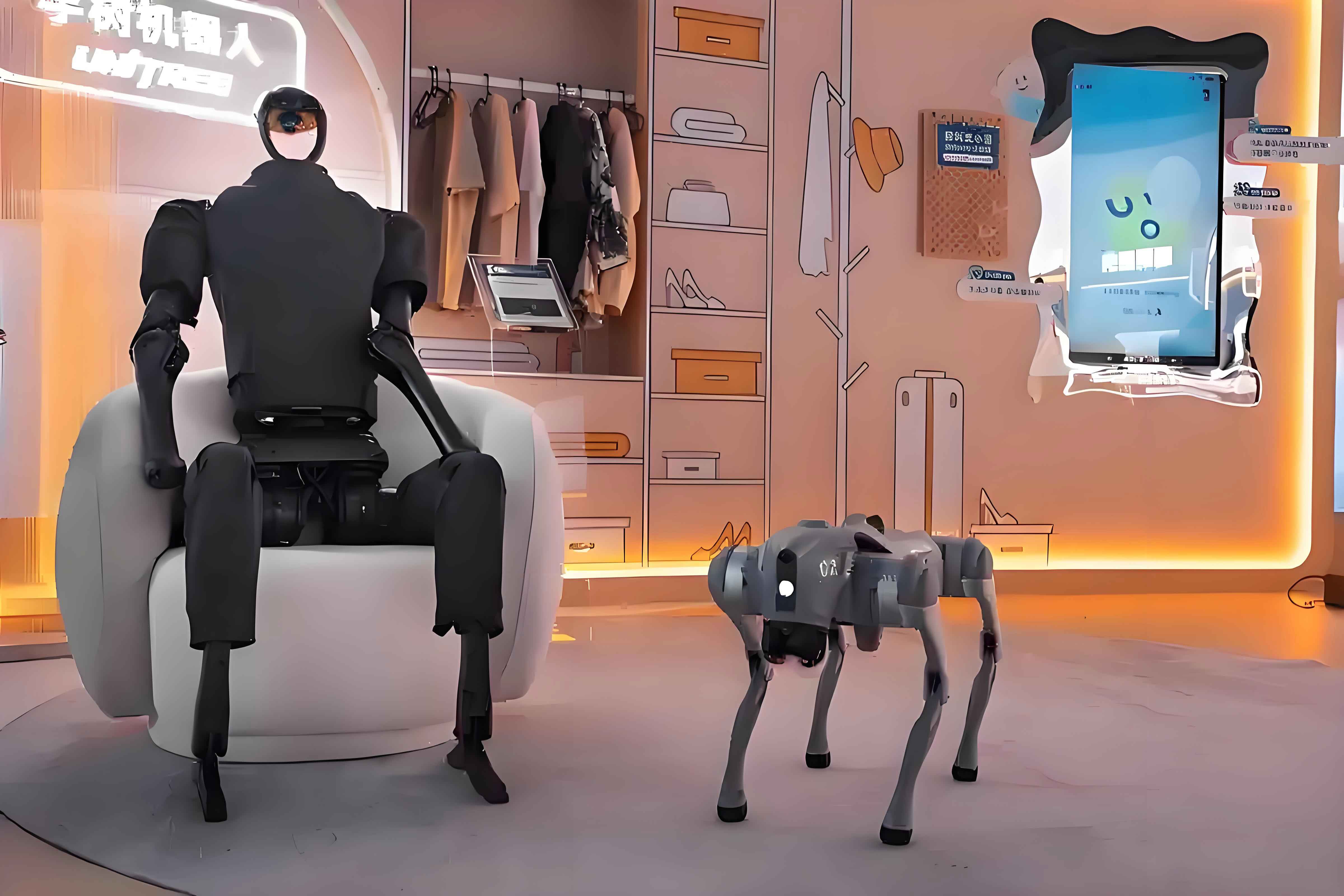
From my analysis, policy frameworks have been instrumental in this acceleration. Strategic national plans have consistently emphasized robotics and intelligent manufacturing, providing a top-down impetus for the humanoid robot sector. Key documents have outlined support for core technologies such as sensors, control systems, and drive systems essential for humanoid robots. The following table summarizes the evolutionary policy support that has laid the groundwork for the humanoid robot ecosystem.
| Planning Period | Strategic Focus | Impact on Humanoid Robot Development |
|---|---|---|
| 12th Five-Year Plan | Incorporation of robotics technology into national strategy. | Initial recognition of robotics as a strategic priority, setting the stage for future humanoid robot research. |
| 13th Five-Year Plan | Clarification of goals and key tasks for intelligent manufacturing development. | Increased policy attention and resource allocation for humanoid robots as a component of smart manufacturing. |
| 14th Five-Year Plan | Push for breakthroughs in key core technologies. | Direct focus on advancing critical subsystems like sensors, control systems, and actuators for humanoid robots. |
| Additional Key Policies | Documents promoting AI development and advanced manufacturing integration. | Created a favorable ecosystem supporting innovation, R&D, and industrial application of humanoid robots. |
Entering the current year, numerous regions have unveiled targeted policies to foster high-quality development of the humanoid robot industry, cultivate new quality productive forces, and empower new industrialization. One major economic region, for instance, has adopted a dual-driven policy system combining “hard tech breakthroughs” with “soft rule construction,” aiming to reshape the global humanoid robot industry landscape. This region has established a clear division of labor: one area focuses on embodied intelligence and brain-computer interfaces, another on precision transmission and joint modules, a third on household service robots, and a fourth on special-purpose robot manufacturing bases. A national-level innovation center for humanoid robots has been established, with significant专项 funds directed towards tackling bottlenecks in areas like joint drives and brain-computer interfaces.
Under the guidance of these policy “lighthouses,” the prospects for the humanoid robot are optimistic. Industry reports project substantial market growth. The table below presents a forecast for the humanoid robot market, illustrating its potential economic scale.
| Year | Projected Market Size (Billion USD, Approximate) | Key Growth Drivers |
|---|---|---|
| 2025 | ~7.5 | Initial commercialization, policy support, early industrial adoption. |
| 2029 | ~105 | Technology maturation, cost reduction, expansion into service sectors. |
| 2035 | ~420 | Mass adoption, ubiquitous applications in industry and homes, full ecosystem maturity. |
Simultaneously, policy momentum is aiding the technological journey of the humanoid robot from “toddling steps” towards “dancing into the future.” Numerous enterprises are breaking technical boundaries at an astonishing pace. For example, some have developed humanoid robots that abandon the traditional “bent-knee walk” through bionic joint design and dynamic balance algorithms, achieving a human-like straight-knee gait. Others have showcased humanoid robots capable of performing dynamic maneuvers like backflips, powered entirely by electric drives. These advancements signal the rapid progress in humanoid robot capabilities.
The core of this progress lies in technological innovation. I see the fusion of intelligence and bionics opening new possibilities for the humanoid robot. Advances in AI, machine learning, and sensor technology are making humanoid robots more intelligent and dexterous. Pioneering humanoid robots from leading global labs demonstrate extraordinary mobility and environmental adaptability. Bionics allows humanoid robots to closely resemble humans in appearance and motion, unlocking potential in service, healthcare, and companionship roles.
The dynamic balance of a humanoid robot during locomotion can be modeled using equations of motion. For instance, the control for stable walking often involves solving for joint torques ($\tau$) based on desired trajectories and feedback. A simplified form using a Proportional-Integral-Derivative (PID) controller for a joint might be:
$$\tau(t) = K_p e(t) + K_i \int_0^t e(\tau) d\tau + K_d \frac{de(t)}{dt}$$
where $e(t)$ is the error between desired and actual joint position, and $K_p$, $K_i$, $K_d$ are gain constants. For whole-body dynamics, the Lagrangian formulation is often employed:
$$\frac{d}{dt} \left( \frac{\partial L}{\partial \dot{q}} \right) – \frac{\partial L}{\partial q} = \tau$$
where $L = T – V$ is the Lagrangian (kinetic energy $T$ minus potential energy $V$), $q$ are the generalized coordinates (joint angles), and $\tau$ represents the generalized forces (torques).
Perception is another critical pillar. Modern humanoid robots utilize multi-sensor fusion for environment awareness. The process often involves combining data from depth sensors, cameras, and IMUs (Inertial Measurement Units). A basic sensor fusion formula for estimating state $x$ (e.g., position) using a Kalman filter framework can be represented as:
$$\hat{x}_{k|k-1} = F_k \hat{x}_{k-1|k-1} + B_k u_k$$
$$P_{k|k-1} = F_k P_{k-1|k-1} F_k^T + Q_k$$
$$K_k = P_{k|k-1} H_k^T (H_k P_{k|k-1} H_k^T + R_k)^{-1}$$
$$\hat{x}_{k|k} = \hat{x}_{k|k-1} + K_k (z_k – H_k \hat{x}_{k|k-1})$$
$$P_{k|k} = (I – K_k H_k) P_{k|k-1}$$
Here, $F$ is the state transition model, $B$ the control-input model, $u$ control vector, $P$ error covariance, $Q$ process noise covariance, $H$ observation model, $R$ measurement noise covariance, $K$ Kalman gain, and $z$ measurement vector. This enables the humanoid robot to precisely perceive its surroundings.
The integration of large AI models with embodied intelligence is driving the humanoid robot from “mechanical execution” to “autonomous decision-making.” Training these models often involves minimizing a loss function. For a reinforcement learning agent in a humanoid robot, the objective might be to maximize the expected cumulative reward $J(\theta)$:
$$J(\theta) = \mathbb{E}_{\tau \sim \pi_\theta} \left[ \sum_{t=0}^{T} \gamma^t r(s_t, a_t) \right]$$
where $\tau = (s_0, a_0, s_1, a_1, …)$ is a trajectory, $\pi_\theta$ is the policy parameterized by $\theta$, $r$ is the reward function, and $\gamma$ is the discount factor. Gradient ascent can be performed using the policy gradient theorem:
$$\nabla_\theta J(\theta) = \mathbb{E}_{\tau \sim \pi_\theta} \left[ \sum_{t=0}^{T} \nabla_\theta \log \pi_\theta(a_t | s_t) A^{\pi_\theta}(s_t, a_t) \right]$$
where $A$ is the advantage function. This allows the humanoid robot to learn complex tasks through interaction.
The industry ecosystem for humanoid robots is undergoing what I can only describe as “fission.” We are at a historic inflection point where technological breakthroughs, declining cost curves, and scenario deployment are intertwining to propel this field from “future tech” into tangible innovation. The industrial landscape is shifting from linear, simplistic models to a networked, diversified, and specialized structure. On one hand, established industrial robotics giants are expanding into humanoid robot ventures. On the other, innovative startups are focusing on specific domain innovations. This parallel development of diversification and specialization injects new vitality and reshapes the competitive environment.
In this restructuring wave, technological innovation and industrial ecosystems are demonstrating remarkable dynamism. Advances in AI, machine learning, and sensor technology provide robust support. From balance algorithms and environmental perception systems to flexible joint design and intelligent control systems, continuous breakthroughs are redefining the competitive landscape for humanoid robots. Furthermore, by integrating upstream and downstream resources, an efficient, collaborative, and rapidly responsive网状 supply chain system is being built. This aims to quickly adapt to market changes and achieve seamless design-to-production integration. For instance, localization rates for core components in some supply chains have reached high levels, significantly reducing actuator costs and improving component longevity, such as harmonic reducer life exceeding specified hours.
The following table compares key technological aspects influencing the current development phase of humanoid robots.
| Technology Domain | Key Innovations | Impact on Humanoid Robot Performance |
|---|---|---|
| Actuation & Mobility | High-torque density actuators, bionic joint design, dynamic balance algorithms. | Enables natural, efficient, and stable locomotion (e.g., straight-knee walking, running, dynamic maneuvers). |
| Perception & Sensing | Multi-modal sensor fusion (depth cameras, LiDAR, IMUs), 360° panoramic depth perception. | Provides precise environment mapping and object recognition, crucial for navigation and manipulation. |
| Control Systems | Whole-body motion control (WBC), model predictive control (MPC), real-time operating systems. | Ensures coordinated movement, compliance, and adaptability to external disturbances. |
| Artificial Intelligence | Embodied AI, large foundation models (LFMs), reinforcement learning, sim-to-real transfer. | Facilitates autonomous task planning, learning from demonstration, and generalizable skill acquisition. |
| Power & Endurance | High-energy-density batteries, efficient power management, low-power electronics. | Extends operational time, critical for practical deployment of humanoid robots. |
From technological fission to industrial transformation, mass production for the humanoid robot is no longer a distant dream. With leading models from global tech giants and startups entering stages of scaled delivery, the current year is widely regarded as the “first year of mass production for humanoid robots.” Entities are racing to advance technological breakthroughs and commercialization. The path seems to mirror the trajectory of the new energy vehicle industry, where scale-driven supply chain cost reductions and efficiency gains played a pivotal role.
Looking ahead, as general-purpose AI models evolve and supply chains achieve scale-driven cost reductions and efficiency improvements, the humanoid robot is poised to replicate the growth trajectory of transformative technologies like electric vehicles. The potential applications are vast. Below is a non-exhaustive list of sectors where humanoid robots are expected to make significant inroads.
| Sector | Potential Applications | Key Value Proposition |
|---|---|---|
| Manufacturing & Logistics | Assembly, parts handling, quality inspection, palletizing, warehouse logistics. | Flexibility in unstructured environments, reduces repetitive strain on human workers, 24/7 operation. |
| Healthcare & Eldercare | Patient assistance, rehabilitation therapy, medication reminder, companionship, monitoring. | Addresses labor shortages, provides consistent care, enhances patient independence and safety. |
| Household & Personal Service | Cleaning, cooking, childcare assistance, security, personal concierge. | Increases convenience, frees up time for individuals, supports daily living activities. |
| Hospitality & Retail | Customer service, information kiosk, cleaning, inventory management. | Enhances customer experience, operational efficiency, and allows human staff to focus on complex tasks. |
| Education & Research | Teaching assistant, interactive learning partner, platform for AI and robotics research. | Provides personalized learning, sparks interest in STEM, accelerates R&D cycles. |
| Emergency & Hazardous Environments | Search and rescue, disaster response, nuclear inspection, space exploration. | Operates in conditions too dangerous for humans, extending reach and capability in critical missions. |
The economic impact equation for widespread humanoid robot adoption could consider total cost of ownership (TCO) versus productivity gains. A simplified model for an industrial humanoid robot might be:
$$\text{ROI} = \frac{\sum_{t=1}^{N} (P_t + L_t – C_t)}{I_0}$$
where ROI is Return on Investment, $P_t$ is productivity gain in year $t$, $L_t$ is labor cost saving in year $t$, $C_t$ is operational cost (maintenance, energy, software) in year $t$, $I_0$ is initial investment cost, and $N$ is the lifespan. Mass production directly drives down $I_0$, improving ROI and accelerating adoption.
However, the road ahead is not without challenges. Technical hurdles remain in achieving robust and safe human-robot interaction, ensuring energy efficiency for prolonged operation, and developing truly generalizable AI for unstructured environments. Ethical, social, and regulatory frameworks need to evolve concurrently to address issues of privacy, job displacement, liability, and safety standards for humanoid robots. The cost-performance ratio must continue to improve to enable broad market penetration beyond niche applications.
Despite these challenges, I am convinced that the momentum behind the humanoid robot revolution is irreversible. We are at the cusp of a new era where hardware foundational development and software breakthroughs are converging. With不断完善顶层设计, policy support, technological iteration, and market demand will form a合力, propelling the humanoid robot from B-end industrial scenarios to C-end household service penetration, ultimately重构ing the共生模式 between humans and machines. The humanoid robot stands as a testament to human ingenuity, and its journey from labs to our everyday lives will undoubtedly be one of the defining narratives of our time. The future where humanoid robots are commonplace assistants, collaborators, and caretakers is steadily approaching, and it promises to reshape our world in ways we are only beginning to imagine.