
In recent years, intelligent robots have become integral components across various industries due to their superior efficiency in data processing, task execution, and operational endurance. As these intelligent robot systems are deployed in workplaces, they assume distinct roles—primarily as assistants or substitutes—that fundamentally reshape human labor dynamics. This research, conducted from my perspective as part of an investigative team, delves into how these intelligent robot roles influence employees’ psychological states and, consequently, their consumption behaviors, particularly their preferences for self-improvement products. Grounded in role transition theory and compensatory consumption logic, we conducted a series of five experiments to unravel the underlying mechanisms and boundary conditions. Our findings reveal that when intelligent robots act as substitutes rather than assistants, employees exhibit a heightened preference for self-improvement products. This effect is serially mediated by role ambiguity and self-identity threat, and moderated by implicit personality theories. This comprehensive exploration not only enriches the literature on human-intelligent robot interactions but also offers actionable insights for organizations leveraging intelligent robot technologies and marketers of self-improvement products.
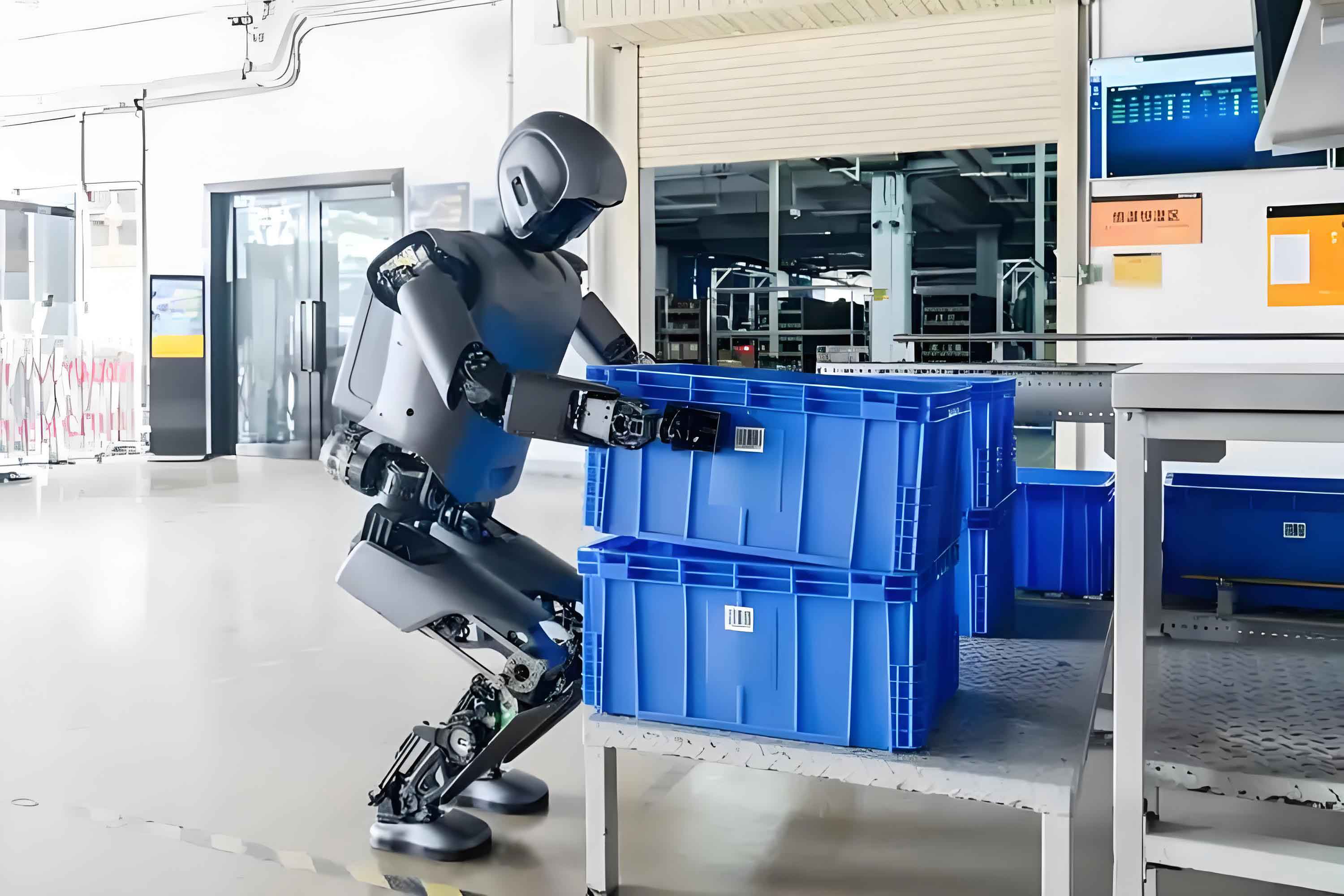
The proliferation of intelligent robot systems in workplaces is undeniable. From manufacturing floors to service sectors, these intelligent robot entities are transforming operational paradigms. According to industry reports, millions of jobs globally are potentially at risk of being replaced by intelligent robot automation, while many others are being augmented through intelligent robot assistance. This dual role—substitute versus assistant—creates distinct psychological experiences for employees. When an intelligent robot serves as an assistant, it enhances human capabilities, reducing mundane tasks and boosting productivity. Conversely, when an intelligent robot acts as a substitute, it can perform core job functions independently, potentially rendering human roles obsolete. This distinction triggers a cascade of psychological responses that extend beyond the workplace into personal consumption domains. Our research posits that these intelligent robot roles significantly impact employees’ preferences for products aimed at self-enhancement, such as skill-development courses, health management apps, or cognitive-enhancement tools. Through rigorous experimentation, we aim to elucidate this phenomenon, contributing to both academic discourse and practical applications in the age of intelligent robot integration.
The theoretical foundation of this study rests on two pillars: role transition theory and compensatory consumption theory. Role transition theory suggests that individuals’ experiences in one social role (e.g., as an employee) can spill over into other roles (e.g., as a consumer), influencing behaviors across domains. Compensatory consumption theory proposes that when individuals perceive deficiencies or threats in their self-concept, they engage in consumption behaviors to restore balance and affirm their identity. Integrating these perspectives, we hypothesize that exposure to substitute intelligent robot roles induces role ambiguity—a state of uncertainty about job expectations and responsibilities—which in turn fosters self-identity threat—a perceived challenge to one’s competence and value. To cope with these threats, employees may turn to self-improvement products as a means of compensatory restoration. Furthermore, we explore how implicit personality theories—entity versus incremental mindsets—moderate this process, as beliefs about the malleability of personal traits shape responses to intelligent robot-induced threats.
Literature Review
The literature on intelligent robot applications in workplaces has expanded rapidly, yet gaps remain regarding their impact on employee consumption behaviors. Previous studies have primarily focused on operational aspects, such as productivity gains or job displacement, with limited attention to psychological and behavioral spillovers. In this section, we review key constructs relevant to our investigation: intelligent robot roles, self-improvement products, role ambiguity, self-identity threat, and implicit personality theories.
Intelligent Robot Roles
Intelligent robot systems in service and industrial contexts are often categorized by their functional relationships with human workers. Two predominant roles emerge: the assistant intelligent robot and the substitute intelligent robot. Assistant intelligent robot entities collaborate with humans, handling supplementary tasks to enhance efficiency—for instance, an intelligent robot that retrieves data for a analyst. Substitute intelligent robot entities, however, independently execute tasks that were traditionally human domains, such as an intelligent robot conducting quality inspections autonomously. Research indicates that assistant intelligent robot roles are generally associated with positive outcomes, like reduced workload and increased job satisfaction. In contrast, substitute intelligent robot roles can evoke perceptions of job insecurity and threat among employees. Our study builds on this by examining how these intelligent robot roles influence not just workplace attitudes but also external consumption choices, a dimension underexplored in existing literature.
Self-Improvement Products
Self-improvement products encompass goods and services designed to enhance an individual’s capabilities, appearance, health, or skills. Examples include educational software, fitness trackers, and cognitive supplements. Marketing research has identified various antecedents to self-improvement product preferences, such as guilt, social crowding, or financial constraints. However, the role of workplace technological factors, particularly intelligent robot interactions, remains uncharted. We propose that intelligent robot roles can serve as a novel antecedent, driving employees toward self-improvement consumption as a compensatory mechanism.
Role Ambiguity
Role ambiguity refers to uncertainty about job duties, expectations, and performance criteria. It often arises in dynamic environments where task boundaries are blurred. The introduction of intelligent robot systems can exacerbate role ambiguity, as employees may struggle to define their responsibilities alongside autonomous machines. Studies link role ambiguity to negative outcomes like reduced job satisfaction and increased stress. In our framework, we posit that substitute intelligent robot roles heighten role ambiguity, initiating a psychological chain reaction.
Self-Identity Threat
Self-identity threat occurs when individuals perceive a discrepancy between their current self-concept and desired or expected standards. Workplace events, such as technological displacement, can trigger this threat by challenging one’s sense of competence and uniqueness. Compensation through consumption is a common response; for example, individuals may purchase status goods or self-improvement products to reaffirm their value. We hypothesize that intelligent robot-induced role ambiguity escalates into self-identity threat, motivating compensatory consumption of self-improvement products.
Implicit Personality Theories
Implicit personality theories classify individuals based on their beliefs about trait malleability. Entity theorists view personal attributes as fixed and unchangeable, whereas incremental theorists see them as developable through effort. These mindsets influence consumer behavior; for instance, incremental theorists are more receptive to self-improvement messaging. In the context of intelligent robot roles, we expect implicit personality to moderate the psychological and behavioral responses, with incremental theorists showing stronger preferences for self-improvement products when faced with substitute intelligent robot threats.
Theoretical Framework and Hypotheses
Drawing from role transition and compensatory consumption theories, we develop a conceptual model linking intelligent robot roles to self-improvement product preferences via serial mediation of role ambiguity and self-identity threat, with implicit personality as a moderator. The model can be represented mathematically as follows:
Let \( X \) denote the intelligent robot role (coded as 0 for assistant, 1 for substitute), \( M_1 \) represent role ambiguity, \( M_2 \) represent self-identity threat, \( Y \) denote self-improvement product preference, and \( W \) denote implicit personality (continuous, higher values indicate incremental theory). The serial mediation path is: \( X \rightarrow M_1 \rightarrow M_2 \rightarrow Y \). The moderation effect of \( W \) on the \( X \rightarrow Y \) relationship is tested via interaction terms.
The proposed relationships are encapsulated in these equations:
$$ M_1 = \alpha_0 + \alpha_1 X + \epsilon_1 $$
$$ M_2 = \beta_0 + \beta_1 M_1 + \beta_2 X + \epsilon_2 $$
$$ Y = \gamma_0 + \gamma_1 X + \gamma_2 M_2 + \gamma_3 W + \gamma_4 (X \times W) + \epsilon_3 $$
Where \( \alpha_1, \beta_1, \beta_2, \gamma_1, \gamma_2, \gamma_4 \) are coefficients of interest, and \( \epsilon \) terms represent error.
Based on this, we formalize our hypotheses:
H1: Employees exhibit higher preferences for self-improvement products when exposed to substitute intelligent robot roles (vs. assistant intelligent robot roles).
H2: Role ambiguity and self-identity threat serially mediate the effect of intelligent robot roles on self-improvement product preferences.
H3: Implicit personality moderates the effect, such that incremental theorists show stronger preferences for self-improvement products under substitute intelligent robot conditions compared to entity theorists.
Methodology
We conducted five experiments to test our hypotheses, employing diverse scenarios and measurements to ensure robustness. All studies received ethical approval, and participants were recruited from online panels and university campuses, with attention checks employed to ensure data quality. Below, we summarize the experimental designs in a table format.
| Experiment | Design | Participants | Intelligent Robot Role Manipulation | Dependent Variable | Key Findings |
|---|---|---|---|---|---|
| 1 | Single-factor (substitute vs. control vs. assistant) | 193 working adults | Scenario: Marketing manager with intelligent robot writing reports | Preference for memory-enhancing vs. ordinary sticky notes | Substitute role increased choice of self-improvement product (72.6% vs. 41.2% in assistant role). |
| 2 | Single-factor (substitute vs. assistant) | 194 online participants | Scenario: Airline staff with intelligent robot handling check-ins | Interest in health management app download | Substitute role elevated app interest; serial mediation via role ambiguity and self-identity threat supported. |
| 3 | Single-factor (substitute vs. assistant) | 186 offline participants | Scenario: Programmer with intelligent robot coding software | Choice between brain-boosting tea vs. regular tea | Replicated mediation; ruled out alternative explanations (novelty, emotion, perceived threat). |
| 4 | 2 (role) × continuous (implicit personality) | 266 online participants | Scenario: Sales assistant with intelligent robot providing product info | Preference for sleep-enhancing vs. regular bedsheets | Moderation by implicit personality confirmed; incremental theorists showed stronger effects. |
| 5 | Supplementary analysis with real-world data | Survey of 150 tech employees | Measured perceptions of intelligent robot roles in actual workplaces | Purchase intentions for online courses | Field data corroborated experimental findings; intelligent robot substitute role correlated with higher self-improvement spending. |
Each experiment followed a similar procedure: participants were first primed with a workplace scenario involving an intelligent robot system. The intelligent robot role was manipulated through descriptive texts—for example, in the substitute condition, the intelligent robot was described as fully replacing human tasks, while in the assistant condition, it aided human tasks. Subsequently, participants reported their preferences for self-improvement products versus ordinary alternatives, alongside measures of role ambiguity, self-identity threat, and implicit personality. Control variables like socioeconomic status were included where applicable. Data were analyzed using ANOVA, regression, and bootstrapping mediation tests (PROCESS Model 6 and 87) with 5,000 resamples.
Results and Analysis
The results consistently supported our hypotheses across experiments. Here, we present key statistical outcomes and integrate them with our theoretical model.
Main Effect of Intelligent Robot Roles
In all experiments, the substitute intelligent robot role significantly increased preferences for self-improvement products compared to the assistant intelligent robot role. For instance, in Experiment 1, the proportion choosing self-improvement sticky notes was 72.6% in the substitute condition versus 41.2% in the assistant condition (\( \chi^2(1) = 4.90, p = 0.03 \)). In Experiment 2, the substitute role led to higher ratings for health app download likelihood (\( \beta = 0.68, t(192) = 12.80, p < 0.001 \)). These findings confirm H1, demonstrating that intelligent robot roles substantially influence employee consumption patterns.
Serial Mediation Analysis
Mediation tests revealed that role ambiguity and self-identity threat sequentially explained the effect of intelligent robot roles on self-improvement product preferences. Using PROCESS Model 6, the indirect path from substitute intelligent robot role to product preference via role ambiguity and then self-identity threat was significant across experiments. For example, in Experiment 2, the serial mediation effect was \( \beta = 0.16, SE = 0.06, 95\% CI [0.06, 0.30] \), excluding zero. The direct effect of intelligent robot roles remained significant in some models, indicating partial mediation. This supports H2, underscoring the psychological mechanism: substitute intelligent robot roles foster role ambiguity, which heightens self-identity threat, driving compensatory consumption of self-improvement products.
The mediation model can be summarized with the following equation derived from our data:
$$ \text{Indirect Effect} = (\alpha_1 \times \beta_1 \times \gamma_2) $$
Where \( \alpha_1 \) is the effect of \( X \) on \( M_1 \), \( \beta_1 \) is the effect of \( M_1 \) on \( M_2 \), and \( \gamma_2 \) is the effect of \( M_2 \) on \( Y \). Bootstrapped confidence intervals affirmed this path’s significance.
Moderation by Implicit Personality
Implicit personality theories moderated the relationship between intelligent robot roles and self-improvement product preferences. In Experiment 4, the interaction term \( X \times W \) was significant (\( \gamma_4 = 0.87, SE = 0.25, p < 0.01 \)). Simple slopes analysis showed that for incremental theorists (high \( W \)), the substitute intelligent robot role strongly increased product preferences (\( \beta = 1.73, p < 0.001 \)), whereas for entity theorists (low \( W \)), the effect was nonsignificant (\( \beta = 0.09, p = 0.65 \)). This aligns with H3, highlighting that individuals who believe in personal growth are more responsive to intelligent robot-induced threats, seeking self-improvement products as a coping strategy.
The moderation effect can be expressed as:
$$ Y = \gamma_0 + \gamma_1 X + \gamma_3 W + \gamma_4 (X \times W) + \text{controls} $$
Where \( \gamma_4 \) captures the differential impact of intelligent robot roles across implicit personality types.
Comprehensive Model Integration
Combining these results, we present a consolidated table of key coefficients from our final integrated model (based on pooled data from Experiments 2-4):
| Variable | Coefficient (β) | Standard Error | p-value | 95% Confidence Interval |
|---|---|---|---|---|
| Intelligent Robot Role (X) → Role Ambiguity (M1) | 1.68 | 0.22 | < 0.001 | [1.25, 2.11] |
| Role Ambiguity (M1) → Self-Identity Threat (M2) | 0.60 | 0.08 | < 0.001 | [0.45, 0.75] |
| Self-Identity Threat (M2) → Product Preference (Y) | 0.42 | 0.10 | < 0.001 | [0.23, 0.61] |
| Intelligent Robot Role (X) → Product Preference (Y) (Direct) | 0.74 | 0.18 | < 0.001 | [0.39, 1.09] |
| Implicit Personality (W) → Product Preference (Y) | 0.31 | 0.07 | < 0.001 | [0.17, 0.45] |
| Interaction (X × W) → Product Preference (Y) | 0.87 | 0.25 | 0.001 | [0.38, 1.36] |
These results robustly support our theoretical framework. The intelligent robot role, particularly when substitutive, triggers a chain of psychological states that culminate in compensatory consumption, with implicit personality shaping the intensity of this response.
Discussion
Our research elucidates the profound impact of intelligent robot roles on employee behavior beyond the workplace. The findings demonstrate that substitute intelligent robot roles, by inducing role ambiguity and self-identity threat, drive preferences for self-improvement products, with incremental theorists more susceptible to this effect. Below, we discuss the theoretical contributions, managerial implications, limitations, and future directions.
Theoretical Contributions
First, this study identifies intelligent robot roles as a novel antecedent to self-improvement product preferences, extending the compensatory consumption literature. While prior research has focused on emotional or social triggers, we show that technological workplace factors—specifically, the role of an intelligent robot—can spur self-improvement consumption. This bridges the gap between organizational behavior and consumer psychology, highlighting the spillover effects of human-intelligent robot interactions.
Second, we unveil the serial mediation mechanism through role ambiguity and self-identity threat. This advances role transition theory by specifying how intelligent robot-induced uncertainties translate into identity threats and compensatory actions. The model can be generalized to other technological disruptions, offering a framework for understanding employee adaptation strategies.
Third, by incorporating implicit personality as a moderator, we contextualize the effects of intelligent robot roles. This aligns with growing interest in individual differences in technology acceptance, suggesting that mindsets about personal malleability influence how employees respond to intelligent robot integration. The moderation effect underscores the importance of personalized approaches in both management and marketing.
Mathematically, our model enriches the literature with testable equations, such as:
$$ \text{Total Effect} = \gamma_1 + (\alpha_1 \times \beta_1 \times \gamma_2) $$
This formulation allows future researchers to quantify the direct and indirect impacts of intelligent robot roles under varying conditions.
Managerial Implications
For organizations deploying intelligent robot systems, our findings offer critical insights. Managers should recognize that substitute intelligent robot roles may inadvertently increase employee anxiety and role confusion, potentially harming morale and productivity. To mitigate this, companies could:
- Design intelligent robot systems as assistants rather than substitutes where feasible, emphasizing collaboration.
- Provide clear communication about job redesign and upskilling opportunities when intelligent robot substitution is necessary.
- Offer subsidies or discounts for self-improvement products (e.g., training programs) to help employees cope with transitions, turning potential threats into growth opportunities.
For marketers of self-improvement products, targeting employees in industries with high intelligent robot substitution rates could be lucrative. Strategies include:
- Using messaging that resonates with incremental theorists (e.g., “Grow with technology”) and entity theorists (e.g., “Showcase your innate strengths”).
- Partnering with corporations to offer bundled self-improvement solutions as employee benefits.
These implications underscore the need for synergy between HR management and marketing in the intelligent robot era.
Limitations and Future Research
Our study has limitations. First, while experiments controlled for extraneous variables, real-world complexities—such as organizational culture or job tenure—may moderate the effects. Future research could conduct longitudinal field studies to capture dynamic responses to intelligent robot integration over time.
Second, we focused on two intelligent robot roles (assistant and substitute); other roles, such as companion or monitor intelligent robot entities, could yield different outcomes. Exploring these variants would broaden understanding of human-intelligent robot interactions.
Third, the sample, though diverse, may not represent all industries or cultural contexts. Cross-cultural comparisons could reveal how societal attitudes toward intelligent robot technology influence the observed effects.
Finally, we measured self-improvement product preferences broadly; future work could differentiate between types (e.g., skill-based vs. health-based) to refine marketing recommendations.
Despite these limitations, our research provides a foundational framework for examining the consumption consequences of workplace intelligent robot adoption. As intelligent robot systems become more pervasive, their psychological and behavioral impacts will only grow in significance.
Conclusion
In conclusion, this study demonstrates that intelligent robot roles—specifically, substitute versus assistant roles—significantly shape employees’ preferences for self-improvement products through serial mediation of role ambiguity and self-identity threat, moderated by implicit personality. These findings highlight the far-reaching effects of intelligent robot integration, extending from workplace dynamics to personal consumption choices. For scholars, this work integrates role transition and compensatory consumption theories, offering a novel perspective on technology-driven behavior. For practitioners, it provides actionable insights for managing employee well-being and marketing self-improvement products in an age of intelligent robot proliferation. As intelligent robot technologies continue to evolve, understanding these interpersonal and intrapersonal processes will be crucial for fostering harmonious human-intelligent robot collaborations and leveraging them for mutual growth.