
As I observe the relentless evolution of manufacturing floors, a profound transformation is underway. The convergence of demographic shifts, technological leaps, and evolving economic paradigms is paving the way for a new class of worker. From my perspective, the humanoid robot is not merely a laboratory novelty but an imminent cornerstone of modern industrial strategy, particularly within the structurally ideal environment of the automotive sector. This industry, with its legacy of automation, standardized processes, and enclosed facilities, presents the perfect proving ground for these sophisticated machines to transition from concept to critical asset. In this analysis, I will delve into the forces driving this change, map out the tangible applications, and confront the significant hurdles that stand between today’s prototypes and tomorrow’s pervasive partners on the production line.
The Confluence of Drivers: Why Now?
The momentum behind humanoid robot integration is not accidental; it is the result of three powerful, synchronous vectors reshaping global manufacturing.
1. The Demographic and Economic Imperative
Across major industrial economies, the workforce is undergoing a dual pressure. An aging population is leading to a steady decline in the number of experienced skilled laborers, creating a “silver drain” of tacit knowledge. Concurrently, younger generations often show a declining interest in repetitive, physically demanding, or hazardous factory roles. This creates a structural labor gap that threatens production stability and scalability. The humanoid robot offers a compelling solution due to its fundamental design principle: it operates within spaces built for humans. Unlike bespoke industrial arms that require complete re-engineering of workspaces, a humanoid robot can theoretically step into an existing workstation, use the same tools, and navigate the same aisles, minimizing disruptive and costly infrastructure overhauls. The economic equation is shifting from “cost of labor” to “cost of task completion,” and for many standardized but complex tasks, robots are becoming viable.
2. The Technological Tipping Point
The dream of a functional humanoid robot has existed for decades, but only recently have the enabling technologies matured sufficiently. We are witnessing breakthroughs across the stack:
- Perception: Multi-modal sensor fusion (LiDAR, high-resolution RGB-D cameras, inertial measurement units, and tactile sensors) now provides a humanoid robot with a rich, real-time 3D understanding of its environment. This allows for operations like bin-picking irregular parts or inspecting surfaces under variable lighting.
- Actuation & Mobility: Advances in high-torque density actuators, harmonic drives, and lightweight composite materials have resulted in more powerful, energy-efficient, and agile bipedal platforms. Dynamic balance control, once a primary obstacle, is now managed through sophisticated algorithms that process sensor data at high frequency to adjust posture and gait.
- Intelligence & Control: This is perhaps the most transformative area. The integration of foundation models and embodied AI (具身智能) provides a humanoid robot with a form of semantic understanding and task-level reasoning. Instead of being pre-programmed for every micro-movement, it can interpret natural language instructions (“inspect this door panel for scratches”), break down the task into sub-goals, and generate appropriate motion trajectories. The control paradigm can be summarized as an optimization problem, minimizing error between desired and actual state:
$$ \min_{\tau} \int_{0}^{T} ( \mathbf{q}_{des}(t) – \mathbf{q}(t) )^T \mathbf{Q} ( \mathbf{q}_{des}(t) – \mathbf{q}(t) ) + \dot{\mathbf{q}}^T \mathbf{R} \dot{\mathbf{q}} \, dt $$
Where $\mathbf{q}$ is the vector of joint angles, $\tau$ is the vector of joint torques, $\mathbf{Q}$ and $\mathbf{R}$ are weighting matrices, and the integral runs over the task duration $T$.
3. The Demand for Flexibility and Data
The market is moving away from monolithic production runs. The rise of mass customization in automotive—different trim levels, battery options, and personalized features—demands manufacturing lines that can switch configurations rapidly. Traditional, fixed automation struggles with this variability. A humanoid robot, governed by software, can be re-tasked much faster. Furthermore, it acts as a mobile data acquisition node. Every interaction, force measurement, and visual inspection generates data, feeding the digital twin of the factory and enabling predictive maintenance, quality analytics, and continuous process optimization.
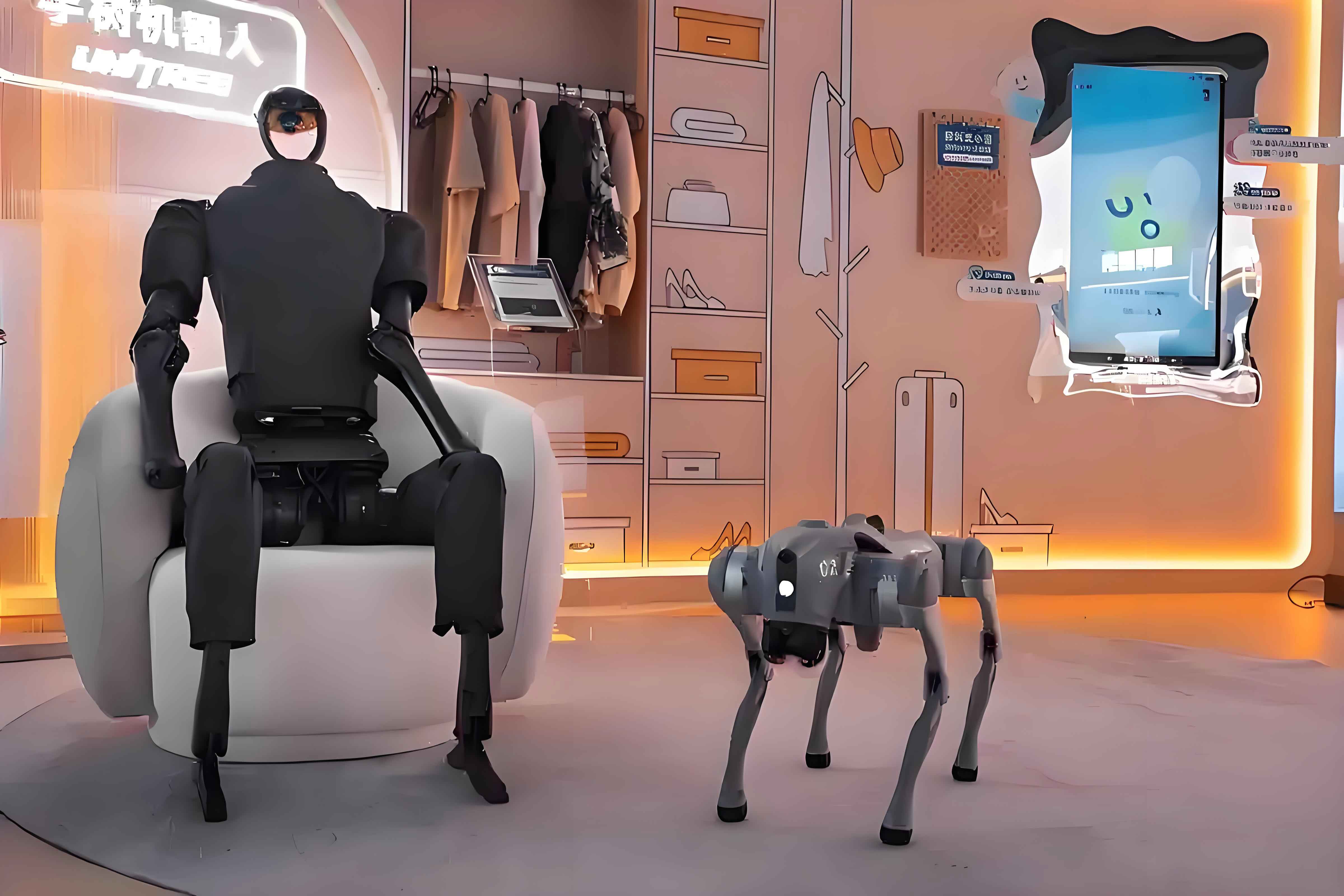
The Automotive Arena: Prime Application Scenarios
The automotive factory is a structured yet complex world, an ideal “gymnasium” for humanoid robots to learn and prove their value. The synergy is clear: the automotive industry has deep expertise in relevant technologies like motors, sensors, and precision gearboxes, while the robot provides a general-purpose automation platform. The application matrix is expanding across the value chain.
| Process Area | Specific Task | Technical Requirements | Value Proposition |
|---|---|---|---|
| Quality Inspection | Body-in-White (BIW) surface defect detection, gap & flush measurement, final assembly audit. | High-res vision, consistent positioning, semantic understanding of defect types. | Eliminates human fatigue/error, ensures 100% inspection coverage, provides digitized quality records. |
| Material Handling & Logistics | Kitting parts for assembly lines, transferring components between stations, loading/unloading machines. | Robust navigation in dynamic spaces, object recognition for varied parts, safe human-robot interaction. | Optimizes material flow, frees human workers for higher-value tasks, operates 24/7. |
| Component Assembly | Seat installation, dashboard fitting, wiring harness routing, door panel assembly. | Dexterous manipulation, force-feedback for insertions, adaptability to slight part variations. | Handles ergonomically challenging tasks, enables flexible line reconfiguration for model mixing. |
| Value-Add Processes | Applying adhesives/sealants, polishing/painting touch-ups, screw driving/torquing. | Path planning for consistent bead application, fine force control. | Improves process consistency, takes over monotonous or hazardous (fume-heavy) operations. |
In logistics, for instance, the efficiency gain from deploying a fleet of humanoid robots can be modeled. If a single robot can service $N$ workstations with a mean time between failures (MTBF) of $M$ hours and a mean time to repair (MTTR) of $R$ hours, the system availability $A$ for a critical logistics loop is a key metric:
$$ A = \frac{MTBF}{MTBF + MTTR} = \frac{M}{M + R} $$
System designers aim to maximize $A$ through redundant robot deployment and predictive maintenance to minimize $R$.
Future Trajectory: Towards Cognitive Collaboration
Looking forward, I anticipate the role of the humanoid robot evolving from a task executor to an intelligent collaborator within a cyber-physical system. Several interconnected trends will define this evolution:
1. Dynamic Role Allocation and Swarm Intelligence
The factory of the future will feature a fluid ecosystem. A central AI “orchestrator” will analyze real-time orders, line status, and worker availability to dynamically assign tasks to the most suitable agent—human or robot. A humanoid robot might handle bulk material movement during peak demand, then switch to precision sub-assembly during a lull. Furthermore, multiple humanoid robots will collaborate on single complex tasks, like maneuvering a large, flexible interior component into a vehicle body. Their control systems will communicate to synchronize forces and motions, ensuring coordinated action without a centralized, rigid program.
2. Immersive Human-Robot Interfaces (HRIs)
Interaction will move beyond teach pendants. Augmented Reality (AR) overlays will allow a technician to see a humanoid robot’s intended action path, sensor readings, or diagnostic alerts superimposed on the real world. Gesture and voice control will enable intuitive, on-the-fly tasking and correction. For maintenance, an AR interface could guide a human technician through repair procedures on the humanoid robot itself, drastically reducing downtime.
3. Continuous Learning and Simulation-Based Training
Deploying a humanoid robot will increasingly rely on high-fidelity digital twins. Thousands of hours of operational training can be compressed into simulations where the robot learns optimal strategies for millions of edge-case scenarios—slippery floors, obstructed paths, deformed parts. This simulation-to-reality (Sim2Real) pipeline, governed by reinforcement learning, will be crucial for building robust, adaptable autonomy. The learning objective in simulation is often to maximize the expected cumulative reward $J(\theta)$ for a policy $\pi_\theta$:
$$ J(\theta) = \mathbb{E}_{\tau \sim \pi_\theta} \left[ \sum_{t=0}^{T} \gamma^t r(s_t, a_t) \right] $$
where $\tau$ is a trajectory of states $s_t$ and actions $a_t$, $r$ is the reward function, and $\gamma$ is a discount factor.
The Formidable Challenge Landscape
Despite the compelling vision, the path to widespread adoption is strewn with significant technical, economic, and operational obstacles that must be soberly assessed.
| Challenge Category | Specific Issues | Consequences |
|---|---|---|
| Technical Maturity | Dynamic Stability & Locomotion: Energy-efficient bipedal walking/running on uneven, cluttered factory floors. | Risk of falls causing damage/injury, limited operational speed compared to wheeled AGVs, high energy consumption. |
| Dexterous Manipulation: Achieving sub-millimeter precision in force and position control for delicate assembly. | Inability to perform high-tolerance tasks (e.g., precision bearing insertion), potential for part damage. | |
| Economic Viability | High Capital Expenditure (CapEx): Cost of advanced sensors, actuators, and computing units. | Prolonged return on investment (ROI) periods, limiting adoption to large OEMs. |
| Operational Expenditure (OpEx): Maintenance of complex mechanical joints, software updates, energy costs. | High total cost of ownership (TCO) can outweigh labor savings. | |
| Integration & Training Cost: Engineering effort to integrate into legacy systems and train workforce. | Hidden costs that delay deployment and add project risk. | |
| Operational & Safety | Safety Certification: Lack of universal standards for human-robot collaboration (HRC) at close quarters. | Regulatory uncertainty, potential liability issues, restrictive “caged” deployments negating flexibility benefits. |
| AI Reliability & “Hallucination”: Risk of the robot’s decision-making model generating incorrect or unsafe actions in novel situations. | Unpredictable behavior, safety hazards, loss of trust from human coworkers. |
The cost challenge, in particular, can be framed as an equation that must balance for adoption to occur. The Total Cost of Ownership (TCO) for a humanoid robot system over $n$ years must be less than the cost of the human labor it supplements or augments, adjusted for productivity gains:
$$ \text{TCO}_{robot} = C_{capex} + \sum_{i=1}^{n} \left( \frac{C_{opex,i} + C_{maintenance,i} + C_{downtime,i}}{(1+r)^i} \right) $$
$$ \text{Cost}_{human} = \sum_{i=1}^{n} \left( \frac{N \cdot (S_i + B_i + O_i) \cdot (1 – \Delta P)}{(1+r)^i} \right) $$
Where $C_{capex}$ is initial purchase/lease cost, $C_{opex}$ includes energy/software, $r$ is discount rate, $N$ is number of workers, $S$ is salary, $B$ is benefits, $O$ is overhead, and $\Delta P$ is the productivity differential. The breakthrough will happen when TCO_{robot} < Cost_{human} for a critical mass of applications.
Strategic Pathways to Adoption
Bridging the gap between potential and practice requires a concerted, multi-faceted strategy. Based on my analysis of the industry’s trajectory, I propose the following integrated approach.
1. Phased Technical Development: Focus on “Winnable” Battles
Instead of pursuing a perfect general-purpose humanoid robot immediately, the focus should be on developing domain-specific excellence for high-impact, well-defined automotive use cases.
- Phase 1 (Now – 2 years): Target structured material handling and pre-programmable inspection tasks. The goal is to prove basic reliability and ROI in controlled environments.
- Phase 2 (3 – 5 years): Develop enhanced dexterity and adaptive control for sub-assembly tasks (e.g., installing interior trim). This requires breakthroughs in tactile sensing and compliant control algorithms.
- Phase 3 (5+ years): Achieve full cognitive collaboration, where the humanoid robot understands context, learns from demonstration, and works seamlessly alongside humans on unscripted tasks.
2. Innovative Business Models to Mitigate Financial Risk
The high upfront cost is a major barrier. New financial and operational models can accelerate adoption:
| Model | Description | Advantage for Manufacturer | Advantage for Provider |
|---|---|---|---|
| Robotics-as-a-Service (RaaS) | Pay-per-hour or per-task subscription. Provider owns & maintains robots. | Low CapEx, converts fixed cost to variable, easy scalability. | Recurring revenue, retains ownership of assets/software. |
| Shared Fleet Platform | Regional pool of robots shared among multiple small/medium suppliers. | Access to automation without full investment; ideal for intermittent needs. | High asset utilization, serves a broader market segment. |
| Outcome-Based Contracting | Payment tied to key performance indicators (KPIs) like units moved, defects found. | Guaranteed performance and ROI, aligns provider incentives with operational goals. | Potential for higher margins if performance exceeds targets. |
3. Ecosystem and Policy Enablers
No single company can solve all challenges. A supportive ecosystem is vital.
- Standardization: Industry consortia must urgently develop safety standards (e.g., ISO/TS 15066 for contact scenarios), communication protocols, and data formats specific to humanoid robots. This reduces integration complexity and safety certification timelines.
- Collaborative R&D: Open innovation platforms linking automotive OEMs, tier-1 suppliers, robotics companies, and AI research institutes can accelerate problem-solving, particularly in areas like simulation environments and benchmark datasets.
- Targeted Policy Support: Governments can play a catalytic role through R&D tax credits for human-robot collaboration projects, funding for shared testing facilities, and updating vocational training programs to include robotics operation and maintenance.
In conclusion, the integration of humanoid robots into automotive manufacturing is an inevitability driven by irreversible macro-trends. The journey will be iterative, starting with niche applications where the technology is robust and the economics clear. The automotive industry, with its unique blend of scale, structure, and technical sophistication, is the logical first frontier. Success will not belong to those who simply purchase robots, but to those who strategically integrate them into a reimagined production system—one that leverages the unique strengths of both human creativity and robotic precision, endurance, and data-generating capability. The factory of the future will be a symphony of flesh and steel, and the humanoid robot is poised to be a key instrumentalist.