
In a 5G smart factory located in Ningbo, dozens of humanoid robots work in seamless coordination, executing tasks such as sorting, transporting, and precision assembly on production lines. Across various museums, humanoid robot docents patiently guide visitors through exhibitions, sharing detailed knowledge. In select bank branches, humanoid robots handle customer inquiries and assist with account opening procedures. These scenarios, once confined to science fiction films, are rapidly integrating into everyday reality, showcasing the expanding capabilities of humanoid robots.
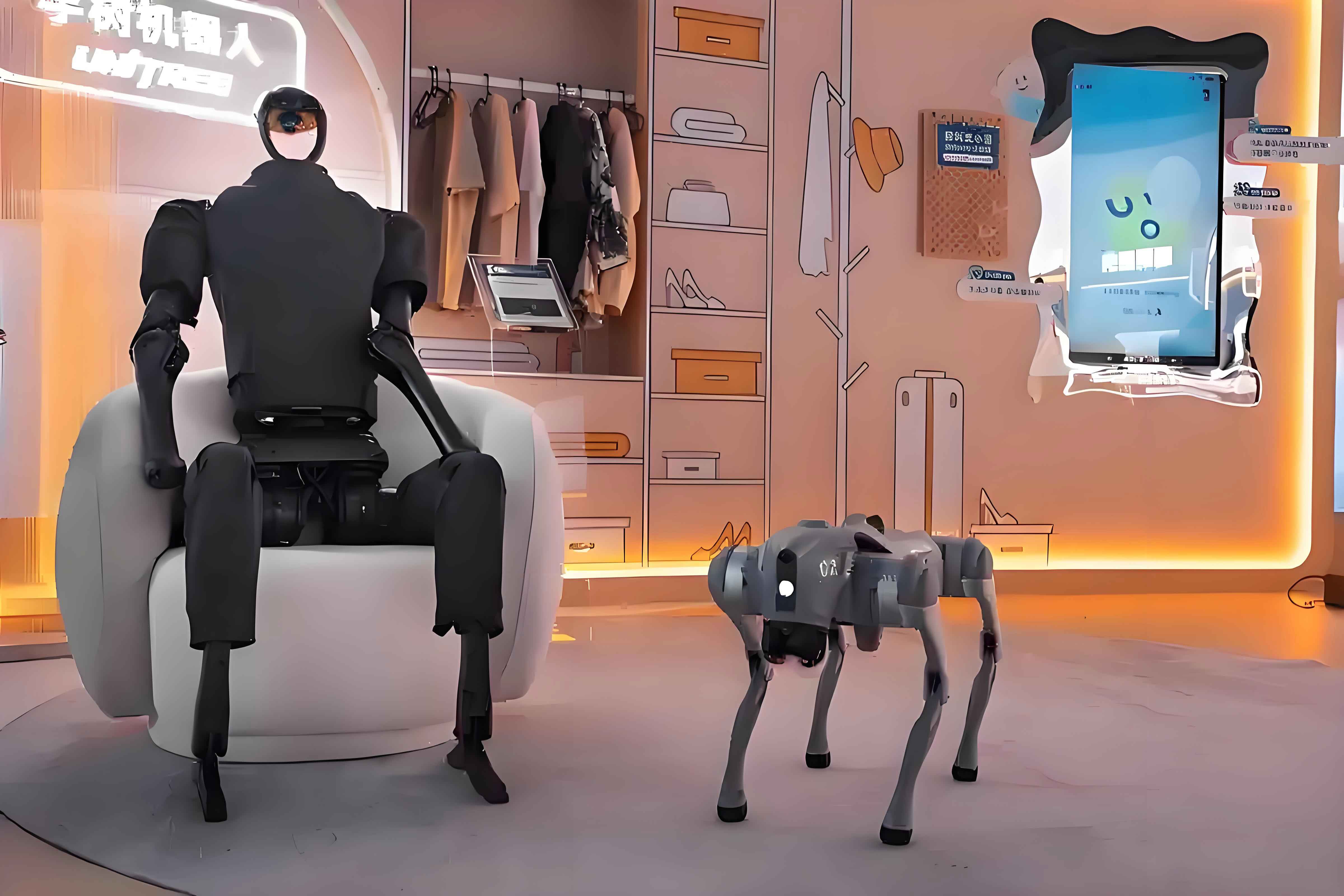
However, the rapid deployment of humanoid robots is not without its challenges. Incidents have occurred globally where humanoid robots have caused harm, such as a recent case where an engineer was knocked down by a humanoid robot during a competition, highlighting the inherent risks. This has spurred industry-wide discussions on establishing robust risk management frameworks tailored to the diverse and growing applications of humanoid robots.
- Beyond Risk Mitigation: Insurance as a Catalyst for Industry Advancement
The humanoid robot sector represents a pinnacle of cutting-edge technology with immense growth potential. According to a report from the China Academy of Information and Communications Technology, by 2045, China could have over 100 million humanoid robots in use across various industries, with the total market size for整机 reaching approximately 10 trillion yuan. This projection underscores the transformative impact humanoid robots are expected to have on multiple sectors.
Despite this optimism, the industry faces a dual reality of progress and peril. For instance, at a recent global humanoid robot sports event, a participating humanoid robot abruptly veered during a sprint, colliding with an engineer in an adjacent lane before being deactivated. Such events, while sometimes perceived as humorous, bring to the forefront the urgent need for comprehensive risk management strategies for humanoid robots.
In response, the insurance sector has taken proactive steps. In September 2025, the “Jizhi Bao” insurance product was launched in Ningbo, offering comprehensive coverage across the entire humanoid robot industry chain, thereby alleviating concerns for stakeholders. A multi-tiered product matrix is gradually taking shape, with basic insurance types achieving broad penetration and emerging insurance varieties under continuous development.
An official from People’s Insurance Company (Group) of China Limited (PICC) explained that robots, including humanoid robots and low-altitude aircraft, are integral to smart manufacturing and represent key fusion innovation scenarios within China’s artificial intelligence ecosystem. Robot insurance aims to disperse innovation risks through financial innovation, thereby fostering the research, development, application, and widespread adoption of humanoid robots. This direction is also a critical innovation path for science and technology insurance.
At the foundational level, property damage insurance and product liability insurance have become standard for humanoid robots. For example, Everyone’s Property Insurance Co., Ltd. designed a liability insurance policy for VIATRIX exoskeleton robots by Aoshark Intelligent, explicitly covering losses to users or third parties caused by product defects. Similarly, Ping An Property & Casualty Insurance Company of China, Ltd. (Ping An P&C) underwrote product liability insurance and quality guarantee insurance for hip exoskeleton robots developed by Hangzhou Zhiyuan Research Institute, paving the way for humanoid robot applications in medical and elderly care settings.
In the realm of emerging insurance products,研发费用保险 (R&D cost insurance), pilot testing insurance, cybersecurity insurance, and data security liability insurance are becoming focal points. Industry experts note that as humanoid robots become more integrated with AI and the Internet of Things, risks such as cyber-attacks on control systems and user data breaches are increasingly prominent.
Leading insurers are already positioning themselves in this space. PICC has established a digital security insurance product system covering data security, network security, cloud security, and equipment security. Ping An P&C is exploring cybersecurity liability保障, incorporating it into the full lifecycle risk ecosystem for humanoid robots to address novel risks associated with “physical world intelligent agents.”
“Market growth is not instantaneous; it evolves gradually from laboratory research to industrial manufacturing and eventually to widespread personal consumption,” stated the PICC representative. Throughout this process, the humanoid robot industry faces uncertainties in R&D, concept validation, pilot testing, and application promotion, necessitating continuous enhancement of insurance product innovation and risk management capabilities. Thus, the role of insurance extends beyond mere risk absorption to actively driving industrial upgrades for humanoid robots.
- Overcoming Data Silos: Innovative Approaches to Insurance Challenges
From the widespread adoption of basic coverage to breakthroughs in new insurance types, the development of humanoid robot insurance is accelerating. However, keeping pace with the industry’s rapid evolution and addressing novel risk profiles present significant challenges. Balancing risk protection, industry promotion, and sustainable growth requires navigating several obstacles.
Qiu Jian, Chief Insurance Researcher at China United Insurance Group Research Institute, highlighted that insurance for new types of robots like humanoid robots faces multiple hurdles, including data scarcity, fast-paced technological iterations, and complex, dynamically changing risk structures. Solutions must be explored through practical experience.
In response, insurance companies are investigating diverse coverage pathways. The PICC official noted that years of experience in covering commercial applications of industrial robots have provided a foundation of underwriting, pricing, and claims data. For新型 humanoid robots, adjustments are made based on factors such as technological maturity, safety levels, operational environments, and maintenance costs to achieve differentiated pricing. A representative from Ping An P&C Sichuan Branch added that the company “intervenes from the experimental phase,” participating in product safety assessments and collecting scenario risk data to compensate for the lack of historical data.
Claims handling also presents difficulties, particularly in责任界定 (liability determination). Malfunctions in humanoid robots may involve multiple parties, such as manufacturers for quality issues, operators for mishandling, or system developers for vulnerabilities. In the event of an accident, disputes can arise over liability. The PICC official acknowledged that the humanoid robot industry is in a rapid development phase, especially in emerging areas like humanoid robots, where historical data is lacking. In complex interactive scenarios, insurance incidents occur without established standards for apportioning responsibility among relevant parties, posing challenges for actuarial pricing and claims settlement for humanoid robots.
Pursuing ecological synergy and promoting “data sharing” could be key breakthroughs. “It is recommended that, under controllable data and privacy security, data sharing and standard co-construction be strengthened among industries, technology sectors, and the insurance industry to assist in risk monitoring, risk assessment, and risk reduction services,” the PICC official suggested.
Long Ge, Deputy Director of the Innovation and Risk Management Research Center at the University of International Business and Economics, further emphasized that breaking down “data silos” in humanoid robot insurance requires industry organizations to take the lead. On one hand, they should promote the establishment of sharing mechanisms among enterprises, insurers, and research institutions; on the other hand, technical solutions for data desensitization and privacy protection need refinement to support the humanoid robot ecosystem.
- Policy Support: Macro-Level Drivers for Substantive Progress
Addressing the challenges and pain points in the humanoid robot insurance market involves not only explorations by insurance companies but also ongoing policy support at various levels.
The 2025 Government Work Report explicitly called for持续推进 “Artificial Intelligence Plus” actions. In May 2025, Li Yunze, Administrator of the National Financial Regulatory Administration, stated at a State Council Information Office press conference that efforts would be made to promote the development of insurance products for emerging areas such as humanoid robots and low-altitude aircraft, effectively safeguarding enterprises’ innovative development.
While policies set the top-level framework, precise implementation at the local level is crucial for bridging the “last mile” of policy落地. According to reviews, over 20 documents related to promoting the development of the humanoid robot industry have been issued by different departments this year alone, covering support policies in technological R&D, application promotion, investment, and financing.
Many regions are stimulating market demand through premium subsidies and product guidance. For instance, in June, the Ningbo Municipal People’s Government Office issued the “Several Policy Measures of Ningbo City to Promote the Innovative Development of the Humanoid Robot Industry,” proposing to explore the establishment of application insurance for humanoid robots. It offers subsidies of up to 80% of the premium amount, not exceeding 2 million yuan, for enterprises with premium rates not exceeding 3%. In August, the draft “Regulations of Hangzhou City on Promoting the Development of the Embodied Intelligent Robot Industry” open for public comment encouraged relevant insurance institutions to develop insurance products and services tailored to the characteristics of the embodied intelligent robot industry in accordance with national regulations. Additionally, regions like Guangdong and Jiangsu directly provide high premium subsidies to insured enterprises for humanoid robots.
“These policies help guide insurance institutions to provide full lifecycle insurance services for the humanoid robot industry, enrich insurance supply, and assist in accelerating innovation, upgrading, and commercial application,” the PICC representative commented.
Policy support has already begun to yield tangible results for humanoid robot insurance. In Qiu Jian’s view, with the deepening of the “AI+” initiative and the expanding application scenarios for humanoid robots, insurance for humanoid robots is expected to become a significant growth area in科技保险 (technology insurance), promoting standardized and scaled development of this industry.
In summary, the integration of humanoid robots into various sectors is accelerating, driven by technological advancements and supportive policies. The insurance industry’s role is evolving from basic risk coverage to an enabler of innovation and growth for humanoid robots. As data sharing improves and products mature, insurance is poised to underpin the sustainable expansion of humanoid robots into new frontiers, ensuring that the benefits of these advanced technologies are realized while managing associated risks effectively. The continued collaboration between insurers, policymakers, and industry players will be crucial in shaping a resilient future for the humanoid robot ecosystem.
| Insurance Type | Coverage Focus | Example Provider | Application in Humanoid Robots |
|---|---|---|---|
| Product Liability Insurance | Covers losses due to product defects | Everyone’s Property Insurance | Exoskeleton robots in industrial use |
| Quality Guarantee Insurance | Ensures product quality and performance | Ping An P&C | Hip exoskeletons for medical scenarios |
| Cybersecurity Insurance | Protects against network attacks and data breaches | PICC, Ping An P&C | AI-integrated humanoid robot systems |
| R&D Cost Insurance | Covers research and development expenses | Under development by multiple insurers | Early-stage innovation for humanoid robots |
The table above illustrates key insurance types relevant to the humanoid robot industry, highlighting how coverage is adapting to address specific risks associated with these advanced machines. As the market for humanoid robots grows, insurers are continuously refining their offerings to include more specialized products, such as those for pilot testing and data security, which are critical given the interconnected nature of modern humanoid robots. This evolution in insurance products not only mitigates financial risks but also encourages further investment and experimentation in humanoid robot technologies, ultimately supporting broader adoption across sectors like healthcare, manufacturing, and services. With ongoing policy incentives and industry collaboration, the foundation for a robust insurance framework for humanoid robots is steadily strengthening, promising a safer and more innovative future for this dynamic field.