
The advent of sophisticated humanoid robots, representing a tangible convergence of advanced robotics and artificial intelligence (AI), heralds a transformative era in human society. As these embodied intelligences transition from laboratory prototypes to potential companions, caregivers, and co-workers, they promise unprecedented utility across diverse sectors. However, this technological leap simultaneously precipitates a complex lattice of safety risks and formidable challenges for established legal frameworks, particularly within criminal law. The core dilemma revolves around a deceptively simple question: when a humanoid robot causes harm, who, or what, should be held criminally liable? This article, from my perspective as a scholar navigating this nascent field, aims to dissect this question. I will explore the unique attributes of humanoid robots, map the risk landscapes of their application scenarios, critically evaluate prevailing theoretical models of liability, and propose a structured, forward-looking framework for criminal accountability that remains responsive to technological evolution and broader normative systems.
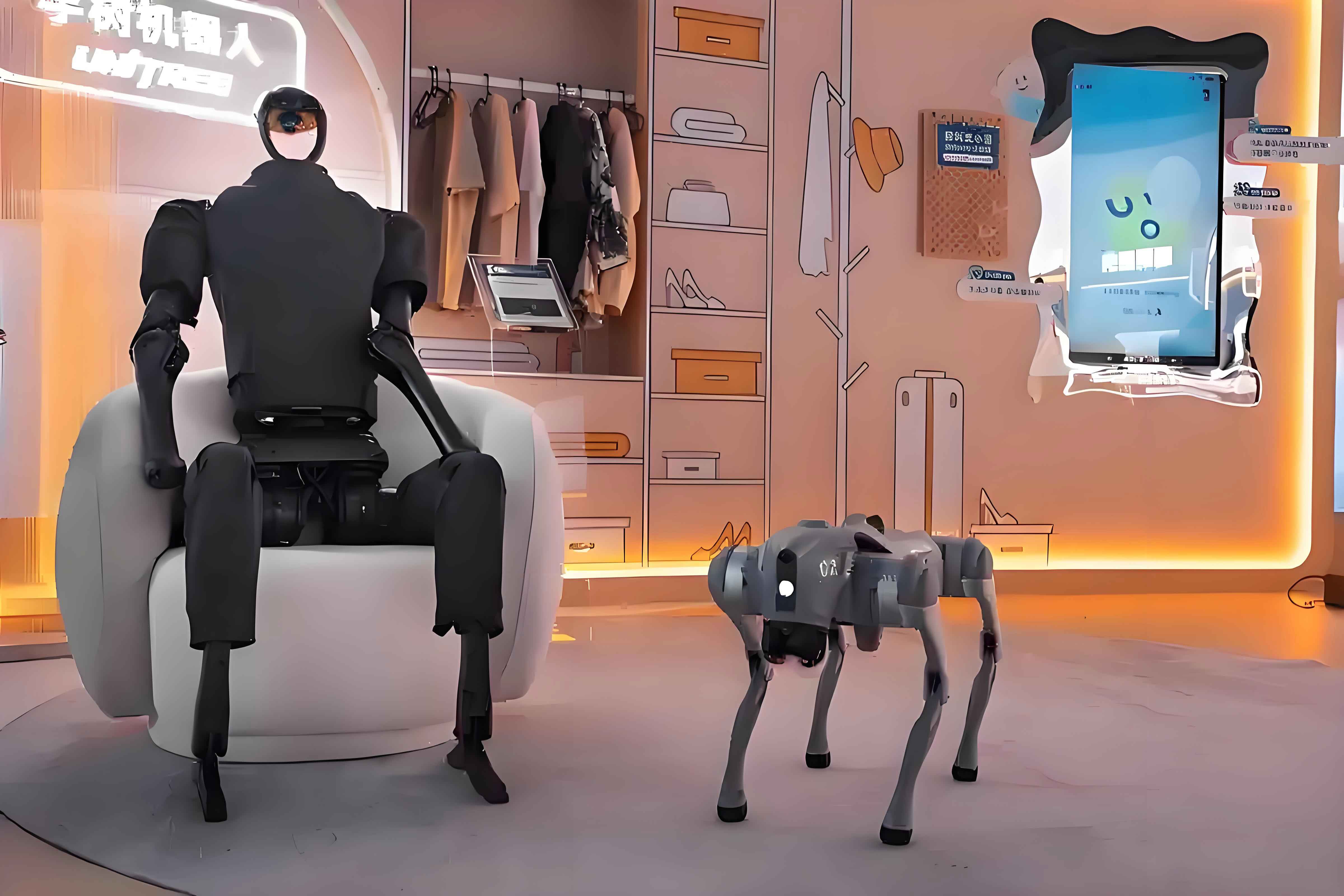
The distinctiveness of the humanoid robot lies not merely in its anthropomorphic form but in the synergistic combination of form and function. This fusion creates specific technical and, consequently, legal attributes.
First, the humanoid robot‘s anthropomorphic design is a deliberate engineering and social choice. Beyond biomimetic curiosity, this form factor leverages human psychology for smoother interaction. The “uncanny valley” phenomenon notwithstanding, a human-like appearance can foster affinity, trust, and intuitive communication, which are crucial for service, caregiving, and social robotics. This very affinity, however, blurs the line between tool and social entity, complicating legal categorization.
Second, the technical architecture of a humanoid robot is inherently complex and integrative. It requires the seamless fusion of:
- “Brain” (Cognition & Interaction): Advanced AI for environmental perception, reasoning, and natural human-robot interaction (HMI).
- “Cerebellum” (Motion Control): Sophisticated algorithms for dynamic balance, locomotion, and dexterous manipulation.
- “Body” (Physical Embodiment): Advanced mechanics, materials, and actuators to achieve human-like mobility and interaction with the physical world.
This integration makes the humanoid robot a system of systems, where a failure in one module can have cascading, unpredictable effects.
Third, and most crucially, contemporary humanoid robots are increasingly powered by high-level, often learning-enabled, AI. The integration of large language models (LLMs) and vision-language models (VLMs) is accelerating this trend, enabling more adaptive, context-aware, and apparently autonomous behavior. This autonomy is the core of the legal challenge.
The following table summarizes the key differentiating factors between a standard AI system, a non-humanoid robot, and a humanoid robot:
| Feature | AI System (e.g., LLM) | Non-Humanoid Robot (e.g., Industrial Arm) | Humanoid Robot |
|---|---|---|---|
| Embodiment | Virtual / Disembodied | Embodied, Non-Human Form | Embodied, Anthropomorphic Form |
| Primary Interaction | Data I/O, Language | Physical Task Execution | Social & Physical Task Execution |
| Environmental Navigation | N/A | Constrained / Pre-defined | Dynamic, Human-Centric Spaces |
| Legal Perception | Product / Tool | Product / Industrial Tool | Product / Potential Social Agent |
| Core Risk Type | Data, Misinformation | Industrial Accident, Product Malfunction | Social Harm, Autonomous Physical Harm, Psychological Impact |
This unique combination positions the humanoid robot at the intersection of product liability law and nascent debates about electronic personhood, demanding a specialized legal analysis.
Application Scenarios and the Genesis of Criminal Law Puzzles
The deployment of humanoid robots across various sectors creates a multifaceted risk matrix. Understanding these scenarios is prerequisite to constructing a sensible liability framework.
1. The Home and Healthcare: As domestic aides, companions, or nursing assistants, humanoid robots operate in intimate settings. Risks include physical injury (e.g., dropping a patient), psychological harm (from inappropriate social interaction), and unprecedented privacy invasions. A caregiving humanoid robot continuously collects highly sensitive biometric and behavioral data. A security breach could constitute a massive data crime. The harm here is direct but occurs within a complex web of expected benefits and user consent.
2. Public Service and Security: The potential use of humanoid robots in policing or crowd control presents acute dilemmas. A “killer robot” scenario, where a humanoid robot uses lethal force, forces a confrontation with principles of proportionality, necessity, and human judgment enshrined in law enforcement protocols. Even non-lethal force requires careful algorithmic encoding of legal norms. The chain of command and intent in such scenarios becomes extraordinarily difficult to trace.
3. The Workplace: In industrial or collaborative settings, a malfunctioning or erroneously programmed humanoid robot can cause serious injury or death. While seemingly analogous to traditional industrial accidents, the learning capacity of the AI introduces an element of unpredictability. Did the harm stem from a manufacturing defect, a programming error, an unforeseen learning outcome, or operator misuse? This leads to the central problem of Diffused Criminal Liability.
4. Military Applications: Battlefield humanoid robots raise grave concerns under International Humanitarian Law (IHL). The principles of distinction (between combatants and civilians) and proportionality are intensely contextual and value-laden. Can an algorithm reliably make such judgments? Violations could constitute war crimes, but attributing them to a programmer, commander, or the machine itself is a profound legal challenge.
5. The Ethical Frontier – Social and Intimate Robotics: This scenario most starkly reveals the collision between technology and social norms. “Sex robots” or highly advanced social companion robots challenge fundamental ethical and legal concepts. Could their production or use be considered trafficking in obscene materials, or even a form of virtual assault if programmed with non-consensual narratives? The legal response here is entirely contingent on prior ethical and social evaluations, which are currently unresolved.
The table below categorizes these scenarios and their primary associated criminal law challenges:
| Application Scenario | Exemplary Risks | Core Criminal Law Challenge |
|---|---|---|
| Domestic & Healthcare | Physical injury, Data privacy breach, Psychological harm | Diffused Liability between maker/user; Data crime attribution; Defining “duty of care” for a robot. |
| Policing & Security | Excessive/lethal force, Unlawful restraint | Encoding legal principles (proportionality) into AI; Attributing intent in use-of-force decisions. |
| Industrial Workplace | Industrial accident, Collision harm | Differentiating product liability from operational error in a learning system; Forensic analysis of AI causation. |
| Military | War crimes (indiscriminate attack, disproportionate force) | Compliance with IHL; Command responsibility for autonomous actions; Notion of a “responsible agent” in battle. |
| Social/Intimate Companion | Normalization of harmful behavior, Psychological dependency | Determining legal “harm” from human-robot interaction; Defining obscenity/prostitution in a robotic context; Reliance on extrinsic ethical standards. |
From these scenarios, four overarching criminal law puzzles crystallize:
1. The Diffusion of Liability: Harm caused by a humanoid robot often results from a confluence of actions by designers, programmers, manufacturers, owners, and users, compounded by the robot’s own (potentially inscrutable) decision-making. This creates a “many hands” problem where traditional causal attribution breaks down.
2. The Subjectivity Question: Can or should a sufficiently advanced humanoid robot be considered a legal person capable of bearing independent criminal responsibility? This debate pits ontological arguments about consciousness and free will against functionalist arguments about social utility and accountability.
3. Normative Disconnect: Criminal law operates as a last resort, yet for humanoid robots in regulated fields (healthcare, finance, security), the substantive standards for lawful conduct are set by sectoral laws (data protection, medical device regulations, IHL). Criminal liability assessments must be “open” to these external normative frameworks to avoid incoherence.
4. The Ethical Vacuum: In areas like intimate robotics, the law lacks clear socio-ethical coordinates. Criminalization decisions depend on prior resolutions of ethical debates about human dignity, relationships, and the meaning of consent—debates that are ongoing and contentious.
Deconstructing Theoretical Models of Liability
Legal scholarship has proposed several archetypal models to address robot-inflicted harm. Each can be formalized and assessed for its applicability to the humanoid robot context.
1. The Agency (or Innocent Agent) Model: This model treats the humanoid robot as a sophisticated tool or an “innocent agent” wielded by a human master. Liability falls squarely on the human who intentionally used or programmed the robot to cause harm. It aligns with doctrines of indirect perpetration.
$$ L_{human} = f(I, C) $$
Where $L_{human}$ is human liability, $I$ is the human’s criminal intent, and $C$ is a demonstrable chain of causation and control over the robot’s actions. This model works well for direct, intentional misuse but fails when the harm results from emergent robot behavior beyond specific human instruction.
2. The Negligence Model: This is currently the dominant and most flexible approach. It holds human actors (designers, manufacturers, users) liable if they breach a duty of care, and that breach foreseeably causes harm through the robot’s actions. It requires establishing a standard of care for AI development and deployment.
$$ Breach = |P_{actual} – P_{standard}| $$
Where a breach occurs if the actual precautions taken ($P_{actual}$) fall demonstrably short of the legally required standard of care ($P_{standard}$). The critical challenge is defining $P_{standard}$ for fast-evolving, complex AI systems. Concepts like “permissible risk” and “reasonable foreseeability” need recalibration. For instance, is a certain error rate in object recognition by a care robot “permissible” given its societal benefits? This can be modeled as a risk-balancing function:
$$ R_{permissible} = \frac{B_{social}}{K \cdot S_{harm}} $$
Where $R_{permissible}$ is the tolerable risk level, $B_{social}$ is the aggregated social benefit, $S_{harm}$ is the severity of potential harm, and $K$ is a societal risk-aversion constant. A human actor may be negligent if the realized risk $R_{actual} > R_{permissible}$.
3. The Strict Liability Model: This model removes the need to prove fault or intent. If the humanoid robot causes harm, its owner or manufacturer is automatically liable. It simplifies prosecution but violently clashes with the fundamental criminal law principle of *mens rea* (guilty mind). Its application seems limited to highly dangerous, non-delegable activities or as a regulatory tool in minor offences. A strict liability rule can be expressed simply as:
$$ L_{strict} = 1 \quad \text{if} \quad H_{robot} > 0 $$
Where $L_{strict}$ is liability (1 for liable, 0 for not) and $H_{robot}$ is harm caused by the robot. This binary function is legally and ethically problematic for serious crimes.
4. The Independent Liability (Electronic Personhood) Model: This most radical model proposes granting advanced humanoid robots a form of legal personhood, making them directly liable for their crimes. Proponents argue by analogy to corporate criminal liability. The model’s feasibility hinges on functionalist, not ontological, reasoning: if treating the robot as a responsible agent best serves the goals of justice, deterrence, and social regulation, then it should be recognized as such.
$$ L_{robot} = g(A, F, S) $$
Where $L_{robot}$ is the robot’s independent liability, $A$ represents its apparent autonomy and decision-making capacity, $F$ is the functional utility of assigning it liability (e.g., closing accountability gaps), and $S$ is social acceptance of such a status. Critics argue that robots cannot truly be “punished” in a retributive sense, though sanctions like algorithmic alteration, confiscation, or fines payable from a dedicated robot fund are conceivable.
The following table provides a comparative summary of these models:
| Model | Core Principle | Applicability to Humanoid Robots | Major Weakness |
|---|---|---|---|
| Agency | Robot as tool of human intent. | High for direct, intentional misuse. Low for autonomous/emergent harm. | Fails under conditions of high robot autonomy. |
| Negligence | Breach of human duty of care. | High. The primary model for current and near-term technology. | Difficult to define standards of care and causation in complex systems. |
| Strict Liability | Liability without fault. | Low for core criminal law. Potentially for regulatory offences. | Violates fundamental justice principles (*mens rea*). |
| Independent Liability | Robot as responsible legal agent. | Conceptual for future strong AI. Currently speculative. | Contested philosophical foundation; practical enforcement challenges. |
Toward a Scenario-Based and Open Criminal Liability Framework
Given the multifaceted nature of the problem, no single model is sufficient. I propose a dual-axis, scenario-based framework that integrates traditional and prospective theories while remaining open to external normative inputs.
Axis 1: The Human-Centric Dimension (Present to Near Future)
This axis relies on extended traditional doctrines, primarily negligence and agency. Its application is modulated by two key adapted principles:
- Reconstructed “Permissible Risk”: The social acceptability of risk from a humanoid robot is a function of its domain (medical vs. entertainment), compliance with emerging industry standards, and the consent/awareness of affected parties. Acting within this permissible risk zone should negate liability.
- Extended “Principle of Reliance”: This principle must operate bidirectionally and even between machines. A human may reasonably rely on a certified humanoid robot to act within its parameters. Conversely, a robot’s algorithm may be designed to rely on certain human behaviors or signals from other certified systems. Justified reliance can break chains of causation.
The applicable model on this axis depends on the degree of effective human control, a normative assessment factoring in design purpose, user interface, and the specific context of the harmful act.
Axis 2: The Robot-Centric Dimension (Future-Oriented)
This axis entertains the possibility of independent liability. Its relevance grows with the humanoid robot‘s level of functional autonomy and social integration. This is not an ontological judgment about machine consciousness but a functionalist one about social and legal utility. When diffused liability creates unacceptable accountability gaps (a “responsibility vacuum”), and the robot’s behavior is sufficiently detached from specific human instruction or foreseeable negligence, attributing agency to the machine itself may become the most coherent way to uphold the rule of law. The threshold for this can be conceptualized as:
$$ T_{independence} = \frac{A_{op} \cdot U_{social}}{C_{trace}} $$
Where $T_{independence}$ is the threshold for considering independent liability, $A_{op}$ is the operational autonomy of the humanoid robot, $U_{social}$ is its degree of social integration and perceived agency, and $C_{trace}$ is the traceability of the harm to a specific human actor’s fault. When $T_{independence}$ exceeds a societal-legal benchmark, the independent liability model becomes viable.
These two axes form a matrix that guides liability assessment based on the specific scenario (scenario-based). The framework must also be open in two crucial ways:
1. Openness to Other Legal Norms: Criminal liability for a battlefield humanoid robot must engage IHL. Liability for a data-breach by a caregiver robot must be assessed through the lens of data protection law (e.g., GDPR principles). The criminal law acts as an enforcer of these front-line normative systems.
2. Openness to Robo-Ethics: In ethically charged domains, criminal law cannot lead; it must follow deliberative ethical frameworks. Should a humanoid robot be programmed with Asimov-inspired ethical constraints? Should child-like sex robots be banned? These ethical decisions, potentially codified in soft law or design standards, must inform the interpretation of criminal law concepts like “obscenity,” “harm,” or “duty of care.”
The proposed integrated framework can be visualized through the following decision matrix:
| Scenario Context / Control Level | High Effective Human Control | Low Effective Human Control |
|---|---|---|
| Low Autonomy / Social Integration (e.g., Simple teleoperated robot causing harm) |
Model: Agency or Direct Negligence. Liable human is the intentional user or grossly negligent operator. Permissible risk/reliance principles apply. |
Model: Negligence (Design/Manufacture). Liability shifts to producers for product defects or flawed safety protocols. Standards of care are key. |
| High Autonomy / Social Integration (e.g., Advanced learning robot causing unforeseen harm in social setting) |
Model: Negligence (Supervision/Duty to Update). Human owner/operator may bear a duty to monitor and correct aberrant learning. Risk calculations are complex. |
Model: Independent Liability (Future). Accountability gap emerges. Functionalist arguments for robot personhood gain traction, provided ethical/legal preconditions are met. |
Note: All assessments are preconditioned on “Openness” to sectoral law (e.g., IHL, data law) and prevailing robo-ethical standards.
Conclusion: Preparing for the Inevitable Interaction
The integration of humanoid robots into the fabric of daily life is no longer a science fiction trope but a developing engineering and commercial reality. The criminal law, a cornerstone of social order, cannot be caught flat-footed. A reactive, piecemeal approach risks both injustice—scapegoating developers for truly autonomous machine errors—and impunity, allowing harmful acts to fall between the cracks of outdated legal categories.
The path forward requires a balanced, structured, and adaptive approach. In the immediate term, we must vigorously adapt traditional negligence and product liability doctrines, recalibrating concepts of foreseeable risk, duty of care, and justifiable reliance for the age of learning algorithms and embodied AI. This human-centric axis will handle the majority of cases for the foreseeable future.
Concurrently, we must engage in the more profound, forward-looking debate about the conditions under which a humanoid robot might be held independently accountable. This requires shifting from an exclusively ontological perspective to a functionalist one, asking not “Is it conscious like us?” but “Does treating it as a responsible agent in this context best serve the purposes of justice, deterrence, and social stability?”
Finally, and critically, this entire jurisprudential endeavor cannot occur in a vacuum. The criminal liability framework for humanoid robots must be consciously open. It must actively integrate norms from international law, administrative law, and data protection law. More fundamentally, it must be informed by a robust, inclusive, and ongoing societal dialogue on robot ethics, which will provide the essential normative substrate for deciding what constitutes a criminal “harm” in human-robot society. By developing this scenario-based, dual-axis, and open framework, we can strive to ensure that the legal singularity accompanies the technological one, guiding the development of humanoid robots toward outcomes that are not only innovative but also just and aligned with human values.