
From my vantage point within the global automation landscape, the ascent of China’s logistics robotics sector is not merely a trend; it is a fundamental restructuring of the industry’s competitive dynamics. This transformation is deeply rooted in a powerful, synergistic cycle: the vast and demanding domestic market provides an unparalleled testing ground, which fuels rapid, application-driven innovation in both hardware and software. As a result, the foundational capabilities of these machines have been elevated to a world-class standard, propelling China robot companies from domestic players to formidable international contenders. This article delves into the core components of this evolution, examining the technological leaps that underpin the rise of the China robot in material handling and order fulfillment.
The catalyst for this evolution is twofold. First, the relentless pace of manufacturing upgrading and e-commerce expansion within China has created a crucible for innovation. Scenarios range from dense, high-throughput parcel sortation to complex, dynamic assembly line feeding in automotive and electronics plants. Second, a mature and competitive domestic supply chain for core components has emerged, dramatically reducing barriers to iteration and customization. This environment has allowed China robot developers to move beyond imitation to genuine innovation, refining their offerings with a speed that is often breathtaking to observe.
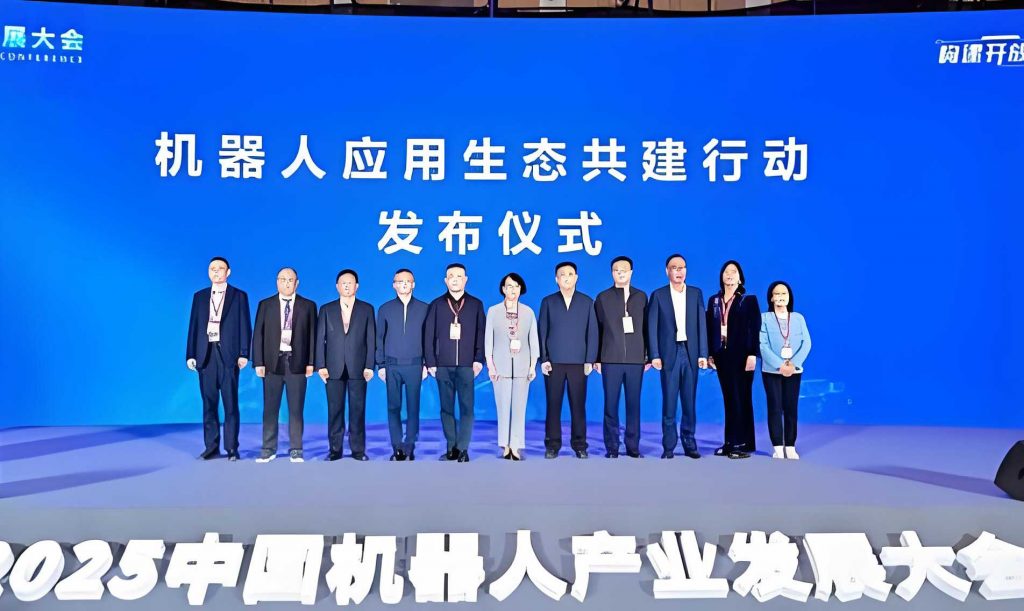
The hardware foundation of the modern China robot is a testament to precision engineering and robust design. This encompasses everything from the mechanical chassis to the sensory organs and the “muscles” that drive movement.
1. Perception and Navigation: The Sensory Leap
The transition from fixed, infrastructure-dependent guidance to flexible, intelligent navigation represents perhaps the most significant hardware-software co-evolution. Early automated guided vehicles (AGVs) relied on magnetic tapes or QR codes, limiting flexibility. Today’s autonomous mobile robots (AMRs) from leading China robot manufacturers are equipped with sophisticated sensor suites—primarily laser rangefinders (LiDAR), depth cameras, and ultrasonic sensors—enabling real-time perception. Simultaneous Localization and Mapping (SLAM) algorithms process this data, allowing the robot to understand and navigate its environment dynamically. The performance of these systems can be summarized by their ability to minimize localization error, often modeled as the minimization of a pose graph error function:
$$
\min_{\mathbf{x}, \mathbf{m}} \sum_{k} \sum_{(i,j) \in \mathcal{C}_k} \left\| \mathbf{z}_{ij} – h_{ij}(\mathbf{x}_i, \mathbf{m}_j) \right\|^2_{\Sigma_{ij}}
$$
Where $\mathbf{x}$ represents robot poses, $\mathbf{m}$ represents map features, $\mathbf{z}_{ij}$ is the sensor measurement, $h_{ij}$ is the measurement prediction model, and $\Sigma_{ij}$ is the measurement covariance. The relentless optimization of this process by China robot firms has led to AMRs that can operate confidently in crowded, changing warehouses.
| Era | Primary Technology | Key Hardware | Flexibility | Typical Application |
|---|---|---|---|---|
| Phase 1 (Early 2010s) | Line Following / Magnetic Tape | Optical/Magnetic Sensor | Very Low (Fixed Path) | Repetitive Point-to-Point Transport |
| Phase 2 (Mid 2010s) | QR Code / Visual Landmark | Downward-facing Camera | Low (Discrete Nodes) | Structured Warehouse Grids |
| Phase 3 (Late 2010s – Present) | Laser SLAM / Natural Feature | 2D/3D LiDAR, RGB-D Cameras | High (Free Navigation) | Dynamic Manufacturing, Flexible Warehousing |
| Phase 4 (Emerging) | Multi-modal Fusion SLAM | LiDAR, Vision, IMU, Wheel Encoders | Very High (Any Environment) | Unstructured Outdoor Yards, Mixed Human-Robot Spaces |
2. Actuation and End-Effectors: The Muscle and Dexterity
The drive for efficiency has pushed significant advancements in the core mechanical components. High-torque, brushless DC motors paired with precision harmonic or planetary gear reducers form the heart of the mobility system. The control of these components is critical for smooth acceleration, precise positioning, and energy efficiency. The motion dynamics are often governed by simplified models, where the torque $\tau$ required for a given rotational acceleration $\alpha$ is:
$$
\tau = J \alpha + b \omega + \tau_{friction}
$$
where $J$ is the moment of inertia, $b$ is the viscous friction coefficient, and $\omega$ is the angular velocity. China robot suppliers have made strides in optimizing this equation by developing integrated motor-drive units with higher power density and better thermal management.
Furthermore, the “hand” of the robot—its end-effector—has seen remarkable specialization. Beyond simple lift mechanisms for pallets, we now see adaptive grippers for mixed-case picking, telescopic forks for deep-rack access, and even collaborative robotic arms mounted on mobile bases for intricate kitting operations. This hardware diversification directly addresses the fragmented but deep needs of the Chinese market.
| Component | Traditional Solution | Advanced China Robot Implementation | Impact |
|---|---|---|---|
| Navigation Sensor | Import-dominated 2D LiDAR | Domestic 3D LiDAR, solid-state LiDAR, multi-sensor fusion kits | Reduced cost, improved robustness in complex scenes |
| Drive Motor | Standard industrial servo motors | Customized high-torque-density motors with integrated drives | Higher payload-to-weight ratio, more compact design |
| Reducer | Imported harmonic drives | Domestic precision harmonic reducers with competitive backlash and lifespan | Supply chain security, cost reduction for collaborative robot arms |
| Energy System | Lead-acid batteries, manual charging | Lithium-ion packs, autonomous wireless/contact charging | 24/7 operation capability, higher energy density, smarter power management |
If hardware forms the body of the China robot, software is its central nervous system and brain. The sophistication of the software stack—from low-level control to fleet intelligence—is what transforms a collection of parts into a cohesive, intelligent system.
1. Fleet Intelligence and Multi-Agent Coordination
The true value of a China robot solution is unlocked not by a single machine, but by a coordinated fleet. This requires a powerful central dispatch system, often analogous to a real-time “air traffic control” for robots. The core challenge is dynamic scheduling and path planning in a congested, shared space. The optimization problem can be framed as minimizing total mission completion time (makespan) or total travel distance, subject to constraints like collision avoidance, battery levels, and task priorities. A simplified objective for a set of robots $R$ and tasks $T$ might be:
$$
\min \sum_{r \in R} \left( \sum_{(i,j) \in \text{Path}(r)} d_{ij} \cdot x_{ij}^r \right)
$$
subject to: Each task is assigned to exactly one robot, and robot paths are conflict-free. Chinese firms have excelled in developing algorithms that provide robust, near-optimal solutions to this NP-hard problem in real-time, allowing for the seamless orchestration of hundreds of robots in a single facility.
2. Digital Twin and Predictive Analytics
A cutting-edge software layer adopted by forward-thinking China robot companies is the digital twin. This is a virtual, real-time replica of the entire physical logistics system—robots, inventory, stations, and human workers. It serves multiple purposes: simulation for workflow design and stress-testing, real-time monitoring, and predictive maintenance. By feeding operational data back into the digital model, the system can predict traffic bottlenecks, simulate the impact of adding more robots, or forecast when a specific motor’s performance is deviating from the norm, prompting pre-emptive maintenance. This shifts operations from reactive to predictive, maximizing uptime and system longevity.
| Module | Core Function | Technical Challenge | Business Value |
|---|---|---|---|
| Multi-Robot Task Allocation (MRTA) | Dynamically assigns pending tasks to the most suitable robot | Balancing workload, accounting for robot capabilities/battery, real-time re-allocation | Maximizes overall system throughput and utilization |
| Decentralized Path Planning | Calculates collision-free paths for each robot in a shared space | Solving “deadlock” scenarios, optimizing for global efficiency not just individual paths | Enables high-density, safe operation of large fleets |
| Digital Twin & Simulation | Creates and runs a virtual model of the physical system | High-fidelity modeling of physics, robot dynamics, and stochastic processes | Reduces deployment risk, enables offline optimization and staff training |
| Predictive Health Management | Analyzes sensor data to predict component failures | Building accurate failure models from operational data, reducing false alarms | Minimizes unplanned downtime, lowers life-cycle maintenance cost |
The ultimate competitive advantage of the leading China robot ecosystem lies in the seamless integration of the hardware and software pillars. It is a holistic, system-level approach to solving material flow problems. This is evident in several key areas:
1. Rapid Deployment and Scalability: The combination of natural feature navigation (minimal infrastructure change) and intuitive fleet management software allows a China robot solution to be deployed in a matter of weeks, not months. Scaling the system is as simple as adding more robots to the network; the software seamlessly integrates them into the fleet.
2. Resilience and Adaptability: The multi-modal perception systems allow these robots to handle temporary obstacles, reconfigured layouts, or even operate in semi-structured environments. This resilience is crucial for the dynamic nature of modern logistics and manufacturing.
3. Data-Driven Continuous Optimization: The software stack does not stop at control. It continuously collects granular data—travel paths, cycle times, stop durations, battery cycles, and error codes. This data is analyzed to identify inefficiencies, propose layout changes, and guide future hardware design iterations, creating a virtuous cycle of improvement.
The trajectory of the China robot is clear: from leveraging a demanding home market to achieve hardware parity, to now driving innovation in intelligent, scalable software systems. The integration of advanced perception, robust actuation, and sophisticated fleet intelligence has created logistics robots that are not just tools, but adaptable, intelligent partners in the supply chain. As these firms continue to invest in core technologies like AI-based vision, next-generation batteries, and 5G-enabled edge computing, their influence on the global standards for flexible automation will only grow stronger. The message to the world is that the future of logistics robotics is being shaped, in large part, by the relentless innovation and system-level thinking emanating from China’s vibrant automation sector.