
As an observer deeply embedded within the technological and industrial currents shaping modern manufacturing, I have witnessed a profound shift occurring on a global scale. Nowhere is this transformation more dynamic and consequential than in China. The nation’s journey from being the “world’s factory” to a “global manufacturing power” is fundamentally intertwined with the rapid adoption and advancement of robotics technology. The narrative of China robot development is no longer just about scale; it is about sophistication, integration, and defining the future of work. This article explores the multifaceted evolution of robotics in China, analyzing the driving forces, current landscape, critical challenges, and the promising horizon of human-machine collaboration.
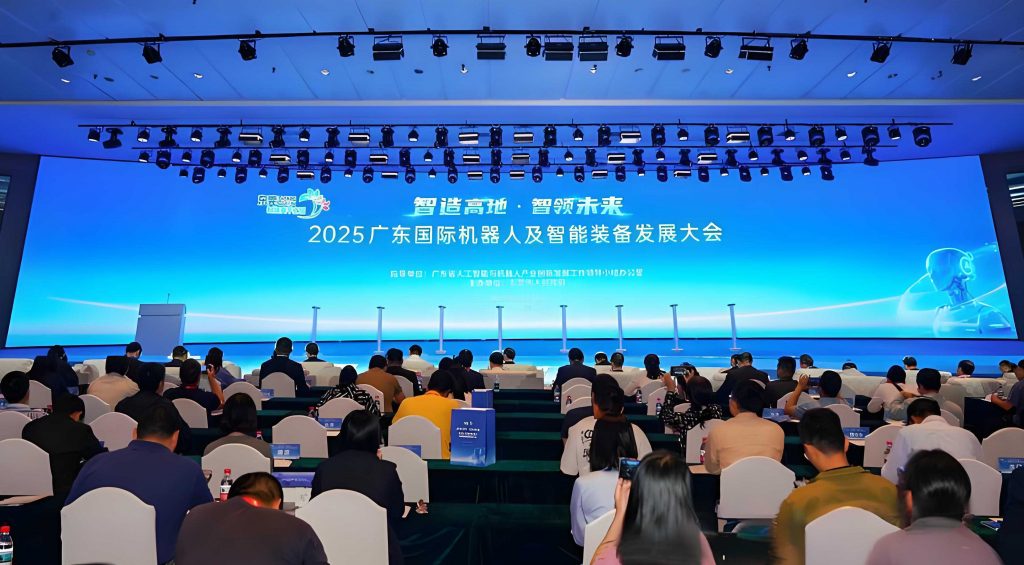
The imperative for this transformation is rooted in deep-seated macroeconomic and demographic trends. For decades, China’s manufacturing supremacy was built upon a formidable demographic dividend—a vast and relatively low-cost labor force. However, this foundation has been undergoing a seismic shift. Since 2012, the working-age population has been in a consistent decline, while labor costs have risen sharply and continuously. The traditional model is becoming economically untenable. This creates a powerful catalyst for automation. The equation is straightforward: to maintain competitiveness, Chinese manufacturers must augment human labor with robotic precision and endurance. The strategic national initiative “Made in China 2025” explicitly identifies robotics as a top-tier priority, formalizing this technological pivot as a cornerstone of industrial policy.
The value proposition of industrial robotics extends far beyond mere labor substitution. From my analysis, the integration of China robot systems delivers a compound benefit across several key performance indicators:
- Productivity and Quality: Robots operate with consistent speed and precision, 24/7, drastically reducing cycle times and minimizing defects. This leads to superior product quality and higher overall equipment effectiveness (OEE).
- Cost Optimization: While the initial investment is significant, the total cost of ownership over time is favorable. Savings are realized not only in direct labor but also through reduced material waste, lower energy consumption per unit produced, and a decrease in costly rework.
- Production Flexibility: Modern collaborative robots (cobots) and robots with advanced vision systems enable high-mix, low-volume production. This agility is crucial for responding to fast-changing consumer demands and trends like mass customization.
- Workplace Safety: Robots can take over dangerous, repetitive, and ergonomically unsound tasks, thereby reducing workplace accidents and improving overall employee well-being.
We can model the return on investment (ROI) for a robotic workcell with a simplified formula that captures these benefits:
$$ROI = \frac{\text{Annual Savings} + \text{Annual Revenue Increase} – \text{Annual Operating Cost}}{\text{Initial Investment}} \times 100\%$$
Where:
- Annual Savings = Reduced labor costs + lower scrap/waste + energy savings.
- Annual Revenue Increase = Higher output volume × improved product yield.
- Annual Operating Cost = Maintenance, programming, and utilities for the robot system.
- Initial Investment = Robot hardware, integration, safety systems, and training.
The dramatic impact on production efficiency can be further expressed by comparing output before and after automation. If a manual workstation produces \( Q_m \) units per hour and an automated cell produces \( Q_a \) units per hour, the percentage increase in efficiency is:
$$\text{Efficiency Gain} = \frac{Q_a – Q_m}{Q_m} \times 100\%$$
In practice, gains of 50% to 300% are commonly observed, fundamentally altering production economics.
The Current Landscape: A Market of Unparalleled Scale and Potential
China’s ascent in the global robotics market is a defining story of the 21st century. In 2013, it surpassed Japan to become the world’s largest market for industrial robots, a position it has firmly held since. This market is fueled by both multinational leaders and a burgeoning cohort of domestic China robot manufacturers. The demand spans traditional strongholds like automotive and electronics to rapidly growing sectors such as logistics, food and beverage, and metal fabrication.
The following table summarizes the explosive growth trajectory of the industrial China robot market:
| Year | Annual Industrial Robot Installations (Approx.) | Global Market Share | Key Driver |
|---|---|---|---|
| 2013 | ~57,000 | >20% | Surpassed Japan, becoming #1 market |
| 2018 | >150,000 | >36% | Rapid automation across electronics & EV sectors |
| 2022 | >290,000 | >52% | Post-pandemic recovery, supply chain resilience |
| 2025 (Projection) | >450,000 | >55% | “Made in China 2025” push, service robot boom |
Despite this staggering volume, the true indicator of saturation—robot density—reveals the immense runway for growth. Robot density measures the number of industrial robots per 10,000 employees in the manufacturing sector. While South Korea, Singapore, and Germany boast densities well over 300, and the global average sits near 150, China’s density, though rising fast, was approximately 322 in 2022. This signifies that penetration is still in its middle stages, with thousands of small and medium-sized enterprises (SMEs) yet to embark on their automation journey. The potential for the China robot ecosystem is, therefore, far from exhausted.
| Application Sector | Primary Robot Tasks | Demand Driver |
|---|---|---|
| Automotive | Welding, painting, assembly, material handling | Electric vehicle production surge, quality standards |
| Electronics | Precision assembly, testing, packaging, PCB handling | Miniaturization, high-volume, rapid product cycles |
| Logistics & Warehousing | Picking, packing, palletizing, autonomous guided vehicle (AGV) navigation | E-commerce explosion, need for 24/7 operation |
| Metal & Machinery | Machine tending, cutting, grinding, polishing | Labor shortages in harsh environments, precision demands |
The Critical Bottleneck: Talent and the Innovation Ecosystem
The most significant constraint facing the China robot industry is not capital, technology, or demand—it is human capital. The breakneck speed of market expansion has created a severe shortage of skilled professionals across the entire value chain. This includes:
- Robotics Engineers: Experts in mechanical design, dynamics, and control systems.
- Software & AI Developers: Professionals who can program complex tasks, implement machine vision, and develop adaptive learning algorithms.
- Systems Integrators: The crucial link who design, install, and commission complete robotic workcells tailored to specific factory needs.
- Technicians & Operators: Skilled workers for daily operation, maintenance, and troubleshooting.
This talent gap is a multi-faceted problem. Academia often struggles to keep curricula pace with industrial needs, and practical, hands-on experience is at a premium. Recognizing this, a multi-stakeholder approach is emerging. Leading technology companies are establishing advanced research centers and partnerships with universities. A pivotal development in this regard is the establishment of state-approved post-doctoral research workstations within high-tech companies. These platforms are not merely corporate R&D labs; they are structured bridges between theoretical research and industrial application. They attract top doctoral graduates, providing them with real-world challenges, advanced tools, and a clear path to commercialize innovations. This model accelerates the transfer of knowledge from academia to industry, directly feeding the China robot ecosystem with high-caliber talent and cutting-edge ideas. It represents a strategic investment in the long-term innovation capacity of the nation’s technology sector.
| Bottleneck Area | Description | Emerging Solutions |
|---|---|---|
| High-End R&D Talent | Shortage of PhD-level researchers in core robotics algorithms, AI, and advanced sensors. | Corporate Post-Doctoral Workstations, national key labs, “Thousand Talents” program. |
| Systems Integration Expertise | Lack of engineers who can design complete, reliable, and efficient automated solutions. | Specialized training academies by robot OEMs, certification programs, industry consortiums. |
| Technical Workforce | Shortage of skilled technicians for programming, maintenance, and operation. | Vocational college partnerships, in-house apprenticeship models, online micro-certifications. |
The Future is Collaborative: From Coexistence to Co-pilot
The historical evolution of human-robot interaction provides a clear vector for the future. In the 1970s, the narrative was one of competition—robots as job replacements. By the 1990s, it shifted to coexistence, with robots behind safety cages in separate work zones. Today, we are in the age of collaboration, where robots like YuMi work side-by-side with humans, combining human dexterity and decision-making with robotic strength and precision. The next frontier, which I believe will mature by 2025-2030, is true “Human-Robot Co-piloting”.
In this paradigm, the relationship is intuitive and symbiotic. Robots will be equipped with advanced sensing (LiDAR, 3D vision, force-torque sensors) and AI that allows them to understand context, predict human intent, and adapt their actions in real-time. The human worker becomes a supervisor and strategic partner, focusing on exception handling, quality oversight, and creative problem-solving, while the robot handles the precise, repetitive, or strenuous physical tasks. This co-pilot model maximizes the strengths of both, leading to unprecedented levels of flexibility and efficiency. It is the logical end-point for the China robot evolution within the factory, making automation accessible to a much wider range of tasks and SMEs.
The enabling technologies for this future can be described by a set of key equations governing robot perception and decision-making. For instance, sensor fusion for environment mapping often relies on probabilistic models like a Kalman Filter, which estimates the state \( x_k \) of the robot and its surroundings at time \( k \):
$$ \hat{x}_{k|k-1} = F_k \hat{x}_{k-1|k-1} + B_k u_k $$
$$ P_{k|k-1} = F_k P_{k-1|k-1} F_k^T + Q_k $$
Where \( F_k \) is the state transition model, \( B_k \) is the control-input model, \( u_k \) is the control vector, \( P \) is the error covariance, and \( Q_k \) is the process noise covariance. This allows the robot to safely navigate a dynamic human environment.
Beyond the Factory: Integration and Supporting Infrastructure
The story of robotics in China is not confined to the assembly line. The vision of “Industrie 4.0” or the Industrial Internet of Things (IIoT) posits a fully connected, data-driven manufacturing ecosystem. Here, robots are critical data-generating nodes. They feed performance metrics, quality data, and maintenance alerts into cloud platforms. This data fuels AI-driven optimization of the entire production flow, from supply chain logistics to predictive maintenance and energy management.
Furthermore, the advancement of core industrial infrastructure is symbiotic with robotics progress. Consider the renewable energy sector. The development of a massive, mobile grid-testing apparatus capable of simulating various grid faults (voltage sags, harmonics, frequency deviations) is a testament to high-end systems integration prowess. While not a robot per se, the creation of such a complex, flexible, and powerful testing system shares the same DNA—advanced power electronics, precise control algorithms, and robust mechanical design. It provides the essential testing ground for next-generation wind turbines, ensuring grid stability. This parallel innovation in adjacent heavy-industry sectors creates a reinforcing cycle of technological capability that benefits the entire China robot and advanced manufacturing landscape. It demonstrates a systemic approach to upgrading the nation’s industrial base.
The performance envelope of such a system can be defined mathematically. For example, to test a wind turbine’s response to voltage dips, the tester must synthesize a voltage waveform with a specific depth and duration:
$$ V_{test}(t) = \begin{cases}
V_{nominal} & \text{for } t < t_0 \\
V_{nominal} \times (1 – \text{dip depth}) & \text{for } t_0 \leq t \leq t_0 + \text{duration} \\
V_{nominal} & \text{for } t > t_0 + \text{duration}
\end{cases} $$
The ability to generate and control such precise, high-power disturbances is a feat of engineering that parallels the precise motion control required of industrial robots.
Conclusion: A Collective Journey Toward an Intelligent Future
The trajectory of the China robot industry is one of the most compelling narratives in modern industrial history. Driven by demographic necessity and strategic ambition, China is not only deploying robots at a world-leading pace but is also actively shaping their future development. The path forward is clear: address the talent bottleneck through innovative industry-academia models, continue to drive technological innovation particularly in AI and collaborative robotics, and foster the deep integration of robotics into the broader smart manufacturing ecosystem. The goal is not a fully lights-out factory, but an intelligently augmented one—where human creativity and robotic capability are fused to create a manufacturing sector that is resilient, efficient, sustainable, and globally competitive. This is the new stage of development, and it is being written now in workshops, labs, and factories across China.