
The landscape of industrial logistics and material handling stands at a precipice. For decades, automation has been synonymous with rigidity—fixed conveyor belts, pre-programmed robotic arms in cages, and Automated Guided Vehicles (AGVs) requiring extensive and costly infrastructure modifications. This paradigm excels in stable, high-volume, low-mix environments but crumbles when faced with variability, legacy infrastructure, or complex, dexterous tasks. The limitations are stark: a lack of adaptability, prohibitive integration costs for small-to-medium operations, and an inability to bridge the gap between digital management systems and the physical, often unstructured, world of the warehouse or factory floor.
We are now witnessing a fundamental shift. The convergence of advanced artificial intelligence, sophisticated sensor suites, and novel mechanical designs is birthing a new generation of autonomous machines. This evolution is not about a single superior design, but rather a strategic diversification of robotic “morphologies”—each optimized for specific mission profiles within the complex ecosystem of modern supply chains. The goal is no longer mere automation, but the creation of truly humanoid robot-inspired adaptive intelligence across various form factors, from those mimicking human bipedal manipulation to those redefining the capabilities of traditional vehicles. In this analysis, we explore four distinct vectors of this revolution: the generalist promise of logistics humanoids, the compact agility of AMRs, the high-density storage specialists, and the rugged outdoor performers.
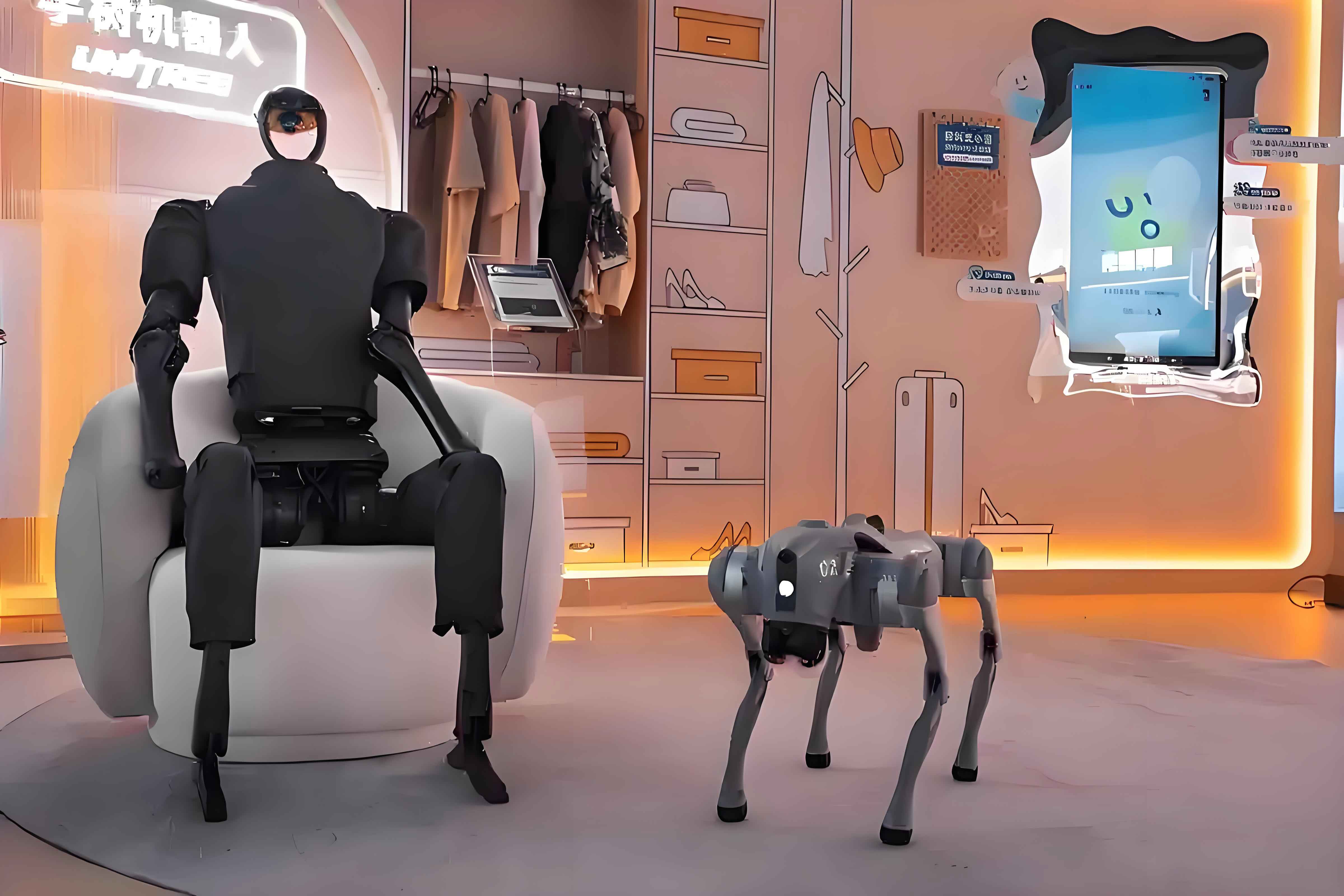
The most audacious step in this morphological evolution is the emergence of the logistics humanoid robot. Imagine a platform that combines the efficient, long-range mobility of a wheeled base with the versatile, multi-degree-of-freedom manipulation of a human torso and arms. This is the core proposition of advanced logistics humanoids. Unlike single-function automata, these robots are designed as multi-modal systems. Their “feet” are often omnidirectional wheels or advanced treads for efficient navigation, while their “hands” are sophisticated grippers or adaptive end-effectors capable of handling a wide variety of shapes and weights.
The technological cornerstone of such a humanoid robot is a sensor fusion system that acts as its “eyes” and “brain.” Achieving millimeter-level navigation precision in dynamic environments requires a synthesis of data from lidar, depth cameras, and inertial measurement units. This allows the robot to build and continuously update a 3D semantic map of its surroundings, identifying not just obstacles, but also specific target objects like mixed-case pallets, totes, or individual boxes. The manipulation challenge is governed by complex kinematics. The robot’s arm must solve for optimal trajectories in real-time. The inverse kinematics problem for a multi-jointed arm can be summarized as finding the joint angles $\theta_i$ that position the end-effector at a desired location $(x, y, z)$ with orientation $(\alpha, \beta, \gamma)$:
$$
f(\theta_1, \theta_2, …, \theta_n) = [x, y, z, \alpha, \beta, \gamma]^T
$$
Solving this in real-time while avoiding collisions and managing dynamic loads (like a swinging box) is a computational feat. The operational matrix for such a humanoid robot in a warehouse can be conceptualized as a function of its core capabilities:
| Capability Dimension | Technical Enabler | Operational Impact |
|---|---|---|
| Perception (Eye) | Multi-modal Sensor Fusion (Lidar, Depth Cam, IMU) | Millimeter navigation, object recognition in clutter. |
| Mobility (Foot) | Omni-directional Mobile Base | Efficient transit in crowded aisles, zero turning radius. |
| Manipulation (Hand) | 7-DOF Arm with Force-Torque Sensing | Dexterous pick-place, palletizing mixed loads. |
| Cognition (Brain) | On-board AI Processor (Path Planning, Task Scheduling) | Adapts to workflow changes, self-optimizes task sequence. |
This integrated “hand-foot-eye-brain” coordination allows the humanoid robot to perform a stunning array of tasks—from transferring original containers and palletizing/de-palletizing to stacking plastic totes—within the same work cell without reprogramming. It breaks the “rigid” limitation by using AI to perceive and adapt to the environment, making it a highly flexible solution for semi-structured or even non-structured spaces where traditional automation fails. The flexibility quotient $F_q$ of such a system compared to a fixed automation unit could be modeled as the ratio of tasks $T$ it can perform over the required environmental precision $E_p$:
$$
F_q = \frac{\sum T_{robot}}{\kappa \cdot E_{p_{required}}} \quad \text{, where } \kappa \text{ is a normalization constant.}
$$
For a traditional palletizer, $T$ is nearly 1 (one specific task) and $E_p$ is very high (requires perfect pallet positioning). For the humanoid robot, $\sum T$ is large (multiple tasks) and it operates reliably even with lower $E_p$ (tolerant to variance), resulting in a much higher $F_q$.
Not all material movement requires the dexterity of a humanoid robot. A vast segment of logistics involves the point-to-point transport of standardized unit loads. This is the domain of Autonomous Mobile Robots (AMRs), which are undergoing their own specialization. The market demand is bifurcating into lightweight, ultra-compact models and robust, heavy-duty carriers, each solving distinct workflow bottlenecks.
Lightweight AMRs, with payloads around 100 kg, are engineering marvels of space optimization. Their design prioritizes a minimal footprint and agile maneuverability for operations in cramped spaces like electronics assembly lines or pharmaceutical packing stations. They are the workhorses of “Goods-to-Person” (G2P) and “Tote-to-Person” (T2P) systems, where their role is to swiftly ferry shelves or bins to stationary human pickers. The key performance metric here is throughput in constrained aisles. The theoretical maximum throughput $\Phi_{max}$ for an AMR in a G2P system depends on its velocity $v$, acceleration/deceleration $a$, and the distance $d$ between stations:
$$
\Phi_{max} = \frac{1}{t_{travel} + t_{pick}} = \frac{1}{\frac{d}{v} + \frac{v}{a} + t_{load/unload} + t_{pick}}
$$
Here, $t_{pick}$ is the human pick time, a constant. Therefore, to maximize $\Phi_{max}$, the robot must minimize $t_{travel}$ and $t_{load/unload}$. Compact AMRs achieve this through high torque-density motors for quick acceleration and sophisticated docking systems for sub-second transfer times.
On the other end of the spectrum, heavy-duty AMRs with payloads of 600 kg or more address the challenge of moving substantial, often bulky items. In automotive manufacturing, they transport engine blocks, dashboards, or tire assemblies. In heavy industry, they move large metal components or dense raw materials. Here, stability, safety, and traction are paramount. The force required to move a load is given by $F = m \cdot a + F_{friction}$. For a 600 kg load accelerating at $0.5 m/s^2$ on a concrete floor (coefficient of friction $\mu \approx 0.6$), the drive system must provide:
$$
F = (600 \cdot 0.5) + (600 \cdot 9.8 \cdot 0.6) \approx 300 + 3528 = 3828 \text{ N}
$$
This substantial force necessitates powerful, redundant drive motors and robust battery systems (often 48V or higher). The differentiation between AMR classes is clear in their specification profiles:
| Parameter | Lightweight AMR (e.g., ~100 kg) | Heavy-Duty AMR (e.g., ~600 kg) |
|---|---|---|
| Primary Design Goal | Maximize agility in confined spaces | Ensure stability and power under heavy load |
| Typical Voltage Platform | 24V | 48V – 80V |
| Key Application | Tote-to-Person, Kitting | Line-Side Feeding, Bulk Component Transfer |
| Navigation Focus | High-precision docking at shelving | Safe, predictable paths in wide aisles |
| Efficiency Gain | Reduces picker walk time by >70% | Eliminates manual forklift trips, reduces damage |
While AMRs optimize horizontal movement, the vertical dimension—especially in high-bay warehouses—presents its own set of extreme challenges. High-lift, very-narrow-aisle (VNA) forklifts are critical for dense storage, but they have historically been constrained by three major pain points: demanding floor flatness requirements, significant mast sway at height, and relatively low lift/lower speeds. A next-generation VNA robot tackles these issues through a systems engineering approach.
The first innovation is in perception and control. By deploying an array of lidars and depth cameras not just at the base but along the mast, the robot creates a real-time model of both its path and the racking structure. An AI perception system can identify pallet positions and detect subtle ground irregularities. This data feeds into a closed-loop control system that adjusts wheel torque and steering in real-time to compensate for floor deviations, dramatically lowering the dependency on perfect flooring. The control law for such compensation might involve a PID controller that adjusts the steering angle $\delta$ based on the perceived lateral error $e_y$ from the target path:
$$
\delta(t) = K_p e_y(t) + K_i \int_0^t e_y(\tau) d\tau + K_d \frac{de_y(t)}{dt}
$$
The second breakthrough is mechanical, targeting mast stability. The traditional single-stage mast acts like a cantilever beam. Deflection $\delta$ at the top of a cantilever under a uniform load is proportional to the cube of the height $L$: $\delta \propto PL^3 / EI$, where $P$ is load, $E$ is modulus of elasticity, and $I$ is area moment of inertia. To combat this, a triple-stage mast with a double-frame design is employed. Crucially, integrating eight hourglass-shaped reinforced plates into the structure massively increases the moment of inertia $I$ at the joints, the points of greatest flex. This makes the mast exponentially stiffer. The stability improvement factor $S_{if}$ can be thought of as the inverse of the deflection ratio:
$$
S_{if} = \frac{\delta_{traditional}}{\delta_{reinforced}} \approx \frac{(PL^3)/(E I_{std})}{(PL^3)/(E I_{reinforced})} = \frac{I_{reinforced}}{I_{std}}
$$
Since $I_{reinforced} >> I_{std}$, $S_{if}$ is large, leading to the “rock-solid” performance even at full extension.
The third advance is in power systems. Equipping the vehicle with a high-torque 20kW motor and an 80V electrical platform allows for much faster lift speeds. If the standard lift speed is $v_s$, the new speed $v_n$ with higher power $P_n$ and improved transmission efficiency $\eta$ is approximately: $v_n \approx v_s \cdot \sqrt{P_n / P_s} \cdot \eta$. A near-doubling of lift/lower efficiency directly translates to more storage/retrieval cycles per hour (CPH). When such a machine is integrated into a system with smaller, horizontal shuttle robots (a “large-small vehicle” mode), the synergistic effect is profound. The high-lift robot only does vertical movement at the aisle end, while the small shuttle handles horizontal transport within the aisle. This decoupling allows both to operate at their optimal speeds simultaneously. The system cost saving of 50-60% arises from reducing the number of expensive high-lift units needed and optimizing the throughput of the entire storage zone.
The final frontier for automation is the outdoor, heavy-industry yard. Environments like paper mills, lumber yards, or steel service centers involve multi-ton loads, exposure to harsh weather, and the need to stack materials several tiers high. Outdoor unmanned balanced forklifts, such as clamp trucks and slab handlers, are engineered for this brutality. With payloads reaching 5 tons and lift heights over 6 meters for triple-tier stacking, these machines are defined by their robustness and safety.
The development process for such robots is a relentless pursuit of durability and reliability under stress. Components are sealed to IP66 standards or higher to withstand rain, snow, and dust. Traction control algorithms are modified for uneven, sometimes slippery ground surfaces. The focus for paper roll handling, for instance, is on precise clamping force control to prevent damage to the product. The required clamping pressure $P_c$ must be sufficient to lift the load without deformation: $P_c = \frac{W}{\mu \cdot A}$, where $W$ is weight, $\mu$ is friction coefficient between clamp and load, and $A$ is contact area. The control system must meticulously regulate this pressure.
However, the paramount concern in an environment where a 5-ton load is moving autonomously is functional safety. Adherence to international standards like those set by TÜV is not optional; it is the bedrock of deployment. Achieving a Performance Level “d” (PLd) as per ISO 13849 from multiple certifying bodies signifies a system with a high probability of achieving its safety function, typically requiring redundant safety-critical systems (e.g., dual LiDAR for obstacle detection, redundant braking circuits). The architecture involves multiple, independently monitored safety channels. The probability of a dangerous failure per hour (PFH) for a PLd system must be between $10^{-7}$ and $10^{-6}$. This is orders of magnitude safer than typical industrial machinery, ensuring that even in the chaotic outdoor yard, the robot’s operations are contained within a virtual safety envelope defined by rigorous risk assessment.
The evolution from single-task machines to adaptive, intelligent systems marks a new chapter in material handling. Each morphological path—the dexterous humanoid robot, the agile AMR, the ultra-stable VNA specialist, and the rugged outdoor carrier—addresses a unique set of constraints and opportunities. What unites them is a shift from hardware-centric to software-defined functionality. Their intelligence, perception, and adaptability are now their defining features, much like the cognitive and motor skills that make a human worker versatile. This is not merely automation; it is the creation of a scalable, flexible, and resilient physical layer for the digital supply chain. The future warehouse or factory will not be filled with identical units, but with a synergistic fleet of diverse robotic agents, each an optimal specialist, yet all orchestrated by a common intelligence platform. In this ecosystem, the principles of the humanoid robot—integrated sensing, adaptive manipulation, and cognitive planning—serve as the conceptual blueprint, even as the physical forms diverge to master their specific domains.