
In the contemporary era of rapid technological advancement, the emergence of intelligent robots represents a pivotal shift in human society, reshaping production systems, social relations, and existential paradigms. As I delve into the ontological interpretation of intelligent robots, I draw upon historical materialism to unravel the philosophical underpinnings of their existence. Intelligent robots are not merely technological artifacts; they embody the dialectical synthesis of human-machine interactions, driven by the logic of capital and productive practices. This article explores the essence of intelligent robots, their significance, inherent risks, and proposes a Chinese-style governance framework to foster harmonious human-robot coexistence. Through this analysis, I aim to demonstrate how intelligent robots, as objectifications of human essential powers, can be harnessed for human liberation and comprehensive development, while mitigating potential threats. The discourse is structured around key themes, including the historical evolution of human-machine contradictions, the transformative role of intelligent robots in生产力 systems, and innovative governance strategies rooted in socialist principles.
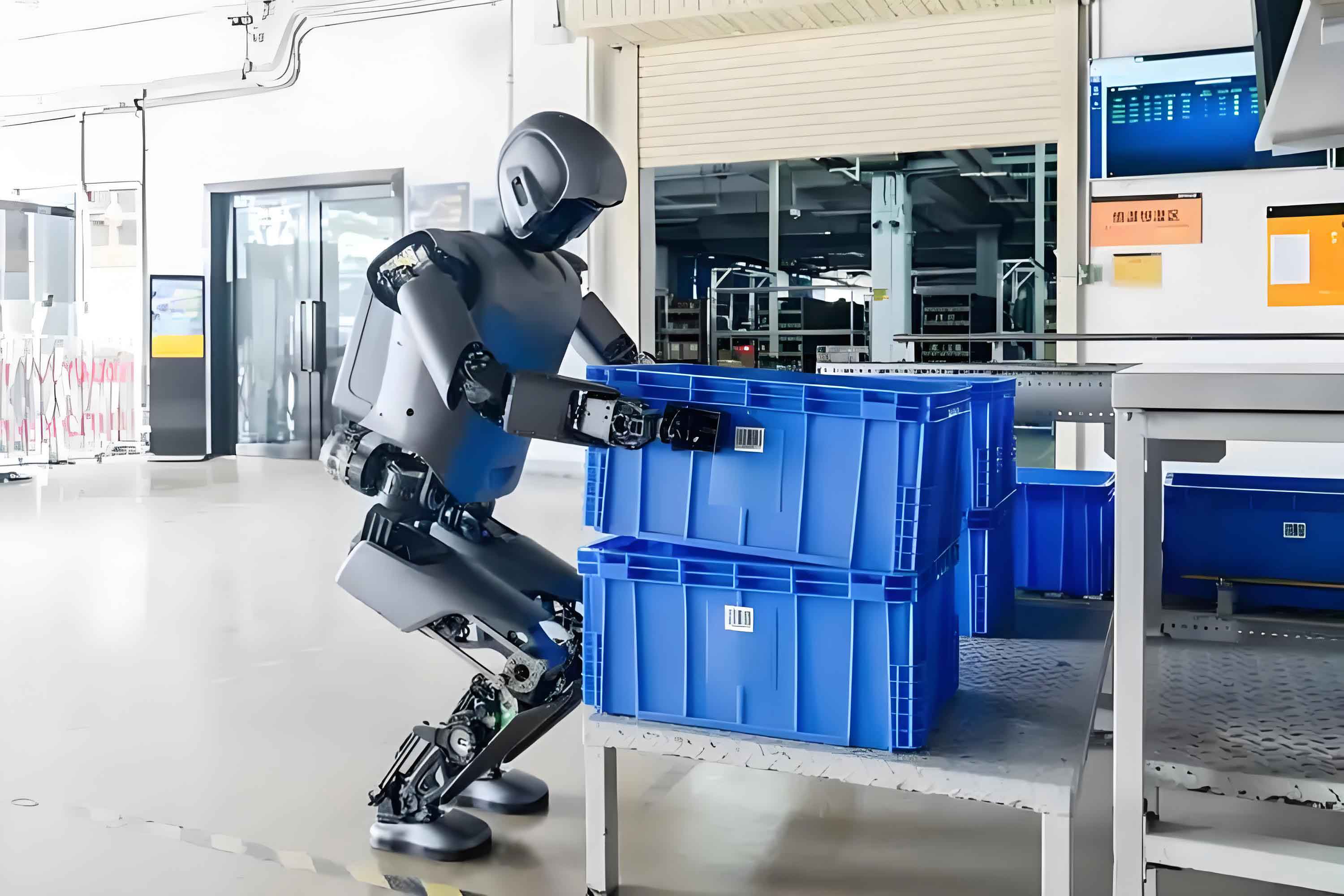
The concept of intelligent robots stems from the intricate interplay between humanization and mechanization, a process deeply embedded in productive practices. From a historical materialist perspective, the development of intelligent robots can be understood through the dialectical relationship between “human mechanization” and “machine humanization.” This duality manifests as a contradiction between humans and machines, evolving through three distinct phases: human-as-machine, human-machine conflict, and the robot stage. These phases represent the低级 stages of human-machine contradiction, where tools and machines gradually acquire autonomy, culminating in the creation of intelligent robots. The intelligent robot, as a social entity created by humans, emerges under the impetus of capital logic, aiming to maximize surplus value by replacing human labor. With the advent of artificial intelligence, this contradiction escalates to a高级 stage, characterized by the potential for profound societal transformations and risks. Although this高级 stage is still nascent, its logical features can be inferred from the historical trajectory of human-machine interactions.
To systematically analyze the evolution of human-machine contradictions, I present a table summarizing the three phases, highlighting the key characteristics and implications of each stage. This framework aids in comprehending how intelligent robots represent a synthesis of previous contradictions, paving the way for advanced interactions.
| Phase | Key Characteristics | Implications for Human-Robot Relations |
|---|---|---|
| Human-as-Machine | Humans treated as tools or slaves; labor objectified in primitive forms. | Foundation for mechanization; early signs of alienation in pre-capitalist societies. |
| Human-Machine Conflict | Machines replace human labor; conflicts like Luddite movements arise. | Intensification of capital-labor contradictions; push for technological advancement. |
| Robot Stage | Intelligent robots autonomously perform tasks; AI integrates into production. | Potential for human liberation or further alienation; rise of高级 contradictions. |
The transition to the intelligent robot phase is driven by the capitalist pursuit of relative surplus value, where technological innovations reduce necessary labor time. Mathematically, this can be expressed using the formula for surplus value: $$ s = v \cdot r $$ where \( s \) is surplus value, \( v \) is variable capital (labor), and \( r \) is the rate of surplus value. As intelligent robots enhance productivity, the composition of capital shifts, with constant capital (machinery) increasing and variable capital decreasing, leading to the formula for the organic composition of capital: $$ o = \frac{c}{v} $$ where \( o \) is the organic composition, \( c \) is constant capital, and \( v \) is variable capital. This dynamic underscores how intelligent robots, as embodiments of advanced constant capital, can exacerbate inequalities if not governed equitably.
The significance of intelligent robots lies in their role as confirmations of human essential powers. Through实践活动, humans externalize their cognitive and physical abilities into intelligent machines, enabling breakthroughs in areas like underwater exploration and space missions. This objectification not only validates human creativity but also propels societal progress by expanding the realms of possibility. For instance, the development of neural networks and large language models mirrors human thought processes, demonstrating the materiality of intelligence. In economic terms, intelligent robots contribute to wealth creation by boosting productivity. The production function can be modeled as: $$ Y = A \cdot F(K, L) $$ where \( Y \) is output, \( A \) represents technological progress (including intelligent robots), \( K \) is capital, and \( L \) is labor. By increasing \( A \), intelligent robots elevate output per unit of input, potentially paving the way for common prosperity. Moreover, they facilitate human liberation by automating tedious tasks, allowing individuals to engage in higher-order creative activities, aligning with Marxist visions of free development.
However, the proliferation of intelligent robots also harbors significant risks, particularly under capitalist relations of production. The table below outlines key risks associated with intelligent robots, emphasizing the need for vigilant governance.
| Risk Category | Description | Potential Impact |
|---|---|---|
| Employment Displacement | Intelligent robots replace human jobs in manufacturing, services, and management. | Rising unemployment, income inequality, and social unrest. |
| Ethical and Legal Challenges | Algorithmic bias, privacy violations, and accountability issues in autonomous decisions. | Erosion of trust, discrimination, and legal ambiguities. |
| Threats to Human Autonomy | Over-reliance on intelligent robots may diminish human cognitive abilities and agency. | Loss of critical thinking skills and potential “digital dictatorship.” |
| Security Risks | Malicious use of intelligent robots in cyberattacks or autonomous weapons. | Global instability and threats to human safety. |
These risks stem from the异化 of labor, where intelligent robots, as products of human labor, become instruments of oppression. The formula for labor异化 can be conceptualized as: $$ A = \frac{H}{R} $$ where \( A \) represents the level of alienation, \( H \) denotes human essence, and \( R \) symbolizes the dominance of intelligent robots. If \( R \) exceeds \( H \), it leads to a scenario where humans are subjugated by their creations. This underscores the urgency of developing governance frameworks that prioritize human values.
In response to these challenges, I propose a Chinese-style AI governance方案 that integrates Marxist principles with contemporary technological realities. This approach emphasizes people-centered development, democratic technological politics, and worker-centric management. The first path involves critiquing the “idol-worship of intelligence” and回归 to the “intelligent human.” This entails rejecting techno-utopian narratives that envision a “superhuman” elite, and instead affirming the collective potential of all people. By fostering a culture that values human dignity over technological fetishism, we can ensure that intelligent robots serve humanity, not vice versa. The second path asserts that human “ways of living” should determine machine “algorithms.” This means embedding democratic processes in AI development, where algorithms are designed to address real human needs and promote social harmony. For example, participatory mechanisms can be established to involve citizens in algorithm governance, preventing biases and ensuring transparency. The third path shifts focus from “artificial intelligence” to “worker intelligence,” advocating for the active involvement of workers in managing intelligent systems. This draws inspiration from historical models like the “Anshan Constitution,” which emphasized worker participation in production. By enhancing workers’ skills and control over technology, we can harness intelligent robots for equitable development.
To illustrate the effectiveness of these paths, I present a comparative table of governance strategies, highlighting the advantages of the Chinese-style approach.
| Governance Path | Key Measures | Expected Outcomes |
|---|---|---|
| People-Centered Values | Promote ethical AI education, regulate against data monopolies, and ensure equitable access. | Enhanced social welfare, reduced inequalities, and strengthened human autonomy. |
| Democratic Algorithm Design | Implement public oversight committees, use open-source algorithms, and conduct impact assessments. | Increased trust in AI, fair decision-making, and alignment with societal goals. |
| Worker Intelligence Development | Provide lifelong learning programs, establish co-management systems, and protect labor rights. | Empowered workforce, innovation in production, and sustainable economic growth. |
Mathematically, the benefits of such governance can be modeled using a utility function: $$ U = \sum_{i=1}^{n} (H_i + R_i) $$ where \( U \) represents social utility, \( H_i \) denotes human well-being, and \( R_i \) symbolizes the contribution of intelligent robots. By maximizing \( U \) through balanced policies, we can achieve a synergistic relationship between humans and intelligent robots. Furthermore, the concept of “worker intelligence” can be quantified as: $$ WI = \frac{S \cdot I}{A} $$ where \( WI \) is worker intelligence, \( S \) is skill level, \( I \) is innovation capacity, and \( A \) is automation intensity. Higher \( WI \) values indicate greater resilience in the face of technological disruption.
In conclusion, the ontological examination of intelligent robots reveals their profound implications for human society. As objectifications of human essence, intelligent robots hold the potential to drive progress and liberation, but they also pose risks if left unregulated. The Chinese-style governance方案, with its emphasis on people-centered values, democratic algorithms, and worker intelligence, offers a viable path forward. By prioritizing human development over blind technological advancement, we can navigate the complexities of the intelligent robot era and build a future where humans and machines coexist harmoniously. This approach not only addresses immediate challenges but also contributes to the broader goal of human comprehensive development, aligning with the vision of a community with a shared future. As we continue to innovate, it is imperative that we remain vigilant, ensuring that intelligent robots serve as tools for empowerment rather than sources of alienation.