
From my perspective, the rise of industrial robotics represents not merely a technological trend but a fundamental restructuring of global manufacturing paradigms. An industrial robot is an automatically controlled, reprogrammable, multipurpose manipulator, programmable in three or more axes, used in industrial automation applications. It is a machine system endowed with a degree of autonomy, capable of executing a pre-defined program of tasks involving manipulation or locomotion under varying, unstructured conditions. The core impetus behind the adoption of China robots lies in their ability to amalgamate human cognitive strengths—rapid environmental analysis and decision-making—with machine virtues such as endurance, precision, and resilience in hostile environments. This synthesis is pivotal for the next phase of industrial modernization.
The historical trajectory of this technology is instructive. Globally, the first practical programmable robot, the Unimate, was installed in a General Motors plant in 1961. This marked the dawn of the industrial robotics era. Japan, facing a severe labor shortage in the 1970s, aggressively adopted and refined this technology, earning its title as the “Robot Kingdom.” Germany, driven by high labor costs and stringent workplace safety regulations mandating automation for hazardous tasks, became another global powerhouse. The development path for China robots began later, with initial research in 1972. Significant state-supported development occurred during the 7th Five-Year Plan (1986-1990), focusing on mastering key technologies for robots like those used in painting, spot welding, arc welding, and handling.
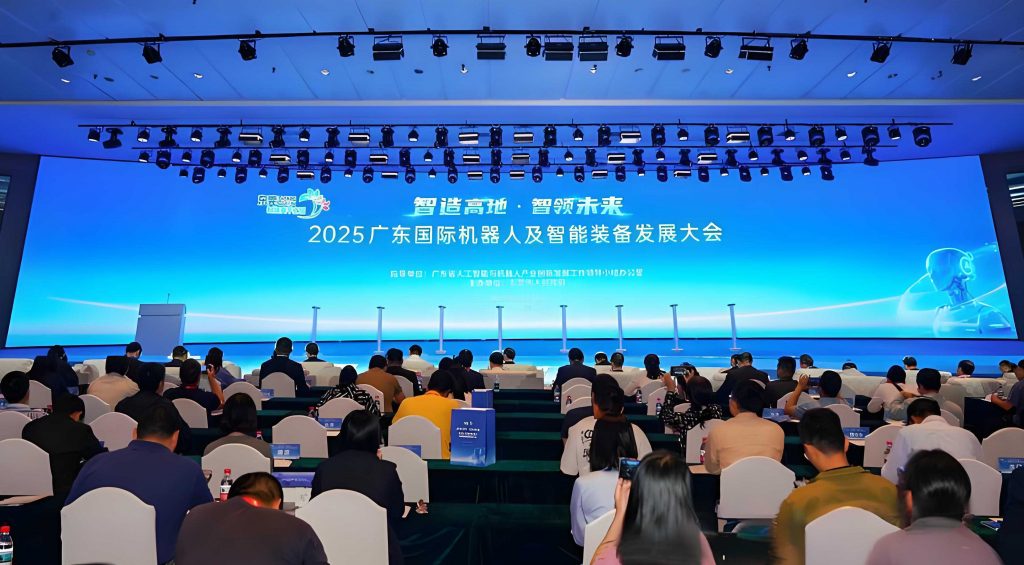
The contemporary landscape for China robots is defined by a potent confluence of market pull and strategic push. Domestically, demographic shifts, rising labor costs, and higher worker expectations regarding job quality have eroded the traditional low-cost labor advantage. This creates a massive endogenous demand for automation. Externally, global competition demands higher quality, consistency, and flexible manufacturing, which are hallmarks of robotic automation. Consequently, the development and deployment of China robots have transitioned from a technological pursuit to a core national economic and industrial strategy.
To understand the taxonomy of China robots, we can categorize them by structure and application, as summarized below:
| Classification Basis | Type | Key Characteristics & Typical Use |
|---|---|---|
| By Mechanical Structure | Articulated Robot (6-axis) | High dexterity, human-arm-like movement. Ideal for complex tasks like welding, assembly, and material handling in confined spaces. |
| Delta/Parallel Robot | Extremely high speed and precision within a limited spherical workspace. Commonly used for high-speed pick-and-place, e.g., in packaging and electronics. | |
| SCARA Robot | Fast, precise in-plane motion with rigidity in the vertical axis. Excellent for assembly, dispensing, and load/unload tasks. | |
| Cartesian/Gantry Robot | Linear movements along X, Y, Z axes. Simple programming, high payload capacity. Used for machine tending, palletizing, and large-scale machining. | |
| AGV/AMR (Mobile Robot) | Mobile platform for logistics. AGVs follow fixed paths (magnetic/optical tape), while AMRs use SLAM for dynamic navigation. | |
| By Primary Application | Welding Robot | Arc, spot, and laser welding. Ensures consistent weld quality, high productivity, and operator safety. |
| Painting/Coating Robot | Provides uniform film thickness, reduces overspray, and eliminates human exposure to toxic fumes. | |
| Material Handling Robot | Includes machine tending, palletizing, and packaging. Handles repetitive, heavy loads with high endurance. | |
| Assembly Robot | Performs precise insertion, screw-driving, and part fitting tasks with high repeatability, crucial in electronics and automotive. | |
| Processing Robot | Directly performs tasks like cutting, grinding, deburring, and polishing, replacing manual or dedicated machines. |
Economic Imperatives and the Role of China Robots
The economic rationale for accelerating the adoption of China robots is compelling and multifaceted. At its core, robotics automation is a capital-for-labor substitution that drives productivity growth. The traditional Cobb-Douglas production function can be modified to explicitly include robotic capital:
$$Y_t = A_t \cdot (L_t^H)^\alpha \cdot (K_t^R)^\beta \cdot (K_t^O)^{1-\alpha-\beta}$$
Where:
$Y_t$ = Total output at time *t*
$A_t$ = Total factor productivity (enhanced by smart, interconnected China robots)
$L_t^H$ = High-skill human capital (complementary to robots)
$K_t^R$ = Robotic capital stock (the focus of China robots deployment)
$K_t^O$ = Other physical capital
$\alpha, \beta$ = Output elasticities
The strategic deployment of China robots increases $\beta$ and enhances $A_t$ through improved precision, reduced downtime, and data-driven optimization. This leads to a higher marginal product of capital in the robotic form. The direct economic advantages are quantifiable:
| Metric | Impact of China Robots | Economic Consequence |
|---|---|---|
| Labor Productivity | Dramatic increase. Robots operate 24/7 with consistent speed and accuracy. | Lowers unit labor cost, increases output per worker, boosting GDP growth potential. |
| Product Quality & Consistency | Near-elimination of human error and variability. Precision measured in microns. | Reduces scrap/rework costs, enhances brand reputation, allows entry into high-value markets. |
| Production Flexibility | Quick reprogramming enables mass customization and rapid product changeovers. | Improves responsiveness to market demand, reduces inventory costs (leaner JIT systems). |
| Operational Cost | High initial CapEx but lower long-term OpEx. Eliminates costs of recruitment, training, benefits, and turnover for replaced tasks. | Improves predictability of manufacturing costs and stabilizes profit margins. |
| Workspace Optimization | Robots can work in dense layouts and utilize vertical space. | Increases output per square meter of factory floor, a critical factor as industrial land values rise. |
The macroeconomic impact extends beyond the factory floor. The burgeoning industry of China robots itself becomes a significant growth sector, creating high-value jobs in R&D, systems integration, maintenance, and data analysis. It stimulates upstream industries (precision components, sensors, AI chips) and downstream sectors (logistics, customized manufacturing services). This industrial ecosystem effect is a powerful engine for innovation and value creation, moving China up the global value chain.
Strategic Applications Driving Adoption
The penetration of China robots across industries is not uniform; it follows a path dictated by technical feasibility, economic return, and strategic necessity. The following analysis delves into key application domains.
1. The Automotive Industry: The Pioneer and Continuous Innovator
The automotive sector has historically been the largest adopter of China robots, using them for welding, painting, and assembly. The economic model here is clear: the high volume, structured environment, and critical demand for quality and safety make the ROI compelling. The trend now is towards more flexible body shops that can handle multiple models on the same line, enabled by advanced vision-guided China robots. The Total Cost of Ownership (TCO) model for a welding robot station can be simplified as:
$$TCO = C_{Cap} + \sum_{t=1}^{n} \frac{C_{Main,t} + C_{Energy,t} – \Delta C_{Labor,t} – \Delta C_{Quality,t}}{(1+r)^t}$$
Where $C_{Cap}$ is capital cost, $C_{Main}$ and $C_{Energy}$ are operating costs, $\Delta C_{Labor}$ is the net labor cost saving, $\Delta C_{Quality}$ is the cost saving from quality improvement (less rework/warranty), $r$ is the discount rate, and $n$ is the lifecycle. For major automakers in China, the payback period for such investments has shortened significantly, driving deeper integration of China robots.
2. Electronics Manufacturing: Precision at Scale
This sector demands extreme precision, miniaturization, and speed. China robots, particularly SCARA and delta types, are indispensable for tasks like PCB assembly, component testing, and precision dispensing. The high product volatility and short life cycles in consumer electronics require reconfigurable automation, which collaborative robots (cobots) often provide. The value proposition here transcends labor substitution; it enables the manufacturing of devices that are simply impossible to assemble reliably by hand at scale.
3. Logistics and Warehouse Automation: The Backbone of E-commerce
The explosion of e-commerce has made logistics a critical battlefield. Here, mobile China robots—AGVs and AMRs—are revolutionizing material flow. They form the core of Automated Storage and Retrieval Systems (AS/RS) and automated guided forklifts. The efficiency gain is modeled not just in speed but in system-level optimization. A fleet of *m* robots in a warehouse can be analyzed for throughput maximization, a problem often approached via queueing theory or multi-agent path finding (MAPF) algorithms. The key metric is order cycle time, which China robots drastically reduce, directly translating to competitive advantage for retailers and third-party logistics providers.
4. Hazardous and Extreme Environment Operations
This is a domain where the ROI calculation includes a heavy weighting on risk mitigation and regulatory compliance. China robots are deployed in environments with toxic chemicals (painting, chemical handling), extreme temperatures (foundries, freezing warehouses), radioactive conditions (nuclear fuel handling), or dangerous tasks (demolition, explosive ordnance disposal). The value equation here incorporates the avoided cost of occupational illnesses, accidents, insurance premiums, and potential litigation. It is a socially responsible and economically sound application of robotics technology.
Technological Trajectories and Innovation Frontiers
The future evolution of China robots is being shaped by several convergent technological trends. The next generation will be characterized by greater intelligence, adaptability, and ease of use.
Artificial Intelligence and Machine Learning Integration: Future China robots will move from deterministic, programmed behavior to adaptive, learning systems. AI will enable:
– Vision systems that can recognize unstructured objects and defects with super-human accuracy.
– Force/torque sensing allowing for delicate assembly tasks without complex fixtures.
– Predictive maintenance, where robots analyze their own sensor data to forecast failures.
– Process optimization through reinforcement learning, where robots iteratively improve motion paths and parameters to maximize yield or minimize cycle time. This can be framed as maximizing a reward function $R$:
$$\pi^* = \arg\max_\pi \mathbb{E}\left[\sum_{t} \gamma^t R(s_t, a_t) | \pi\right]$$
where $\pi$ is the robot’s policy, $s_t$ the state (sensor readings), $a_t$ the action (movement), and $\gamma$ a discount factor.
Human-Robot Collaboration (Cobots): The paradigm is shifting from robots replacing humans to robots augmenting humans. Collaborative China robots, with force-limited joints and advanced sensors, work side-by-side with people, handling the heavy, repetitive, or precise parts of a task while the human provides dexterity, judgment, and oversight. This expands the application space into small-batch, high-mix manufacturing and complex assembly.
Digital Twins and the Industrial Metaverse: A digital twin is a virtual, dynamic replica of a physical robot or production line. Engineers can simulate, debug, and optimize the performance of China robots in a virtual environment before deployment, reducing downtime and integration risk. The digital twin continuously synchronizes with the physical asset, enabling real-time monitoring and what-if analysis.
Modularity and Standardization: To reduce costs and accelerate deployment, the industry is moving towards standardized modular components for China robots—interchangeable arms, grippers, vision modules, and mobile bases. This “Lego-like” approach allows for rapid customization and scaling of automation solutions.
Policy Framework and National Strategy
The rapid ascent of China robots is not a purely market-driven phenomenon; it is actively orchestrated within a comprehensive policy framework. National and local governments have issued a series of strategic plans and supportive policies. The core objectives are to:
1. Achieve technological self-sufficiency in core components (reducers, controllers, servo systems).
2. Increase robot density (number of robots per 10,000 manufacturing workers) to match and eventually lead globally.
3. Foster a complete, competitive domestic industrial chain for robotics.
4. Promote widespread adoption, especially among small and medium-sized enterprises (SMEs).
Key policy instruments include R&D subsidies, tax incentives for manufacturers and end-users, the establishment of national innovation centers and demonstration zones, and the integration of robotics into national science and technology megaprojects. This strategic push is creating a powerful “innovation chain” that is deliberately linked to the “industry chain” to ensure technological achievements translate into commercial and economic impact.
| Policy Focus Area | Typical Measures | Intended Effect on China Robots Ecosystem |
|---|---|---|
| Core Technology Breakthrough | National R&D programs; “National Team” formation for key components; IP creation support. | Reduce import dependency, lower system cost, improve technical parameters (precision, reliability). |
| Industry Cluster Development | Establishing robotics industrial parks; fostering specialist SMEs; promoting merger & acquisition. | Achieve economies of scale and agglomeration, build resilient supply chains. |
| Market Creation & Adoption | Purchase subsidies for end-users; “Machine Replace Human” demonstration projects; loan interest subsidies. | Lower adoption barrier for SMEs, accelerate market penetration, create pull for manufacturers. |
| Talent Development | Curriculum reform in engineering; vocational training programs; high-end talent recruitment initiatives. | Address the critical skills gap in robotics integration, programming, and maintenance. |
| Standards & Regulations | Developing national safety and performance standards; certification systems. | Ensure product quality and safety, facilitate interoperability, build international influence. |
Addressing Challenges and Societal Implications
The path forward for China robots is not without significant challenges. A primary concern is the potential displacement of workers in routine manual jobs. While history suggests automation creates new job categories, the transition can be painful. Proactive policies in re-skilling and social safety nets are essential. The future workforce will need to shift towards roles that complement China robots: system designers, programmers, data analysts, maintenance technicians, and supervisors of automated processes.
Another challenge is the initial capital investment, which remains a hurdle for many SMEs. Innovative business models like Robotics-as-a-Service (RaaS), where companies pay a subscription fee for robotic capacity instead of purchasing hardware outright, are emerging to address this. Cybersecurity of interconnected robotic systems is also a growing concern that requires robust solutions.
From a broader societal perspective, the proliferation of China robots will fundamentally reshape the industrial landscape. It promises to make manufacturing cleaner, safer, and more efficient. It could also contribute to “re-shoring” or “near-shoring” of production, as the cost advantage of low-wage labor diminishes relative to the efficiency of automated, smart factories closer to consumer markets. This has profound implications for global trade patterns.
Conclusion: An Indispensable Force for the Future
In conclusion, the analysis clearly indicates that industrial robotics is an irreversible and accelerating megatrend. For China, the development and widespread integration of China robots is not an optional upgrade but a strategic imperative for sustaining economic growth, achieving industrial upgrading, and securing a position of leadership in the high-tech manufacturing arena of the 21st century. These machines are the physical embodiment of the fusion of information technology with industrial technology—the core of the “Fourth Industrial Revolution.”
The trajectory is set: from hard automation in structured environments to flexible, intelligent collaboration in unstructured settings. The economic models, from production functions to TCO analyses, validate their contribution to productivity and quality. The policy framework is actively nurturing the ecosystem. While challenges related to workforce transition and SME adoption persist, the overall direction is unequivocal. China robots are transitioning from being tools within a factory to becoming the foundational infrastructure of a modern, intelligent, and competitive manufacturing economy. Their continued evolution will be a primary determinant of national industrial capability and economic resilience for decades to come. The era of China robots is not on the horizon; it is already here, fundamentally redefining the nature of work and the engines of prosperity.