
From my vantage point within the intricate ecosystem of advanced production, I have witnessed a profound transformation sweeping across China’s industrial landscape. The concerted drive towards intelligent manufacturing is not merely a policy directive; it is a tangible, accelerating reality reshaping factories, supply chains, and global competitiveness. This movement, underpinned by strategic national initiatives and groundbreaking technological breakthroughs, marks a decisive shift from scale-oriented production to value-driven, flexible, and intelligent creation. At the heart of this revolution lies the relentless evolution of robotics, particularly the ambitious development of next-generation systems designed for unprecedented collaboration and precision.
The framework for this national upgrade was decisively established several years ago with the launch of a specialized action plan for smart manufacturing demonstration projects. This initiative was designed to identify, cultivate, and proliferate best practices across the vast and varied spectrum of Chinese industry. The results, as communicated in recent high-level discussions, are quantitatively impressive and geographically widespread. Hundreds of model projects have been selected, spanning nearly a hundred different industrial categories and touching every provincial-level region in the country. The scale of investment mobilized exceeds hundreds of billions of yuan, signaling deep commitment from both the state and the private sector.
The performance metrics from these pioneering projects tell a compelling story of systemic improvement. To encapsulate this data:
| Key Performance Indicator (KPI) | Average Improvement | Peak Improvement |
|---|---|---|
| Production Efficiency | 37.6% | >200% |
| Energy Utilization Rate | 16.1% | 125% |
| Operational Costs | 21.2% Reduction | – |
| Product Development Cycle | 30.8% Reduction | – |
| Product Defect Rate | 25.6% Reduction | – |
These figures translate into the tangible foundation of over two hundred high-level digital workshops and smart factories. They represent a critical mass of proven experience, now serving as benchmarks and blueprints for wider industrial adoption. The sharing of insights from leading provincial authorities and corporate giants from sectors as diverse as home appliances, heavy machinery, aerospace, and industrial software further accelerates this diffusion of knowledge. The consensus is clear: integration of digital and physical systems is no longer optional for maintaining a competitive edge.
While system-level integration provides the architecture, the physical agents of change within these smart factories are the robots. The trajectory for China robots is rapidly advancing beyond traditional, caged automation towards a new generation of machines characterized by cooperation, intelligence, and adaptability. Recent, significant breakthroughs have successfully tackled a suite of long-standing technical bottlenecks. These advances are not incremental; they redefine the capabilities of China robots.
The core challenges addressed include novel motor materials and drive mechanisms, sophisticated multi-sensor data fusion, and inherently safe mechanical design suitable for close human collaboration. Furthermore, breakthroughs in safety-aware behavioral decision-making, intelligent control architectures, and user-friendly operating systems have been achieved. The culmination of this research is a prototype system that embodies the next evolutionary step for China robots: lightweight construction, high precision, a significantly improved payload-to-weight ratio, and enhanced intrinsic safety. Perhaps most importantly, these China robots are designed for simplicity in programming and ease of use, lowering the barrier to deployment for small and medium-sized enterprises.
The technical specifications of such systems can be summarized by a set of interdependent equations and metrics. For instance, the effective positioning accuracy $ \epsilon_p $ of a next-generation robot is a function of sensor fusion $ S_f $, control loop gain $ K_c $, and structural thermal stability $ \Delta T_s $:
$$ \epsilon_p = \frac{ \alpha }{ \sqrt{S_f} } + \beta \cdot \exp(-K_c) + \gamma \cdot \Delta T_s $$
where $ \alpha, \beta, \gamma $ are system-specific constants. The goal is to minimize $ \epsilon_p $ through advancements in all contributing factors.
Similarly, the collaborative safety index $ \Lambda_{safe} $, crucial for human-robot teamwork, can be modeled based on force/torque sensitivity $ F_{sens} $, reaction latency $ t_r $, and compliant joint stiffness $ K_j $:
$$ \Lambda_{safe} = \int_{0}^{t_{cr}} F_{sens}(t) \cdot H(t_r) \, dt \quad \text{where} \quad K_j \leq K_{max} $$
Here, $ H(t_r) $ is a Heaviside function representing the system’s reaction speed, and $ t_{cr} $ is the critical time window for collision avoidance. The development focus is on maximizing $ \Lambda_{safe} $.
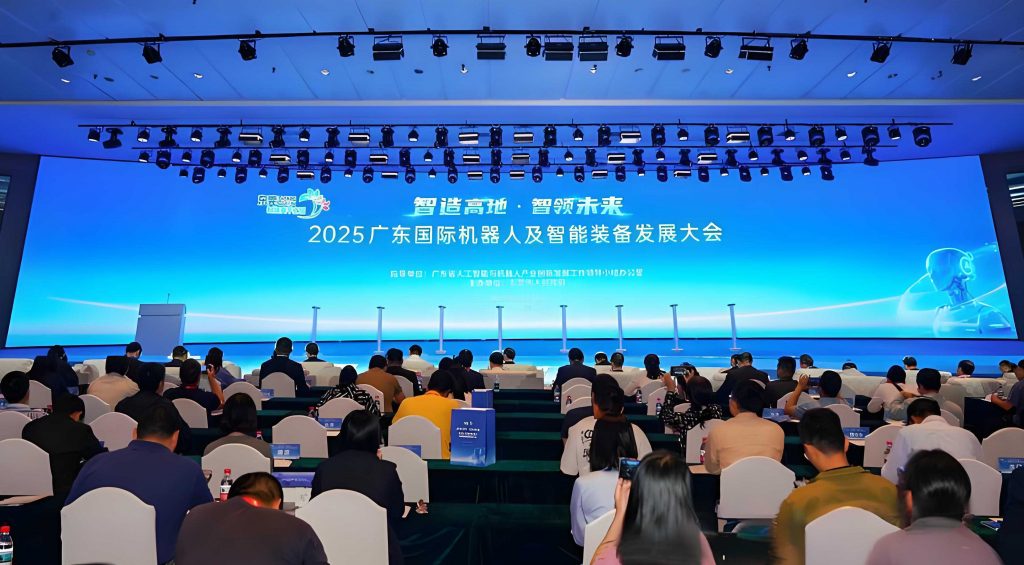
The validation of these next-generation China robots moves beyond laboratory benchmarks into demanding real-world application scenarios. Third-party testing and expert evaluations have confirmed their capabilities in high-precision, high-value manufacturing tasks. The table below outlines some key verification areas:
| Application Domain | Specific Task | Key Requirement Addressed |
|---|---|---|
| Precision Mechanical Assembly | Fine part mating, screw driving with tight tolerances | Sub-millimeter accuracy, force control |
| 3C Electronics Inspection | Visual and tactile inspection of small, complex components | High repeatability, integrated vision systems |
| Aerospace Manufacturing | In-situ measurement of large structures like aircraft doors | Large workspace adaptability, metrology integration |
These successful pilots are the essential precursors to full-scale industrialization. They demonstrate that China robots are poised to enter markets traditionally dominated by established international players, offering a combination of performance, safety, and cost-effectiveness.
However, the path of technological progress is inextricably linked with market dynamics. The transition towards intelligent manufacturing also demands adaptation from the vast supporting industry. A prime example is the precision tooling sector, which supplies the “teeth” for automated machining centers. Recent forums highlight a period of intense challenge and introspection. Structural shifts in major downstream industries, such as the move away from metal in consumer electronics, have caused significant demand shocks, leading to order declines and calls for transformation within the tooling community.
The strategic response emerging from these discussions mirrors the broader industrial ethos: resilience through diversification, excellence through quality, and strength through collaboration. Leaders emphasize the necessity to move beyond dependency on single market segments. The formula for survival and growth $ G $ in this context involves multiple variables:
$$ G = \underbrace{D_c \cdot P_d}_{\text{Market Strategy}} + \underbrace{Q_s \cdot S_p}_{\text{Product Excellence}} – \underbrace{L_r \cdot R_f}_{\text{Financial Risk}} $$
where:
- $ D_c $ = Customer/Industry Diversification Index
- $ P_d $ = Product Portfolio Diversity
- $ Q_s $ = Product Quality and Stability Score
- $ S_p $ = Service and Solution Proficiency
- $ L_r $ = Corporate Debt Leverage Ratio
- $ R_f $ = Market Risk Factor
The directive is clear: increase $ D_c $ and $ P_d $ by expanding into new sectors like automotive and aerospace; maximize $ Q_s $ through relentless focus on quality control and process stability; and minimize the risk term $ L_r \cdot R_f $ by maintaining prudent financial management. The future direction points not only towards automation in production but also towards portfolio expansion, a climb up the quality ladder from mid-range to high-end, and a transition from rough management to refined, data-driven operations. This evolution in supporting industries is a critical enabler for the sophisticated applications envisioned for advanced China robots.
The imperative to adapt is powerfully driven by the needs of high-end manufacturing. The requirements of automotive powertrain production or aerospace engine manufacturing for cutting tools are exponentially more severe. These sectors demand exceptional durability, heat resistance, and consistency—attributes that define the global top tier. Research and guidance now actively focus on helping enterprises understand and meet these stringent specifications. This push from downstream high-tech sectors creates a powerful “pull-through” effect, forcing upstream suppliers to innovate rapidly. It establishes a virtuous cycle where advanced manufacturing needs drive tooling and robotics innovation, which in turn enables even more advanced manufacturing. This cycle is fundamental to the maturation of the entire industrial chain and the reputation of China robots and associated technologies on the world stage.
Looking forward, the convergence of several technological vectors will define the next chapter for China robots and smart manufacturing. The integration of 5G and industrial IoT will dissolve latency barriers, enabling real-time, cloud-edge coordinated control of massive robot fleets. Artificial intelligence and machine learning will transition from performing pre-programmed tasks to enabling adaptive, self-optimizing robotic systems. Digital twin technology will create perfect virtual replicas of physical robots and production lines, allowing for simulation, optimization, and predictive maintenance at unprecedented fidelity. The very nature of human-robot collaboration will deepen, moving from sequential cooperation to true symbiotic teamwork, guided by intuitive interfaces like AR and advanced natural language processing.
In conclusion, the journey of intelligent manufacturing in China is a multi-layered narrative of strategic vision, technical grit, and market-driven adaptation. From the macro-level gains evidenced by nationwide demonstration projects to the micro-level breakthroughs in robotic actuation and control, the progress is interconnected and mutually reinforcing. The development of next-generation China robots, characterized by safety, intelligence, and flexibility, is a cornerstone of this evolution. While challenges persist, particularly for supply chain industries adjusting to seismic market shifts, the overarching trajectory is one of relentless upgrading—diversifying markets, elevating quality, and deepening integration. As these elements coalesce, China robots and the intelligent manufacturing ecosystems they inhabit are steadily transitioning from followers of global trends to architects of the factory of the future.