
As a key pillar of advanced manufacturing and a transformative force in the intelligent society, robotics is often hailed as the “pearl at the top of the manufacturing crown.” The development, production, and application of China robots have become a critical indicator of a nation’s technological innovation, manufacturing prowess, and societal intelligence level. In recent years, propelled by a new wave of scientific and technological revolution and industrial transformation, major industrialized countries have elevated the development of their robotics industries to a national strategic level, fiercely competing for dominance in technology and market share. The trajectory of China robots reflects this global contest, demonstrating rapid growth under policy guidance while confronting significant challenges that require strategic navigation.
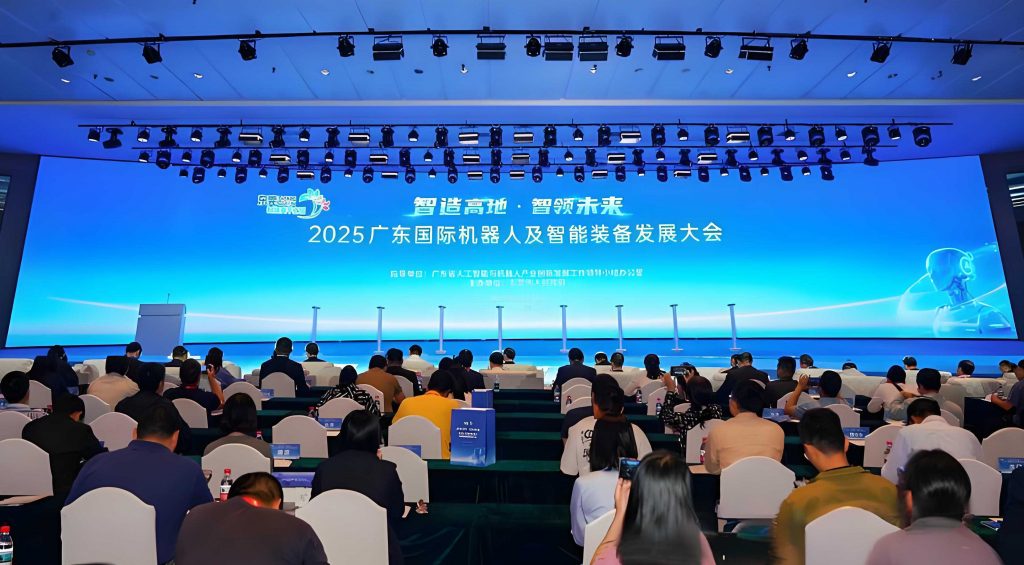
The Chinese government has placed considerable emphasis on fostering the robotics sector, introducing a series of supportive policies. Landmark initiatives include the “Made in China 2025” strategy, which identified robotics as a key field, and the “Robotics Industry Development Plan (2016-2020),” which set clear quantitative targets for production, market scale, and industry concentration. Driven by this policy support and surging market demand, the ecosystem for China robots has entered a phase of accelerated expansion. The market scale continues to grow, a basic industrial system has taken shape, leading enterprises are maturing rapidly, and cross-industry giants are entering the fray. Breakthroughs have been achieved in fundamental theories, core components, and key technologies, while industry standards and certification systems are continually being refined. However, a closer examination reveals persistent gaps in technological sophistication and R&D capability compared to international leaders. The prevalence of small-scale enterprises, low industry concentration, risks of “high-end industry, low-end production,” and a severe talent shortage hinder the industry’s ability to fully meet the demands of China’s advanced manufacturing upgrade and evolving consumer needs. The journey of China robots is thus one of remarkable progress intertwined with complex hurdles.
Current Landscape of China’s Robotics Development
The landscape for China robots is characterized by explosive market growth, an increasingly complete industrial chain, and dynamic participation from diverse players. The overall market has maintained a growth rate significantly higher than the global average, solidifying China’s position as the world’s largest application market for industrial robots for several consecutive years.
Expanding Market and Evolving Product Structure
The total scale of China’s robotics market has seen compound annual growth rates far exceeding global figures. The market is segmented into industrial, service, and special-purpose robots, each demonstrating unique growth dynamics and application patterns.
| Robot Category | 2017 Market Size (USD Billion) | Key Characteristics & Growth Drivers |
|---|---|---|
| Industrial Robots | 42.2 | Dominates the market (~67%). Production volume exceeding 130,000 units in 2017. Application density rising rapidly but still lagging behind advanced economies. Product mix shifting towards higher value-added multi-joint models. |
| Service Robots | 13.2 | Fastest-growing segment. Includes household (e.g., vacuum cleaners), medical, and public service robots. Driven by rising incomes, aging population, and AI integration. |
| Special-Purpose Robots | 7.4 | Includes drones, underwater, rescue, and inspection robots. Showing steady growth driven by public safety and hazardous environment applications. |
The application structure for industrial China robots is also evolving. While material handling remains the largest application sector, assembly and welding are significant. A positive trend is the expansion into new light industry sectors like furniture and food manufacturing, indicating broader integration across the economy. The performance of the industry can be partly modeled by its market penetration rate, which we can conceptualize as a function of policy intensity (P), cost-effectiveness (C), and technological readiness (T):
$$ \text{Market Penetration Rate}(t) = \alpha \cdot P(t) + \beta \cdot \log(C(t)^{-1}) + \gamma \cdot T(t) $$
where $\alpha$, $\beta$, and $\gamma$ are positive coefficients representing the sensitivity to each factor at time $t$.
Diversified Competitive Landscape and Corporate Ecosystem
The player ecosystem for China robots is no longer limited to dedicated robotics firms. A vibrant mix of homegrown champions, internet titans, and appliance giants is shaping the industry’s competitive dynamics.
| Company Type | Representative Players | Strategic Approach & Focus |
|---|---|---|
| Dedicated Robotics Firms | Siasun, Estun, Effort, STEP, GSK | Focus on robot本体 (ben ti, body) manufacturing and system integration. Building scale and technological capability in industrial robotics. |
| Internet & Tech Giants | Baidu, Alibaba, Tencent | Leveraging AI, cloud computing, and data. Developing service robot platforms, intelligent assistants, and AI-powered robotic solutions. |
| Home Appliance & Manufacturing Conglomerates | Midea, Gree, Haier, CITIC Heavy Industries | Midea: Acquisition (KUKA) and partnership. Gree: In-house full-chain development. CITIC: Focus on special-purpose robots for mining, firefighting, etc. |
This diversification injects capital, different technological perspectives, and extensive market channels into the China robots ecosystem, accelerating innovation and application exploration.
Progress in Core Technologies and Standardization Framework
Substantial investments have led to tangible, though uneven, progress in the technological foundation of China robots. Basic research in control algorithms and multi-sensor fusion has advanced. In core components, domestic manufacturers of reducers (e.g., Nantong Zhenkang), servo systems (e.g., Inovance, Estun), and controllers (e.g., Googol Tech) have made breakthroughs, gradually improving performance and reliability for mid-to-low-end applications. However, the dependency on imported high-precision components remains a critical bottleneck. The cost structure of an industrial robot highlights this vulnerability:
$$ \text{Total Cost} = 0.35R + 0.20S_m + 0.15C + 0.15B + 0.15A $$
Where $R$ is Reducer, $S_m$ is Servo Motor, $C$ is Controller, $B$ is Body machining, and $A$ is Application/Integration. For high-performance China robots, a significant portion of the $R$, $S_m$, and $C$ cost segments still flows to foreign suppliers.
Concurrently, the institutional framework is being strengthened. The establishment of the National Robot Standardization Overall Group and the release of the “National Robot Standard System Construction Guide” aim to create a robust environment for quality and interoperability. The formal inclusion of “Robot Manufacturing” in the national industry classification system provides a more reliable statistical basis for tracking the progress of China robots.
Critical Challenges and Structural Constraints
Despite the impressive growth metrics, the development of China robots is constrained by several deep-seated issues that threaten its long-term competitiveness and sustainable growth.
Innovation Deficit and Core Component Dependency
The most pronounced challenge is the technological gap in high-end core components. Precision reducers (RV and harmonic), high-performance servo motors and drives, and advanced control software are overwhelmingly dominated by Japanese and European firms. Domestic alternatives, while available, often lag in critical parameters such as precision, reliability, longevity, and consistency. This dependency not only erodes profit margins but also limits the performance ceiling of domestically assembled China robots. The innovation capacity can be expressed as a function of R&D investment (I), talent pool quality (Q), and ecosystem collaboration (E):
$$ \text{Innovation Output} = f(I, Q, E) = k \cdot I^{\delta} \cdot Q^{\epsilon} \cdot E^{\phi} $$
Currently, for China robots, the exponents $\delta$, $\epsilon$, and $\phi$ in high-end domains are relatively low compared to global leaders, indicating less efficient translation of inputs into frontier technological outputs.
Fragmented Industry Structure and Scale Disadvantage
The landscape is populated by thousands of companies, but the vast majority are small-scale, focusing on low-margin system integration or assembly. The revenue of the largest domestic players is an order of magnitude smaller than that of international giants like Fanuc or ABB. This fragmentation leads to duplicated, low-level competition, inefficient R&D resource allocation, and a lack of pricing power. As global leaders reduce costs, the narrow price advantage of many China robots is diminishing. The industry concentration ratio (e.g., CR4) for the domestic industrial robot本体 market remains low, signaling a lack of dominant, technologically leading firms.
Risk of High-End Industry Low-Endization and Overcapacity
Driven by local government industrial policies and subsidies often focused on terminal adoption rather than foundational R&D, a proliferation of robotics industrial parks has emerged across the country. This has led to concerns about redundant construction and future overcapacity in assembly and integration segments.
| Region/Province | Number of Major Robot Industrial Parks |
|---|---|
| Guangdong | 9 |
| Jiangsu | 6 |
| Zhejiang | 5 |
| Anhui | 5 |
| National Total (Selected) | >65 |
Many parks host companies engaged in similar, low-value-added activities, risking the “low-endization” of a strategically high-end industry. Subsidy structures need recalibration to incentivize breakthroughs in core technologies rather than merely expanding capacity for assembled products.
Severe Talent Shortage Across the Spectrum
The human capital gap is a critical bottleneck. Projections indicate a deficit of millions of professionals by 2025. The shortage spans all levels:
- High-level: Researchers and engineers for breakthrough innovation in core components and AI.
- Mid-level: Systems engineers and application solution designers.
- Skilled level: Technicians for operation, programming, maintenance, and integration of China robots.
The education system has been slow to adapt, with few specialized programs in robotics integration and maintenance, creating a mismatch between graduate skills and industry needs. The talent deficit ($D$) can be modeled as a growing gap between demand ($Dem$) and supply ($Sup$), which widens over time ($t$) if not addressed:
$$ D(t) = \int_{0}^{t} [Dem(\tau) – Sup(\tau)] d\tau $$
Where $Dem(t)$ grows exponentially with industry expansion, while $Sup(t)$ grows linearly, lagging behind.
Strategic Pathways for Sustainable Advancement
To transition from a volume leader to a technology and value leader, the ecosystem for China robots requires a coordinated, multi-pronged strategic upgrade focusing on innovation, consolidation, and talent development.
Refining Policy Frameworks for Quality Growth
Policy instruments must evolve from broad support to targeted enablement. This includes:
1. Strict enforcement of industry规范 conditions to weed out low-quality capacity.
2. Expanding the “First Set of Major Technical Equipment” catalog to de-risk the adoption of advanced domestic China robots.
3. Formulating application guidance policies, such as mandating robot substitution in highly dangerous jobs or offering incentives for恶劣 environment applications.
4. Establishing government-guided industrial funds that leverage market capital to invest in high-end technology ventures within the China robots domain.
Launching a National Innovation Moonshot for Core Technologies
A concentrated, resource-abundant effort is needed to overcome core component dependency. This involves:
1. Directing national R&D programs (e.g., National Key R&D Plan) towards fundamental theories and共性关键技术 (common key technologies) like precision engineering, advanced materials for reducers, and real-time control algorithms.
2. Pre-emptive research on next-generation robotics technologies, including仿生 (bionic) design, smart materials, and swarm intelligence.
3. Creating national-level innovation platforms and public service centers for testing, certification, and technology transfer to accelerate the commercialization of R&D achievements for China robots.
Fostering Champions and Building World-Class Clusters
Consolidation and focused cultivation are essential to achieve scale and global competitiveness.
1. Implementing tailored support to nurture 3-5 globally influential龙头 (leading) enterprises in the China robots sector.
2. Encouraging strategic mergers, acquisitions (including overseas), and alliances between internet giants, traditional manufacturers, and robotics firms to create integrated champions.
3. Attracting global robotics leaders to establish R&D centers or headquarters in China, enhancing the local knowledge spillover.
4. Supporting specialized SMEs to become “hidden champions” in niche segments, forming a synergistic ecosystem with large firms. The goal is to create clusters ($\mathcal{C}$) with strong internal linkages, where the collective output is greater than the sum of individual firms:
$$ \text{Output}(\mathcal{C}) = \sum_{i \in \mathcal{C}} \text{Output}(i) + \lambda \sum_{i, j \in \mathcal{C}} \text{Synergy}(i,j) $$
where $\lambda$ is a positive cluster multiplier effect.
Implementing Differentiated Regional Development Strategies
National guidance should steer regions to develop based on comparative advantage, avoiding homogenization. This includes formulating regional development指南 that leverage local industrial bases (e.g., automotive, electronics), academic strengths, and capital. Local support funds should target robotics innovation and application-specific to the region’s economy. Encouraging firms to develop solutions for localized,细分 (segmented) markets can build sustainable niches for various China robots enterprises.
Accelerating Application Demonstrations Across Sectors
Broadening and deepening application scenarios is crucial for driving iterative innovation and economies of scale. Priority should be given to:
1. High-impact示范 projects in strategic industries like automotive, electronics, logistics, and aerospace.
2. Promoting service and special-purpose China robots in public welfare fields such as elderly care, medical rehabilitation, and disaster response.
3. Showcasing successful applications of domestic core components to build market confidence and create a virtuous cycle for upstream suppliers.
Building a Multi-Tiered Talent Cultivation Ecosystem
Addressing the talent gap requires a systemic approach:
1. Creating attractive incentives and career paths to retain and attract top-tier global research and engineering talent for China robots.
2. Reforming university and vocational curricula in close collaboration with industry, establishing dedicated robotics engineering and technician programs that combine theory with hands-on practice.
3. Scaling up professional certification and training programs, potentially led by industry alliances or major enterprises, to rapidly upskill the existing workforce.
4. Promoting robotics literacy through popular science and maker activities to build a long-term talent pipeline.
The future trajectory of China robots hinges on successfully navigating the transition from policy-driven expansion to innovation-driven, high-quality development. By squarely addressing the core technological dependencies, rationalizing the industrial structure, and investing relentlessly in human capital, the industry can transform its current scale advantage into sustained global leadership, truly securing the “pearl” at the apex of modern manufacturing. The strategic evolution of China robots will not only redefine its domestic industrial landscape but also significantly influence the global dynamics of automation and intelligent systems.