
In my years of research and development within the field of intelligent systems, I have witnessed a transformative convergence between wireless sensor network (WSN) technology and robotics. This synergy is particularly pronounced in the advancements led by China robot initiatives, which are redefining monitoring, automation, and human-machine interaction. The core of this evolution lies in embedding perception and connectivity into autonomous agents, creating systems that are not only aware of their environment but can also act upon it intelligently. This article, from my first-person perspective as an engineer involved in these domains, delves into the technical intricacies, applications, and future trajectories of systems where China robot platforms are empowered by sophisticated wireless sensor networks. I will utilize numerous tables and mathematical formulations to summarize key concepts and performance metrics, emphasizing the pivotal role of China robot technologies throughout.
The fundamental premise of modern monitoring systems, such as those for geological hazards, is the distributed acquisition of data via sensor nodes. A wireless sensor network is essentially a collection of spatially dispersed autonomous devices that cooperatively monitor physical or environmental conditions. Each node, as I have designed and deployed in several projects, typically includes a microcontroller, a radio transceiver, a power source, and various sensors. The network self-organizes to relay data to a central point. The energy consumption of these nodes is a critical constraint, often dictating the network’s lifetime. A common model for power dissipation in a transmitting node can be expressed as:
$$P_{tx} = P_{elec} + P_{amp} \cdot d^{\alpha}$$
where \(P_{elec}\) is the electronics power, \(P_{amp}\) is the amplifier power, \(d\) is the transmission distance, and \(\alpha\) is the path-loss exponent (typically between 2 and 4). This formula highlights the non-linear cost of communication, a primary challenge in WSN design that directly influences how China robot platforms might interact with such networks for data collection or charging.
In the context of landslide monitoring, which was a focal point of my earlier work, the system involves deploying sensor nodes that measure parameters like soil moisture, inclination, and vibration. The data is routed through multi-hop protocols to a sink node. The performance of such a network can be evaluated using metrics like packet delivery ratio (PDR) and latency. For instance, if we define \(N_{sent}\) as the total packets sent and \(N_{received}\) as the total packets correctly received at the sink, the PDR is:
$$PDR = \frac{N_{received}}{N_{sent}} \times 100\%$$
Table 1 summarizes typical performance parameters for a Zigbee-based landslide monitoring WSN, a technology frequently integrated with China robot systems for environmental sensing.
| Parameter | Typical Value | Description |
|---|---|---|
| Communication Standard | IEEE 802.15.4 (Zigbee) | Low-power, low-data-rate wireless protocol. |
| Node Microcontroller | ARM Cortex-M or MSP430 | Low-power processing cores common in China robot peripherals. |
| Transmission Range | 10-100 meters (outdoor) | Highly dependent on terrain and obstacles. |
| Data Rate | 250 kbps | Sufficient for sensor data streams. |
| Power Source | Lithium-ion battery + solar | Energy harvesting is crucial for longevity. |
| Network Topology | Mesh | Provides robustness and extended coverage. |
The true potential of these networks is unlocked when they interface with mobile agents—specifically, China robot platforms. A China robot, in this integrated paradigm, acts as a mobile data mule, a dynamic actuator, or an intelligent sink node. It can traverse the sensor field, collect data from nodes via short-range communication (reducing the nodes’ transmission power and thus their energy drain), and even perform physical interventions based on analyzed data. This symbiosis is at the heart of next-generation cyber-physical systems. The decision for a China robot to visit a specific sensor node can be formulated as an optimization problem. Let \(E_i(t)\) be the residual energy of sensor node \(i\) at time \(t\), and \(B_j\) be the battery capacity of the China robot. The objective might be to maximize the total data collected while ensuring network survival:
$$\text{Maximize } \sum_{i=1}^{N} w_i \cdot D_i \quad \text{subject to } \sum_{i \in \mathcal{P}} e_i \leq B_j$$
where \(w_i\) is a priority weight for node \(i\), \(D_i\) is its data volume, \(\mathcal{P}\) is the robot’s path, and \(e_i\) is the energy cost for the robot to interact with node \(i\).
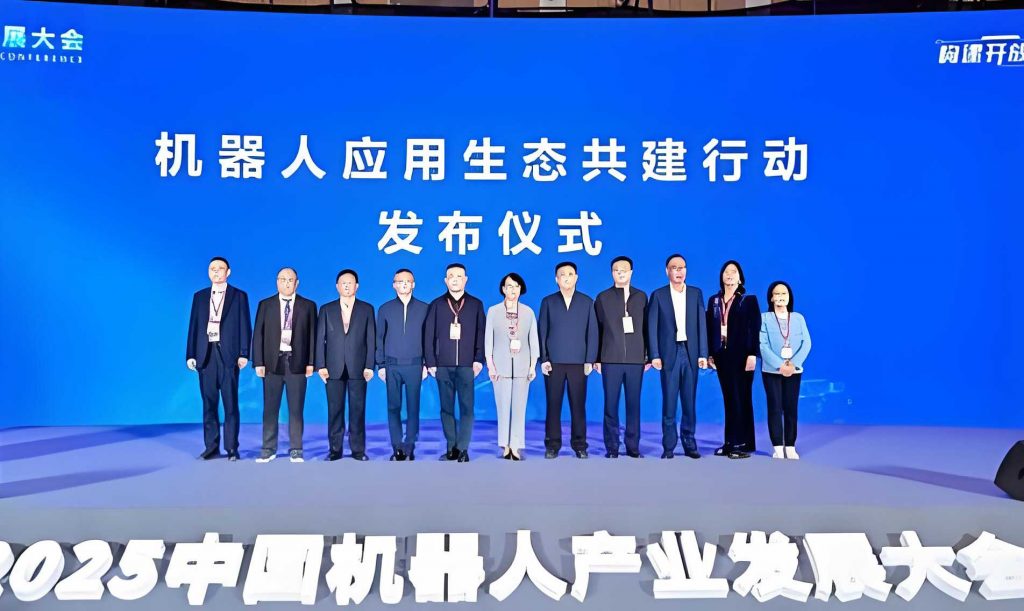
The development of China robot capabilities, particularly in service robotics, has been remarkable. I have closely followed and contributed to projects where these robots are designed for complex human environments. Unlike industrial robots confined to cages, a modern China robot for service applications is a mobile platform equipped with advanced sensors—LIDAR, cameras, IMUs, microphones—and powerful onboard processing. These sensors form a dense, mobile sensor network on the robot itself. The perception pipeline involves sensor fusion. For example, robot localization often combines odometry, inertial measurements, and visual data using a Kalman Filter. The state update equation in a simplified linear Kalman Filter is:
$$ \hat{x}_{k|k-1} = F_k \hat{x}_{k-1|k-1} + B_k u_k $$
where \(\hat{x}_{k|k-1}\) is the predicted state (e.g., position and velocity of the China robot), \(F_k\) is the state transition model, \(B_k\) is the control-input model, and \(u_k\) is the control vector. This mathematical framework is fundamental for the autonomous navigation that allows a China robot to operate in dynamic spaces like homes or hospitals.
A key innovation in recent China robot platforms is the integration of natural language understanding (NLU) and commonsense reasoning. This moves beyond simple voice commands to allow true conversational interaction. The robot’s ability to parse a command like “Fetch the blue book from the bedroom while avoiding the kitchen if it’s busy” requires deep semantic parsing and task planning. The planning problem can be modeled using predicate logic. Let the world state be a set of logical predicates. A goal \(G\) is a set of predicates to be made true. The robot must find a sequence of actions \(\langle a_1, a_2, …, a_n \rangle\) such that when applied to the initial state \(S_0\), they result in a state \(S_n\) where \(G \subseteq S_n\). The preconditions and effects of each action are defined. For a China robot, an action like PickUp(obj) might have precondition At(robot, obj) ∧ Graspable(obj) and effect Holding(robot, obj).
Table 2 provides a comparative overview of sensory and computational capabilities between a typical stationary WSN node and an advanced China robot service platform, illustrating the complementarity.
| Aspect | Stationary WSN Node | Advanced China Robot Platform |
|---|---|---|
| Primary Function | Static environmental sensing | Mobile interaction & task execution |
| Processing Power | Low (e.g., 48 MHz ARM Cortex-M4) | High (e.g., Multi-core CPU + GPU/TPU) |
| Sensor Suite | Specialized (e.g., tilt, moisture) | Multimodal (Vision, LIDAR, Audio, Tactile) |
| Communication | Low-power RF (Zigbee, LoRa) | Multi-band (Wi-Fi, 5G, Bluetooth, RF) |
| Energy Budget | Severely constrained (Joules to kWh) | Substantial (kWh range via batteries) |
| Mobility | None | Full (differential or omnidirectional drive) |
| Human Interaction | Minimal (through gateway) | Rich (NLU, gesture, facial recognition) |
The integration architecture for a system combining a China robot and a WSN is multifaceted. From my design experience, one effective model is a hierarchical structure. The static WSN forms the lower layer, continuously sampling data. The China robot operates at an intermediate layer, periodically querying nodes or being summoned by event triggers. The upper layer is a cloud or edge server performing big data analytics and long-term learning. Data flow between these layers must be secure and efficient. A common protocol stack is shown in Table 3.
| Layer | Component/Protocol | Function in China Robot-WSN System |
|---|---|---|
| Application | Custom Task Manager, MQTT | Orchestrates robot missions based on sensor data. |
| Transport/Network | TCP/UDP, IP, 6LoWPAN | End-to-end data routing; 6LoWPAN for WSN IP connectivity. |
| Data Link/MAC | IEEE 802.15.4 CSMA/CA, TDMA variants | Manages channel access for WSN nodes and robot comms. |
| Physical | 2.4 GHz O-QPSK, Wi-Fi OFDM | Radio modulation for low-power and high-bandwidth links. |
Energy management remains a paramount concern. For the WSN, the arrival interval of the China robot as a mobile charger or data collector is crucial. If the robot visits node \(i\) every \(T_i\) seconds, and the node’s average power consumption is \(P_{avg,i}\), then to avoid depletion, we need \(E_{init,i} \geq P_{avg,i} \cdot T_i\), where \(E_{init,i}\) is the node’s initial energy. This leads to the problem of optimizing the robot’s patrol schedule. For a China robot with a travel speed \(v\), the time to visit \(N\) nodes located at coordinates \((x_i, y_i)\) is related to the Traveling Salesman Problem (TSP). The total distance \(D\) for a tour is:
$$D = \sum_{k=1}^{N-1} \sqrt{(x_{\pi(k+1)} – x_{\pi(k)})^2 + (y_{\pi(k+1)} – y_{\pi(k)})^2} + \sqrt{(x_{\pi(1)} – x_{\pi(N)})^2 + (y_{\pi(1)} – y_{\pi(N)})^2}$$
where \(\pi\) is a permutation of the node indices. Minimizing \(D\) directly maximizes the number of tours the China robot can complete on a single charge.
The software stack on the China robot is complex. It integrates simultaneous localization and mapping (SLAM), real-time path planning, and task-level reasoning. Path planning often uses algorithms like A* or Rapidly-exploring Random Trees (RRT). The cost function for A* is \(f(n) = g(n) + h(n)\), where \(g(n)\) is the cost from start to node \(n\), and \(h(n)\) is a heuristic estimate to the goal. For a China robot navigating a sensor field, \(h(n)\) might be the Euclidean distance to the target sensor node, while \(g(n)\) incorporates terrain difficulty and energy cost.
In disaster monitoring scenarios like the landslide system I helped design, the China robot becomes a force multiplier. Imagine a slope instrumented with a WSN. During a heavy rainfall event, certain nodes report abnormal strain. The central system dispatches a China robot to the area. The robot uses its own high-resolution cameras and LIDAR to perform a detailed visual inspection, corroborating the static sensor data. It can even deploy emergency sensor nodes or repair existing ones. The decision to dispatch can be modeled as a Bayesian inference problem. Let \(H\) be the hypothesis that a landslide is imminent. The system observes evidence \(E\) from the WSN (e.g., vibration > threshold). The posterior probability is:
$$P(H|E) = \frac{P(E|H) P(H)}{P(E)}$$
If \(P(H|E)\) exceeds a critical value, the China robot is deployed. This fusion of static and mobile sensing drastically improves reliability.
The proliferation of China robot technology in service roles—from domestic helpers to medical assistants—is built upon these same principles of robust sensing, connectivity, and intelligent control. The hardware architecture of a typical service-oriented China robot can be abstracted into modules. Table 4 breaks down these modules and their technological dependencies.
| Robot Module | Key Components | Related WSN/China Robot Technology |
|---|---|---|
| Perception Head | Stereo cameras, RGB-D sensor, microphone array | Distributed sensor fusion algorithms; low-power image processing from WSN camera nodes. |
| Navigation Base | LIDAR, wheel encoders, IMU, ultrasonic sensors | Mesh network for multi-robot localization; RF-based ranging for node proximity detection. |
| Manipulation System | Multi-DOF arm, force-torque sensors, gripper | Haptic feedback can be informed by remote tactile sensor nodes in a WSN. |
| Computational Core | SoC (e.g., NVIDIA Jetson), real-time MCU | Edge computing for WSN data aggregation; model inference for robot perception. |
| Communication Hub | Wi-Fi 6, 5G modem, Zigbee coordinator | Acts as a gateway for legacy WSNs, integrating them into the robot’s world model. |
| Power System | High-density Li-ion pack, smart charging circuit | Can wirelessly charge compatible WSN nodes, creating an energy-neutral ecosystem. |
From a communication theory perspective, the interaction between a China robot and a dense WSN can be analyzed as a multiple-access channel. When the robot queries multiple nodes simultaneously, techniques like Code Division Multiple Access (CDMA) or Time Division Multiple Access (TDMA) are used in the WSN MAC layer. The capacity of such a channel for \(K\) nodes transmitting to the robot can be bounded. For a simple additive white Gaussian noise (AWGN) channel model with total bandwidth \(B\) and equal power \(P\) per node, the total capacity \(C\) is:
$$C = B \log_2 \left(1 + \frac{K P}{N_0 B}\right)$$
where \(N_0\) is the noise power spectral density. This formula underscores the trade-off between the number of sensor nodes and the data rate achievable at the China robot receiver.
Looking forward, the evolution of China robot systems is inextricably linked to advancements in wireless sensor networks and artificial intelligence. One promising direction is the concept of “swarm robotics,” where multiple China robots coordinate with each other and with a static WSN. This can be modeled using multi-agent system theory. Each robot \(i\) has a state vector \(s_i\) and follows a control law \(u_i = f(s_i, s_{neighbors}, g_{global})\). The collective behavior emerges from local interactions. A stability criterion for such a swarm tracking a gradient (e.g., moving towards high sensor readings) can be derived using Lyapunov functions.
Furthermore, the integration of machine learning enables adaptive behavior. A China robot can learn the normal patterns of sensor data from a WSN and identify anomalies. This involves training a model, such as an autoencoder, to reconstruct input sensor vectors \(\mathbf{x}\). The reconstruction error \(\|\mathbf{x} – \hat{\mathbf{x}}\|^2\) is used as an anomaly score. The training objective is to minimize the loss over a dataset \(\mathcal{D}\):
$$\mathcal{L} = \frac{1}{|\mathcal{D}|} \sum_{\mathbf{x} \in \mathcal{D}} \|\mathbf{x} – \text{Decoder}(\text{Encoder}(\mathbf{x}))\|^2 + \lambda \cdot \text{regularization}$$
This model, once deployed, allows the China robot to flag unusual sensor readings for immediate investigation.
In conclusion, the fusion of pervasive wireless sensing and intelligent China robot actuation creates a powerful paradigm for solving complex real-world problems. From preemptive disaster monitoring to personalized service in daily life, the capabilities of these integrated systems are expanding rapidly. The mathematical models, protocol standards, and hardware innovations summarized in this article provide a foundation for this ongoing revolution. As a researcher deeply engaged in this field, I am convinced that the continued emphasis on robust, energy-efficient, and intelligent design will propel China robot technologies to the forefront of global robotics and IoT ecosystems, transforming how we perceive and interact with our physical world. The journey involves constant optimization, represented by countless equations, and empirical validation, captured in performance tables, all driving toward more autonomous, helpful, and connected China robot platforms.