
As I reflect on the rapid technological advancements in robotics, I am particularly fascinated by the transformative potential of China robots in the field of firefighting. Over the years, my observations and research have led me to believe that the integration of intelligent machines into emergency response is not just a luxury but a necessity for modern societies. The increasing complexity of industrial accidents, chemical spills, and urban fires demands innovative solutions, and China robots stand at the forefront of this revolution. In this article, I will delve into the current state, classifications, technological features, and future prospects of firefighting robots, with a special emphasis on the journey and potential of China robots. My aim is to provide a comprehensive analysis that underscores the critical role these machines will play in enhancing public safety.
The global landscape of firefighting robotics has evolved significantly, with pioneers like the United States, Japan, and European nations leading the charge. From my perspective, studying these international developments offers valuable lessons for the advancement of China robots. For instance, Japan’s extensive deployment of automated firefighting machines showcases the practicality of robots in hazardous environments. Similarly, the United States’ focus on reconnaissance robots, such as the Pandora, highlights the importance of adaptability and sensory capabilities. To summarize key international efforts, I have compiled the following table, which contrasts various approaches and their implications for China robots.
| Country | Robot Type | Key Features | Implications for China Robots |
|---|---|---|---|
| Japan | Automated Firefighting Robots | Internal combustion/electric motors, crawler tracks, fire monitors, gas detectors, TV surveillance | Emphasizes reliability and multi-functionality in urban settings |
| United States | Reconnaissance Robots (e.g., Pandora) | Hybrid wheel-crawler drive, wireless communication, stereo audio, miniature cameras | Highlights mobility and real-time data acquisition for China robots |
| United Kingdom | Remote-Controlled Fire Vehicles | Cable or battery-powered, water cannons, thermal imagers, mechanical arms | Demonstrates the value of modular design and remote operation |
| Germany | Intelligent Firefighting Systems | AI-driven decision-making, autonomous navigation, integrated sensors | Points toward the future of smart China robots with advanced cognitive functions |
From this overview, it is clear that the progression from first-generation programmed robots to third-generation intelligent systems is a global trend. As I consider the path for China robots, I believe that leveraging these insights can accelerate their development. The mathematical representation of robot autonomy can be expressed through control theory formulas. For example, the performance of a China robot in navigating complex terrains can be modeled using a kinematic equation: $$ \dot{x} = f(x, u) $$ where \( x \) represents the state vector (position, velocity) and \( u \) is the control input. Additionally, the decision-making process for firefighting tasks can be encapsulated in a utility function: $$ U(s) = \sum_{i} \lambda_i R_i(s) $$ Here, \( U(s) \) is the overall utility in state \( s \), \( \lambda_i \) are weights assigned to different rewards \( R_i \) (e.g., extinguishing fire, avoiding obstacles). Such formulas underscore the sophistication required for China robots to operate effectively in dynamic environments.
Moving to classifications, I find it essential to categorize China robots based on their functionalities and capabilities. This not only aids in research and development but also ensures targeted deployment in firefighting scenarios. From my analysis, China robots can be divided into several types, each with distinct technical characteristics. The following table summarizes these categories, reflecting the diverse applications envisioned for China robots.
| Classification Basis | Types of China Robots | Description |
|---|---|---|
| Primary Function | Fire Suppression, Reconnaissance, Hazard Detection, Rescue, Multi-functional | Defines the core tasks, such as using water cannons or sensors for chemical leaks |
| Locomotion Method | Wheeled, Tracked, Hybrid, Adhesive | Determines mobility over obstacles, stairs, or uneven terrain |
| Control Mechanism | Wired, Wireless, Adaptive | Ranges from manual remote control to autonomous AI-driven systems |
| Intelligence Level | Programmed, Sensory-assisted, Intelligent | Graduates from pre-set commands to learning and real-time adaptation |
| Sensory Capabilities | Visual, Olfactory, Thermal, Tactile | Enables detection of fire, smoke, temperatures, or physical contacts |
In terms of technical features, China robots must be engineered to withstand extreme conditions. As I ponder the requirements, several key attributes come to mind. For instance, the ability to resist high temperatures is crucial, which can be quantified using heat transfer equations. The rate of heat absorption by a China robot’s casing can be described by: $$ Q = h A (T_{\text{env}} – T_{\text{bot}}) $$ where \( Q \) is the heat flux, \( h \) is the convective heat transfer coefficient, \( A \) is the surface area, and \( T \) denotes temperatures. Moreover, the robustness against electromagnetic interference ensures reliable communication, modeled via signal-to-noise ratio: $$ \text{SNR} = \frac{P_{\text{signal}}}{P_{\text{noise}}} $$ Achieving a high SNR is vital for China robots operating in industrial settings with heavy machinery. To encapsulate these features, I present another table that outlines the defensive capabilities necessary for China robots.
| Technical Feature | Functional Requirement | Mathematical Representation |
|---|---|---|
| Slope and Obstacle Traversal | Climb inclines up to 30°, overcome barriers of 0.5m height | $$ \theta \leq \arctan(\mu) $$ where \( \mu \) is the friction coefficient |
| Heat and Radiation Resistance | Operate at temperatures up to 500°C for 10 minutes | $$ \tau = \frac{\Delta T}{k} $$ with \( \tau \) as thermal time constant, \( k \) as conductivity |
| Weatherproofing | Function under heavy rain (50mm/hr) without damage | $$ P_{\text{ingress}} \geq \text{IP67 rating} $$ |
| Chemical Corrosion Resistance | Withstand exposure to acids/bases with pH 2-12 | $$ \Delta m = \int \rho \, dA $$ for material loss over time |
| EMI Shielding | Maintain operation in fields up to 10V/m | $$ \text{Shielding effectiveness} = 20 \log_{10} \left( \frac{E_{\text{ext}}}{E_{\text{int}}} \right) $$ |
Turning to the foundation for China robots, I am optimistic about the progress made domestically. Despite starting later than some nations, China has built a robust ecosystem for robotics research. From my experience, numerous universities and institutes are engaged in cutting-edge work, spanning industrial automation to specialized firefighting applications. The government’s support, through initiatives like the “863” program, has been instrumental in fostering innovation. For example, early projects such as the self-propelled fire monitor and subsequent multi-functional robots mark significant milestones for China robots. To illustrate this growth trajectory, I have developed a timeline table highlighting key achievements in the realm of China robots.
| Year | Milestone for China Robots | Description |
|---|---|---|
| 1995 | First Firefighting Robot Prototype | Development of a self-moving fire monitor, laying groundwork for China robots |
| 1996 | National “863” Plan Robot | Multi-functional China robot for fire and hazard detection, enhancing capabilities |
| 2000s | Industrial Robot Expansion | Widespread adoption in manufacturing, boosting technical expertise for China robots |
| 2010s | AI Integration in Robotics | Incorporation of machine learning algorithms, pushing China robots toward intelligence |
| 2020s | Smart Firefighting Systems | Deployment of autonomous China robots in trial scenarios, improving real-world readiness |
As I envision the future, I believe that China robots are poised for a leap forward. The convergence of artificial intelligence, sensor technology, and material science will drive the next generation of firefighting machines. In my view, strategic focus should be placed on developing adaptive control systems. For instance, the path planning for a China robot in a chaotic fire scene can be optimized using algorithms like A* search, formulated as: $$ f(n) = g(n) + h(n) $$ where \( f(n) \) is the total cost, \( g(n) \) the cost from start, and \( h(n) \) the heuristic estimate to goal. Moreover, collaborative swarms of China robots could revolutionize response efforts, with coordination modeled via multi-agent systems: $$ \max \sum_{i} U_i(a_i, a_{-i}) $$ representing the collective utility of actions \( a_i \) by individual China robots. The potential for China robots to operate in unison, sharing data and tasks, is a promising avenue for research.
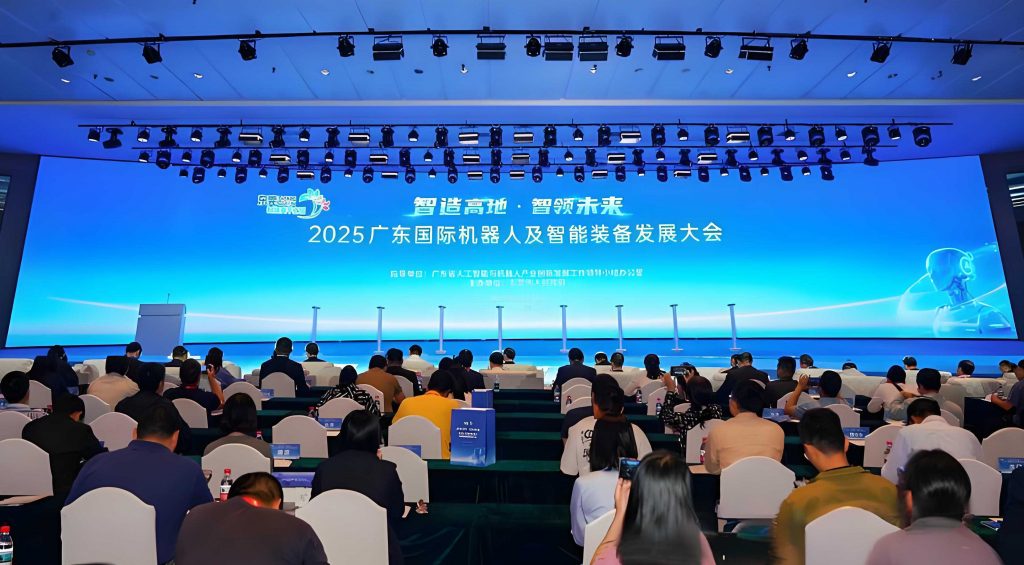
Reflecting on the broader implications, I see the rise of China robots as part of a national strategic imperative. The cultivation of talent from an early age—through robotics education in schools—can sustain long-term innovation. Economically, the robotics industry offers new growth opportunities, with China robots potentially leading in global markets. From a policy perspective, I advocate for increased investment in R&D, perhaps guided by a framework like the “官产学” model mentioned in international contexts, adapted for local needs. This holistic approach will ensure that China robots not only catch up but set benchmarks in firefighting technology.
In conclusion, my exploration reaffirms the transformative role of China robots in enhancing firefighting capabilities. The journey from basic machines to intelligent agents is fraught with challenges, but the progress so far is commendable. As I look ahead, I am confident that with continued collaboration among government, academia, and industry, China robots will achieve world-class standards, making firefighting safer and more efficient. The integration of advanced formulas, such as those for autonomous decision-making: $$ \pi^* = \arg\max_{\pi} \mathbb{E} \left[ \sum_{t} \gamma^t r_t \mid \pi \right] $$ where \( \pi^* \) is the optimal policy and \( \gamma \) a discount factor, will be key to this evolution. Ultimately, the success of China robots will be measured by lives saved and disasters mitigated, a goal worth pursuing with relentless dedication.