
From my perspective as an observer deeply immersed in the technological evolution of our era, the rapid ascent of China’s electronic and robotic sectors represents a transformative force reshaping global industry landscapes. The convergence of information technology and automation, particularly through the proliferation of China robots, is not merely a trend but a fundamental shift in how economies operate and innovate. In this article, I will delve into the intricate dynamics of these industries, drawing from recent developments and data to illustrate their growth trajectories, challenges, and future potentials. I aim to provide a comprehensive analysis that underscores the pivotal role of China robots and electronic advancements, utilizing tables and formulas to encapsulate key metrics and projections. The journey begins with an exploration of the broader electronic information industry, which serves as the backbone for the robotic revolution.
The electronic information industry in China has achieved remarkable milestones, as evidenced by the performance of top enterprises. According to recent assessments, the sector’s sales output is projected to exceed 10 trillion yuan, surpassing earlier five-year plan targets. This growth is driven by a combination of policy support, market expansion, and relentless innovation. To quantify this progress, consider the following table summarizing key indicators for the leading electronics firms, often referred to as the “Top 100.” These enterprises, though representing less than 0.5% of all companies, contribute disproportionately to the industry’s output and profitability.
| Indicator | Value (Latest Assessment) | Growth from Previous Period | Percentage of Industry Total |
|---|---|---|---|
| Main Business Revenue | 2.2 trillion CNY | 12.4% | 23.6% |
| Profit Total | 1194 billion CNY | Over 40% | 28.8% |
| Total Assets | 2.3 trillion CNY | 15% | N/A |
| Entry Threshold | 24.7 billion CNY | 17.6% | N/A |
| R&D Investment | 1051 billion CNY | 5.7% | R&D Intensity: 4.8% (vs. 2.8% industry avg.) |
| Patent Holdings | 157,000 patents | Increase of 24,000 | Over 50% are invention patents |
This data highlights the sector’s robust expansion, with revenue and profit growth outpacing many other industries. The profitability metrics are particularly telling; the sales profit margin for these top firms stands at 5.4%, which is 1 percentage point above the industry average. This margin can be expressed through a simple formula for profit efficiency: $$ \text{Sales Profit Margin} = \frac{\text{Profit Total}}{\text{Main Business Revenue}} \times 100\% $$ Plugging in the values, we get: $$ \text{Margin} = \frac{1194}{2200} \times 100\% \approx 5.4\% $$ This outperformance is not accidental but stems from strategic focus on high-value segments and innovation. Moreover, the asset turnover ratio, a measure of operational efficiency, is 0.9 times, while inventory turnover reaches 11.3 times, indicating effective management practices. These financial health indicators are crucial for sustaining growth, especially as the industry faces challenges like technological dependencies and market volatility.
Transitioning from electronics to automation, the emergence of China robots as a dominant force in global markets is a testament to the country’s industrial ambitions. The robotics sector, often seen as a subset of advanced electronics, has witnessed exponential growth, driven by labor cost pressures, technological advancements, and supportive policies. From my analysis, China’s robot market has evolved from a nascent stage in the early 2000s to becoming the world’s largest by 2013, accounting for one-fifth of global robot purchases. This surge is underpinned by a vision articulated in national plans, aiming for a robot density of over 100 by 2020, alongside fostering internationally competitive enterprises and industrial clusters. To model this growth, we can use an exponential function: $$ R(t) = R_0 \cdot e^{gt} $$ where \( R(t) \) is the robot market size at time \( t \), \( R_0 \) is the initial size, \( g \) is the annual growth rate, and \( t \) is time in years. Assuming a base year of 2013 and a growth rate of 30% per annum, as projected by experts, the market expansion can be projected forward. For instance, by 2020, the market size relative to 2013 would be: $$ R(7) = R_0 \cdot e^{0.30 \times 7} = R_0 \cdot e^{2.1} \approx R_0 \times 8.17 $$ This implies an eightfold increase over seven years, highlighting the rapid scaling anticipated for China robots.
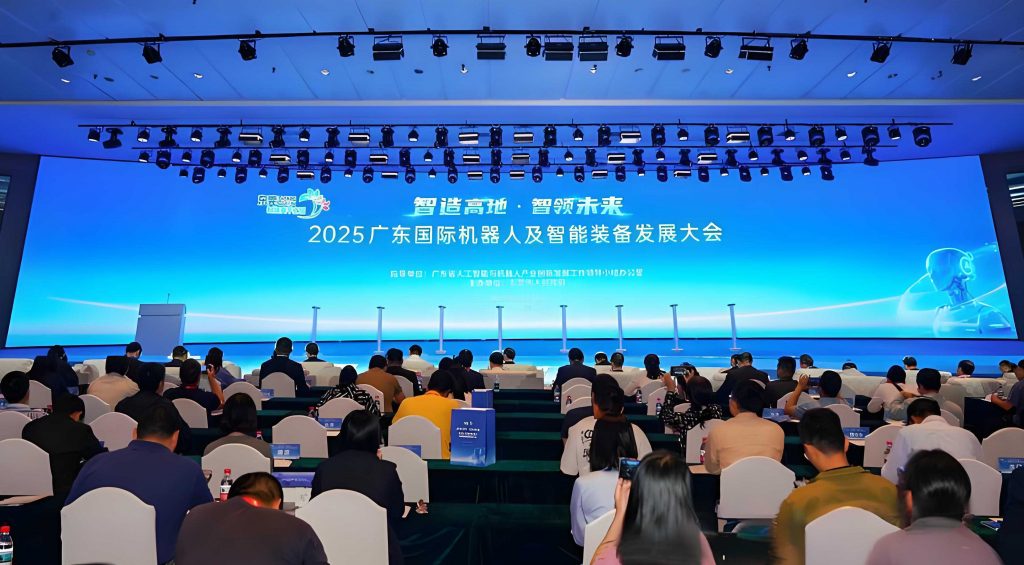
The integration of robotics into various sectors is a key focus, with automation initiatives in industries like automotive, aerospace, and shipbuilding. These applications leverage the synergy between electronic components and robotic systems, enhancing productivity and precision. For example, in automotive manufacturing, China robots are increasingly deployed for tasks such as welding and assembly, driven by advancements in sensors and control algorithms. The economic impact can be assessed through productivity gains, often modeled using Cobb-Douglas production functions: $$ Y = A \cdot K^\alpha \cdot L^\beta $$ where \( Y \) is output, \( A \) is total factor productivity (influenced by technology like robots), \( K \) is capital (including robotic systems), and \( L \) is labor. The adoption of China robots boosts \( A \) and alters the capital-labor ratio, leading to higher efficiency. In many cases, the elasticity of output with respect to capital (\( \alpha \)) increases as robotics become more pervasive, reflecting their role in driving industrial upgrading.
To further illustrate the robotics landscape, consider the following table detailing projected targets and current trends for China robots, based on industry reports and policy directives. This encapsulates the strategic direction and market dynamics shaping the sector.
| Aspect | Target by 2020 | Current Status (Approx.) | Implications |
|---|---|---|---|
| Number of Internationally Competitive Firms | 3 to 5 | Emerging leaders in domestic market | Enhanced global market share for China robots |
| Industrial Clusters | 8 to 10 | Several regions developing hubs | Synergistic innovation and supply chain efficiency |
| Robot Density (per 10,000 workers) | Over 100 | Rapidly increasing from low base | Accelerated automation across manufacturing |
| Market Growth Rate | Sustained high growth | Around 30% annually | Expansion driven by policy and demand for China robots |
| Key Application Sectors | Automotive, aerospace, etc. | Pilot projects in automation | Deepening integration of China robots into core industries |
The innovation engine behind both electronics and robotics is fueled by substantial research and development investments. From my observations, the top electronics firms allocate over 4.8% of their revenue to R&D, significantly above the industry average. This commitment translates into patent outputs, with invention patents comprising more than half of all holdings. Such intellectual property accumulation is critical for reducing external dependencies, a challenge noted in sectors like semiconductors. The relationship between R&D spending and patent generation can be expressed as: $$ P = k \cdot I^d $$ where \( P \) is the number of patents, \( I \) is R&D investment, \( k \) is a constant, and \( d \) is the elasticity of patents to investment. For China’s context, \( d \) tends to be positive and increasing, reflecting improving innovation efficiency. This is pivotal for advancing core technologies, including those underpinning China robots, such as artificial intelligence, machine vision, and precision mechanics.
In the realm of robotics, innovation is accelerating through collaborations between academia, industry, and government. National projects, like the “04 Special Project,” focus on developing key technologies for robotics and数控机床, aiming to elevate the capabilities of China robots. The progress in these areas can be quantified using technology readiness levels (TRLs), but for simplicity, we can model adoption rates with logistic growth functions: $$ A(t) = \frac{K}{1 + e^{-r(t – t_0)}} $$ where \( A(t) \) is the adoption level of robotic technologies at time \( t \), \( K \) is the maximum adoption capacity, \( r \) is the growth rate, and \( t_0 \) is the inflection point. For China robots, \( r \) is influenced by factors like cost reductions and policy incentives, leading to an S-shaped curve that captures the rapid uptake in recent years. This model helps predict when saturation might occur, but given the vast potential in sectors like logistics and services, the ceiling for China robots remains high.
The macroeconomic implications of these technological shifts are profound. As China robots become more ubiquitous, they contribute to structural changes in the labor market and economic output. From a first-person vantage point, I have noted debates on job displacement versus creation, but overall, the net effect tends toward productivity enhancements that drive GDP growth. This can be analyzed through growth accounting frameworks, where robotics contribute to the capital stock and technological progress. For instance, the contribution of robotics to GDP growth (\( g_Y \)) can be decomposed as: $$ g_Y = g_A + \alpha g_K + \beta g_L $$ where \( g_A \) is growth in total factor productivity (boosted by robotics innovation), \( g_K \) is capital growth (including investments in China robots), and \( g_L \) is labor growth. With robotics adoption, \( g_K \) accelerates, and \( g_A \) rises due to efficiency gains, potentially offsetting slower labor growth in an aging population. Empirical estimates suggest that a 1% increase in robot density could lift productivity by 0.3-0.5% in manufacturing, underscoring the economic value of China robots.
Looking ahead, the convergence of electronics and robotics promises new frontiers, such as the Internet of Things (IoT) and smart manufacturing. In these domains, China robots are not isolated machines but interconnected nodes in cyber-physical systems. The data generated by these systems can be leveraged for predictive maintenance and optimization, using algorithms like machine learning models. For example, the performance of a robotic arm might be monitored in real-time, with anomaly detection based on sensor data. This can be modeled using statistical process control: $$ \text{Control Limits} = \mu \pm 3\sigma $$ where \( \mu \) is the mean performance metric and \( \sigma \) is the standard deviation. Deviations beyond these limits signal potential failures, enabling proactive interventions. Such applications highlight how China robots are evolving from mere tools to intelligent agents within broader digital ecosystems.
To encapsulate the synergy between electronics and robotics, consider another table comparing key metrics across both sectors, emphasizing their interlinkages and collective impact on China’s technological ascent.
| Metric | Electronics Sector (Top 100 Firms) | Robotics Sector (Projected for China Robots) | Convergence Potential |
|---|---|---|---|
| Revenue Growth Rate | 12.4% annually | ~30% annually | Accelerated by embedded electronics in robots |
| R&D Intensity | 4.8% of revenue | Increasing, driven by innovation needs | Shared technologies (e.g., sensors, chips) |
| Export Contribution | 10% of industry total | Growing global market share | China robots as export commodities |
| Employment Impact | High-skilled jobs in R&D | Mixed: displacement in manual tasks, creation in tech roles | Reskilling initiatives to leverage both sectors |
| Policy Support | Five-year plans and incentives | Specific robotics initiatives and funding | Integrated strategies for industrial upgrading |
In my analysis, the challenges facing these industries cannot be overlooked. For electronics, issues like reliance on foreign technologies for key components (e.g., semiconductors) pose risks to supply chain resilience. Similarly, for China robots, achieving international competitiveness requires breakthroughs in core technologies and brand building. The dependency ratio can be quantified as: $$ \text{Dependency} = \frac{\text{Imported Critical Components}}{\text{Total Component Usage}} \times 100\% $$ Reducing this ratio is a priority, driven by domestic innovation and strategic investments. Moreover, market volatility, as seen in stock valuations for robotics companies, introduces uncertainties. The price-earnings (P/E) ratios for some firms have soared, reflecting optimism but also potential bubbles. This can be assessed using valuation models: $$ \text{P/E} = \frac{\text{Stock Price}}{\text{Earnings per Share}} $$ When P/E ratios exceed fundamental growth prospects, caution is warranted, even as the long-term outlook for China robots remains bullish.
The environmental and social dimensions also merit attention. As China robots proliferate, their energy efficiency and carbon footprint become critical. Lifecycle assessments can be applied: $$ \text{Carbon Emissions} = \sum (\text{Energy Use per Phase} \times \text{Emission Factor}) $$ across manufacturing, operation, and disposal phases. Innovations in green robotics, such as energy-efficient actuators, are emerging to address these concerns. From a social perspective, the adoption of China robots must be accompanied by policies for workforce transition, ensuring that the benefits of automation are broadly shared. This aligns with broader goals of sustainable development, where technology serves as an enabler rather than a disruptor.
In conclusion, the journey of China’s electronic and robotic sectors is a compelling narrative of ambition, innovation, and transformation. Through first-person reflection, I have endeavored to capture the essence of this evolution, emphasizing the pivotal role of China robots in shaping the future. The data, tables, and formulas presented herein underscore the quantitative underpinnings of this progress, from revenue growth and R&D investments to market projections and productivity gains. As these industries continue to advance, their integration will likely spawn new paradigms, such as fully automated smart factories and AI-driven service robots. The path forward involves navigating challenges with resilience, leveraging strengths like a vast domestic market, and fostering collaboration across borders. Ultimately, the rise of China robots and electronic technologies is not just a national story but a global one, influencing how humanity interacts with machines and data in the decades to come.
To further elaborate on the mathematical foundations, consider additional formulas that model innovation diffusion and economic impact. For instance, the Bass diffusion model can be applied to the adoption of China robots: $$ N(t) = p \cdot m + (q – p) \cdot \int_0^t N(\tau) d\tau – \frac{q}{m} \left( \int_0^t N(\tau) d\tau \right)^2 $$ where \( N(t) \) is the number of adopters at time \( t \), \( m \) is the market potential, \( p \) is the coefficient of innovation, and \( q \) is the coefficient of imitation. For China robots, \( p \) and \( q \) are likely high due to policy pushes and network effects, leading to rapid uptake. Similarly, input-output analysis can gauge the ripple effects: $$ \Delta X = (I – A)^{-1} \cdot \Delta F $$ where \( \Delta X \) is the change in total output, \( I \) is the identity matrix, \( A \) is the technical coefficient matrix, and \( \Delta F \) is the change in final demand from robotics investments. This highlights the multiplier effects as China robots stimulate upstream and downstream sectors.
In summary, the narrative of China’s technological ascent is richly documented through metrics and models, all pointing toward a future where electronics and robotics are inextricably linked. As I reflect on this journey, the emphasis on China robots serves as a beacon for innovation, driving progress across industries and borders. The continuous evolution of these sectors will undoubtedly yield new insights and opportunities, reinforcing China’s position on the global stage. Through sustained effort and strategic vision, the promise of a robotic era, powered by advanced electronics, is steadily becoming a reality.