
- August Frenzy: A Showcase of Humanoid Robot Advancements
August 2025 has been designated as China’s month of robotics, marked by a series of high-profile events that underscore the rapid evolution of the humanoid robot sector. On August 18 at 8:20 AM, Zhiyuan’s full-scale humanoid robot, known as A2, successfully completed a 24-hour autonomous walk in Shanghai. This feat was achieved through hot-swappable battery replacements, with no remote intervention, as the humanoid robot navigated obstacles and planned paths independently. The primary goal of this demonstration was to validate the stability, environmental adaptability, and hardware reliability of humanoid robots in practical scenarios. According to Wang Chuang, General Manager of Zhiyuan Robot’s General Business Department, this unprecedented test provided comprehensive insights into the humanoid robot’s performance under varying conditions, including daytime, nighttime, and unexpected human interactions, while also pushing the limits of its capabilities in high-temperature environments.
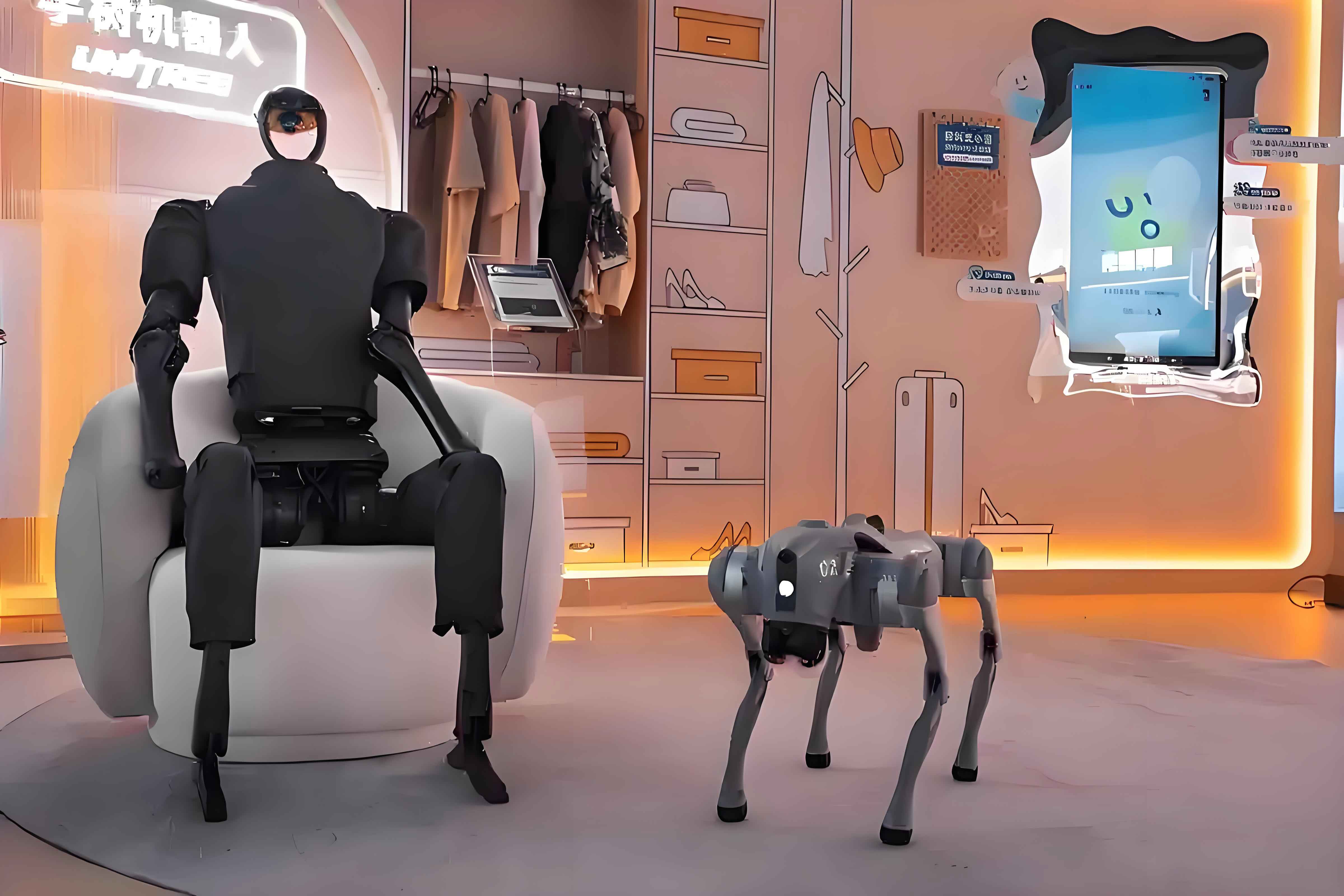
Just a day earlier, from August 15 to 17, the World Humanoid Robot Sports Games took place in Beijing, featuring 127 brands competing in 26 events, including 1,500-meter races and gymnastics, across 487 matches. These humanoid robots demonstrated abilities such as running and dancing, though incidents of falls and collisions highlighted the ongoing challenges in the field. This event served as a microcosm of the intense competition within China’s humanoid robot industry, showcasing both progress and areas needing improvement. Preceding this, the World Robot Conference held from August 8 to 12 attracted 169 global enterprises, which presented over 100 new products. For instance, Dobot Atom II, a next-generation embodied intelligent humanoid robot from Yuejiang, displayed dual-brain decision-making and coordinated arm movements, with its left hand tightening mechanical arm bearings to a precision of 0.1 millimeters while the right hand sorted components into six-compartment bins simultaneously.
- Key Players and Strategic Shifts in Humanoid Robot Development
Companies like Yuejiang Robotics have transitioned from traditional industrial robotics to the humanoid robot domain, a move initiated in 2023 driven by breakthroughs in AI models that enhance control, cognition, and interaction capabilities. Lang Xulin, Chief Scientist at Yuejiang, emphasized that this shift represents an evolution toward more complex systems rather than a mere change in track. While industrial robots excel in precise repetition, humanoid robots must address higher-level challenges such as perception, cognition, and generalization. Similarly, other firms such as Junpu Intelligent, which developed the humanoid robot Jarvis, and Xiaomi Group, a global Fortune 500 company diversifying into smartphones and automobiles, have seamlessly entered the humanoid robot arena. These transitions have catalyzed a significant migration of talent from sectors like internet technology, consumer electronics, and home appliances, forming a core advantage for China’s humanoid robot ecosystem.
Shao Tianlan, CEO of Mech-Mind Robotics, estimated that over 200 new upstream and downstream companies have emerged in the robotics sector in recent years, with the current workforce exceeding 200,000 professionals. However, given the immaturity of humanoid robot technology and the relatively small market size, the industry cannot rely solely on internally cultivated talent. Instead, it draws extensively from pools of engineers and software developers nurtured in other high-tech fields. This rapid influx of expertise is unparalleled; Shao noted that the concentration of hundreds of thousands of engineering talents entering a new industry almost instantaneously is a phenomenon difficult to imagine in other countries, underscoring China’s unique position in the global humanoid robot landscape.
- Global Context: China’s Competitive Edge in Humanoid Robotics
Globally, only a handful of nations—including China, the United States, Germany, and Japan—possess the robust manufacturing foundations in automotive and家电 industries necessary for humanoid robot development. Moreover, countries with abundant software engineering talent are even scarcer. The humanoid robot industry demands a tight integration of hardware and software capabilities, and China’s high density of skilled professionals provides a distinct advantage. Shao Tianlan observed that while the United States remains a formidable competitor, with companies like Tesla developing the Optimus humanoid robot and startups such as Figure AI planning increased production in 2025, China has the potential to lead in certain segments. He pointed out that Chinese firms already hold strong positions in specific robot categories, such as lawn mowers, vacuum cleaners, drones, and dog-shaped robots, and that the humanoid robot sector could follow suit.
Wang Chuang of Zhiyuan expressed confidence in China’s eventual dominance in the humanoid robot race, citing historical precedents in hardware competitions like lidar and drones where international players struggled to match Chinese enterprises. Although Chinese algorithms for humanoid robots may currently lag, the rapid pace of domestic innovation, combined with superior supply chain efficiency and cost-effectiveness, accelerates iteration cycles. Wang emphasized that if foreign humanoid robot hardware remains expensive and unstable, it will hinder algorithmic progress, whereas China’s collaborative supply network allows for faster refinement and deployment of humanoid robot technologies.
- Market Trajectory: From Industrial Applications to Household Integration
The adoption pathway for humanoid robots is widely acknowledged as “first to work, then to home.” Lang Xulin of Yuejiang highlighted that the immediate focus for humanoid robot companies is not on creating products that mimic humans perfectly but on deploying them quickly in functional roles. Initial applications are expected in low-speed, high-frequency, and essential scenarios such as搬运, retail guidance, and facility inspections, where tasks are well-defined and environments controlled. This approach allows for gradual technological maturation. Looking ahead, the home market represents a billion-dollar opportunity for humanoid robots, but the transition from factories to households hinges on overcoming barriers related to safety, affordability, and comprehensive service systems. Xie Kaixuan, Marketing Director at Yuejiang, projected that within the next decade, humanoid robots could become as commonplace in homes as refrigerators and washing are today, though this requires addressing non-technical factors like user trust and accessibility.
China’s dominance in the industrial robot market bolsters optimistic forecasts for humanoid robots. According to International Federation of Robotics President Ito Takayuki, global installations of industrial robots declined by 3% in 2024, with drops of 2% in Asia, 6% in Europe, and 9% in the Americas. In contrast, China saw a 5% increase, raising its share of global deployments from 51% in 2023 to 54% in 2024. This means over half of the world’s industrial robots are utilized in Chinese factories for industries like automotive and consumer electronics—sectors that are also prime candidates for humanoid robot integration. The synergy between existing industrial automation and emerging humanoid robot applications creates a fertile ground for growth, as these industries demand versatile machines capable of handling complex tasks.
- Capital Influx and Innovation Acceleration in Humanoid Robot Sector
Venture capital has played a crucial role in fueling China’s humanoid robot innovation. Data from IT Juzi indicates that in the first five months of 2025 alone, robotics-related financing in China reached 23.2 billion yuan, surpassing the total of 20.9 billion yuan for the entire year of 2024. This surge in investment reflects growing confidence in the humanoid robot industry’s potential, attracting resources to both整机 manufacturers and component suppliers. Wang Xingxing, CEO of Yushu Robotics, reported that the sector experienced average growth rates of 50% to 100% in the first half of 2025, driven by industry enthusiasm and policy support. Such capital infusion enables rapid scaling of research and development, production capacity, and market expansion for humanoid robot ventures, further consolidating China’s position as a hub for robotic innovation.
The convergence of talent, capital, and supply chain advantages is accelerating progress in humanoid robot technology. Although current humanoid robots are primarily task-specific and far from achieving true multi-purpose functionality, the industry is poised for breakthroughs. Wang Xingxing noted that while hardware for humanoid robots is now marginally sufficient, the main hurdle lies in the inadequacy of robot large models or embodied intelligence. He compared the current state to the pre-ChatGPT era, where the direction and technical路线 were identified but not yet fully realized. This suggests that the next leap in humanoid robot capabilities may be imminent, potentially transforming how these machines interact with and adapt to dynamic environments.
- Future Outlook: Challenges and Opportunities for Humanoid Robot Evolution
Despite the optimistic trends, the humanoid robot industry faces significant challenges, particularly in advancing artificial intelligence and ensuring practical reliability. The emphasis remains on developing robust algorithms that can handle real-world unpredictability, which is essential for expanding the applications of humanoid robots beyond controlled settings. Companies are investing heavily in AI research to enhance the cognitive abilities of humanoid robots, aiming for seamless human-robot collaboration. As the technology matures, the focus will shift toward standardization, safety protocols, and cost reduction to facilitate widespread adoption. The journey from specialized industrial tools to household companions for humanoid robots will require continuous innovation, but the current momentum in China’s ecosystem suggests a promising trajectory toward global leadership in this transformative field.
In summary, the humanoid robot industry in China is experiencing unprecedented growth, fueled by a combination of strategic corporate shifts, abundant talent, vigorous capital investment, and a supportive market environment. Events like the 24-hour walk by Zhiyuan’s A2 humanoid robot, the World Humanoid Robot Sports Games, and the World Robot Conference have highlighted both the achievements and the ongoing evolution of humanoid robot capabilities. With a clear pathway from industrial deployment to home integration, and backed by China’s manufacturing prowess and engineering density, the humanoid robot sector is set to play a pivotal role in the future of automation. As technological barriers are gradually overcome, humanoid robots may soon become integral to daily life, mirroring the proliferation of earlier technological revolutions.