
In recent years, the rapid advancement of artificial intelligence technologies, particularly large-scale models, has significantly reduced the complexity of developing humanoid robots. This progress aligns with strategic national initiatives, such as those outlined in development plans, which emphasize the importance of integrating humanoid robots into key sectors like logistics. As an observer and participant in this technological evolution, I believe that humanoid robots are poised to revolutionize the logistics industry by addressing critical challenges in efficiency, cost, and labor shortages. This article explores the transformative potential of humanoid robots in logistics, focusing on their ability to enhance operations in the “last mile” and “last hundred meters,” reduce operational expenses, and foster collaborative growth through innovation and data integration.
The logistics sector has long relied on automation to streamline processes, but traditional robots, such as Automated Guided Vehicles (AGVs) and Autonomous Mobile Robots (AMRs), have limitations. These systems often lack the versatility to handle complex tasks like navigating stairs or manipulating irregularly shaped items, which are common in urban delivery and warehouse environments. Humanoid robots, with their bipedal design and advanced sensory capabilities, can overcome these hurdles. For instance, they can efficiently sort parcels, perform non-contact deliveries, and provide real-time door-to-door services, thereby meeting the growing demand for rapid and reliable logistics solutions. The following sections delve into the specific changes and opportunities brought by humanoid robots, supported by analytical models, cost comparisons, and strategic pathways for integration.
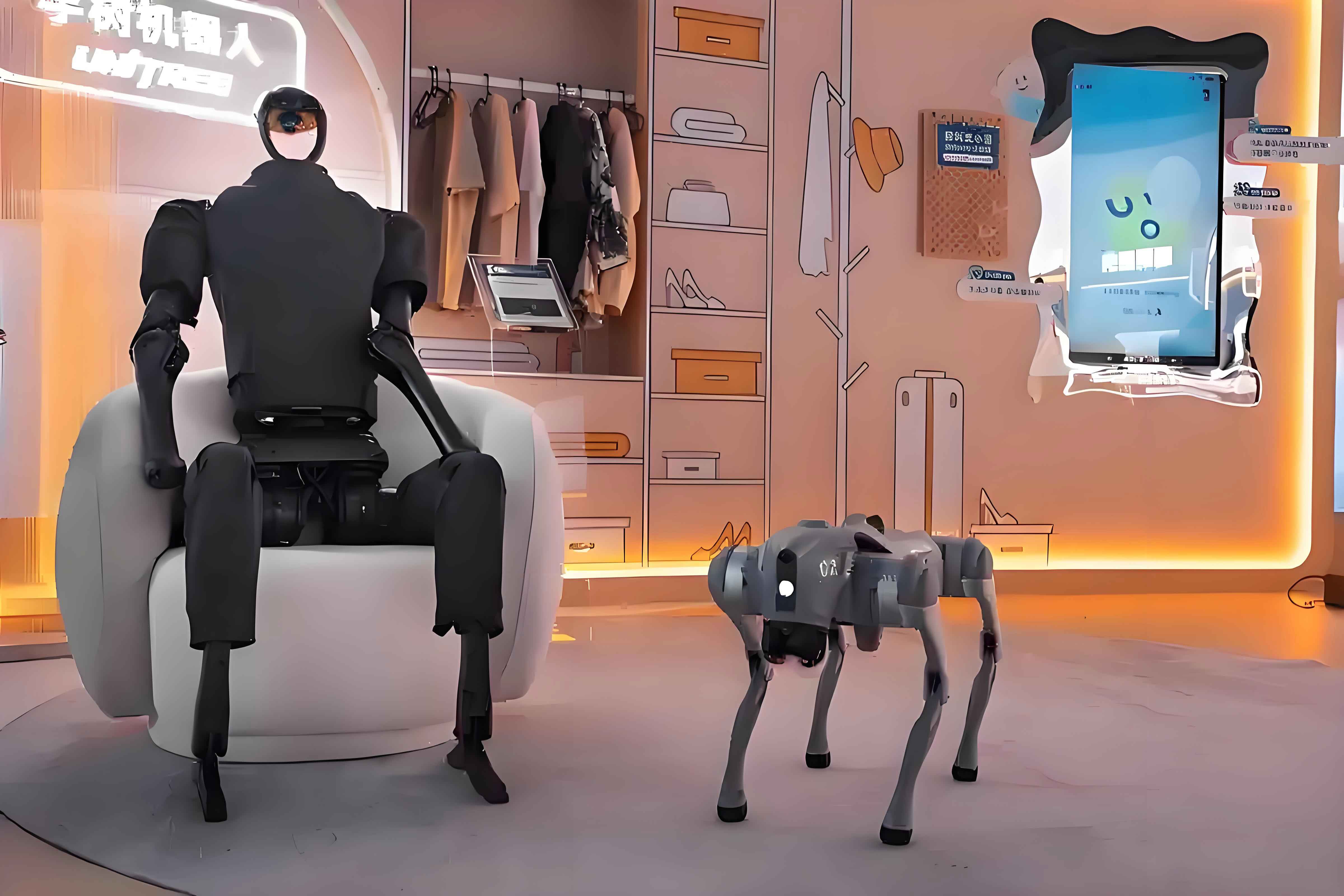
One of the most pressing issues in logistics is the “last mile” delivery, which involves transporting goods from distribution centers to end-users. This phase is characterized by high frequency, small batch sizes, and diverse product types, making it labor-intensive and costly. Humanoid robots can transform this segment by leveraging their human-like mobility and dexterity. For example, they can climb stairs in older residential buildings to deliver packages directly to doors, a task that wheeled robots struggle with. Moreover, in warehouse settings, humanoid robots can use their articulated limbs to place items on shelves of varying heights, overcoming the constraints of fixed robotic arms. The efficiency gains from using humanoid robots can be quantified using productivity models. Consider a scenario where a humanoid robot handles sorting and delivery tasks: the throughput rate can be expressed as $$ \text{Throughput} = \frac{N}{T} $$ where \( N \) is the number of items processed and \( T \) is the time taken. With humanoid robots, \( T \) decreases due to their ability to perform multiple tasks concurrently, leading to higher throughput.
To illustrate the advantages of humanoid robots over existing systems, the table below compares key features of AGVs, AMRs, and humanoid robots in logistics applications:
| Robot Type | Mobility | Task Flexibility | Cost per Hour (USD) | Suitability for Stairs |
|---|---|---|---|---|
| AGV | Fixed paths | Low | 5-7 | No |
| AMR | Dynamic navigation | Medium | 8-10 | No |
| Humanoid Robot | Bipedal, adaptive | High | 2-3 (projected) | Yes |
As shown, humanoid robots offer superior flexibility and mobility, which directly addresses the inefficiencies in current logistics operations. The declining cost of humanoid robots, driven by advancements in AI and mass production, further enhances their appeal. For instance, the operational cost of humanoid robots is expected to drop to $2–3 per hour, compared to human labor costs that often exceed $4 per hour in many regions. This cost advantage can be modeled using a simple equation: $$ \text{Total Cost} = C_f + C_v \times H $$ where \( C_f \) is the fixed cost of the robot, \( C_v \) is the variable cost per hour, and \( H \) is the operational hours. As production scales, \( C_f \) decreases, making humanoid robots a cost-effective solution for logistics enterprises.
The growth in e-commerce and parcel delivery volumes has intensified the demand for efficient logistics solutions. In many countries, annual parcel volumes have surpassed hundreds of billions, with peaks during promotional events like holiday seasons. This volatility strains human resources, leading to delays and increased costs. Humanoid robots can mitigate these issues by providing consistent performance regardless of demand fluctuations. Additionally, the rise in health-conscious behaviors has spurred demand for non-contact delivery options, which humanoid robots can fulfill through automated, hygienic processes. The integration of humanoid robots into logistics networks also aligns with broader trends in smart city development, where data-driven systems optimize resource allocation. For example, humanoid robots equipped with sensors can collect real-time data on traffic conditions, warehouse occupancy, and delivery routes, enabling predictive analytics for better decision-making.
Another critical factor driving the adoption of humanoid robots is the demographic shift towards aging populations and declining birth rates, resulting in labor shortages. In logistics, this is particularly evident in roles involving sorting, loading, and delivery. Humanoid robots can fill this gap by performing repetitive and physically demanding tasks, thereby reducing reliance on human workers. The economic impact can be significant; for instance, replacing a portion of the workforce with humanoid robots could save billions in labor costs annually. To quantify this, consider the following cost-benefit analysis table based on hypothetical data for a mid-sized logistics company:
| Scenario | Human Labor Cost (USD/year) | Humanoid Robot Cost (USD/year) | Net Savings (USD/year) |
|---|---|---|---|
| Current Operation | 500,000 | N/A | N/A |
| Partial Automation | 300,000 | 150,000 | 50,000 |
| Full Automation | 0 | 200,000 | 300,000 |
This table demonstrates how incremental adoption of humanoid robots can lead to substantial cost reductions. Furthermore, the efficiency of humanoid robots can be expressed using a productivity index: $$ \text{Productivity Index} = \frac{\text{Output}}{\text{Input}} = \frac{\text{Items Handled}}{\text{Time} \times \text{Cost}} $$ where higher values indicate better performance. Humanoid robots, with their ability to work continuously and adapt to dynamic environments, typically achieve higher productivity indices compared to traditional systems.
The development and deployment of humanoid robots in logistics require collaborative efforts across multiple stakeholders. Innovation in this field hinges on data sharing and joint research initiatives. For example, logistics companies can provide real-world scenarios for training humanoid robots, while manufacturers refine designs based on feedback. This synergy can accelerate the maturation of humanoid robot technologies, leading to faster commercialization. Additionally, partnerships with academic institutions can foster talent development and cutting-edge research, ensuring that the next generation of engineers and technicians is equipped to handle the complexities of humanoid robotics. Governments can also play a role by integrating humanoid robot data into public infrastructure systems, such as smart traffic networks, to enhance overall efficiency.
Looking ahead, the potential market for humanoid robots in logistics is enormous. With thousands of distribution centers and millions of delivery points globally, even basic adoption could drive demand for hundreds of thousands of units. The scalability of humanoid robots makes them suitable for various applications, from urban delivery to rural logistics. As AI continues to evolve, humanoid robots will become more autonomous and capable of handling complex decision-making processes. For instance, they could use machine learning algorithms to optimize routes in real-time, minimizing delivery times and energy consumption. The future of logistics with humanoid robots promises not only cost savings but also enhanced service quality, sustainability, and resilience.
In conclusion, humanoid robots represent a paradigm shift in the logistics industry, offering solutions to longstanding challenges in efficiency, cost, and labor. By embracing collaborative innovation, data-driven strategies, and interdisciplinary partnerships, logistics enterprises can harness the full potential of humanoid robots. This transformation will not only elevate operational standards but also contribute to the broader goals of technological advancement and economic growth. As we move forward, the integration of humanoid robots into logistics will undoubtedly redefine the landscape, making it more adaptive, intelligent, and responsive to future demands.