
The narrative of China’s industrial modernization is increasingly being written by its machines, specifically, by the rapid and strategic development of its robotics sector. The journey of China robots is not merely a tale of technological adoption but a compelling saga of national strategy, persistent challenges, and a determined pivot towards sovereign capability. I have observed this evolution from its nascent stages, where the concept was foreign and the technology out of reach, to the current dynamic landscape where domestic champions are reshaping global supply chains and redefining automation possibilities. The imperative for China to develop its own robotics ecosystem was clear from the beginning—it was, and remains, a cornerstone for securing economic independence and technological leadership.
The foundational steps for China robots were taken during the nation’s early scientific and technological campaigns. State-backed initiatives provided the essential seedbed for research and demonstration, creating the initial pool of knowledge and expertise. This phase was characterized by learning, reverse-engineering, and understanding core principles. The strategic approach often involved using major national engineering projects as testbeds to drive research and development, a method that accelerated practical understanding. This period laid the groundwork, proving that the nation not only needed robotic technology but also possessed the will to cultivate its own industry. The emergence of initial competitive entities marked the transition from pure research to applied engineering.
| Phase | Primary Driver | Key Characteristic | Industry Focus |
|---|---|---|---|
| Foundational (1980s-1990s) | National R&D Plans & Demonstration Projects | Technology Absorption, Prototype Development | Heavy Industry, Academic Research |
| Growth & Application (2000s-2010s) | Automotive Industry Boom, “Copy-to-Learn” | System Integration, Foreign Collaboration | Automotive Manufacturing, Welding, Handling |
| Innovation & Expansion (2010s-Present) | National Strategic Plans (e.g., Made in China 2025), Market Demand | Core Technology Breakthroughs, New Application Fields | Electronics, New Energy, Logistics, Services |
The heart of the modern advancement in China robots lies in the relentless pursuit of autonomous innovation. Moving beyond assembly and integration, the focus has sharply turned to mastering core technologies: precision reducers, servo systems, controllers, and sophisticated application software. This drive is fueled by the understanding that true competitiveness and security of supply cannot be outsourced. The performance of a robotic system can be fundamentally expressed through its kinematics, accuracy, and repeatability. For instance, the positioning accuracy of a robot arm, a critical metric for China robots in high-precision manufacturing, is often a function of its mechanical design, control algorithms, and component quality. A simplified model for the error at the end-effector can be represented as a composite of various factors:
$$
\Delta P = f(\Delta \Theta_{gear}, \Delta L_{therm}, \epsilon_{control}, \delta_{calib})
$$
Where $\Delta P$ is the total positional error, $\Delta \Theta_{gear}$ is backlash and error from the reducer, $\Delta L_{therm}$ is thermal expansion-induced error, $\epsilon_{control}$ is the control system tracking error, and $\delta_{calib}$ is calibration residual error. Mastering the minimization of each term in this equation represents a significant battlefield for domestic robotics companies.
The application breadth of China robots has exploded, moving far beyond the traditional stronghold of automotive welding. Today, they are indispensable in electronics assembly, photovoltaic panel handling, logistics sorting, and even in custom-tailored chemical processing lines. This expansion is not accidental but a direct result of targeted R&D to solve industry-specific problems. For example, the demand in consumer electronics for high-speed, ultra-clean, and delicate handling spawned an entirely new class of cleanroom robots. These machines operate in environments where even microscopic particulates are catastrophic, requiring special materials, sealed designs, and smooth, laminar-flow-friendly motion profiles. The development trajectory here mirrors the broader arc: initial reliance on foreign technology, followed by intense domestic development to capture the market and drive down costs.
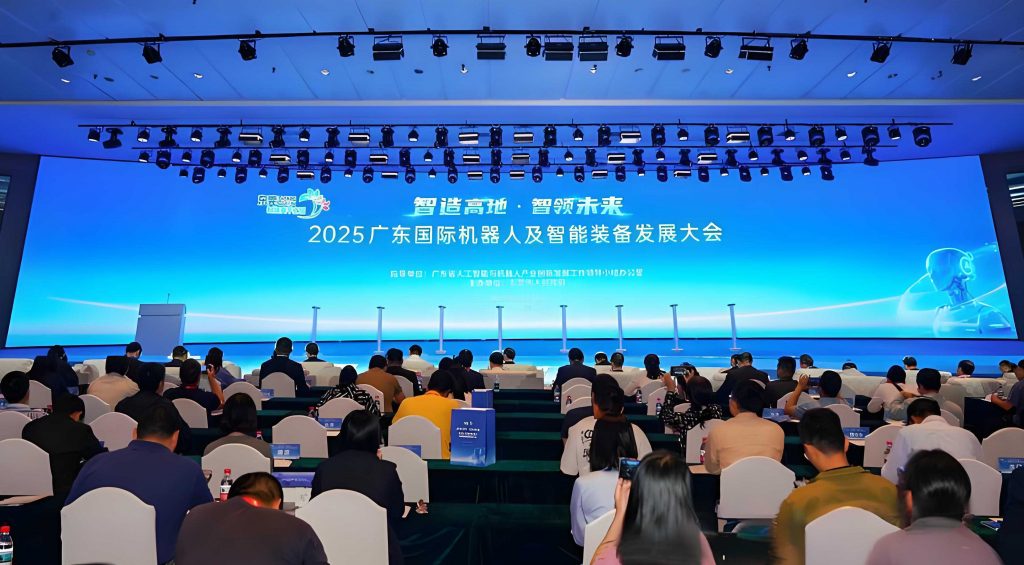
However, the path for China robots has been and continues to be fraught with significant challenges. The initial and most persistent hurdle has been the industry’s heavy reliance on imported core components, particularly high-precision speed reducers and servo motors. This dependency created a cost structure that made domestic robots less competitive against established international brands and stifled the scalability of the industry. Furthermore, the market was characterized by highly customized, low-volume projects. Each installation was a unique engineering feat, leading to long lead times, high costs, and difficulties in ensuring consistent reliability and quality—the antithesis of scalable industrialization.
| Challenge Category | Specific Issue | Strategic Response & Progress |
|---|---|---|
| Supply Chain & Cost | Dependence on imported core components (e.g., reducers, servos). | National R&D projects; emergence of domestic component manufacturers (e.g., Nantong, Zhejiang); gradual performance improvement and cost reduction. |
| High system cost limiting market adoption. | Economies of scale from growing production; vertical integration by leading robot makers; competitive pricing strategies. | |
| Industrialization & Standardization | Customized, low-volume projects hindering scale. | Push towards modular and standardized robot cell designs; development of general-purpose robot models. |
| Lack of strong, independent system integrators. | Growth of specialized integration companies; training programs to build integrator ecosystem. | |
| Market & Application | Perceived reliability gap vs. international brands. | Continuous quality improvement; long-term warranty and support packages; demonstration projects in flagship enterprises. |
| Talent & Innovation | Shortage of high-end R&D and application engineers. | Increased university programs; collaboration between academia and industry; attracting global talent. |
The international landscape also plays a crucial role in shaping the development of China robots. Global leaders initially entered the Chinese market primarily as technology exporters and system suppliers. Their presence, however, served as both a benchmark and a training ground for local engineers and enterprises. Over time, as the strategic importance of the market became undeniable, these foreign firms shifted tactics. Many established local production facilities, not only to reduce costs and lead times but also to better integrate into the local ecosystem and preempt the rise of domestic competitors. This move created a complex, competitive environment where China robots must compete on technology, price, service, and deep understanding of local industry pain points simultaneously. The competitive dynamic is no longer just “foreign vs. local” but increasingly involves domestic firms competing with each other and with the localized operations of global giants.
Looking forward, the future trajectory of China robots is inextricably linked to broader technological megatrends. The integration of artificial intelligence, particularly machine vision and adaptive learning, is transforming robots from pre-programmed, repetitive machines into flexible, perceptive collaborators. The rise of collaborative robots (cobots) that can work safely alongside humans opens vast new application spaces in small and medium-sized enterprises (SMEs), which were previously locked out of automation due to cost and complexity. Furthermore, the expansion into non-industrial sectors—such as healthcare, agriculture, and services—represents the next frontier. The core technologies honed in industrial settings are being adapted for delicate surgical procedures, autonomous harvesting, and customer interaction.
$$
\text{Future Capability} = \text{Core Mechatronics} \times \text{AI Perception} \times \text{Connectivity (5G/IoT)}
$$
This multiplicative relationship suggests that the value of China robots will grow exponentially as these domains converge. The establishment of local R&D centers for core technologies like motion control and AI by both domestic and international firms underscores China’s role as a primary battlefield for the future of robotics. The government’s continued strategic support through initiatives like “Made in China 2025” provides a stable policy environment and directional guidance for long-term investment.
| Application Frontier | Technical Requirements | Key Challenges for China Robots | Potential Impact |
|---|---|---|---|
| Advanced Electronics Manufacturing (e.g., Chip Packaging) | Nanometer-level precision, ultra-clean environment, micro-force sensing. | Extreme precision components, vibration dampening, material science for cleanrooms. | Enabling sovereignty in semiconductor supply chain. |
| Smart Logistics & Warehousing | Navigation in dynamic environments, multi-robot coordination, high-speed sorting. | Robust SLAM algorithms, fleet management software, cost-effective mobile platforms. | Revolutionizing e-commerce and supply chain efficiency. |
| Medical & Healthcare Robotics | Safety, dexterity, human-robot interaction, compliance with medical standards. | High-reliability design, compliant actuator technology, regulatory approval processes. | Improving surgical outcomes and assisting rehabilitation. |
| New Energy (Battery Manufacturing, Solar) | Handling of large, delicate formats; operation in specific chemical environments. | Custom end-effector design, corrosion-resistant materials, integration with process lines. | Scaling up production for the green energy transition. |
In conclusion, the story of China robots is a powerful testament to a nation’s systematic pursuit of industrial and technological self-reliance. From cautious beginnings grounded in state-sponsored research to today’s vibrant, competitive, and innovative market, the sector has navigated complex challenges related to technology, supply chains, and market acceptance. The drive for autonomous innovation is now the dominant theme, powering advancements from core components to cutting-edge AI integration. The future will be defined by how effectively these China robots can move beyond their industrial roots to become intelligent, ubiquitous partners in every aspect of economic and social life. Their continued evolution is not just about automating tasks; it is about fundamentally augmenting human capability and shaping the next chapter of global manufacturing and beyond.