
From the silent, soaring arc of a launch vehicle against the blackness of space to the delicate, precise pinch of a robotic hand, a quiet revolution is underway. Its foundation is not in lines of code or megawatt engines, but in the molecular architecture of threads finer than a human hair. As a researcher observing these trends, I am consistently amazed by the transformative power of advanced fiber materials. What began as a quest for stronger, lighter materials for aerospace has evolved into a foundational technology enabling breakthroughs across robotics, medicine, and sustainable engineering. This essay explores the paradigm shift driven by high-performance fibers, with a particular focus on their critical and evolving role in the most complex of machines: the humanoid robot.
The recent feasibility approval for a commercial launch vehicle with a primary structure almost entirely built from carbon fiber reinforced polymer (CFRP) marks a significant inflection point. The claimed mass reduction of over 30% compared to traditional metallic alloys is not merely an incremental improvement; it represents a fundamental change in design philosophy. The governing equation for a rocket’s performance, the Tsiolkovsky rocket equation, illuminates why this is so revolutionary:
$$ \Delta v = I_{sp} \cdot g_0 \cdot \ln\left(\frac{m_0}{m_f}\right) $$
Here, $\Delta v$ is the change in velocity, $I_{sp}$ is the specific impulse of the engine, $g_0$ is standard gravity, $m_0$ is the initial total mass, and $m_f$ is the final mass (dry mass plus remaining propellant). A reduction in the vehicle’s structural dry mass ($m_f$) directly and exponentially increases the achievable $\Delta v$ for a given amount of propellant, or conversely, allows for a smaller, more efficient vehicle to achieve the same mission. This is the “material-driven” aspect of the new aerospace era. But the implications of this material science victory extend far beyond the launch pad.
This convergence is perfectly encapsulated by the recognition of high-performance carbon fiber composites as one of the top ten global engineering achievements. Such accolades highlight criteria beyond pure strength-to-weight ratio: systemic innovation, the direction of new quality productive forces, and the ability to address global challenges. The applications are a testament to this versatility, as summarized below:
| Application Domain | Fiber Type | Key Property Leveraged | Impact |
|---|---|---|---|
| Aerospace Structures | Carbon Fiber | Specific Stiffness & Strength, Fatigue Resistance | ~30% mass reduction, increased payload, fuel efficiency |
| Ballistic Textiles | Aramid, Ultra-High Molecular Weight Polyethylene (UHMWPE) | High Energy Absorption, Tensile Strength | Lightweight personal and vehicle armor |
| Marine & Offshore | Carbon, Aramid, HMPE | Corrosion Resistance, Strength, Low Density | Lightweight hulls, deep-sea risers, mooring lines |
| Industrial Textiles | High-Strength Nylon, Polyester | Tear Strength, Weather Resistance | Long-lasting banners, architectural membranes, parachutes |
The development of specialized nylon 66 microfilament yarns for large, aerial parade banners is a prime example of a “spin-off” application. The requirements—extreme tear strength, minimal weight, and resistance to dynamic aerodynamic loads—mirror aerospace challenges. The solution, a finely engineered polymer fiber, resulted in a product with multi-fold improvements in key performance metrics, demonstrating how the pursuit of extreme performance in one field creates scalable solutions for others.
The Nexus: Advanced Fibers and the Embodied Intelligence of the Humanoid Robot
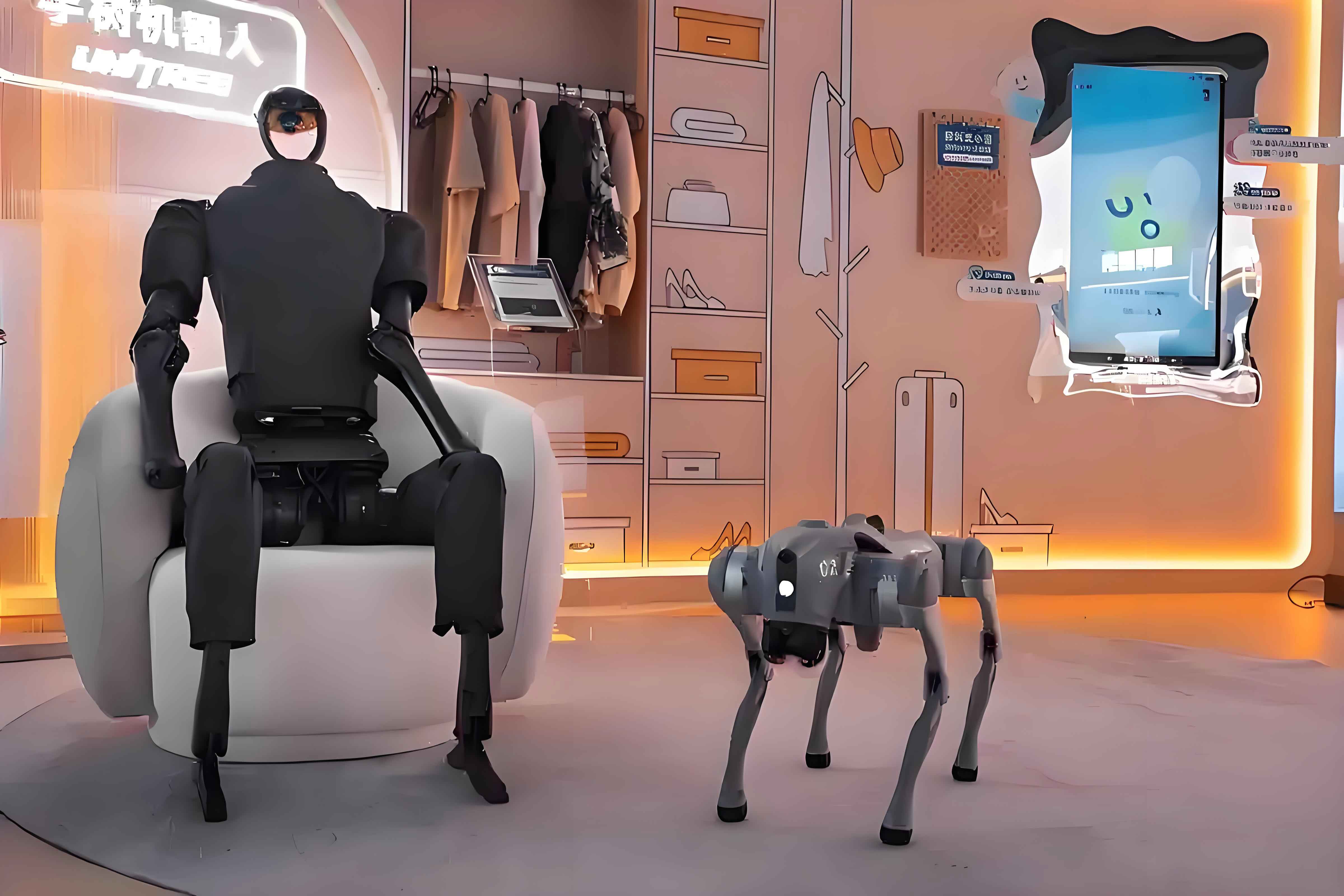
Nowhere is the multi-disciplinary demand for advanced fibers more concentrated than in the field of humanoid robotics. A humanoid robot is not merely a mobile machine; it is an attempt to replicate the versatility, dexterity, and environmental interaction capability of the human form. This ambition runs headlong into the fundamental constraints of weight, strength, power efficiency, and control fidelity. Advanced fibers provide pathways to overcome these constraints across three critical subsystems: actuation and manipulation, sensing, and structural integration.
1. The Robotic Tendon: From Power to Precision
The quest for dexterous manipulation in a humanoid robot leads engineers away from bulky, rigid actuators placed directly in the fingers and toward tendon-driven mechanisms, inspired by biology. Here, motors (the “muscles”) can be located in the forearm or palm, and their force is transmitted via tendons (cables or fibers) to the phalanges. This centralizes mass, reducing the inertial load on the hand and enabling faster, more efficient movements.
The tendon material is paramount. It must possess an extraordinary specific strength (strength-to-density ratio), high fatigue life to withstand millions of flexion cycles, and extremely low elongation under load to ensure precise positional control. This is where fibers like Ultra-High Molecular Weight Polyethylene (UHMWPE) enter the stage. With a specific strength that can exceed that of carbon fiber and is an order of magnitude greater than steel, UHMWPE is a leading candidate. Its nearly inert chemical nature also provides excellent wear resistance.
However, the challenge is not just strength. A tendon must maintain near-constant tension. Many high-performance polymers exhibit creep—a time-dependent deformation under constant load. In a humanoid robot hand, creep would manifest as a gradual slackening of the tendon, causing a loss of grip precision. The creep strain $\epsilon_c$ can often be modeled with a power-law or logarithmic function of time $t$:
$$ \epsilon_c(t) = A \cdot \sigma^n \cdot t^m $$
where $A$, $n$, and $m$ are material-dependent constants, and $\sigma$ is the applied stress. Mitigating this requires advanced fiber processing—drawing, heat-setting, and potentially hybridization with other nanoscale materials—to align the polymer chains and inhibit their slow, relative sliding. The engineering target is to maximize the fiber’s modulus $E$ (the slope of the stress-strain curve, $\sigma = E \epsilon$) while minimizing the creep compliance $J(t) = \epsilon(t)/\sigma$. The development of such anti-creep, high-modulus polymer fibers is a key materials frontier for reliable humanoid robot actuation.
2. Sensing and Conformality: The Fiber as a Nerve
Beyond transmitting force, fibers are evolving into sensors themselves, creating a “nervous system” for the humanoid robot. Techniques like fiber Bragg grating (FBG) allow optical fibers to become precise strain, temperature, and shape sensors. When such a sensor is embedded within a structural CFRP component or alongside a UHMWPE tendon, it provides real-time feedback on load, integrity, and even the onset of damage.
Furthermore, the flexibility and drapability of woven fiber textiles enable the creation of conformal “e-skins.” Conductive fibers (e.g., carbon nanotube-infused threads, silver-coated polyamide) can be woven into fabrics that sense pressure, proximity, and shear across complex curved surfaces of a humanoid robot, such as its torso or fingertips. This multi-modal sensory layer is crucial for safe and nuanced human-robot interaction.
3. The Structural Exoskeleton: Lightness with Compliance
The primary structure of a humanoid robot presents a unique challenge: it must be lightweight and stiff for efficient locomotion, yet possess some degree of compliance and energy absorption for safety and stability. Pure metals are often too dense and too stiff (brittle in impact). CFRP offers an excellent balance, but its traditional, aerospace-grade brittleness is a drawback.
The next generation involves tailored composite laminates and hybrid structures. For example, a tibia structure might use a carbon fiber skeleton for load-bearing, selectively interleaved with layers of energy-absorbing aramid or UHMWPE fabrics. The design optimization problem involves minimizing the mass $M$ of a component subject to constraints on stiffness $K$, peak load capacity $P_{max}$, and energy absorption $U$:
$$ \begin{aligned}
\text{minimize: } & M(\rho, t, \theta) = \int_V \rho(\theta) \, dV \\
\text{subject to: } & K(\theta, E_{11}, E_{22}, G_{12}) \geq K_{req}, \\
& P_{max}(\theta, \sigma_{ult}) \geq P_{req}, \\
& U(\theta, \epsilon_{fail}) \geq U_{req}.
\end{aligned} $$
Here, $\theta$ represents the ply orientation angles in the laminate, and $E_{11}$, $E_{22}$, $G_{12}$, $\sigma_{ult}$, $\epsilon_{fail}$ are the material properties (longitudinal, transverse, shear moduli, ultimate strength, and failure strain) of the chosen fiber system. The solution space now includes not just carbon, but a palette of fibers—each selected for a specific functional contribution to the humanoid robot‘s overall performance and robustness.
| Humanoid Robot Subsystem | Fiber Material Candidates | Primary Function | Key Material Property Targets |
|---|---|---|---|
| Tendon-Driven Actuators (Hands, Ankles) | UHMWPE, Aramid, PBO (Zylon®) | Force Transmission, Precision | Ultra-High Specific Strength, Low Creep, High Fatigue Life |
| Exoskeletal Structure (Limbs, Torso) | Carbon Fiber, Hybrid (Carbon/Aramid) | Load Bearing, Mass Reduction | High Stiffness & Strength, Damage Tolerance, Vibration Damping |
| Conformal Sensory Skin | Conductive Polymers, CNT Fibers, Optical Fibers (FBG) | Tactile Sensing, Proprioception, Health Monitoring | Electrical Conductivity, Flexibility, Durability, Sensitivity |
| Compliant Joints & Dampers | Elastomeric Fibers, UHMWPE Weaves | Energy Absorption, Safe Interaction | High Toughness, Elastic Recovery, Hysteresis Control |
Synthesis and Future Trajectories
The narrative is clear: the evolution of advanced fibers and the rise of the humanoid robot are deeply intertwined. The humanoid robot serves as the ultimate integrator and driver for fiber innovation, demanding solutions that simultaneously address mechanical, sensory, and control challenges. Looking forward, the convergence will deepen along several axes:
Multifunctional Fibers: The distinction between structural, actuating, and sensing fibers will blur. We will see “smart tendons” that measure their own tension and strain, and structural composites with embedded fiber-optic networks providing a full-body strain map for the humanoid robot‘s control system.
Bio-inspired and Sustainable Fibers: Research into regenerated cellulose-based high-performance fibers (e.g., from modified lyocell processes) and bio-synthetic hybrid materials could lead to strong, compliant, and ultimately biodegradable components for specialized humanoid robot applications, addressing end-of-lifecycle concerns.
Manufacturing Revolution: The cost and speed of manufacturing complex CFRP parts remain barriers. Automated fiber placement (AFP) and 3D weaving techniques tailored for robotic structural components will be essential to scale production for the next generation of affordable, high-performance humanoid robots.
In conclusion, the journey from a carbon fiber rocket body to the delicate tendon of a robotic finger is not a series of disjointed applications, but a coherent technological arc. It is the arc of humanity learning to engineer at the molecular level to create matter that serves ever more complex and integrated functions. The advanced fiber is the unsung enabler—the silent thread weaving together the future of exploration, industry, and finally, a new form of embodied artificial intelligence in the humanoid robot. As these materials continue to evolve, so too will the capabilities and ubiquity of the machines they empower, reshaping our physical world in profound and subtle ways.